
Travel. Mexico. Nature.
The Most Magical Place in Mexico is Underground
Exploring the Cenotes of Valladolid
What are Cenotes?
It is no secret that the Yucatan peninsula of Mexico is home to one of the world’s most unique geographical features.
Cenotes.
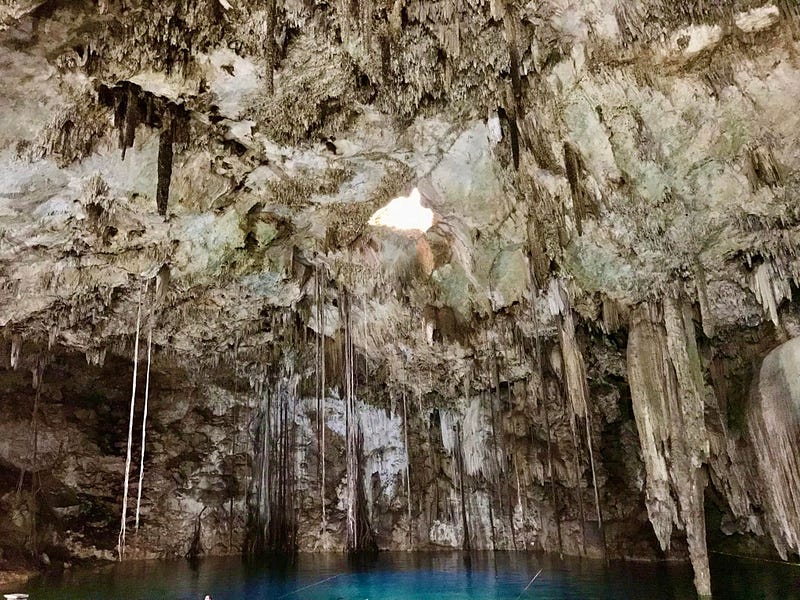
Cenotes are natural sinkholes, they are created when a cave collapses in on itself and exposes the fresh groundwater beneath it.
Why are they so unique to this part of Mexico? Well, the entire region was once a reef, millions of years ago, and now the limestone base of the reef is exposed from a drop in sea level. The erosion of this limestone creates an everchanging terrain of caves, underground river systems, and sinkholes.
There are three main types of cenotes, open, semi-open, and underground. Open cenotes are where the cave roof and walls have entirely gone and the cenote is fully exposed, semi-open are mostly underground but with some openings in the roof or walls, and underground cenotes are (you probably guessed) completely enclosed underground.
As well as being simply beautiful and wonderful places to swim and experience nature they are also culturally significant.
The Mayans considered these to be the entrance to the underworld and that they were often visited by Mayan Gods, in particular the Gods of rain, lightning, and thunder. Because of this, there were often sites where offering and rituals were given to appease these Gods, particularly in times of drought. I remember visiting an open cenote in Bacalar where we were told it was common to drown young women as human sacrifices. Many cenotes are sites of archaeological importance, containing items such as gold, jade, and pottery as well as human remains from such sacrifices.
What are they like to visit?
On our itinerary that we had written months before the trip, for Tulum, we had written “beautiful cenotes” but for Valladolid we had written “outstanding cenotes” with multiple exclamation marks. Clearly, this place was the real deal. I loved the cenotes we visited in Tulum so this made me incredibly excited!
They were truly outstanding, in every sense of the word. Our itinerary wasn’t wrong!
There’s something otherworldly about these underground terrains that remind you that you are standing in the presence of the genius, the artistry, and mastery of nature itself. It kind of reminds you that your life is the tiniest, faintest of dots on this earth’s timeline and that you need to cherish every small, fleeting moment like this one. One day you will be gone but here will remain for generations to come and stand in awe just like you are now.
What’s my favourite Cenote?
Cenote Suytun was my personal favourite.
It felt like a place that should only exist in maps drawn by Tolkien. A perfect walkway and circular disk platform stand in the centre below a natural skylight in the rock with the sun streaming down onto the platform below and dappling the fresh turquoise water.
Over time this fissure in the rock will widen and fall in, opening the cenote up to the elements and the sky above it but for now, it is another fleeting moment in the life of the cenote.
I joked to Joe that this place reminded me of finding Horcruxes in Harry Potter. I kept imagining a cold, white, dead hand grabbing my ankle rather than a fish slipping by in the darkness. It’s impossible not to compare the place to something magical, even if it’s dark magic.
I have complained before of the often stark difference between Instagram’s portrayal and real life but here I would take reality any day. Speaking of Instagram, it’s funny, taking photographs is heavily policed to stop people from hogging the platform and preventing others from being able to take their photos. Having witnessed some travellers' insanely long-winded photoshoots, I actually think this is quite fair. We had to queue and were given only a few minutes to take our photographs before being ordered off the platform.
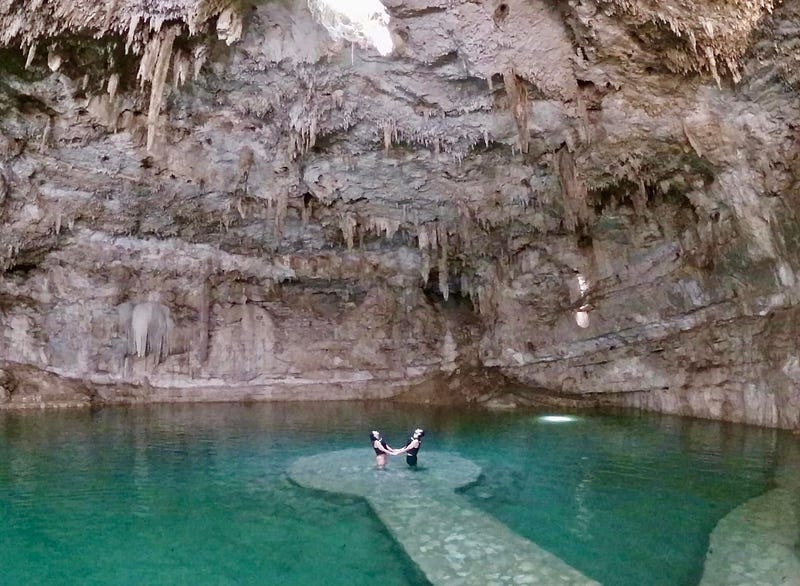
This meant we spent the rest of the time just swimming and looking around, not worrying about getting the perfect photo but just enjoying the whole experience.
Swimming in the fresh, cold underground lake and gazing up at hanging stalactites like icing dripping from a cake is something I will never forget.
A big thank to Globetrotters for this month’s challenge of writing about terrains of the world! Such a great topic with endless wonders to read and write about!
This month we are tagging two writers that have inspired you to go to this place or write about this kind of terrain, so here are my two. :)
If you want to learn about the science behind cenotes then this is the article for you!
If you want to learn more about the cultural importance of cenotes to the Mayan people and the importance of conservation then this is a wonderful article!
If you enjoy reading stories like these and want to support me as a writer, consider signing up to become a Medium Member. It’s $5 a month, giving you unlimited access to stories on Medium. If you sign up using my link, I’ll earn a small commission.
If you want updates when I post a new story, you can also subscribe!
If you liked this story, then check out some of my others 👇


