
The most expensive party ever: BILLION DOLLAR PARTY!
The Party That Ended a 2500-Year-Old Monarchy
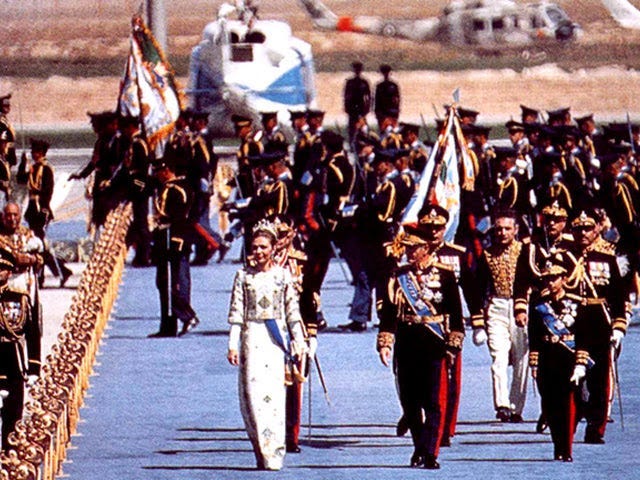
The largest gathering of monarchs and heads of state in modern history took place in the Iranian desert in October 1971. Iran’s Shah Mohammed Reza Pahlavi, who was hosting the celebration to commemorate the Persian Empire’s 2500th anniversary, spent hundreds of millions of dollars to make an impression.
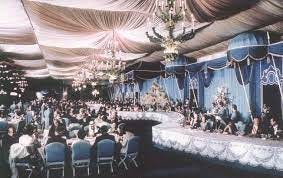
There had never been a party with such splendor in all of recorded history. More importantly, the party had the most decorated guest list, which included heads of state from 65 different countries, emperors, kings and queens, princes and princesses, sheiks, sultans, and business figures of all stripes from five different continents. It featured delectable food from the best restaurant in the world, exquisite drinks, luxurious accommodations, and decorations in the style of medieval Europe. Instead of being held at a luxurious hotel or historic castle, the event was held in the midst of a desert, with everything being set up from scratch using plastic tents. How much does all this cost? This celebration nearly cost a dynasty — not a million dollars, but a billion dollars. It turned out to be a springboard for the Iranian Revolution’s ascent and the Iranian Monarchy’s collapse, which brought about a permanent transformation of the nation.
REZA’S REIGN
As Shahanshah, or “King of Kings,” Shah Mohammed Reza Pahlavi oversaw a dynasty that dated back 2,500 years. The results of Operation Ajax in 1953 gave him total control over the Iranian government. Iran’s well-liked prime minister nationalized the nation’s oil in 1951, barring exports to the United States and Great Britain. To organize a coup supported by the United States and Great Britain that ousted the Prime Minister and reinstated the Shah as the ultimate leader, the Shah received $1 million.
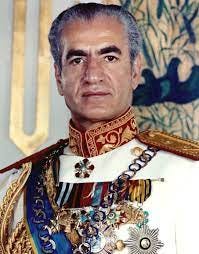
The Shah started his “White Revolution” in 1963 with the intention of modernizing Iran. Women were granted more liberties, land was dispersed, nuclear facilities were built, and the increase in goods production gave rise to an industrialist elite.
However, a brutal reality lay beneath this ideal of modernity. Although many Muslim clergy and conservative citizens opposed the Shah’s changes, he made sure their views were never heard. There were few civil freedoms; Iran’s violent secret service, SAVAK, would arbitrarily detain and torture people; by 1971, Iran had the highest rate of political prisoners and state executions worldwide. He saw 1971 as a chance to present his new Iran to the world and establish himself as the “New Cyrus,” since it would be 2,500 years since Cyrus the Great founded the First Persian Empire.
The Shah said in September 1970 that all global leaders would be invited to a sumptuous three-day celebration to be held in the ruins of Persepolis, the capital of the former Persian empire. There, they would honor him as the “King of Kings” and wonder at Iran’s past.
IN THE MIDDLE OF THE DESERT
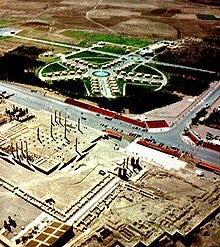
To accommodate the guests, a whole city was constructed in the middle of the Iranian desert. They were kept in tents made of plastic. But they weren’t your typical tents, mind you. They had plenty of opulent furniture, carpets, and other items. You might be thinking right now, “This must have cost a fortune.” You’re correct; it did. Iran’s formal release of the amount was $16.8 million ($112 million after inflation). However, Time magazine estimated the amount at an absurd $100 million ($635 million adjusted for inflation).
These tents were placed on five avenues (representing the five continents) radiating out from a central fountain. The Tent City also consisted of a ‘Tent of Honor’, where the Shah would receive his guests, the banqueting tent (the largest on the site), and a full 18-hole golf course. One tent contained sixteen hair salons and four beauty parlors (staffed by Parisian stylists), while another acted as a social club with a bar, cabaret suite, and even a secret gambling room.
THE PARTY!
On October 12, the centennial celebrations got underway at Cyrus the Great’s mausoleum in Pasargadae as a tribute to his spirit. In full imperial regalia, the Shah, Shahbanu Farah, and Crown Prince Reza filed to the mausoleum, where the Shah passionately addressed his illustrious predecessor. He informed Cyrus to “rest in peace, for we are awake, and we will always stay awake,” and he pledged that the Iranian people would “prove worthy heirs of their glorious past.”
The two days that followed saw the arrival of the Shah’s esteemed visitors. With eight kings, eight presidents, and an emperor among the guests, it was arguably the most elite guest list in history. Journalists and staff later described the’surreal’ atmosphere of so many world leaders in one place. The Vice President of America would be smoking outside his tent and waving to the King of Sweden as he walked past, all while the First Lady of Yugoslavia was chatting with the Emir of Abu Dhabi. Most of the European monarchs were related, so they would freely walk in and out of each other’s tents and hang out at the social club. The underground safe was crammed with tiaras, necklaces, and solid-gold jewelry, but the most expensive item in there was in fact the diamond-encrusted collar of the Emperor of Ethiopia’s dog.
This celebration alone could have led an outsider with no prior knowledge of Iran to be unable to determine that the country was extremely poor. The Shah made great efforts to ensure that the world saw only an Iran that rivaled the splendor of the ancient Persian empire. He was careful to hide the fissures and gaps in a collapsing dynasty and to provide the world with just the images he wanted them to see.
A DOOMED LEGACY
The party most definitely accomplished what the Shah had hoped for in terms of international status. The world was undoubtedly fascinated by Iran’s richness and glorious history, which was screened all over the world; Time magazine dubbed it “the greatest gathering of the century.” The other kings of the Shah were either horribly envious or deeply impressed. The Shah truly was Shahanshah, the King of Kings, for those three days.
But the people whose opinion really mattered, the Iranian public, were outraged!
The Shah was eating truffles and parading in an artificial oasis while 51% of his subjects went hungry and his nation was suffering from a drought. All the while, his secret service had thousands of suspected prisoners imprisoned and universities closed.
And there was the conspicuous absence of Iranians. As previously indicated, a relatively small number of Iranian artisans participated in the Tent City’s creation. The Shah served only French cuisine, prepared by French cooks. Very few of the Shah’s own ministers were invited to his 600-person feast; instead, only a small number of Iranians involved in the arrangements were invited. In fact, even the Shah questioned, “Where are the Iranians?” after seeing the specially commissioned feature film about the incident. Therefore, the celebration served more as the Shah’s pretext to brag to his wealthy and arrogant friends than it did as a showcase for Iranian culture and history.
literally and figuratively. The Shah had lost all of the public support by now.
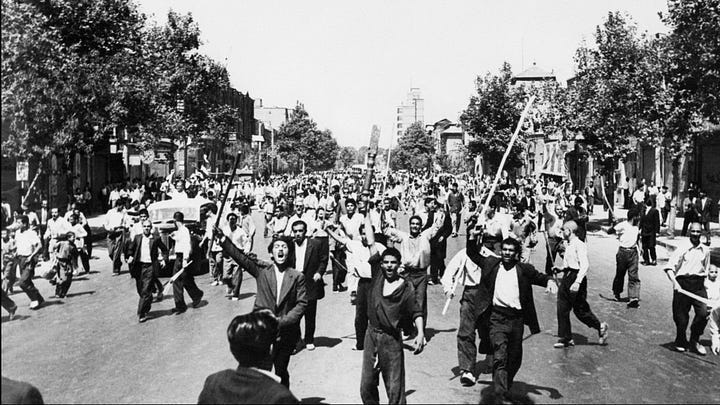
Political parties in opposition, despite their contrasting ideologies, joined hands against the ‘king of kings.’ Iran’s popular uprising led to the Islamic Revolution of 1979, which ended the rule of the Pahlavi Dynasty and the two and a half millennia of the Persian Empire. The party was turning out to be truly cataclysmic in every sense of the word. Ayatollah Khomeini returned from exile. Iran became an Islamic Republic under Khomeini, its first supreme leader.
Shah formally apologized to his people three years after the incident and asked for their forgiveness for decades of poor choices, wrongdoing, and brutality. Unfortunately, the harm had already occurred. The Iranian people trusted the Shah with the outside world, much like his party supplies. He was sent into exile, where he passed away a year later
I am MUSA AYAZ. I write about poetry, tech, business and self-improvement, and interesting trending topics to revolutionize writing in a way you have never seen before.
Runner up on Promptly Written Poetry Competition (2023).
Follow me: Medium.com/@musaayaz
E-mail me: [email protected] for work.
My previous articles: