
The More Developed, The More Depressed?
The truth about “First World Problems.”

We have all made a joke here and there about “First World Problems” — your favorite coffee place ran out of soy milk? (First World Problems). You have “too much choice” at the supermarket and it’s overwhelming? (First World Problems). “Boring” day?— yes, this is also a “First World Problem”…
However embarrassing and shameful we find such irks to complain about — when there is war, starvation, and a pandemic, going on right now in the world — we still do it.
But since it seems the whole developed world is plunging into a mental health crisis, are these so-called “first world problems” at least partially to blame?
Depression: Disease of the Rich?
A growing amount of research suggests that people who live in wealthy countries are more likely to be depressed than those in low to middle-income countries. In one particular study, around 15% of people in developed countries claimed to have experienced depression at some point in their lives. That compares with 11% in less developed countries.
That being said, across nations of various stages of development, women were still reported twice as likely as men to suffer from depression— a matter I dipped into in an earlier article.
Types of First World Problems
So what is it about the modern, “first world” or developed lifestyle that apparently messes so much with our heads?
Too much choice
Overchoice or “choice overload” is a cognitive process describing when you struggle with indecisiveness or even symptoms of anxiety when making a decision when faced with many options — even when there’s not really much at stake — like when asked to choose what film to watch, or deciding what to wear. Sometimes these decisions are as easy to make as breathing, but other times they set our heads into a spin! Why is that?
According to Psychology Today, too many choices can leave you “dissatisfied and disappointed.” After a certain point, too many options, although deemed desirable by our capitalist societies, can actually lead to a modern phenomenon called “decision fatigue,” stemming from the so-called “paradox of choice.”
This is essentially describing how the more options presented before us, the more trapped we feel. In a sense, too many choices make us feel like we have no choice at all, as we can become somewhat paralyzed, and directionless. We lose clarity, and we tend to overthink every decision — which only leads to increased self-doubt, self-blame if things don’t go to plan (you made the “wrong choice”!) and anxiety, as we risk obsessing over every minute decision.
It’s for this reason that public figures such as Mark Zukerberg and Barack Obama famously said that they wear the same thing every day — to at least somewhat decrease each day’s endless stream of choices.
Boredom
As humans, we are wired to hate boredom. Our complex brains crave stimulation and intrigue. And yet, if you are truly “bored” — that is, understimulated and underwhelmed — then you are most likely in a pretty privileged position. After all, if you are starving, or running or fighting for your life, then you may have many negative feelings, but boredom likely isn’t one of them.
When looking up the official definition of the term “boredom,” I found the below pretty telling graph showing how the word has been thrown around increasingly since around the time of the industrial revolution. In other words, as people’s overall quality of life improved, so did their use of the word “boredom.”
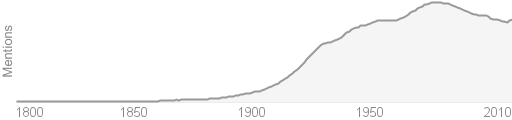
So you may feel pretty lousy for complaining about being bored — or that your job, your relationship, or even your life is boring — but although it’s true that boredom is a privilege, it comes at a pretty hefty price. It ultimately means a lack of stimulation, drive, or even purpose.
According to Scientific American:
‘Easily bored people are at higher risk for depression, anxiety, drug addiction, alcoholism, compulsive gambling, eating disorders, hostility, anger, poor social skills, bad grades and low work performance.’
As such, being bored may indicate being privileged and secure, but boredom really is harmful. Therefore, this “first world problem” perhaps shouldn’t be dismissed entirely as a mental health concern.
Materialism & Superficiality
Now for perhaps the most-stigmatized type of first world problem: over-reliance on luxury or more generally, materialism and superficiality. Think getting upset that your phone battery dies, that you don’t have the particular car you want, that you can’t find that particular brand of organic olives that you love, or that you can’t get a hair appointment because — I don’t know — there’s a global pandemic…
I’m pretty sure that all of us in the developed world have complained about these kinds of issues at some point. Even those of us who know that these are simply “first world problems” and feel slightly ashamed as soon as the whine rolls off our tongue.
That being said, it’s human nature to adapt and thus get accustomed to our lifestyle pretty quickly. This goes both ways — look how we have all been forced to adapt due to the pandemic. It would have been hard to fathom just a few months ago how the whole world would essentially come to a halt, and we’d all shut ourselves away for the foreseeable. Well, as soon as things get better, we will no doubt soon take everything for granted just as we did before. This is what makes humans so adaptable — we quickly change our expectations as our lifestyles change.
Similarly, just as a billionaire may winge over having to go to Barbados instead of the Maldives next summer, your average middle-class European or North American may only dream of going on such a holiday — and yet get upset that they don’t have hot water for a week. Meanwhile, someone living in a slum in India may well dream of having running water at all.
What I’m getting at is that it’s all relative. As trivial as the battles faced by those higher up the chain than you may appear, rest assured that yours seem just as ludicrous to others less privileged than yourself.
Social Isolation
So this fourth and final pillar of the developed world’s mental health crisis has taken on a whole new meaning in recent months. But temporary isolation practices aside, the developed world has had a problem with social isolation and loneliness long before the Covid-19 pandemic.
As societies become more developed, more people have the means to live alone. This means more people live away from their families or decide against having roommates just because they can. People put off getting married, having kids, or “settling down,” because they thankfully no-longer feel coerced into doing so. However, this means that there is this vast new phase in the modern young person’s life, from around the early 20s to 30 or beyond — a gaping hole in the traditional life path of the generations before us— where many in developed societies spend up to a decade or more neither living with family, roommates, or a partner.
Of course, there is nothing wrong with this new social phenomenon, and it works out rather nicely for some. However, this lifestyle shift combined with increased urban living — meaning that most of us don’t even have other community hubs to belong to that you may get in a small town — is making many individuals feel more isolated than ever before, in ways that our parents likely wouldn't even be able to relate to.
The science shows that from lack of human touch, to a less tangible and yet equally painful perceived lack of belonging to either a family unit or other social circle, goes against our sociable, tribal instincts, and can trigger severe consequences for our mental health.
Is the Developed World Doomed to be Depressed?
Once we have enough to get by — even if only just — in other words, we no-longer worry when the next meal will be, or if we will have a roof over our heads for another night — then we instinctively find new problems to focus on. Of course, we don't go from “will I starve?” to “will I have to queue for my almond milk macchiato?” overnight. But little by little, our expectations for our lifestyles improve — and rightfully so! But just as this means that we get more, it also means that we want more. We expect more.
However, this isn't just about what we should or shouldn't want or expect for ourselves, it’s about how this shift affects our mental health. Once we are able to relax for a minute and step out of that fight-or-flight survival mode, we have the time and space to think, dream, and hope for more. This is a beautiful thing — and the reason why once a society can meet its people’s basic needs, it can go on to produce more art, scientific research, and other humanity-defining endeavors. However, it can also be like opening a can of worms when it comes to life satisfaction and fulfillment…
A Note of Caution
This all being considered, we must be careful we don’t start to claim something along the lines of ‘the poor are too busy earning their livelihood and do not have the luxury to worry about something as trivial as mental health’. Not only does this arrogantly imply that those less fortunate are not capable of thinking of the deeper purpose of their life and reflecting as the privileged claim to do, but it also is a disservice to the very real illnesses of depression and related mental health problems.
If we are too quick to believe that depression is a “disease of the rich” as many proclaim, then we risk trivializing it as simply a self-pitying response to having everything that you need — which, of course, it isn’t.
As put by Livewire, regarding this stance:
‘Not only does such a proposition reek of callousness, but it turns a blind eye to the facts and reality. Depression, or for that matter any mental illness, is not a phase that will pass on its own with time or a state of mind such as boredom which can be cured by simply having fun. It is a disease that needs proper medical treatment and attention.’
So just as societal development brings great beauty and enlightenment, it also brings pain. We are able to actually contemplate our lives beyond how to maintain them. We question our purpose, our future, and we form aspirations and expectations.
We have the most sought-after and yet the most harmful combination of choice, boredom, and expectation, that both propels us into progress and weighs us down simultaneously. The key to human development as well as perhaps our generation’s greatest threat.
Roxanna is a content writer and advocacy consultant specialized in human rights, identities, health, and welfare. With a languages degree from King’s College London, a Master’s in European Studies from the London School of Economics and Political Science, and a background in political PR, human rights, and health advocacy, she strives to increase visibility and encourage debate around ethical and sociocultural issues around the world.
Twitter: @roxannayasmin