
The Miracle of Human Ideals in a Cosmic Wasteland
And the shocking misnomer of scientific “laws of nature”
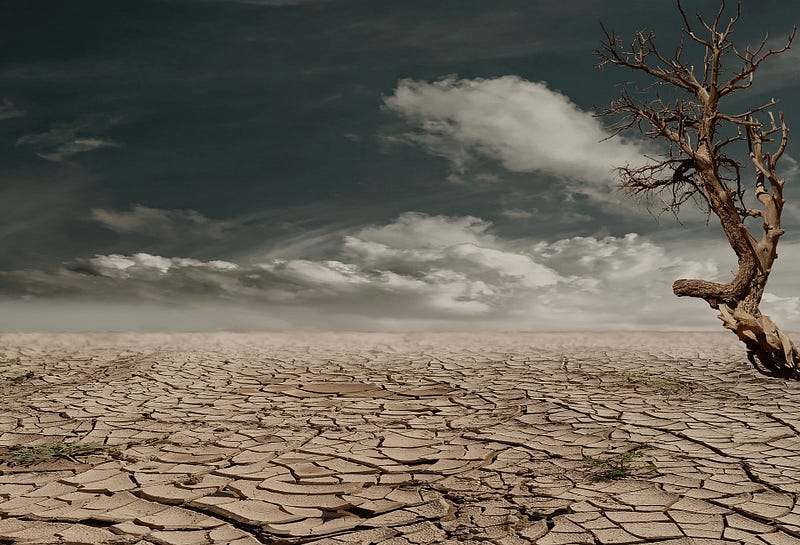
We’d have a better chance of seeing how virtually miraculous ideals are if we hadn’t been lulled into complacency by the scientific figure of speech which says there are such things as “laws of nature.”
There are no such “laws,” which is to say that no scientist in his or her professional capacity thinks natural events obey laws that a deity dictated beforehand like a legislator, architect, or city planner setting up a society.
A proof that such a legislator of the universe exists would mark the swift end of science as a naturalizing enterprise since all patterns in nature would be artifacts with subjective properties, such as designs and purposes they’d be intended to fulfill. Hence, science as a set of methods for explaining away apparent order in reductive, strictly objective terms would be wrongheaded.
It’s such a disservice that scientists have done, then, to have gotten carried away with this metaphor of lawfulness in nature, to have obfuscated how scientific objectifications entail, instead, that the natural order is a perfectly absurd (monstrous, inhuman, amoral, indifferent) evolution of regularities. The disservice carries on with some scientists’ flippant talk of God, as in Stephen Hawking’s misleading book title God Created the Integers, or in Albert Einstein’s presumption that “God doesn’t throw dice” to determine the universe’s state.
Modern science emerged from the dross of Christendom, so it’s easy to understand the metaphor’s origin. Early modern scientists were often deists, so they believed a deity created the universe as a machine that runs itself. That was before scientific methods had been established as functionally atheistic, or as being modelled on a naturalistic ideal that eliminates mysteries rather than adding to popular confusions with religious, pseudoscientific mystifications.
Indeed, that scientific ideal of solving mysteries with skeptical, mechanistic, materialistic explanations is itself an instance of the miracle in question, of how we can choose to realize what ought to be, whereas nature dumbly shuffles along with no such end in view.
If there were laws of nature, they’d be like human laws against the perpetration of crimes. Nature would obey its laws in the way that we obey our laws to avoid being punished by society. Somewhere, in black holes perhaps, naughty processes would be jailed for violating the laws that “govern” nature. And “outside” the universe, over the rainbow, the legislator and judge would be busy writing new laws or perhaps editing old ones and enforcing them to ensure that the universe doesn’t revert to a chaotic free-for-all.
For several obvious reasons, that’s not the scientific picture. No late-modern scientist in his or her professional capacity can posit deities, miracles, or even values that would motivate the law which would be a prescription rather than a description.
Indeed, the slavishness with which natural events adhere to scientific generalizations tells us that those generalizations aren’t laws, or that they’re laws for the social institutions of science but not for nature.
Laws are prescriptions that can be, and that sometimes are violated. But, according to scientific methodology, the supposed laws of nature are never violated. If a law of physics or chemistry appears to be violated, that’s because we’re missing a better formulation of the law.
Alternatively, the apparent violation could be due to the confounding influence of neighboring systems. That is, what may look like a violation could be just the odd interaction between systems that falls outside the “law’s” scope. Scientific generalizations are usually ceteris paribus, meaning they’re part of a patchwork of models that analyze the cosmos into parts that we can understand and potentially control.
Evidently, natural elements, forces, cycles, processes, levels, and conditions aren’t subject to laws because they have no freedom to choose whether to obey a law or to violate it. The very inhuman consistency of natural regularities indicates that “law of nature” must be an overextended figure of speech.
But it’s because of this confusion about scientific knowledge that we assume ideals (or values, prescriptions, standards, and so on) are commonplace. They’re not since ideals are as anomalous as people. And as I said, we’d be clearer about this strangeness of ours if we hadn’t been misled to think that the universe is full of lawful behaviour, as though every sign of order in nature were a case of goodness, of what was supposed to happen, of an ideal being constantly achieved in what the seventeenth century deist Gottfried Wilhelm Leibniz called the best of all possible universes.
No, all laws are the products of intelligent beings that emerge within the universe. Human scientists author them, for example, and deem them good because laws of nature are their brainchildren. Or folks generally approve of these laws as parts of scientific models if the generalizations have fruitful applications which improve our lives.
We might expect nature to follow scientific generalizations because we’re complacent and satisfied with our level of understanding. But there’s no objective conformity to laws; on the contrary, that’s a contradiction in terms. Only minds can conform or be governed. You don’t govern a rock with the force of gravity by dictating that the rock must adhere to Newton’s or to Einstein’s model. Neither the rock nor the force cares about that model or has any agency that calls for mere guidance.
You see, then, the alternative to literal lawfulness: it’s the monstrous simulation of order which conjures itself into being with no blueprint, or with no principles that dictate limits to what nature can do. The natural order emerges from lawless interactions, meaning interactions that are wildly asocial. Nature doesn’t work towards what’s best or just since the present order of stars and planets will be followed by eons of unthinkable disorder in which black holes will swallow all light and evaporate into eternal nothingness.
Consequently, our ability to imagine alternatives that we deem superior is miraculous in the sense that our typical normativity is anti-natural. Nature would “prefer” to be impersonal in its transitions from cause to effect or from one system, process, or level to the next. As an outgrowth of life’s evolution, though, after untold amoral outcomes on Earth, we can conceive of the good, the noble, and the just. Our autonomous minds are preoccupied with these ideals that mean nothing to the outer wilderness.
Hence, we should contrast the following two scenarios:
- (1) A lawful, implicitly artificial universe in which life emerges, a universe that obeys divine commandments and entertains yet more prescriptions in the case of human ideals.
- (2) A monstrous natural order in which life emerges by the sort of impersonal chances that hold also in the counterintuitive subatomic realm, and in which life eventually dreams that there’s a better way.
The reckless talk of “laws of nature” leads us to think we’re in the first scenario, whereas we’re very much in the second.
It’s hard to know ourselves when we give too much credit to nature just because the universe is so much vaster than us. As persons we’re anomalous visionaries of unnatural (meaningful, normative) possibilities. We’re explorers and reformers of wild places. We’re alienated by nature’s zombie-like mockery of intended order so that, if only by way of tragic impudence we aim to give all things a reason for being.


