avatarRudi Widiyanto

Free AI web copilot to create summaries, insights and extended knowledge, download it at here

1835

Abstract

least seven people and injured dozens more in France, Belgium, Spain, and the Netherlands</a>. The storm also disrupted travel, closed schools, and damaged homes and infrastructure. <a href="https://www.bbc.com/news/world-middle-east-67039975">In France alone, more than 1.3 million people were without power</a>.</p><p id="36d9">These storms are not isolated events. They are part of a larger pattern of extreme weather events that are becoming more frequent, longer lasting, and more destructive due to climate change. <a href="https://www.msn.com/en-us/news/other/the-forgotten-survivors-of-hurricane-otis-we-don-t-even-have-water-to-wash-with-and-now-disease-is-setting-in/ar-AA1jizbZ">According to the Intergovernmental Panel on Climate Change (IPCC), human activities have caused global warming of about 1.1°C since the pre-industrial period, and this warming is likely to reach 1.5°C between 2030 and 2052 if it continues at the current rate</a>. This warming has increased the likelihood and intensity of heat waves, droughts, floods, wildfires, hurricanes, and other disasters that threaten human lives and livelihoods.</p><p id="2aa0">The IPCC also warns that limiting global warming to 1.5°C would require rapid and far-reaching transitions in energy, land use, urban planning, transportation, and industry. <a href="https://www.msn.com/en-us/news/other/the-forgotten-survivors-of-hurricane-otis-we-don-t-even-have-water-to-wash-with-and-now-disease-is-setting-in/ar-AA1jizbZ">Such transitions would have multiple benefits for human health, well-being, security, and economic development</a>. However, achieving these transitions would require unprecedented levels of cooperation and action from governments, businesses, civil society, and individuals.</p><p id="d726">Therefore, while we should not ignore the humanitarian

Options

crisis in the Middle East or any other region of the world, we should also not forget the existential threat posed by climate change.</p><p id="4f19">We should use social media not only to voice our opinions on political issues but also to raise awareness and demand action on environmental issues. We should also take personal responsibility for reducing our carbon footprint and supporting green initiatives.</p><p id="03ef">We should remember that we are all connected by one planet and one future.</p><p id="2a68">RW</p><div id="3e4f" class="link-block"> <a href="https://readmedium.com/two-wars-on-earth-ecdec15df978"> <div> <div> <h2>Two Wars on Earth</h2> <div><h3>They say that the first casualty of war is truth. Each side of the conflicted party would spread the news that…</h3></div> <div><p>medium.com</p></div> </div> <div> <div style="background-image: url(https://miro.readmedium.com/v2/resize:fit:320/1*v6n6CMTXSzBdqebjrCfHdg.png)"></div> </div> </div> </a> </div><div id="d29a" class="link-block"> <a href="https://readmedium.com/the-pale-blue-dot-and-the-perils-of-war-92e1aa3a16b5"> <div> <div> <h2>The Pale Blue Dot and the Perils of War</h2> <div><h3>The world has been gripped by the news of the escalating conflicts in the Middle East. The unprecedented attack by…</h3></div> <div><p>medium.com</p></div> </div> <div> <div style="background-image: url(https://miro.readmedium.com/v2/resize:fit:320/0*VqBzpCfbM74IpmnW)"></div> </div> </div> </a> </div></article></body>

The Middle East, the Climate, and Social Media, A Global Perspective

While society trying to stop World War III, actually another war has been erupted.
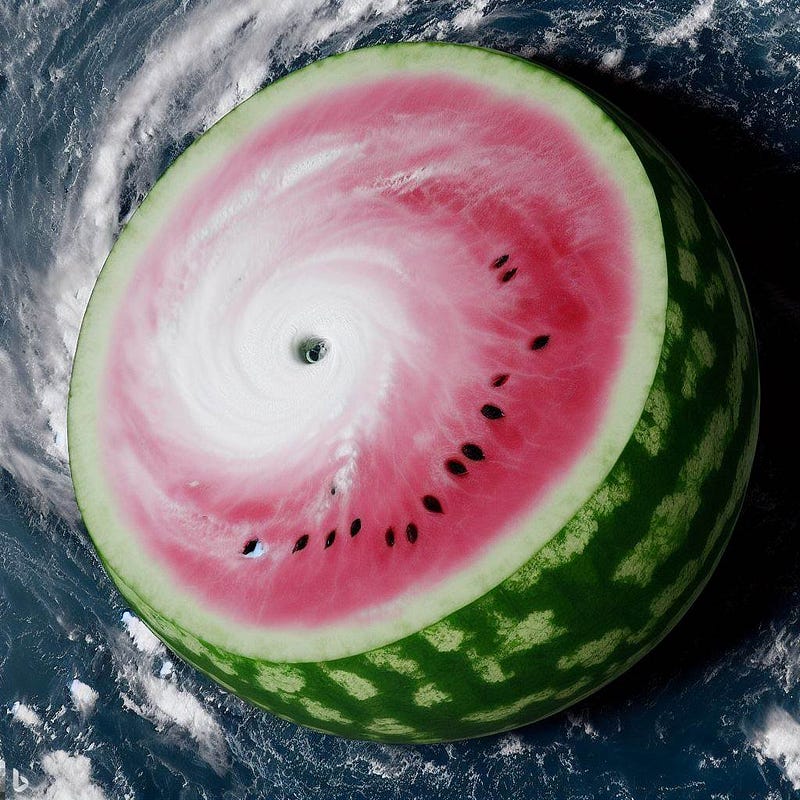
watermelon storm-DALLE by author

The Middle East has been the center of attention for the past month, as the conflict between Israel and Hamas escalated into a full-scale war. The war has not only affected the lives of millions of people in the region but also sparked a global debate on social media, where users have expressed their support or opposition to either side or called for an immediate ceasefire.

However, while the world is focused on the Middle East, another war is silently raging: the war against climate change.

In October 2023, Hurricane Otis hit Acapulco, Mexico, as a Category 5 hurricane, the strongest storm ever recorded on the Pacific coast of Mexico. Otis intensified rapidly from a tropical storm to a major hurricane in just 12 hours, giving little time for preparation and evacuation. The storm caused widespread damage, power outages, and casualties in Acapulco and surrounding areas. More than 1.2 million people lost electricity, and at least 48 people were killed by the storm.

A few days later, another powerful storm, Ciaran, battered Western Europe with torrential rain and winds of up to 200 km/h (124 mph). Ciaran killed at least seven people and injured dozens more in France, Belgium, Spain, and the Netherlands. The storm also disrupted travel, closed schools, and damaged homes and infrastructure. In France alone, more than 1.3 million people were without power.

These storms are not isolated events. They are part of a larger pattern of extreme weather events that are becoming more frequent, longer lasting, and more destructive due to climate change. According to the Intergovernmental Panel on Climate Change (IPCC), human activities have caused global warming of about 1.1°C since the pre-industrial period, and this warming is likely to reach 1.5°C between 2030 and 2052 if it continues at the current rate. This warming has increased the likelihood and intensity of heat waves, droughts, floods, wildfires, hurricanes, and other disasters that threaten human lives and livelihoods.

The IPCC also warns that limiting global warming to 1.5°C would require rapid and far-reaching transitions in energy, land use, urban planning, transportation, and industry. Such transitions would have multiple benefits for human health, well-being, security, and economic development. However, achieving these transitions would require unprecedented levels of cooperation and action from governments, businesses, civil society, and individuals.

Therefore, while we should not ignore the humanitarian crisis in the Middle East or any other region of the world, we should also not forget the existential threat posed by climate change.

We should use social media not only to voice our opinions on political issues but also to raise awareness and demand action on environmental issues. We should also take personal responsibility for reducing our carbon footprint and supporting green initiatives.

We should remember that we are all connected by one planet and one future.

RW

Future
Climate Change
Middle East
Recommended from ReadMedium