
The Pale Blue Dot and the Perils of War
The world has been gripped by the news of the escalating conflicts in the Middle East. The unprecedented attack by Hamas on Israel, which killed hundreds of civilians and sparked a full-scale war, has shocked and saddened many people around the globe.
The ongoing tensions between Ukraine and Russia, which threaten to erupt into another armed confrontation, have also raised concerns about the stability and security of the region. These are not the only wars that are raging or brewing in the world today. Millions of people are suffering from the violence and devastation caused by human conflicts.
I have never been in a war situation, or even a gunfight, and I never hope to be one in the future. But I can imagine how terrifying and traumatic it must be to hear the sounds of guns, rockets, and explosions, and to see the destruction of buildings, the blood of bystanders, and the fear in people’s eyes.
These sights and sounds can leave deep scars in one’s memory and psyche, whether they are adults or children. There is no good outcome for either side in a war. Both parties lose lives, resources, dignity, and hope.
What makes these wars even more tragic is that they come at a time when the world is trying to recover from the Covid-19 pandemic, which has claimed millions of lives and disrupted billions of livelihoods.
The pandemic has shown us how interdependent we are as a global community, and how we need to work together to overcome a common enemy. The pandemic has also shown us how fragile and precious life is, and how we need to cherish and protect it. Yet, instead of learning from these lessons, we seem to revert to our old habits of harming each other.
We should condemn war and violence in all its forms, but we should not take sides or fuel hatred. By doing so, we only divide the world into three camps: those who support one side, those who support the other side, and those who want peace.
This polarization only makes it harder to find a peaceful resolution and a lasting reconciliation. We should instead seek to understand the root causes of these conflicts, which often stem from historical grievances, political injustices, economic inequalities, religious differences, or ethnic tensions. We should also seek to empathize with the human suffering on both sides, which often goes unnoticed or ignored by the media or the public.
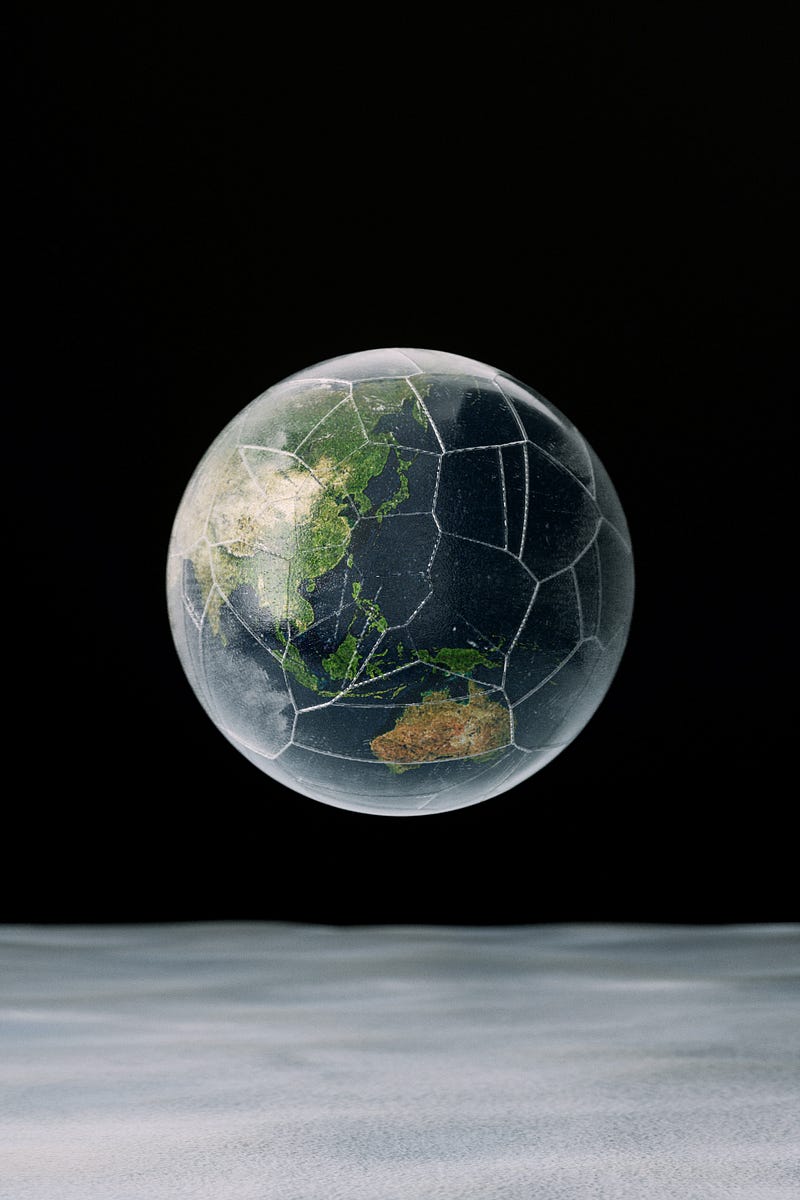
When I started learning astronomy, I was fascinated by the image of the Pale Blue Dot taken by Voyager 1 in 1990. It shows Earth as a tiny dot in a vast sea of darkness, barely visible among the rays of sunlight. It reminds me of how small and insignificant we are in the grand scheme of things, but also how unique and precious we are as a planet that harbours life. It makes me wonder why we waste our time and energy fighting each other over trivial matters when we could be exploring and appreciating the wonders of the universe together.
Perhaps one day, when humans can reach other planets or stars, or even encounter other forms of life beyond Earth, we will finally unite and cooperate as one species: Terrans.
Or maybe we will bring our destructive tendencies with us and start interplanetary wars.
I hope we realize that we are all passengers on this Pale Blue Dot, and that we have only one home to share and care for.
warmest,
Rudi Widiyanto.


