avatarDark Energy Articles

Free AI web copilot to create summaries, insights and extended knowledge, download it at here

2381

Abstract

cientists have known about the existence of LTT9779 b since 2020. At that time, thanks to NASA’s TESS telescope, a hot planet slightly larger than Neptune was spotted in space, <b>which orbits its parent star in just 19 hours.</b> This was already unique — only one star system in two hundred has a planet whose orbital period is shorter than an Earth day.</p><p id="026f">The latest work is the result of further observations of the exoplanet with the help of the European CHEOPS telescope. With it, scientists have determined that LTT9779 b has the highest albedo of all the planets we know of. That is, that it reflects a record amount of light that falls on it.</p><figure id="e8fc"><img src="https://cdn-images-1.readmedium.com/v2/resize:fit:800/1*itUuuKq9UBtWVzQavheh7g.jpeg"><figcaption>[Photo: ESA, CC BY-SA IGO 3.0, <a href="https://creativecommons.org/licenses/by-sa/3.0/igo/deed.en">CC BY-SA 3.0 IGO</a>, via <a href="https://commons.wikimedia.org/wiki/File:ESA%E2%80%99s_new_and_future_exoplanet_missions_ESA23832632.jpg">Wikimedia Commons</a>]</figcaption></figure><h1 id="353d">Clouds of glass and titanium</h1><p id="007b">The finding came as quite a surprise. Scientists had suspected that LTT9779 b’s albedo would be low. <b>The planet is so close to its star that it is ultra-hot.</b> The surface, which is constantly facing the star, has a temperature as high as ca. 2000 deg C. Under such conditions, there is no chance for the globe to retain an atmosphere containing, for example, a lot of water vapor.</p><blockquote id="8f63"><p>“This planet should not exist,” said Vivien Parmentier, co-author of the study from the Côte d’Azur Observatory. — It is believed that planets of this type are rocky globes whose atmospheres have been “blown away” by their parent star.</p></blockquote><p id="0339">Yet LTT9779 b does have an atmosphere. The globe is surrounded by a layer of metallic clouds. Scientists surmise that they consist mainly of silicate — that is, silicic acid salts — and titanium-containing salts. There are so many of these compounds in the atmosphere that they condense to form clouds. On the same principle, a cloud consisting of condensed water vapor will soon appear in a closed bathroom where you turn on the shower.</p><h1 id="a786">A planet that shouldn’t exist</h1><p id="0438">This atmospheric composition explains another mystery about L

Options

TT9779 b. Until now, the globes discovered, which are very close to their suns, were either at most the size of Earth or much larger than Jupiter. Planets in between were missing. It was even assumed that there was a so-called Neptunian Desert. That is, the area around a star where there are no planets of size close to Neptune.</p><p id="263e">Scientists believe that LTT9779 b owes its survival precisely to its metallic atmosphere.</p><blockquote id="c460"><p>“Its clouds reflect light, protecting the planet from overheating and evaporation”, says Sergio Hoyer, lead author of the paper from the Astrophysical Laboratory of Marseille. — “The metallic atmosphere is heavy, so it is harder to blow off”, the researcher adds.</p></blockquote><p id="dc21">According to space.com, the planet LTT9779 b is such an interesting object that it will be further studied in the coming years. Both with the help of the Hubble Telescope and the James Webb Space Telescope.</p><div id="3f0e" class="link-block"> <a href="https://readmedium.com/the-codex-gigas-is-called-the-satanic-bible-it-is-the-largest-medieval-manuscript-in-the-world-d88ae2945590"> <div> <div> <h2>The Codex Gigas is called the Satanic Bible. It is the largest medieval manuscript in the world</h2> <div><h3>Many relics remain from the Middle Ages, as fascinating as they are enigmatic. One of those, which an aura of mystery…</h3></div> <div><p>medium.com</p></div> </div> <div> <div style="background-image: url(https://miro.readmedium.com/v2/resize:fit:320/1*jSpw1Qlca7WUlMuiNh1e1w.jpeg)"></div> </div> </div> </a> </div><p id="60c4"><b>Thank you for reading! If you enjoyed this content, please consider giving it a clap, leaving a donation, or offering a tip to support my work. Your generosity helps me continue creating valuable content.</b></p><figure id="e494"><img src="https://cdn-images-1.readmedium.com/v2/resize:fit:800/1*QCQqlZr6doDP-cszzpaSpw.png"><figcaption><a href="https://www.buymeacoffee.com/oconnel">https://www.buymeacoffee.com/oconnel</a></figcaption></figure><figure id="92a2"><img src="https://cdn-images-1.readmedium.com/v2/resize:fit:800/1*fxkd_sjXknSGRO4TY0S9Mg.png"><figcaption></figcaption></figure></article></body>

The Metallic Mirror World: Discovery of the Brightest Planet

Scientists have found a planet that reflects as much as 80 percent of the light falling on it. This is a record for known planets outside the solar system. “This planet should not exist,” one astronomer said of it.

[Photo: Leandro Barco from Pixabay]

Unlike stars, planets do not emit light. However, they can reflect the one that falls on them from their parent sun. Earth reflects 30 percent of the light that reaches its surface. It is far from Venus, the record holder in the solar system. Venus reflects as much as 75 percent of the sun’s light.

264 light years away, however, is a globe that has broken Venus’ record. It has been named LTT9779 b. This planet is a true cosmic mirror. As much as four-fifths of the light that falls on it from its parent star ends up back in space.

What makes LTT9779 b have such unusual properties? The clouds surrounding it, which consist of silicate and titanium salts. The unusual planet is described in a paper published in the scientific journal Astronomy&Astrophysics.

Very hot planet close to star

Scientists have known about the existence of LTT9779 b since 2020. At that time, thanks to NASA’s TESS telescope, a hot planet slightly larger than Neptune was spotted in space, which orbits its parent star in just 19 hours. This was already unique — only one star system in two hundred has a planet whose orbital period is shorter than an Earth day.

The latest work is the result of further observations of the exoplanet with the help of the European CHEOPS telescope. With it, scientists have determined that LTT9779 b has the highest albedo of all the planets we know of. That is, that it reflects a record amount of light that falls on it.
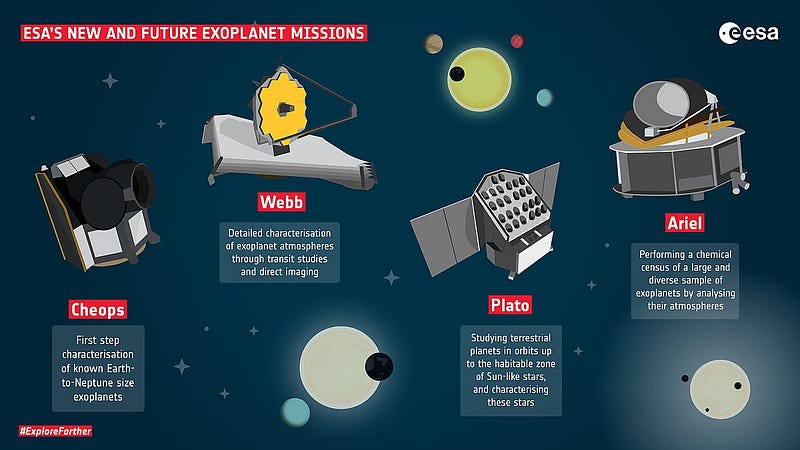
[Photo: ESA, CC BY-SA IGO 3.0, CC BY-SA 3.0 IGO, via Wikimedia Commons]

Clouds of glass and titanium

The finding came as quite a surprise. Scientists had suspected that LTT9779 b’s albedo would be low. The planet is so close to its star that it is ultra-hot. The surface, which is constantly facing the star, has a temperature as high as ca. 2000 deg C. Under such conditions, there is no chance for the globe to retain an atmosphere containing, for example, a lot of water vapor.

“This planet should not exist,” said Vivien Parmentier, co-author of the study from the Côte d’Azur Observatory. — It is believed that planets of this type are rocky globes whose atmospheres have been “blown away” by their parent star.

Yet LTT9779 b does have an atmosphere. The globe is surrounded by a layer of metallic clouds. Scientists surmise that they consist mainly of silicate — that is, silicic acid salts — and titanium-containing salts. There are so many of these compounds in the atmosphere that they condense to form clouds. On the same principle, a cloud consisting of condensed water vapor will soon appear in a closed bathroom where you turn on the shower.

A planet that shouldn’t exist

This atmospheric composition explains another mystery about LTT9779 b. Until now, the globes discovered, which are very close to their suns, were either at most the size of Earth or much larger than Jupiter. Planets in between were missing. It was even assumed that there was a so-called Neptunian Desert. That is, the area around a star where there are no planets of size close to Neptune.

Scientists believe that LTT9779 b owes its survival precisely to its metallic atmosphere.

“Its clouds reflect light, protecting the planet from overheating and evaporation”, says Sergio Hoyer, lead author of the paper from the Astrophysical Laboratory of Marseille. — “The metallic atmosphere is heavy, so it is harder to blow off”, the researcher adds.

According to space.com, the planet LTT9779 b is such an interesting object that it will be further studied in the coming years. Both with the help of the Hubble Telescope and the James Webb Space Telescope.

Thank you for reading! If you enjoyed this content, please consider giving it a clap, leaving a donation, or offering a tip to support my work. Your generosity helps me continue creating valuable content.


https://www.buymeacoffee.com/oconnel
Planets
Space
Universe
Science
Life Lessons
Recommended from ReadMedium