
The Man Who Wished His Words Were in a Book
His words give us hope even when we stand beside the grave of our family member
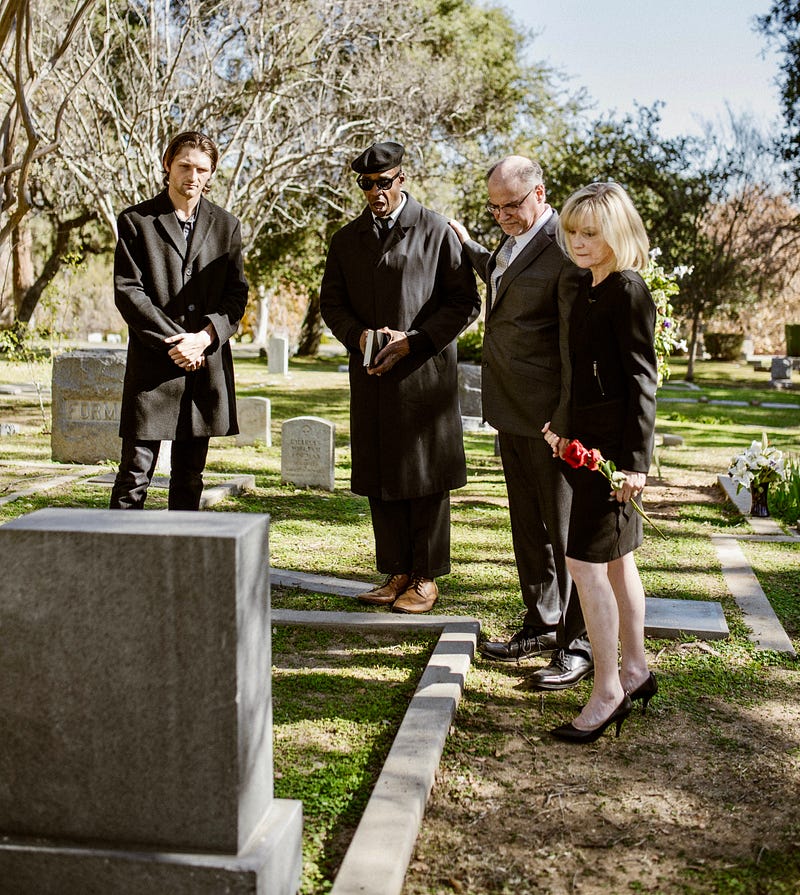
November was a tough month for me.
I delivered my sermons. Prayers for God’s comfort, I offered. At last, I stood beside the dug graves. When it was over, I fell across my bed and cried.
But then I reread an ancient man’s words, and they reignited the flame of faith within me.
It’s been a month since I did the commitment service for my brother-in-law. He was ninety-four, and his widow, my sister, is ninety-three. A week ago, I did the memorial and commitment services for my brother and his wife. They died over two years ago. Covit-19 demanded we wait till their four adult children could attend. They came from their homes in far-flung locations across our nation.
So, who is this ancient man, and what about his words?
The man is Job.
Job’s book is not about an imaginary character. He was a real person, who breathed the same air we breathe. The prophet Ezekiel listed him with Noah and Daniel as righteous men. Then too, James in the New Testament wrote of the endurance exhibited by the man, Job.
Of course, Job wasn’t the only biblical person to suffer.
There are many examples of God’s people suffering in this life. Daniel slept while the lions walked. The three Hebrew young men went into the fire and came out smoke-free.
All these men taught us this transformative truth: as God’s children, we will suffer hardships and disappointments. But the end result is our faith stands the test no matter the outcome.
The transformative truth is our faith sustains us when death robs us of family members. People to whom we have strong ties.
There are Latin terms addressing the brevity of life and what is good to remember.
“Memento Mori” means “remember you will die.”
“Memento Vita” means “remember that we still have a life to live.”
So, though our lives end in death, we know earth was never intended to be our eternal home.
Hope beyond the grave
These are the words Job inscribed four to five thousand years ago. God gave him his wish; his words are in the book.
“Oh, that my words were written!
Oh, that they were inscribed in a book! That they were engraved on a rock. With an iron pen and lead, forever!
For I know that my Redeemer lives, And He shall stand at last on the earth; And after my skin is destroyed, this I know, That in my flesh I shall see God, Whom I shall see for myself, And my eyes shall behold, and not another. How my heart yearns within me! (Job 19:23–27, NKJV)
The writers of Bible commentaries differ on who wrote the book of Job. Even some theologians differ on the meaning of this text I’m writing about.
Well, I’m not a theologian
All I know is when I read, “my Redeemer lives,” and even when my body is in a grave, I will see Him with my eyes. I sense the Spirit of God within me trembling with anticipation.
After those two funerals, I lay on my bed, emotionally exhausted. But then, I remembered my life’s fellow traveler, the man, Job.
How my heart yearns within me.
My prayer is for you to experience Job’s hope.
Read more of the essential life lessons from an experienced octogenarian in Armstrong’s Timeless Views here. It’s Free.
Here’s the story I wrote when the last of my four brothers died.


