
The Man Who Sold the Apocalypse
Was Christian doomsday writer Hal Lindsey just a hustler?
In 1971 he published a book that said a spiritual event called “the Rapture” would happen soon. Christians would be lifted up to Heaven, as everyone left behind would suffer.
Hal Lindsey has been one of the more successful writers in history, and one of the most recognized names in America’s largest religion. I’m looking over his life. Married four times. In 1977, Publisher’s Weekly finds him driving around L.A. in his Mercedes Benz. They report:
“Lindsey maintains a suite of offices in a posh Santa Monica high-rise for the personal management firm that sinks his royalties into long-term real estate investments.”
Let’s meet Hal Lindsey.
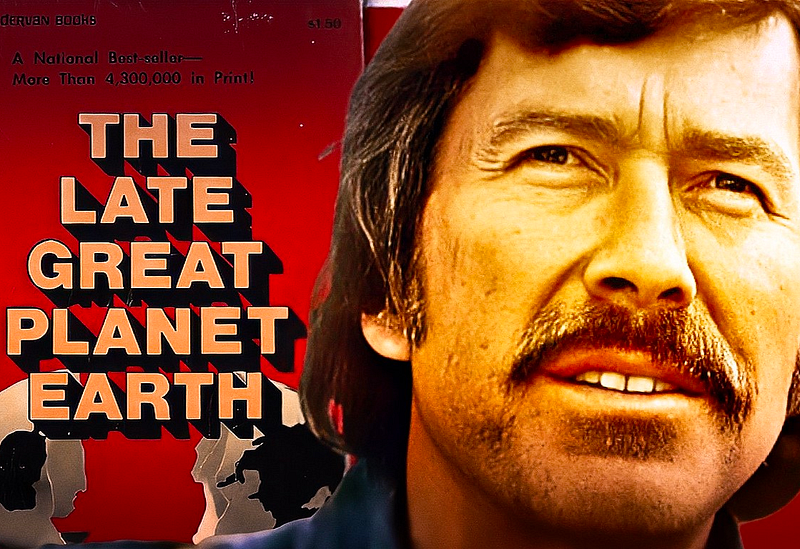
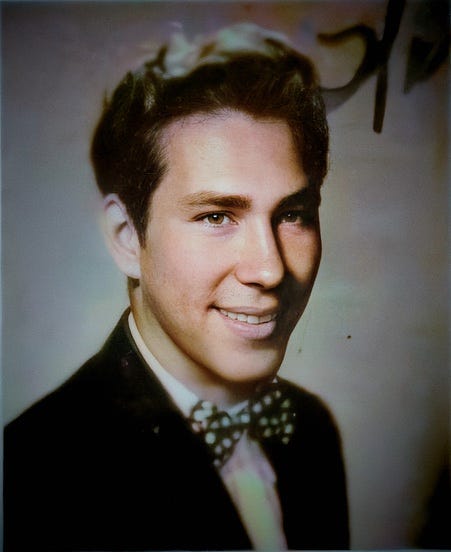
He was born in Houston on November 23, 1929.
Over the years he gives a ‘testimony’ of his faith with some biographical information. His parents weren’t really Christian, he explains, but he wanted to be! As a teenager he got baptized — three times. He kept sliding back into ‘sin’. After his third baptism, he dropped into it completely.
He writes: “I started in big with booze and sex, and although my conscience did bother me at first, I finally got to where I could do these things with no conscious sense of guilt at all.”
To be Evangelical is to imagine a noxious pollutant—‘sin’—around the planet. That’s why men misbehave, drinking and having sex. So then ‘religion’ is needed to counteract the sin, and get back to good behavior.
Lindsey went to college, partied for two years and dropped out. About to be drafted into the Korean War, he enlisted in the Coast Guard. He was stationed in New Orleans, and stayed there. For four years, he worked as a tugboat captain, devoted to “wine, women and song…”
He married, and divorced.
All he says is that she “found someone she liked better and divorced me.” At age 26, he realized he was somebody “no one ever took seriously,” and saw his life as “the pattern of a loser, a guy with more than enough talent who never seemed to get it together.”
He tried religion again — and this time it took. Reading his Bible constantly, he says, he moved home to Houston to live with his parents, who were stunned by his amazing grace. Lindsey read the story of Moses in the book of Exodus — and was contacted by God himself. “You’re going to be another bush through which I’m going to speak,” the deity said.
In 1956, amid the Suez Canal crisis, a friend invited him to a lecture on Bible prophesies. The speaker was a local pastor named Robert Thieme, Jr., and Lindsey started attending Thieme’s church.
If that’s his usual story, in a recent blog post, Lindsey says he’d been invited to go the church when suffering another bout of “depression.” The sermon series he’d gone to hear was on young men needing to grow up.
Had the young man needed a sense of fatherly connection and personal discipline? What he got was Evangelical apocalyptic theology.
Thieme was a notorious character.
Military in bearing, racist and authoritarian to an extreme degree even for Evangelicals, Thieme gave off the idea of having answers to all matters of life —and followers got them in his thousands of speeches.
Lindsey found in Thieme a “spiritual father” — he’ll call him “Dad.”
He writes in a later book dedication: “Both his teaching and his personal discipling changed me from an unstable misfit with no ambition into a man driven with a holy passion to serve the Lord.”
It would appear that Thieme saw a disciple of his own ideas, and pulled strings to bump him a few steps ahead. In 1958, without an undergraduate education, Lindsey was admitted into Thieme’s alma mater, Dallas Theological Seminary.
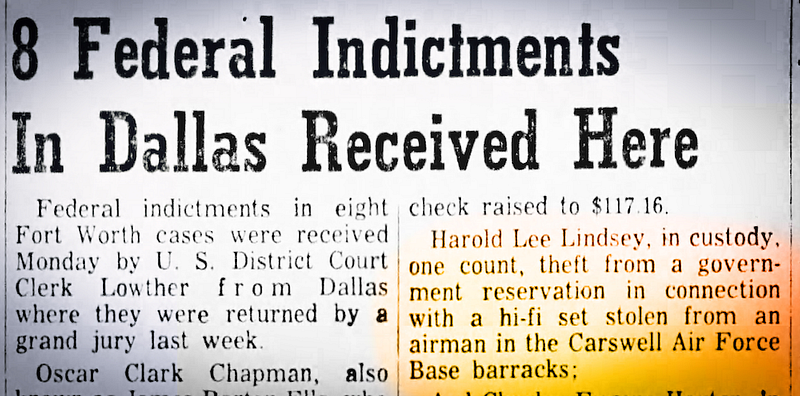
But how well was the Christianity actually going? No other guys named ‘Harold Lee Lindsey’ come up in newspaper archives in Texas at the time, but one was arrested in Dallas in 1958 for stealing a stereo.
For all claims to be a prophet, Lindsey’s books were just ideas he heard in school.
His DTS classmates would later say that The Late Great Planet Earth was “repackaged” lecture notes.
At the time he was in school, however, Lindsey had no particular interest in prophesy. The push in the Evangelical world was evangelism. The word of the day was ‘crusade’—and he got on board that train.
In his junior year, he found wife #2. Jan Houghton worked for the messaging machine, Campus Crusade for Christ. He got hired too, and when he graduated, they jetted out to California.
Lindsey appears to have been ordained. Early on, he is regularly identified as a ‘Rev.’, and performed marriages. This is a man trained by his religion and operating with the blessing of his fellow clerics—who’d decided to just overlook his first marriage.
He worked with Campus Crusade a few years.
It was like a corporation focused on the business of getting conversions. Lindsey had bigger ideas. In a 1976 interview, he recalls that he’d gotten the “greatest response whenever I would lecture on the Second Coming.”
So he reinvented his brand into “1960s spiritual guru” and opened his own ‘Christian’ leadership training school. “We are seeing possibly the greatest disciples since the first century,” he says of it in 1971. “I believe God is raising up the last living remnant before the return of Christ.”
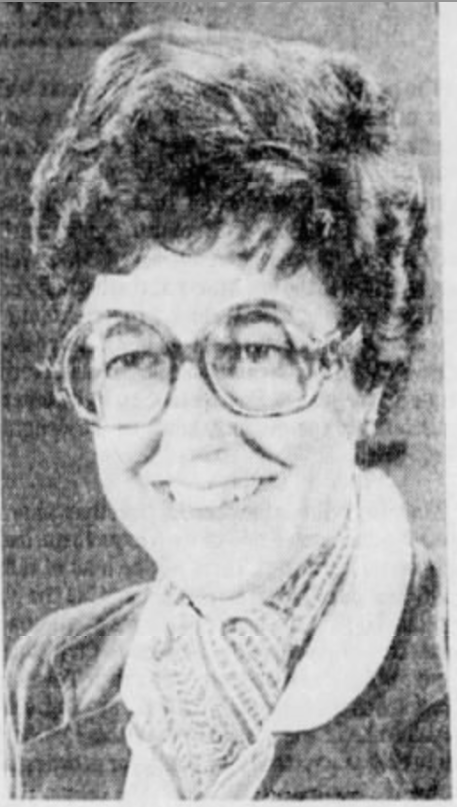
And he hired a ghostwriter to write his first book. Lindsey’s own language skills, as he’ll note, are quite poor. The Late Great Planet Earth was the first book by ‘C.C. Carlson’, as she’s named on the cover.
Carole C. Carlson, then in her mid-40s, was a Christian journalist and mother of three. Her obituary notes she’d end up writing and ghostwriting some twenty books, including for Billy Graham. The male names on the cover were just a sexist theater. A woman was writing everything.
Lindsey’s writings were implicitly female.
The Late Great Planet Earth was not like a ‘religious’ book as churned out by clerics. As the scholar Melani McAlister explains:
“LGPE was a very different sort of narrative than its predecessors, which were often academic, inbred books aimed at audiences of the already-converted.”
Carlson had a ‘voice’ that was slangy, smart, funny and media-savvy, like a hip friend explaining the hip references to you. Even Jesus is explained! Then she explained Evangelical apocalyptic theology, re-casting it all like an exciting Sci-Fi movie playing out before your eyes.
Then Lindsey went out to sell the end of the world—with a smile.
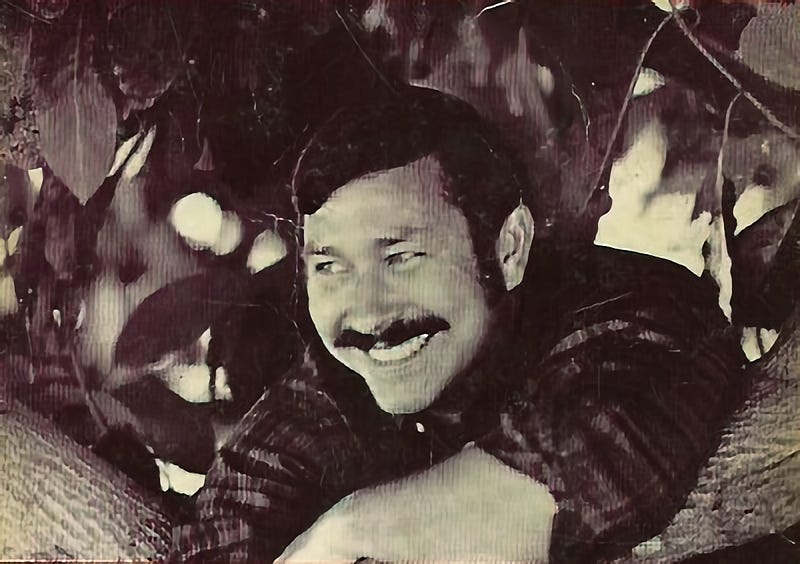
The book was marketed through churches and Christian bookstores.
Thousands—then millions—were reading about concepts like ‘Armageddon’, the horrible battle between Jesus and the forces of darkness. The ‘Rapture’ was when all the people of God were lifted up into Heaven.
Lindsey had all the players mapped out, saying the prophesies were like tomorrow’s newspaper! The state of Israel being established in 1948 had started the countdown to Jesus’ return. Russia was sure to attack the Middle East. It said so, he assured, in the book of Ezekiel.
It was exciting, and terrifying. Jesus was soon to return! And there’d be “billions of dead” and “rivers of blood.” And earthquakes! All you had to do is look at the Middle East and imagine the ungodly struck down by divine wrath — as Evangelicals watch from the sky.
Though Lindsey seemed less and less Evangelical all the time. In interviews he’d say that members of other religions could also be ‘saved’. That’s not Evangelical. He explains in 1971:
“God gives every man light about himself so he knows there must be a personal God and if they respond to this light He will save them.”
He wasn’t calling himself a “prophet” early on.
He adds in the 1971 interview: “I do not consider myself as a prophet but from what I learn from scientists and from the words of Jesus regarding the signs of his second coming, I believe the end is extremely near.”
But new storylines are distributed as required, in book after book — often with ‘C.C. Carlson’ as co-author, though her name appears and disappears.
By 1975 he’d rejected a Christian label. “I believe in Jesus Christ,” he says. “But I am not a religious person in that I belong to any religious order or anything.”
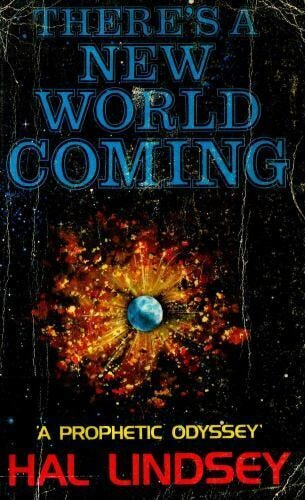
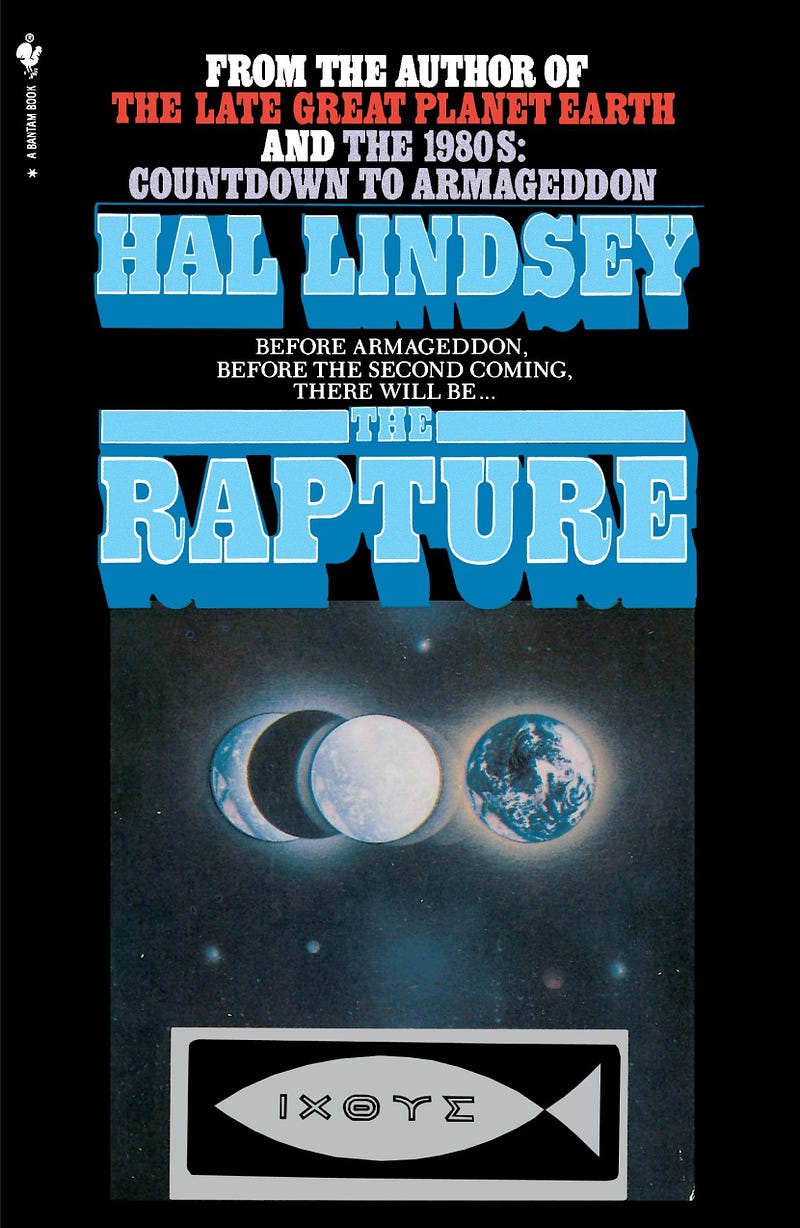
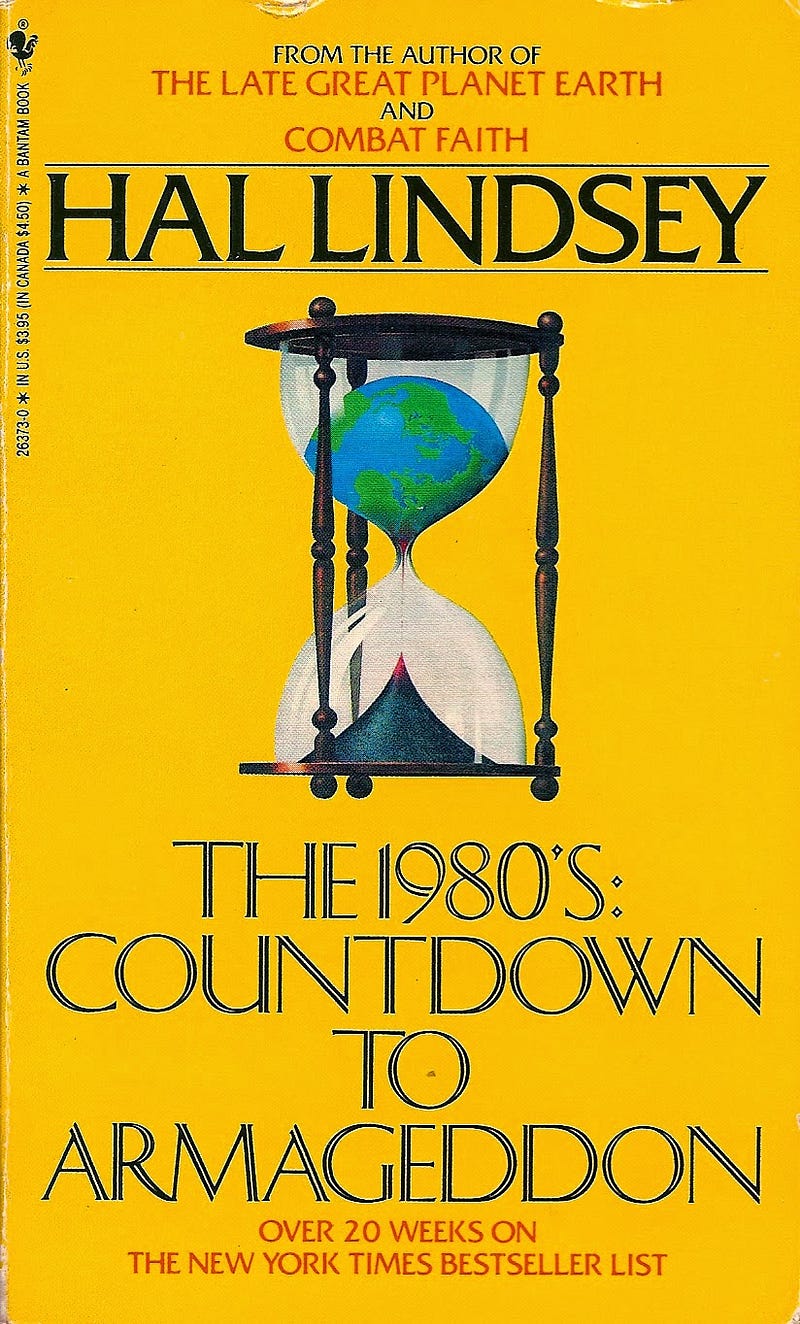
Wife #2 exits, and Wife #3 arrives.
This one is said to have been some twenty-five years younger. Lindsey himself never writes about his family or his life. The three daughters he had with Jan are mentioned only in one later book dedication.
Lindsey became something of a Pop Culture icon. His end-of-the-world act seems to be present in David Bowie 1972 song “Five Years,” off The Rise and Fall of Ziggy Stardust and the Spiders from Mars—though the narrator there, unlike in Lindsey’s books, is mournful.
In 1978, Bob Dylan converted to Christianity, largely under Hal Lindsey’s spell. The Late Great Planet Earth became Dylan’s ‘second Bible’. From 1979 to 1983, Dylan’s three Christian albums, Slow Train Coming, Saved and Shot Of Love, are full of Lindsey’s terms.
Dylan’s talk between songs in concerts filled with speeches like: “Because Russia is going to come down and attack the Middle East. It says this in the Bible…”
Wife #3 exits, Wife #4 arrives.
She’s even younger. Though ordinary clerics would face problems in divorce dramas, Lindsey keeps it all quiet. And when his fans are asked about it, they laugh it off. A rare accusation of ‘adultery’ gets responses like:
“So what if he’s been married 4 times? He’s brought many people to Christ.”
Was that was the issue all along? He was always working as an evangelist. Lindsey says in 1995: “My goal isn’t to scare the hell out of people, but to keep them from going there.”
And Billy Graham, too, would have speeches and books about the Rapture and the Second Coming. It was the apocalypse horror story which packed people into the churches.
The prophesy talk got them all politically agitated.
Evangelicals were accustomed to ignoring current events—that was just the ‘world’ they were ‘separate’ from. As Melani McAlister explains:
“Lindsey’s detailed analysis of the world situation implied that white evangelicals needed to pay careful attention to politics — an unusual position in 1970.”
And that set up the next big movement of the Evangelical world: a little something called the ‘Religious Right’.
Did it all boil down to—sex?
Lindsey had a disastrous record of relationships with women, and was taught that his apparently unmanageable feelings were ‘sin’. As his personal life lurched from disaster to disaster, he started selling a fantasy about the world ending.
Was his message ever even Christian? It had all been based on terror, anxiety, and stoking conflict—when the teaching of Jesus was to be a ‘peacemaker’.
The messiah had called himself ‘the Life” — but these people were too busy dreaming of mass carnage and death to notice. 🔶


