avatarAnne Bonfert

Free AI web copilot to create summaries, insights and extended knowledge, download it at here

2875

Abstract

nd they usually walk on is the shape of their hooves. These hooves are broader than usual at antelopes so they won’t sink when walking on sand and crossing dunes.</p><figure id="92b7"><img src="https://cdn-images-1.readmedium.com/v2/resize:fit:800/1*KminBJvlin5UgvNpDIF08g.jpeg"><figcaption></figcaption></figure><figure id="416d"><img src="https://cdn-images-1.readmedium.com/v2/resize:fit:800/1*_dPnfHQ_ZSpMI2XG4riLlQ.jpeg"><figcaption><b>Lone oryx bull running across the dry plains in front of the red dunes of the Namib desert. </b>| Credit: <a href="https://medium.com/@anne.bonfert">Anne Bonfert</a></figcaption></figure><h2 id="0b7c">The habitat of the animals</h2><p id="8b34">The oryx is found in most countries in southern Africa but embodies the spirit of the <a href="https://www.krugerpark.co.za/africa_oryx.html">Namib desert</a> since it made this lifeless place to its home like no other animal. You’ll often see them standing underneath tiny thorn trees which offer barely any shade. But enough for the gemsbok.</p><p id="3a40">Build from incredible strength and endurance while only feeding on the sparse desert grass the oryx has something to show for. It can raise its own body temperature from 35 to 45 degrees Celcius in an effort to reduce sweating and loss of moisture. Furthermore, does it use evaporative cooling through the nose and concentrates its urine to absorb all moisture possible.</p><p id="97b2">If the oryx does not have access to water it will dig for succulents during the dry season and eat the water-containing <i>tsama melons </i>found on the desert soil.</p><p id="33d1">While the oryx antelopes mainly roam the wide-open grasslands they also live in more mountainous terrain like the Namib Naukluft mountains or make the dunes of the Namib desert or those in the Kalahari to their home.</p><figure id="fa54"><img src="https://cdn-images-1.readmedium.com/v2/resize:fit:800/1*VipFXbTOsfVvv9oV-DO3HQ.jpeg"><figcaption><b>Oryx standing in the shade of an acacia tree in the Namib desert. </b>| Credit: <a href="https://medium.com/@anne.bonfert">Anne Bonfert</a></figcaption></figure><p id="e542">Predators found in those areas such as lions, leopards, cheetahs, spotted hyenas, and wild dogs are a danger for the gemsbok and cause a high mortality rate among the young calves.</p><p id="c55b">But the oryx aren’t defenseless animals. On the contrary, they are classified as the most dangerous antelopes due to their spiky horns and lone bulls are known to have killed lions before.</p><p id="2aaf">These horns aren’t just used to defend themselves and fight off predators but have several advantages for the animals. They can use those horns to lift up fences and crawl underneath them after lifting their head. I’ve seen that on several occasions and it is quite an impressive behavior adjusting to the countless fences made by mankin

Options

d cutting through their territory.</p><p id="d14d">While it is common to spot an oryx even at the hottest times of day it is usually just one or two animals I spot in the distance. But as mentioned I’ve seen larger groups of them as well.</p><figure id="bcd9"><img src="https://cdn-images-1.readmedium.com/v2/resize:fit:800/1*dQxPVtnSYB1N622VztZCbA.jpeg"><figcaption><b>A group of oryx drinking at a water hole next to other antelopes and zebras in Etosha, Namibia.</b> | Credit: <a href="https://medium.com/@anne.bonfert">Anne Bonfert</a></figcaption></figure><h2 id="b0f0">Different species</h2><p id="9b05">The oryx is the national animal of Namibia and also has the largest population in the country. Next to the South African Oryx, there are more species of the oryx antelope to be found. One of them being the East African oryx which is the closest one to the gemsbok.</p><p id="34cd">The Arabian oryx became extinct in the wild in the early 70s but got reintroduced in several countries on the Arabian peninsula and shows now a population of around 1000 animals in the wild.</p><p id="48a2">The scimitar oryx, home to North Africa, is said to be extinct in the wild despite sources have been reporting surviving populations in Niger and Chad.</p><figure id="239b"><img src="https://cdn-images-1.readmedium.com/v2/resize:fit:800/1*JZt9y4zuzXFfspMgQcjwbQ.jpeg"><figcaption><b>Oryx drinking at a water hole in Etosha, Namibia. </b>| Credit: <a href="https://medium.com/@anne.bonfert">Anne Bonfert</a></figcaption></figure><h2 id="f21b">Final words</h2><p id="aa60">Despite their common appearance in Namibia, I absolutely adore these majestic animals and always appreciate a sighting. They represent desert life for me and I will always connect them to the harsh living conditions of the Namib desert.</p><blockquote id="d8df"><p>Read more about <a href="https://readmedium.com/facts-about-africas-wildlife-539a417b236f">wildlife</a>, <a href="https://readmedium.com/animals-of-africas-wilderness-24382c31370f">photography</a> and <a href="https://readmedium.com/when-flowers-bloom-in-the-desert-e97334be738d">nature writings</a> by signing up for my <a href="https://mailchi.mp/9dd74c10ac6b/signup-mydreamofafrica">email list</a>.</p></blockquote><div id="80f5" class="link-block"> <a href="https://readmedium.com/the-most-beautiful-wildlife-pictures-i-ever-took-2c33433cdc10"> <div> <div> <h2>The Most Beautiful Wildlife Pictures I Ever Took</h2> <div><h3>A collection of photographs</h3></div> <div><p>medium.com</p></div> </div> <div> <div style="background-image: url(https://miro.readmedium.com/v2/resize:fit:320/1*-9PzFRvi-pwe7LpKK5TWnw.jpeg)"></div> </div> </div> </a> </div></article></body>

WILDLIFE PHOTOGRAPHY

The Majesties of the Desert

Oryx antelopes and their survival skills
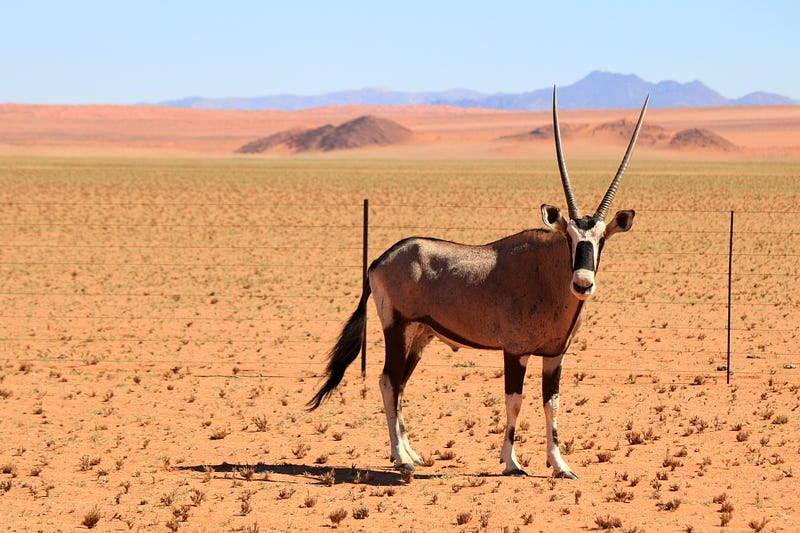
Oryx in the Namib desert, Namibia. | Credit: Anne Bonfert

It’s an animal that can survive in the harshest conditions of the driest landscapes on earth like no other. The oryx antelope. With several adaptations to heat and the lack of water, they live where you don’t think anything can survive.

The oryx is my favorite antelope. I find their appearance somehow majestic. The different colored fur. The black tail. And of course those spiky horns. They run elegantly across the vastness of desert landscapes without burning their hooves on the hot sand.

Sometimes they just stand there and stare at you. Right next to the road. Just to jump off and run away in the very next second. You usually get to see them alone. They rarely appear in large numbers but this year I got to see them in families and even herds. It’s interesting to see what a good rainy season can bring out.

I got to see lots of young ones too. Those who still have to learn a lot in order to survive when the rain doesn’t come for a year, or two. These animals know exactly where to find water even if it hasn’t rained in years. There are some hidden spots they’ll always return to for water or plants carrying moisture.
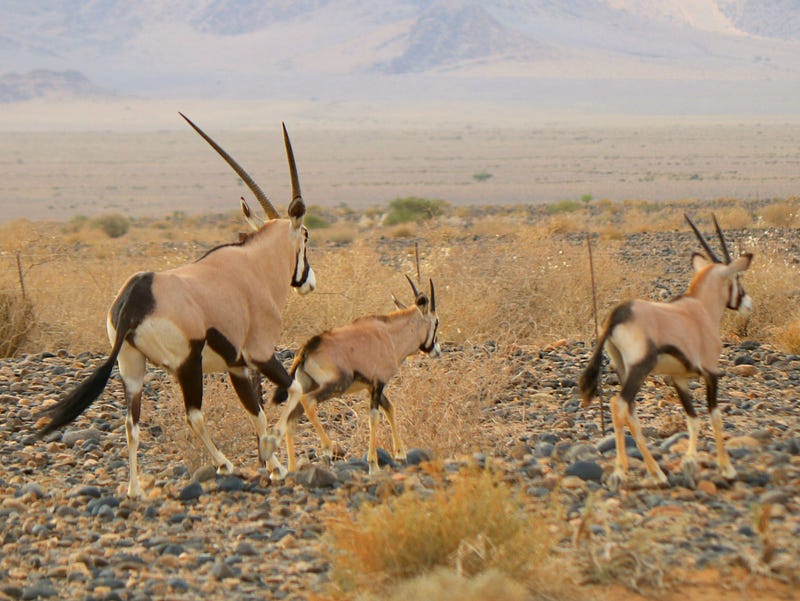
Oryx with young calves in the Namib Naukluft Mountains. | Credit: Anne Bonfert

The South African Oryx

The South African Oryx or Ibex is also known under the name of Gemsbok and is capable of withstanding temperatures like 45 degrees (Celsius) without any problems and without the need for lots of water. This why the animal is a symbol of tenacity and frugality.

Due to the very barren environment oryx live in, they do not group up in large herds and are usually 6 up to 40 animals in a small group. That way they can roam tirelessly through the dry landscape in search of food and water.

They eat at night or early in the morning where plants have up to 42 percent of humidity in them in comparison to barely 1 percent humidity during daytime. This allows them to live off the water in the plants in case they do not have access to a water hole.

Another adaptation of their life in the desert and the sandy ground they usually walk on is the shape of their hooves. These hooves are broader than usual at antelopes so they won’t sink when walking on sand and crossing dunes.
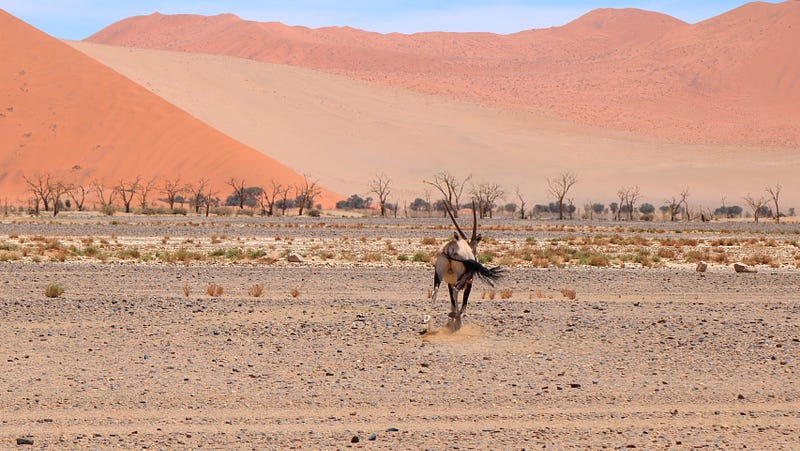
Lone oryx bull running across the dry plains in front of the red dunes of the Namib desert. | Credit: Anne Bonfert

The habitat of the animals

The oryx is found in most countries in southern Africa but embodies the spirit of the Namib desert since it made this lifeless place to its home like no other animal. You’ll often see them standing underneath tiny thorn trees which offer barely any shade. But enough for the gemsbok.

Build from incredible strength and endurance while only feeding on the sparse desert grass the oryx has something to show for. It can raise its own body temperature from 35 to 45 degrees Celcius in an effort to reduce sweating and loss of moisture. Furthermore, does it use evaporative cooling through the nose and concentrates its urine to absorb all moisture possible.

If the oryx does not have access to water it will dig for succulents during the dry season and eat the water-containing tsama melons found on the desert soil.

While the oryx antelopes mainly roam the wide-open grasslands they also live in more mountainous terrain like the Namib Naukluft mountains or make the dunes of the Namib desert or those in the Kalahari to their home.
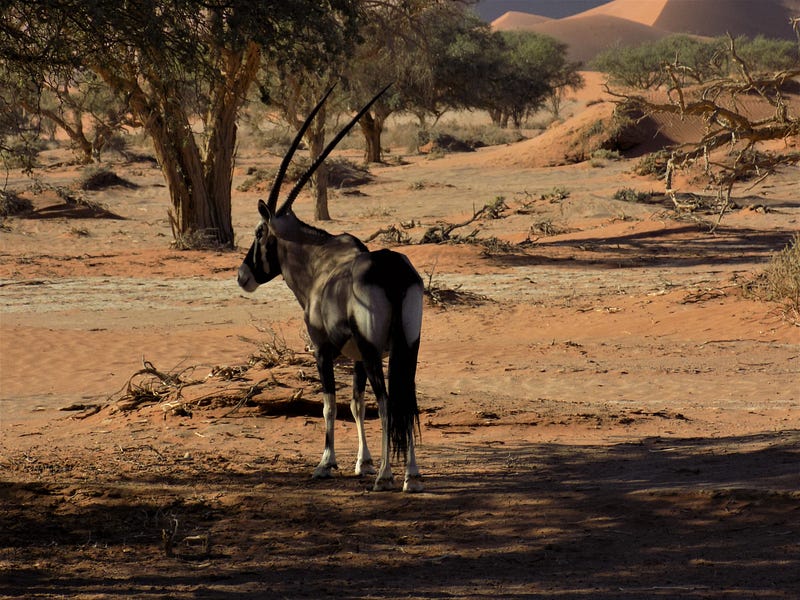
Oryx standing in the shade of an acacia tree in the Namib desert. | Credit: Anne Bonfert

Predators found in those areas such as lions, leopards, cheetahs, spotted hyenas, and wild dogs are a danger for the gemsbok and cause a high mortality rate among the young calves.

But the oryx aren’t defenseless animals. On the contrary, they are classified as the most dangerous antelopes due to their spiky horns and lone bulls are known to have killed lions before.

These horns aren’t just used to defend themselves and fight off predators but have several advantages for the animals. They can use those horns to lift up fences and crawl underneath them after lifting their head. I’ve seen that on several occasions and it is quite an impressive behavior adjusting to the countless fences made by mankind cutting through their territory.

While it is common to spot an oryx even at the hottest times of day it is usually just one or two animals I spot in the distance. But as mentioned I’ve seen larger groups of them as well.
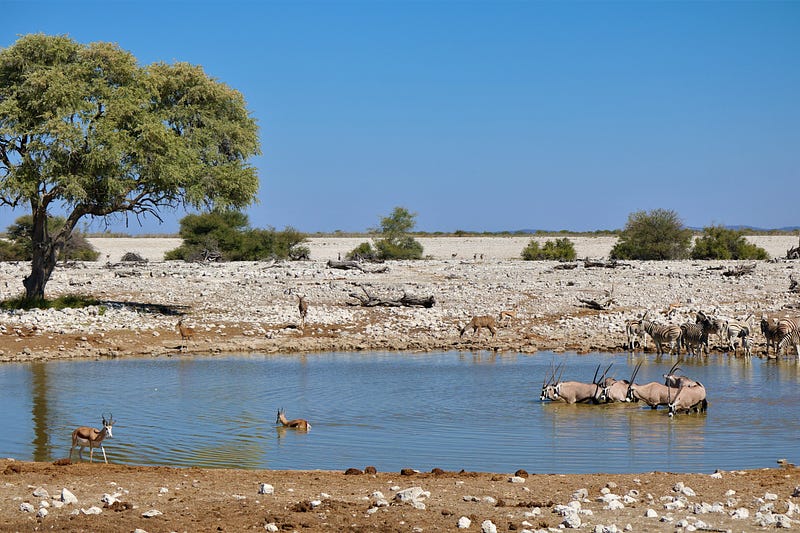
A group of oryx drinking at a water hole next to other antelopes and zebras in Etosha, Namibia. | Credit: Anne Bonfert

Different species

The oryx is the national animal of Namibia and also has the largest population in the country. Next to the South African Oryx, there are more species of the oryx antelope to be found. One of them being the East African oryx which is the closest one to the gemsbok.

The Arabian oryx became extinct in the wild in the early 70s but got reintroduced in several countries on the Arabian peninsula and shows now a population of around 1000 animals in the wild.

The scimitar oryx, home to North Africa, is said to be extinct in the wild despite sources have been reporting surviving populations in Niger and Chad.
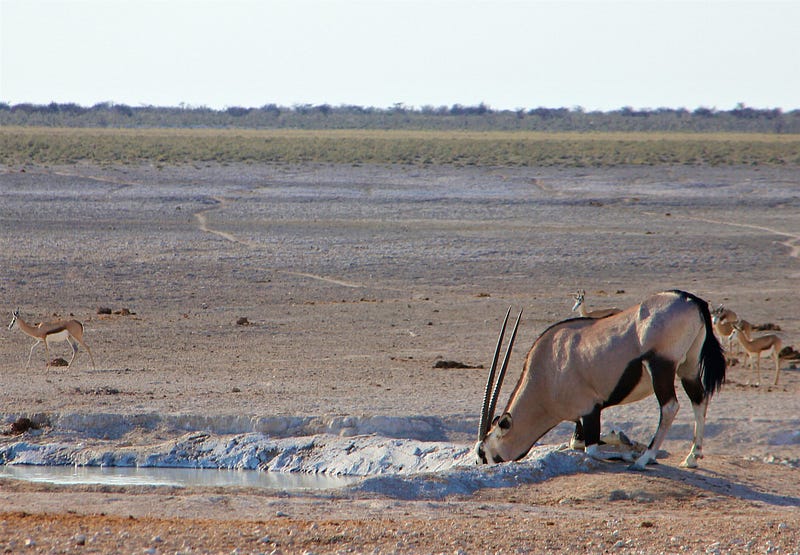
Oryx drinking at a water hole in Etosha, Namibia. | Credit: Anne Bonfert

Final words

Despite their common appearance in Namibia, I absolutely adore these majestic animals and always appreciate a sighting. They represent desert life for me and I will always connect them to the harsh living conditions of the Namib desert.

Read more about wildlife, photography and nature writings by signing up for my email list.

Travel
Nature
Wildlife
Africa
Nature Writing
Recommended from ReadMedium