
The Main Differences Between Portugal and the USA.
If you’re considering moving to Portugal, embrace yourself for a journey of discovering a new way of life and for some cultural shocks.
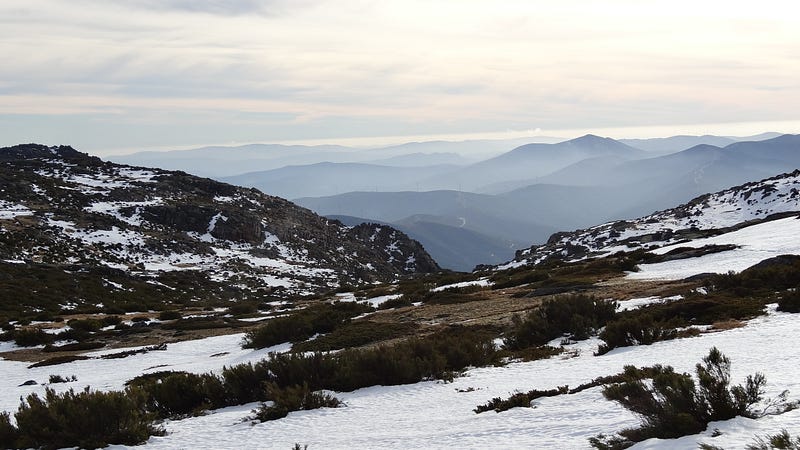
More and more Portugal has been hovering on the radars of those looking to escape their country, especially certain Americans striving to change their lifestyle and seek a more peaceful place to live.
However, moving to Europe — often thought of more as a super country than a continent — can be both challenging and confusing.
Europe, a roughly small piece of land, is nevertheless home to an immense diversity of different languages, cultures, and experiences. So even though there are some similarities between them, each country has its own very different culture, and Portugal, one of the oldest, is no exception.
In this article, I have gathered some of the main cultural differences between America and Portugal, also trying to warn about Portugal’s do’s and don’ts.
So, what differences stand out the most when an American chooses Portugal to live in?
Liberal policies
Portugal had and has had a long road to modernization. The 20th century was a troubled time in the country. It saw an almost millennial monarchy being replaced by a Republic, which saw itself in 1926 being replaced by a fascist dictatorship that would last until 1974.
You can find more details here:
However, Portuguese democracy, now 48 years old, is one of the best examples of how, in a short period, a country that emerged from the depths of the Middle Ages adopted a new world.
Due to leftist and social (not to be confused with socialist) policies made Portugal one of the first European countries to legalize homosexual marriage, allow abortion, and not penalize anyone for drug use.
For those who are interested, this short clip from Michael Moore’s film may be elucidative of these policies.
Portugal is, in the eyes of Americans, politically a liberal country. However, it depends on where you come from. Someone from New York or California might not think so, but no doubt someone from the United States or South interior might be shocked that even Democrats can be seen as a bit conservative to the Portuguese.
Portugal is a welfare state, and the government cares about the safety and health of its citizens. The national health service is free and for all, and told in the first person by my American students living in Portugal, it is as good or better than the service in the United States.
Alcohol and nightlife
One of the aspects that most surprises Americans is that you can buy alcohol in any market and purchase wine, beer, and whiskey in the same place where you buy pasta, rice, and vegetables.
Alcohol consumption on the streets is also allowed, and the nightlife, especially appealing in the summer, invites one beer, or more than one, sitting on a park bench with friends.
I vividly remember what a shock it was, an American friend of mine was dumbfounded when I told him he could drink his beer on my car seat while I was driving.
Portugal is not Spain… as it is obvious!
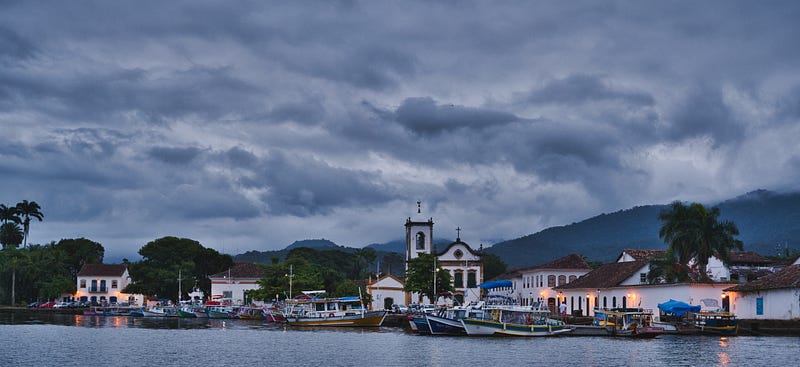
It may be evident to me, but sometimes it isn’t to everyone. However, one thing that hurts the Portuguese soul the most is being confused by their Spanish neighbors.
Worse is to be asked, ignoring history, “When did Portugal split from Spain?”
Uhr….
Well, Portugal was born earlier than Spain, in 1143, when there was no Spain and the neighboring country, a bit like today, was still scattered in several different territories without defined borders.
Saying “gracias” instead of “obrigado” — our word for thanks — in Portugal is something we don’t like. And let’s say if you come to live in a country, at least learn the word to say thank you in the original language.
Usually, the astonishment is great when you realize that the two words are nothing alike!
Education in Portugal
It is interesting to think how the word “educação” in Portuguese can be translated in two different ways into English “education” or “politeness.”
In the Portuguese-speaking world, education includes not only school education but a person’s manners, behavior, and how one behaves towards others.
Now, since much of what we understand as “normal” is socially constructed, politeness differs everywhere.
In Portugal, it is seen as rude or impolite to someone who, when seeing another person, either on the street or in a waiting room, does not greet by saying “Bom dia” (good morning), “Boa tarde” (good afternoon) or “Boa noite” (good evening).
The Portuguese are generally more reserved than the Spanish, which many Americans don’t know. Even though our language seems indecipherable, we seem quieter, speak more softly, and are harder to give confidence to.
As I explained in an article before, this all still comes from the time of 48 years of fascism, where prohibitions left us suspicious and on alert.
That said, it is not common for us to say “olá/ hello” to anyone, but only when we already know them. However, good morning, good afternoon, and good evening are the rules of good manners.
When in doubt, when someone says one of these words to you, respond in the same manner.
Guns
Such a hot topic now in the United States and possibly one of the biggest reasons that make someone come to Portugal; it’s not so hot here.
Portugal is listed as the third most peaceful country in the world. Personally, I have never seen a gun in front of me, nor do I want to. Guns are generally bought by hunters who belong to recreational clubs and require a gun license. And amazingly, in Portugal, there is no argument about having a gun for self-defense.
What a shock, right?
The paranoia about guns, which I see so typically in the United States, is not something that exists in Portugal. Of course, like in any country, there are isolated cases, but the norm is that nobody has guns.
One of these days, an American student of mine who lives in Portugal told me that he was locked in his house and had to call the fire department. Innocently, my first reaction was “why did you even lock yourself in the house?”.
We both suffered a culture shock right there.
I didn’t immediately understand why someone would be inside the house and lock himself in, especially if you can’t get it open from the outside when the door is closed. He suffered a culture shock because he thought he was incapable of feeling safe with the door unlocked.
I think this says a lot about the two cultures.
Many more aspects shock an American when he comes to live in Portugal. There are undoubtedly some very boring things, the pace of life, the bureaucracy, the notion of time that makes everything take longer…
There are no perfect countries, but there are some that can tell us more than others.
As a Portuguese, I am the first to criticize my country for the bad things that exist here, but now in my almost 32 years of life, I am beginning to see the beauty of a land that, for many years, I rejected.
Hello, I’m Araci, a female writer from Portugal navigating her thirties. If you have enjoyed this article, maybe you would like to buy me a coffee here https://ko-fi.com/joanaaraci
I write on Medium about politics, culture, pop culture, society, feminism, and womanhood. I hope you’ve enjoyed this article and that it helped you out!
You can also find more about me here:
Are you considering joining Medium for only 5$ a month? If so, consider doing it through my referral link:
Your membership fee directly supports me, Araci Almeida, and other writers you read. This way, you are helping me out while you’ll also get full access to every story on Medium.
Thank you for reading me.


