The Prohibitions of Fascism in Portugal
We were forbidden to live, and 48 years later, this time period has left its legacies.
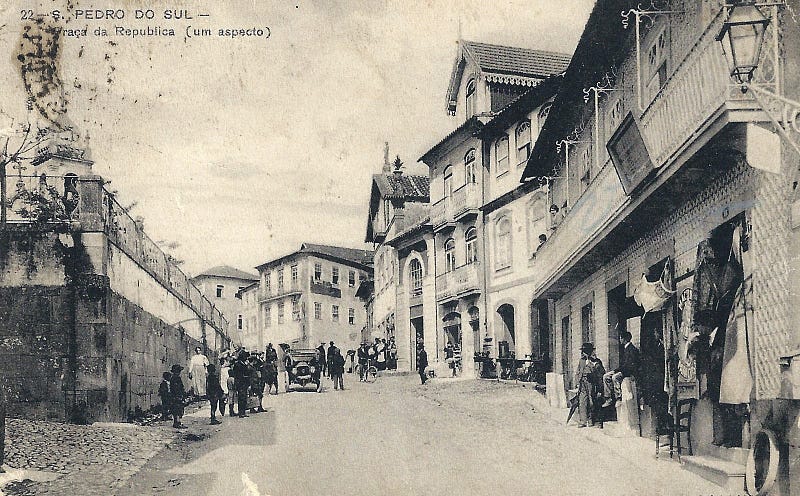
Family Sundays are a time to visit the grandparents, be with the family, and mentally prepare ourselves for the work week ahead. Several books caught my attention this weekend, and I couldn’t resist buying them.
One of them, entitled “Era proibido” (It was forbidden), written by António Costa Santos, grabbed me immediately by the exciting and unknown facts about the rules, prohibitions, and impositions that for almost fifty years changed Portugal, its culture, and mentalities and impacted generations to come.
These absurd prohibitions existed during one of the most unfortunate times in Portugal, the fascist dictatorship that began in 1926 with the military dictatorship and was affirmed in 1933 with Salazar’s rise to power.
It was also in 1933 that my maternal grandfather was born. Flipping through the pages and being incredulous at the most absurd prohibitions, from the ban on kissing in public, drinking coca-cola, wearing a bikini, walking barefoot, using a lighter without a license, shaking the dust, or a woman entering a church without a veil… there were many more.
So I visited my grandfather, who, in his 88 years of life, including 41 years of fascism, could confirm and give me more details about its veracity.
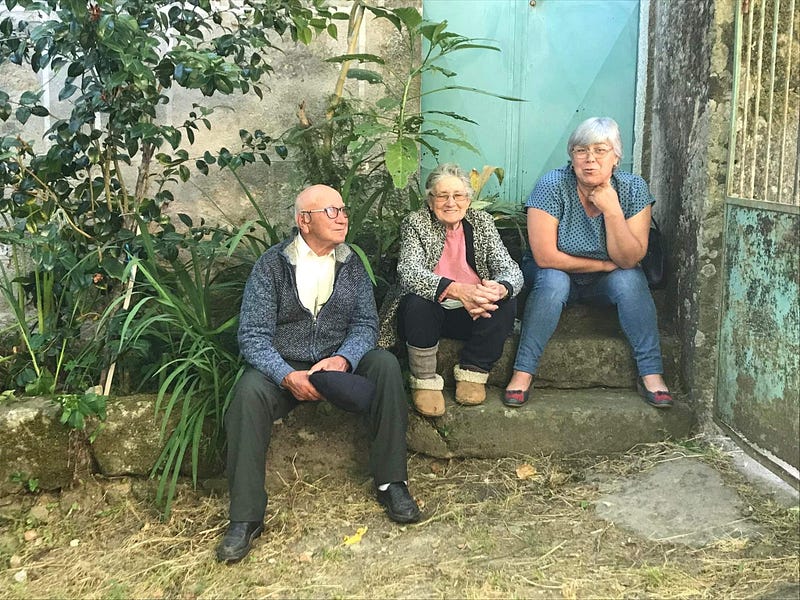
On the way to meet him, on the steps of my paternal grandparents’ centennial house, my aunt Lola, mother, and grandmother were already chatting together. But it was my grandfather I was longing for because even in this detail, the dictatorship that ended 48 years ago still leaves its legacies, namely the general absence of interest in such matters from women, who were the primary victims of the lack of access to education.
I saw him arrive, still walking with his head held high, wearing his glasses, and without any problem, he sat down on one of the stones near the stairs. I sat close to him and, curious as I was about the subject in hand, began to spill the beans:
“Grandpa, is it true that it was actually forbidden to walk barefoot in the street?” — I asked him.
My mother was not indifferent, and she joined in the conversation by listening.
“Yes, it was. Well, here in the village it was easier, there wasn’t so much control. But when we went to the town, we would walk until there barefoot, through the forest, with our shoes in our hands, and we would put them on only when we were arriving” — he told me, almost laughing at such poverty, in a mixture of nostalgia for the youth which has already passed, but not for the time when he lived it.
“It was a misery,” he concluded. And I was ready to ask him the question when he read my thoughts and said, “we clearly went with the shoes in our hands to spare them, right? We only had one pair. But when we got there, no one dared to go barefoot. There were always informers, someone who worked for the priest. You know how religion and government were at that time. They went hand in hand.”
Then my attentive mother intervened, recalling memories of her childhood, stepped in:
“What a thing… I remember dad shouting at us not to go barefoot, that the police would take us to prison, but I thought he was joking, that it couldn’t be true”.
The innocence of a child reveals well the absurdity of the rules, to the point of seeming like something made them up, and nothing of that could be indeed real.
But the truth is that it was forbidden to go barefoot because you didn’t want to show poverty in one of the poorest countries in Europe.
My grandmother, who was much more insistent that I ate the ham she had now set on the table inside, and wanted to me forget about old stories, only intervened once or twice, saying that they were used to going barefoot and that their feet had a rigid sole and that it was all right.
“Even manure I have crushed barefoot,” said my grandfather, and going on, rummaging in the trunk of his memories, he commented on the prohibition of the use of the lighter.
“I had an old lighter, but without gas. So I put oil in it with cotton wool. I arrived at Edgar’s café”, he tells me, almost whispering the following words:
“You could only get in there wearing a suit with a tie and well dressed. Not just any bum could enter there. But I got there, appropriately dressed, and I took out a homemade lighter in front of everyone. It went off with the cotton and the oil, and bang… there was a big, black flame that scared everyone. Everyone ran immediately, some pointing out their finger at me and saying:
“Look, Mata, we’ll call the police,”. There was always some idiot that everyone knew would throw you in.
“Look, Telo will tell the priest,” and you’ll end up in jail,” — he told me, laughing about his audacity that could have cost him dearly.
About kissing in public and how a woman should cover her head in church, they both talked about it. My grandmother didn’t know there were rules, but she put a scarf on her head because “it was the culture. Everyone did it”.
So, from so much prohibition and fear, since everything seemed to be forbidden, people themselves followed what they saw.
“We didn’t kiss in public because that’s not nice to do either,” my grandmom told me, not realizing how much the rules made up the culture.
“But hey grandpa, how did you date her?”, I asked him perhaps for the first time in my whole life.
“I would go to Mass and sit in the church choir, and your grandmother would be down there. Then I would start snapping my fingers. That was the sign that I was there. At the end of Mass, we would find ourselves far away from there. But the rest I won’t tell”, he told me, laughing.
Paraphrasing the book that I’m halfway through reading, the prohibition made by rules led to the moral conduct of “we don’t do those things” or “it looks bad” or better still, “it’s a sin.”
And it was not only the State that made these rules. As the book says,
“we forbade each other in a climate of enormous distrust of the other. (…) It was a caricatured time without fun”.
Among the many prohibitions of course films, songs, and books were scrutinized, censored, and forbidden.
These are some of the most uncanny ones. It was forbidden :
- For a woman to enter the church with her head uncovered;
- To marry a nurse;
- To wear a miniskirt in high school;
- to play cards on the train;
- it was forbidden for a married woman to travel abroad;
- it was forbidden for a woman to walk down the street alone at night.
We take democracy for granted, but if a pandemic, a new war, and the rise of political extremist parties have proven is that the world we leave in can switch immediately.
All these prohibitions seem to be taken from a Twilight Zone episode, just like my mother’s child's innocence thought that his father was making up lies. But for a too very long time, these rules ruled us and left their legacies.
May we never have to go through this nonsense ever again.
Hello, I’m Araci, a female writer from Portugal navigating her thirties. If you have enjoyed this article, maybe you would like to buy me a coffee here https://ko-fi.com/joanaaraci
I write on Medium about politics, culture, pop culture, society, feminism, and womanhood. I hope you’ve enjoyed this article and that it helped you out!
You can also find more about me here:
Are you considering joining Medium for only 5$ a month? If so, consider doing it through my referral link:
Your membership fee directly supports me, Araci Almeida, and other writers you read. This way, you are helping me out while you’ll also get full access to every story on Medium.
Thank you for reading me.