avatarAntonis Iliakis

Free AI web copilot to create summaries, insights and extended knowledge, download it at here

4813

Abstract

me even in conditions of limited mobility or complete immobility of a person. Thus, several studies have confirmed a pronounced strengthening of muscles and an increase in muscle mass and strength due to the intake of vitamin D in people paralyzed due to a stroke.</p><figure id="28ba"><img src="https://cdn-images-1.readmedium.com/v2/resize:fit:800/1*jynQ80j4mi-uiMH4KxmGMw.jpeg"><figcaption>Vitamin D mechanism — Image from <a href="https://commons.wikimedia.org/w/index.php?search=vitamin+D&amp;title=Special:MediaSearch&amp;go=Go&amp;type=image">Wikimedia Commons</a></figcaption></figure><p id="cb1c">The beneficial effect of calciferol on the muscular system of the elderly has been proven — for example, regular intake of vitamin D helps to increase muscle strength and tone and significantly reduce the frequency of falls. Older people who take calciferol supplements are significantly more physically active, which has a beneficial effect on the health of such people in general.</p><h2 id="c52a">Vitamin D for muscle cramps</h2><figure id="daae"><img src="https://cdn-images-1.readmedium.com/v2/resize:fit:800/1*-ECde_WEjpMzJf5Sw3HzwQ.jpeg"><figcaption>Photo by <a href="https://stock.adobe.com/gr_en/contributor/201773432/drobot-dean?load_type=author&amp;prev_url=detail">Drobot Dean</a> from <a href="https://stock.adobe.com/gr_en/images/strong-sportsman-suffering-from-a-knee-pain/219780876?asset_id=219780876">Adobe Stock</a></figcaption></figure><p id="4ac7">Cramps are extremely unpleasant, painful spasms of muscle tissue. Most often, cramps reduce the muscles of the lower leg. Seizures can occur in anyone, regardless of gender and age, but most often they affect adolescents during a period of active growth, pregnant women, the elderly, patients with endocrine diseases, as well as people after significant physical exertion or hypothermia. The cause of seizures most often lies in electrolyte imbalance in the muscle fiber, metabolic failures, and circulatory disorders.</p><p id="4cd7">Taking vitamins for muscle cramps can significantly reduce discomfort and painful spasms. One of the most important vitamins for strengthening muscle tone and restoring them is vitamin D. It is directly involved in metabolic processes in the muscle and one of the manifestations of hypovitaminosis D is muscle weakness and cramps.</p><p id="487b">Receiving calciferol improves metabolism, including electrolytes, in muscle tissue. It is known that vitamin D is directly involved in the exchange of calcium and phosphorus, which also occurs in the muscles. Accordingly, the regular intake of this vitamin helps to reduce the frequency of muscle spasms, and reduce the intensity of seizures.</p><h2 id="2dc4">Vitamin D for Sports Injuries</h2><figure id="e1a5"><img src="https://cdn-images-1.readmedium.com/v2/resize:fit:800/1*L8hsRwkNJKBaI9R-bHO0BQ.jpeg"><figcaption>Photo by Jo <a href="https://stock.adobe.com/gr_en/contributor/207189832/jo-panuwat-d?load_type=author&amp;prev_url=detail">Panuwat D</a> from <a href="https://stock.adobe.com/gr_en/images/young-fitness-man-holding-his-sports-leg-injury-muscle-painful-during-training-asian-runner-having-calf-ache-and-problem-after-running-and-exercise-outside-morning-sport-and-healthy-concepts/244851247?asset_id=244851247">Adobe Stock</a></figcaption></figure><p id="cb3c">Vitamin D is one of the most important biologically active for an athlete, regardless of the sport, they are engaged in. It has been proven that regular intake of calciferol supplements increases muscle strength and endurance, power, muscle response and balance, and coordination of movements. This is due both to the direct participation in the metabolism inside the muscle tissue and to the fact that calciferol is closely involved in the metabolism of sex hormones, in particular, it stimulates the production of testosterone, thus indirectly also positively affecting the growth of muscle mass.</p><p id="4500">In acute and chronic sports injuries, calciferol also has a beneficial effect on the rate of regeneration of muscle fibers, therefore, therapeutic dosages of vitamin D are recommended to be included in the complex treatment of any muscle injuries.</p><p id="b9c7">The preventive role of calciferol is also important, which can and should be taken with increased sports load (during intensive training to get in shape, in preparation for competitions, etc.). Vitamin D significantly increases the elasticity of the muscle fiber and the speed of its recovery after training sessions, which serves as the best prevention of injury due to overload.</p><h2 id="c16d">Final thoughts</h2><p id="5adf">Muscle strengthening is not an idle issue, not only professional athletes and people engaged in physical labor are interested in it, but everyone who wants to maintain h

Options

ealth and physical activity for a long time. Strong muscles are important for teenagers as well as older adults, powerful male bodybuilders, and frail girls.</p><p id="2558">Ensuring adequate vitamin D intake is essential for muscle health, and with it, for overall health. In part, the muscles receive calciferol, which is synthesized in the skin under the influence of sunlight. But in most cases, it is not enough. People living north of the 40th parallel experience a shortage of sunlight — people in the southern regions in winter, and residents of the north — throughout the year.</p><p id="06cb">The second way to get calciferol is by <a href="https://readmedium.com/skipping-breakfast-wont-get-you-faster-to-weight-loss-ed1dc1cad73f">consuming food</a> rich in it. But it is especially difficult to get the right amount of calciferol for people who follow a vegetarian diet — vitamin D is practically not present in it. In addition, do not forget that the concentration of calciferol in foods is directly correlated with their fat content — that is, taking large amounts of food rich in calciferol can lead to weight gain and disorders of fat metabolism. Therefore, a good solution is to buy vitamins for muscles in a pharmacy.</p><p id="8780">Below is a great article from <a href="undefined">Dr Mehmet Yildiz</a> in which he offers us three proven methods to retain muscles while losing fat</p><div id="b345" class="link-block"> <a href="https://readmedium.com/how-to-reduce-abdominal-fat-and-increase-lean-muscles-with-two-practical-steps-98090994e431"> <div> <div> <h2>How to Reduce Abdominal Fat and Increase Lean Muscles with Two Practical Steps</h2> <div><h3>Understanding the health risks of visceral fat and the benefits of lean muscles and improving them by considering…</h3></div> <div><p>medium.com</p></div> </div> <div> <div style="background-image: url(https://miro.readmedium.com/v2/resize:fit:320/1*pelcVwAOV0GoD1CbaDjw6g.jpeg)"></div> </div> </div> </a> </div><p id="93b6">With high physical exertion, active sports, as well as a tendency to muscle injuries, cramps, and muscle pain, it is recommended to visit a doctor without fail and, among other medical examinations, check the level of calciferol in your blood.</p><p id="c607">As a rule, intense physical activity requires increased consumption of vitamin D, so a higher dosage of vitamin D may be recommended. The importance of such a course increases in the dark, cold season. Timely saturation of the body with calciferol will have a beneficial effect on the effectiveness of training, will reduce the likelihood of injury, and if muscle damage occurs, it will speed up their recovery.</p><p id="17d8">Thank you for reading!</p><h2 id="062a">References</h2><ul><li>Annweiler C, Montero-Odasso M, Schott AM, Berrut G, Fantino B, Beauchet O. Fall prevention and vitamin D in the elderly: an overview of the key role of the non-bone effects. <i>J Neuroeng Rehabil. </i>2010;7:50. (<a href="https://www.ncbi.nlm.nih.gov/pmc/articles/PMC2959005/"><i>https://www.ncbi.nlm.nih.gov/pmc/articles/PMC2959005/</i></a>) Accessed on 03/23/2022.</li><li>Baeke F, Gysemans C, Korf H, Mathieu C. Vitamin D insufficiency: implications for the immune system. <i>Pediatr Nephrol. </i>2010;25:1597–1606.</li><li>Bailey RL, Dodd KW, Goldman JA, Gahche JJ, Dwyer JT, Moshfegh AJ, Sempos CT, Picciano MF. Estimation of total usual calcium and vitamin D intakes in the United States. <i>J Nutr. </i>2010;140:817–822. (<a href="https://www.ncbi.nlm.nih.gov/pmc/articles/PMC2838624/"><i>https://www.ncbi.nlm.nih.gov/pmc/articles/PMC2838624/</i></a><i>) </i>Accessed on 03/23/2022.</li><li>Benson J, Wilson A, Stocks N, Moulding N. Muscle pain as an indicator of vitamin D deficiency in an urban Australian Aboriginal population. <i>Med J Aust. </i>2006;185:76–77.</li><li>Demay MB. Mechanism of vitamin D receptor action. <i>Ann N Y Acad Sci. </i>2006;1068:204–213.</li><li>National Institutes of Health Office of Dietary Supplements. Vitamin D.<i> (<a href="https://ods.od.nih.gov/factsheets/VitaminD-Consumer/">https://ods.od.nih.gov/factsheets/VitaminD-Consumer/</a>) </i>Accessed on 03/24/2022.</li><li>Institute of Medicine. DRIs for Calcium and Vitamin D.<i> (<a href="https://www.ncbi.nlm.nih.gov/books/NBK56070/"></a></i><a href="https://www.ncbi.nlm.nih.gov/books/NBK56070/">https://www.ncbi.nlm.nih.gov/books/NBK56070/<i></i></a><i>) </i>Accessed 03/24/2022.</li><li>Heidari B, Shirvani JS, Firouzjahi A, Heidari P, Hajian-Tilaki KO. Association between nonspecific skeletal pain and vitamin D deficiency. <i>Int J Rheum Dis. </i>2010;13:340–346.</li></ul></article></body>

The Magic World Of Vitamins

This is the vitamin you need if you suffer from muscle aches

Photo by Africa Studio from Adobe Stock

We sometimes forget about the exceptional importance of our muscle's health. But it’s the muscles that allow us to move freely, take the necessary posture, perform physical work, play sports, enjoy active leisure, and serve ourselves. Without the constant work of skeletal muscles, the most simple, vital processes like chewing, swallowing, breathing, and many others are impossible.

At the same time, it is generally accepted that to strengthen the muscular apparatus, it is enough to maintain physical activity, in particular, regularly playing sports, doing exercises, and walking. All these measures are really important, but they alone are not enough.

Recent research has shown that metabolism in muscle tissue plays an important role in maintaining muscle tone and strength. Metabolism ensures the construction of new muscle fibers, their nutrition, and effective contraction, that is, it ensures the normal functioning of the muscular system.

With a deficiency of certain nutrients, vitamins, and minerals, muscle dysfunction is possible. The strength of the muscles decreases, they lose their tone and elasticity, they are easily injured during work, and cramps and muscle pain can disturb them. And if the nutritional deficiency (primarily, the protein necessary for the regeneration of muscle fibers) is easy to make up for through good nutrition, with vitamins and minerals, everything is somewhat more complicated.

What vitamins are needed for muscles?

Photo by Ratmaner from Adobe Stock

First of all, this is vitamin D — a unique substance similar in structure to a hormone, which is why in several literary sources and studies it is directly called hormone D. Perhaps it is due to this molecular structure that calciferol and its metabolites are involved in a variety of physiological processes occurring in the body, including metabolism in muscle tissue.

How to strengthen your muscles? Take vitamin D, especially if the muscular system is subjected to regular stress (during active sports, physical work) or if muscle pain and cramps are bothering you. The use of vitamin D helps to reduce the frequency of pain and cramps in the muscles and serves as a prevention of muscle injuries during physical work or sports.

Vitamin D for muscle strengthening

Scientists have long paid attention to the fact that under the influence of sunlight, the working capacity and physical activity of a person grows. Each of us could notice this on our own: in spring and summer we automatically become more active, and in autumn and winter — as if we fall into “hibernation” — metabolism slows down, and activity is reduced to a minimum. Sunlight activates the production of calciferol in the skin, which, in turn, stimulates muscle activity, and increases muscle strength and endurance, generally increasing the tone of the body.
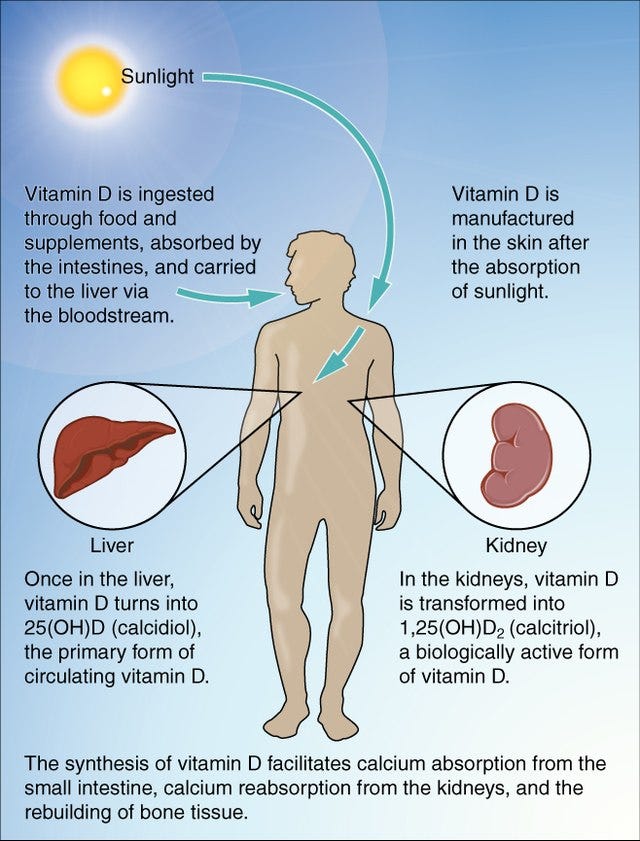
The synthesis of vitamin D — Image from Wikimedia Commons

More recent studies have confirmed the direct involvement of vitamin D and its metabolites in receptor-mediated muscle tissue functions:

  • protein synthesis
  • muscle contractions

At the same time, a truly unique property of vitamin D can be considered that it helps to increase the concentration of protein in muscle tissue and increase muscle volume even in conditions of limited mobility or complete immobility of a person. Thus, several studies have confirmed a pronounced strengthening of muscles and an increase in muscle mass and strength due to the intake of vitamin D in people paralyzed due to a stroke.
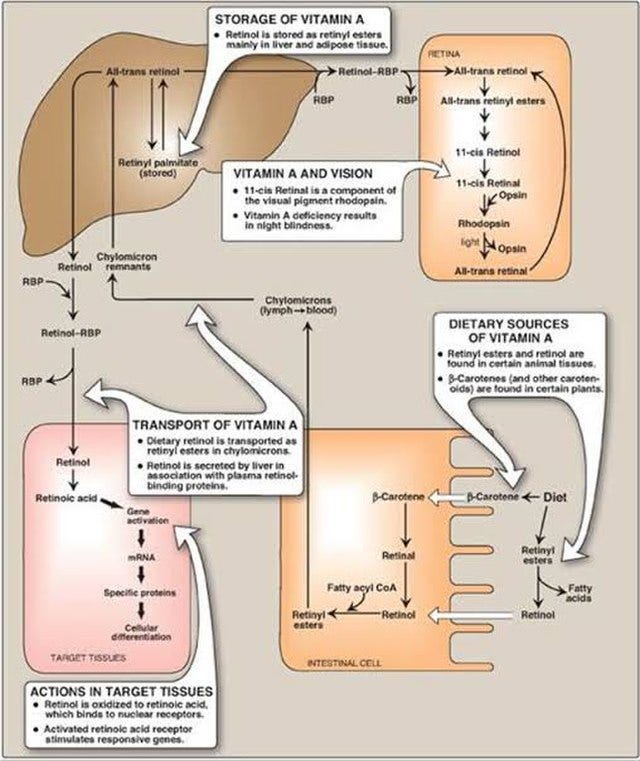
Vitamin D mechanism — Image from Wikimedia Commons

The beneficial effect of calciferol on the muscular system of the elderly has been proven — for example, regular intake of vitamin D helps to increase muscle strength and tone and significantly reduce the frequency of falls. Older people who take calciferol supplements are significantly more physically active, which has a beneficial effect on the health of such people in general.

Vitamin D for muscle cramps

Photo by Drobot Dean from Adobe Stock

Cramps are extremely unpleasant, painful spasms of muscle tissue. Most often, cramps reduce the muscles of the lower leg. Seizures can occur in anyone, regardless of gender and age, but most often they affect adolescents during a period of active growth, pregnant women, the elderly, patients with endocrine diseases, as well as people after significant physical exertion or hypothermia. The cause of seizures most often lies in electrolyte imbalance in the muscle fiber, metabolic failures, and circulatory disorders.

Taking vitamins for muscle cramps can significantly reduce discomfort and painful spasms. One of the most important vitamins for strengthening muscle tone and restoring them is vitamin D. It is directly involved in metabolic processes in the muscle and one of the manifestations of hypovitaminosis D is muscle weakness and cramps.

Receiving calciferol improves metabolism, including electrolytes, in muscle tissue. It is known that vitamin D is directly involved in the exchange of calcium and phosphorus, which also occurs in the muscles. Accordingly, the regular intake of this vitamin helps to reduce the frequency of muscle spasms, and reduce the intensity of seizures.

Vitamin D for Sports Injuries

Photo by Jo Panuwat D from Adobe Stock

Vitamin D is one of the most important biologically active for an athlete, regardless of the sport, they are engaged in. It has been proven that regular intake of calciferol supplements increases muscle strength and endurance, power, muscle response and balance, and coordination of movements. This is due both to the direct participation in the metabolism inside the muscle tissue and to the fact that calciferol is closely involved in the metabolism of sex hormones, in particular, it stimulates the production of testosterone, thus indirectly also positively affecting the growth of muscle mass.

In acute and chronic sports injuries, calciferol also has a beneficial effect on the rate of regeneration of muscle fibers, therefore, therapeutic dosages of vitamin D are recommended to be included in the complex treatment of any muscle injuries.

The preventive role of calciferol is also important, which can and should be taken with increased sports load (during intensive training to get in shape, in preparation for competitions, etc.). Vitamin D significantly increases the elasticity of the muscle fiber and the speed of its recovery after training sessions, which serves as the best prevention of injury due to overload.

Final thoughts

Muscle strengthening is not an idle issue, not only professional athletes and people engaged in physical labor are interested in it, but everyone who wants to maintain health and physical activity for a long time. Strong muscles are important for teenagers as well as older adults, powerful male bodybuilders, and frail girls.

Ensuring adequate vitamin D intake is essential for muscle health, and with it, for overall health. In part, the muscles receive calciferol, which is synthesized in the skin under the influence of sunlight. But in most cases, it is not enough. People living north of the 40th parallel experience a shortage of sunlight — people in the southern regions in winter, and residents of the north — throughout the year.

The second way to get calciferol is by consuming food rich in it. But it is especially difficult to get the right amount of calciferol for people who follow a vegetarian diet — vitamin D is practically not present in it. In addition, do not forget that the concentration of calciferol in foods is directly correlated with their fat content — that is, taking large amounts of food rich in calciferol can lead to weight gain and disorders of fat metabolism. Therefore, a good solution is to buy vitamins for muscles in a pharmacy.

Below is a great article from Dr Mehmet Yildiz in which he offers us three proven methods to retain muscles while losing fat

With high physical exertion, active sports, as well as a tendency to muscle injuries, cramps, and muscle pain, it is recommended to visit a doctor without fail and, among other medical examinations, check the level of calciferol in your blood.

As a rule, intense physical activity requires increased consumption of vitamin D, so a higher dosage of vitamin D may be recommended. The importance of such a course increases in the dark, cold season. Timely saturation of the body with calciferol will have a beneficial effect on the effectiveness of training, will reduce the likelihood of injury, and if muscle damage occurs, it will speed up their recovery.

Thank you for reading!

References

  • Annweiler C, Montero-Odasso M, Schott AM, Berrut G, Fantino B, Beauchet O. Fall prevention and vitamin D in the elderly: an overview of the key role of the non-bone effects. J Neuroeng Rehabil. 2010;7:50. (https://www.ncbi.nlm.nih.gov/pmc/articles/PMC2959005/) Accessed on 03/23/2022.
  • Baeke F, Gysemans C, Korf H, Mathieu C. Vitamin D insufficiency: implications for the immune system. Pediatr Nephrol. 2010;25:1597–1606.
  • Bailey RL, Dodd KW, Goldman JA, Gahche JJ, Dwyer JT, Moshfegh AJ, Sempos CT, Picciano MF. Estimation of total usual calcium and vitamin D intakes in the United States. J Nutr. 2010;140:817–822. (https://www.ncbi.nlm.nih.gov/pmc/articles/PMC2838624/) Accessed on 03/23/2022.
  • Benson J, Wilson A, Stocks N, Moulding N. Muscle pain as an indicator of vitamin D deficiency in an urban Australian Aboriginal population. Med J Aust. 2006;185:76–77.
  • Demay MB. Mechanism of vitamin D receptor action. Ann N Y Acad Sci. 2006;1068:204–213.
  • National Institutes of Health Office of Dietary Supplements. Vitamin D. (https://ods.od.nih.gov/factsheets/VitaminD-Consumer/) Accessed on 03/24/2022.
  • Institute of Medicine. DRIs for Calcium and Vitamin D. (https://www.ncbi.nlm.nih.gov/books/NBK56070/) Accessed 03/24/2022.
  • Heidari B, Shirvani JS, Firouzjahi A, Heidari P, Hajian-Tilaki KO. Association between nonspecific skeletal pain and vitamin D deficiency. Int J Rheum Dis. 2010;13:340–346.
Advice
Energy
Food
Health
Life
Recommended from ReadMedium