HEALTH
Skipping Breakfast Won’t Get You Faster To Weight Loss
Nor necessary will boost your productivity

How important is breakfast, how intermittent fasting is involved in it and finally is it worth limiting yourself in calories for the sake of higher productivity?
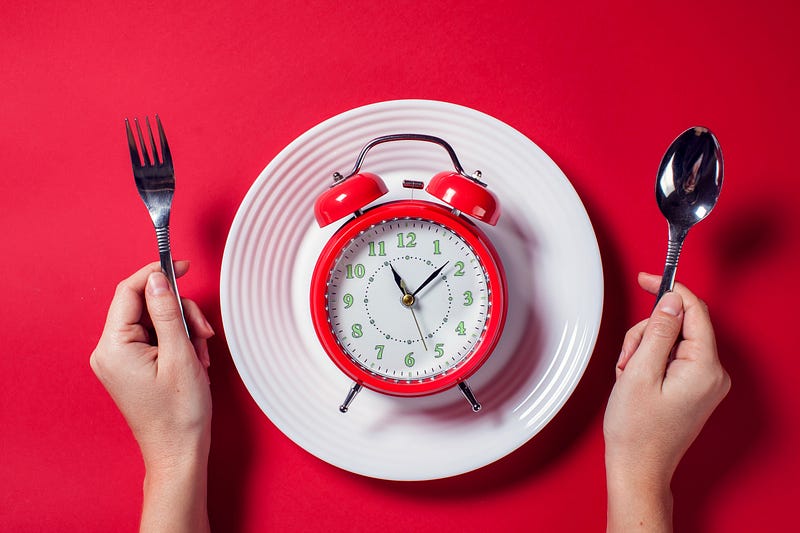
With intermittent fasting, you extend the time between meals, typically the hours between dinner and the next meal the next day. The most popular and everyday option is to skip breakfast and only eat lunch again. For example, if you finish your dinner by 8 p.m. and only eat again at noon the next day, you do a 16-hour fasting period followed by an 8-hour phase of food intake. Water is allowed throughout the day.
Of course, other time variants are also conceivable. Other forms of intermittent fasting are also being experimented with, for example, eating only one meal a day (24-hour fasting), or alternating a day without a meal with a day with food (every other day fasting).
I recently read a very interesting article posted by Bloody blogger about Intermittent fasting,
which intrigued me to make my research on this topic. What I found was very interesting.
For some people, intermittent fasting is an unpleasant condition, a kind of food manipulation. This is a serious situation that opens the door to the world of diabetes or weakens the functions of the kidneys and liver.
Since this is not a personal experience, this article will, for the most of its part, be based on scientific data. Unfortunately, research on skipping breakfast is limited or conducted on people who are overweight and have diabetes. But let’s try to figure it out anyway. So let's dive in…
What Studies have to say

“Breakfast speeds up metabolism”, “breakfast is the most important meal of the day” — you have probably heard statements like this, especially in cereal ads. Harvard Health Publishing claims that the research conducted to examine whether eating breakfast is linked to good health isn’t particularly strong. Breakfast doesn’t fire up your metabolism, make you healthier, or help you lose weight.
So, does omitting breakfast make sense? Simple logic says that the lesser the daily food consumption the easiest not to gain the required amount of calories. There are 13 studies on this topic, and they all differ. In one study, participants lost weight, and in another, they had no change.
At the moment, scientists are sure of one thing:
If you don’t like breakfast, just don’t eat it.
There are many confirmations of this. If a person was used to eating breakfast and then had to skip it, his glucose level increased, and insulin production slowed down. But for those who were used to not eating in the morning, their glucose levels did not change. Here is a study (on overweight people).
In another study, breakfast-haters were forced to eat in the morning for a month and gained weight. In this case, the common idea that a hearty breakfast helps you eat less throughout the day seems dubious.
Skipping breakfast most likely doesn’t make people eat more during the day. But only if they are used to such a regime.
So if you’re used to not eating in the morning, just don’t eat. Nothing bad will happen. But if you can’t live without breakfast, then include more protein in your breakfast.
“Not fasting, but biohacking!”

Silicon Valley regularly sets trends, including in terms of a healthy lifestyle. In 2017, the most fashionable phenomenon in this place was just a strict restriction on food. Intermittent fasting is credited with magical properties, dozens of studies talk about it, and several celebrities call it their main secret. Twitter CEO Jack Dorsey eats only once a day calling the practice a source of energy, and former head of Evernote Phil Libin lost 36 kilograms in 7 months.
Intermittent fasting can lead to weight loss, prevention of diabetes and liver disease, and even a likely increase in life expectancy, but so far it has only been proven in animals.
Scientists attribute many of the positive effects of intermittent fasting to “metabolic switching” — after 10 or 12 hours of fasting, the body depletes its stores of glycogen (a stored form of glucose) and begins to burn ketones (fuel made by the liver from fat).
In November 2021, Harvard Health Publishing published an article on intermittent fasting. Here are the most important points:
- Dozens of animal and human studies have shown that fasting improves metabolism, lowers blood sugar levels, reduces inflammation from arthritis pain to asthma, and speeds up the elimination of damaged cells. The results ended in higher productivity and lower risk of oncology.
- There is some scientific evidence (more often in mice) that circadian fasting (no nighttime snacking) combined with a healthy diet and lifestyle is an effective method of losing weight. Especially for people at risk of diabetes.
- Try a simple form of intermittent fasting. “Limit your meal times, and for best results, do it early in the day (7 am to 3 pm, or even 10 am to 6 pm, but definitely not in the evening before bed).”
- People who suffer from eating disorders, diabetics, pregnant and lactating women should not try it out.
The simplicity and efficiency of the abstracts above can impress anyone. Just don’t eat after six and you’re great! But if you look at the scientific sources, it turns out that there are almost no long-term studies, and those that exist are mostly tested on mice or limited to the number of participants.
In addition to the damage that can be done to people with diabetes and chronic diseases of the gastrointestinal tract (they can fast only on doctor’s advice), there are consequences for healthy people. Let’s see what research has shown so far:
— Reduced REM sleep
Several studies have shown that during intermittent fasting, the phase of sleeping responsible for learning, memory, and creativity is getting shorter.
— Long-term fasting includes health risks
As I mentioned above, Twitter CEO Jack Dorsey only eats 7 meals a week. The National Institutes of Health of the United States believes that such practices increase the risk of gallstones, and John Hopkins Medicine writes that when you fast for a long time, your body begins to store fat.
— Intermittent fasting may contribute to mental illness
The more anxiety, calculations, and thoughts about food, the more mental health suffers.
Any habits associated with dietary restrictions or strict rules around food cause concern for doctors. This approach usually precedes eating disorders.
— Dr. Allison Chase (eating disorder specialist, quoted from The Guardian)
Articles about followers of fasting from the Valley are just an example of neuroticism. Their life is reduced to experiments with weekly fasting, wearing a glucose meter, and constant health tests. Not to mention the claims of incredible productivity, of course.
The basic idea is that fasting should not be treated with guilt for non-compliance with the regime nor with strict adherence to mealtimes.
— Intermittent fasting can lead to overeating
The interval shows excellent results in losing extra pounds. But it also stimulates increased appetite. Αfter a long period without food, your appetite hormones and the brain center of hunger work in an enhanced mode. I may want to eat less and reward myself for completing the task — everything seems logical here. But sometimes this desire is in vain.
If you overeat in the allotted window, fasting loses its meaning. At the heart of any diet is the created calorie deficit. To maintain the achieved weight, you will have to change your eating habits. Otherwise, the fat will return to its place.
How to choose your fasting interval?
Given the scarcity of research, the answer is banal: one that won’t make you ever-hungry and nervous. Except for the adaptation of the first month, of course.
Intermittent fasting gives about the same weight loss results as daily calorie cuts. Yes, those who counted calories daily lost weight just like intermittent fasting without counting.
What about workouts? You can and should exercise. The fast mode only affects peak performance. That is, a quick run on an empty stomach is not the best option, but jogging is quite ok. An important point: with intermittent fasting, you need to eat at least 20 grams of protein within two hours after training to build or at least not lose muscle mass.
VERI — A blood sugar values sensor
I recently read about a sensor from the Finnish startup VERI. This sensor constantly collects your blood sugar values throughout the day. This means that you can see how it changes in great detail, and don’t accidentally lose information between sampling times!
If you’re interested in finding more information about this sensor you can visit the official site. What I found in my research, after contacting the support team and asking for some information about this sensor, is summarized in the following:
- Glucose control is needed if you are striving for longevity and maintaining physical fitness, increasing productivity and if there is a genetic predisposition to diabetes.
- Controlling and consequently regulating sugar levels can improve the quality of your sleep, boost your energy, and enhance your mental clarity.
- The sensor measured not only the level of sugar but also the glucose stability index (at different times after meals), metabolic flow (sugar levels during the day and week), and the number of sugar peaks per day (ideally, no more than once per day).
- Taking a walk after eating increased the stability index. That is, the rise in glucose was below normal.
- Two to three hours of standing work, markedly lowered post-meal peak glucose levels.
- The metabolic flow was worse on days when many snacks (chocolates, bananas, gingerbread) were consumed, but better on salad days, standing work, and healthy snacks (smoothies, curds).
- The more spikes in sugar during the day, the worse the night’s sleep.
It’s important to be mentioned that, apart from the above, walking after meals, eating healthy food, and avoiding sedentary work at some parts of the day, can pose an easy routine anyone could implement in their everyday life.
Final thoughts
- If you never had an appetite in the morning — do not force yourself. There will be no harm. And if you are used to breakfast, but for some reason started skipping it, there will be short-term consequences with slow insulin production.
- Intermittent fasting is suitable for most healthy people and really helps with weight maintenance and disease prevention. But there are no long-term studies that can prove this.
- The best fasting regimen is “8 hours of food — 16 hours of fasting.” It is psychologically much easier to follow. In addition, the body needs at least 16 hours to reduce the level of insulin and blood sugar, which contribute to fat burning.
- Before starting fasting, it is better to consult a doctor for contraindications.
Thank you for reading!