avatarCarolyn Hastings

Summary

The website content presents a poetry prompt focused on the color green, featuring a poem by Carolyn Hastings, an explanation of the diverse shades of green in nature, and an invitation for other writers to contribute their own green-themed poems.

Abstract

The webpage titled "The Magic of Chlorophyll" introduces a creative writing challenge centered on the color green, inspired by a prompt set by Lucy Dan 蛋小姐. Carolyn Hastings has responded with a poem that celebrates the various hues of green found in nature, from mint to jade. The article emphasizes the human eye's ability to distinguish more shades of green than any other color, which contributes to the rich, layered greenery experienced in natural settings. Additionally, the concept of a "twittle," a 100-letter micropoem with a touch of rhyme, is introduced as a potential format for future submissions. The page concludes with a call to action, encouraging other writers, including Caroline de Braganza, Jupiter Grant, Thalia Dunn, Tamara Naidoo, Ching Ching, and R. Rangan PhD, to craft and share their own poems about the color green.

Opinions

  • The author appreciates the complexity and beauty of green hues in nature, highlighting the "magic of chlorophyll."
  • Lucy Dan 蛋小姐 acknowledges her challenge with rhyme and rhythm and is motivated to improve her poetic skills.
  • The author values the unique ability of the human eye to perceive a multitude of green shades, contributing to a layered visual effect in natural landscapes.
  • The author introduces the "twittle" as a novel and concise poetic form, expressing enthusiasm for its potential.
  • The author extends a personal invitation to specific writers to participate in the green-themed poetry challenge, indicating a desire to foster a community of creative expression.

Poetry Prompt | Green

The Magic of Chlorophyll

A green twittle
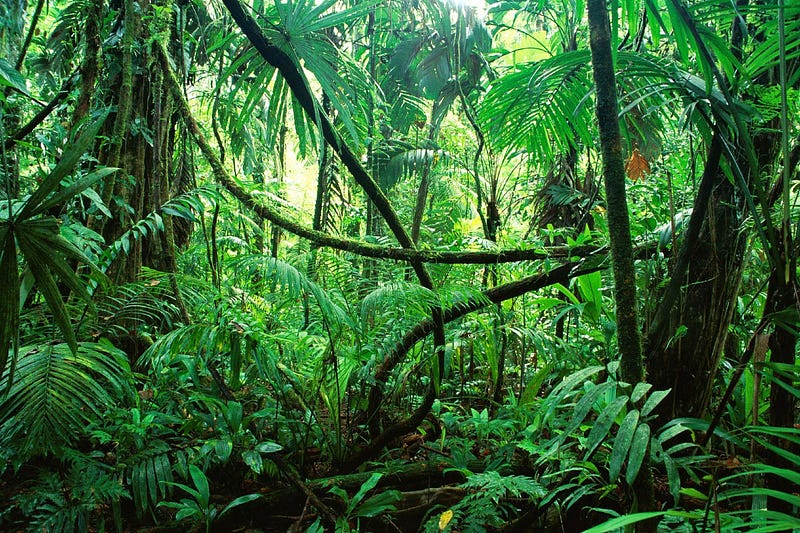
Image by bere von awstburg from Pixabay

We sit immersed in greenery wondrous at Nature’s tones and shades The magic of chlorophyll incanting mint to moss to jade

© Carolyn Hastings 2021

There are literally thousands, if not millions, of different shades of green in nature. The actual number is arbitrary because color is a function of perception, and everyone perceives colours in their own way — think red-green color blindness.

Perhaps more to the point are the contrasts we perceive between the shades and tones of a color. The human eye, as it turns out, can distinguish between more shades of green than any other color. That helps explain the multidimensional layering effect of green-upon-green that we experience when we venture into the depths of forests and jungles.

Thank you to Lucy Dan 蛋小姐 (she/her/她) for setting the prompt: write a poem about the color 0x0d9d29 (green). You can check it out for yourself here -

Lucy bemoaned the fact that she has ‘no rhyme or rhythm game whatsoever’ and has vowed to make it a personal challenge to work harder at these literary devices. With a bit of luck we’ll get a twittle out of her yet!

A twittle, by the way, is a four-line micropoem constructed with exactly 100 alphabet letters and a smidge of rhyme. Here’s another color twittle I wrote recently -

Who else is interested in writing a green poem with or without rhyme? What about it — Caroline de Braganza | Jupiter Grant | Thalia Dunn | Tamara Naidoo | Ching Ching | R. Rangan PhD? 🙏 😊 💕

Poetry
Twittle
Colors
Nature
Perception
Recommended from ReadMedium