
The Lost City of Mahabalipuram What The Fisherman Saw?
A Mystery Within Mystery
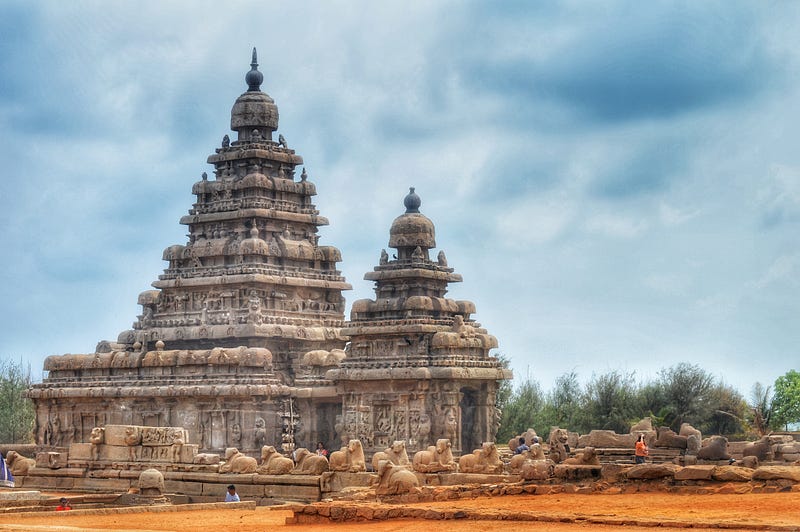

The ancient town of Mahabalipuram, renowned for its exquisite Hindu temples and rich history, recently witnessed a remarkable event following the devastating tsunami that struck Asia on December 26, 2004. After the water receded and before the tsunami’s wrath returned, local fishermen stood along the shore and witnessed a sight that confirmed generations of legends.
The fishermen claim to have seen the remains of ancient temples and hundreds of big-sized blocks briefly exposed by the retreating water before being swallowed up again by the sea.
According to Durai, one of the fishermen, their grandfathers had spoken of a port and a temple that once existed in the area, but now they could see the tangible evidence with their own eyes.
Although the archaeological significance of what they witnessed is back underwater and out of sight, the tsunami did unearth another remarkable discovery.
The force of the waves scrubbed six feet of sand from a section of the beach, revealing a small cluster of long-buried boulders intricately carved with depictions of animals and servant girls.
This revelation drew significant attention to Mahabalipuram, which fortunately escaped major damage from the tsunami.
As the news of the rediscovered Atlantis spread through Indian media, tourists flocked to the town, eager to witness the newly revealed archaeological wonders.
Tourism plays an important role in Mahabalipuram’s economy, attracting visitors from the growing Indian middle class to its mom-and-pop resorts and affordable restaurants.
While the tsunami initially scared away tourists, the rediscovery of ancient treasures brought them back significantly. On sunny weekends, hundreds of people now come to view the carvings and enjoy the beach.
However, the question remains: what exactly did the fishermen see? Some assert they saw more than the six vanished temples, claiming there might have been at least 20. This stirs speculation about the legendary port city that is said to have traded with China and Southeast Asia over 1,300 years ago.
Archaeologists, while dismissing the notion of Atlantis, acknowledge that the area’s history is steeped in myth and legend. The Seven Pagodas, named after the Hindu temples with a vaguely pagoda-like style, were once said to have lined the shore.
Before the tsunami, archaeological excavations were underway on land and at sea, yielding promising finds of barnacle-encrusted blocks that appear to be man-made. While officially expressing little surprise at the discoveries, some researchers privately admit that the tsunami revealed more than expected.
From an archaeological perspective, the tsunami’s impact has led to valuable new findings. However, the human toll regarding loss of life, damage, and destruction remains a sad reminder of the disaster’s devastating effects.
As the ancient town of Mahabalipuram continues to preserve and explore its newfound treasures, it stands as a living testament to the confluence of history, legend, and the resilience of its people…
Please follow me subscribe to my profile for inspiring and entertaining stories and visit my referral link to get full stories