The Loophole Steven King Uses to Supercharge His Writing Productivity
First-person narration as a strategy for breaking writer's block
I recently gave up on a new, very long Stephen King book. I lost interest half way in. The start of the story had me reaching for the Kindle on my nightstand, but chapters later, I found myself scrolling on Instagram rather than reading. So, I let it go. (Yes, I read on a Kindle, and I prefer it for a number of reasons.)
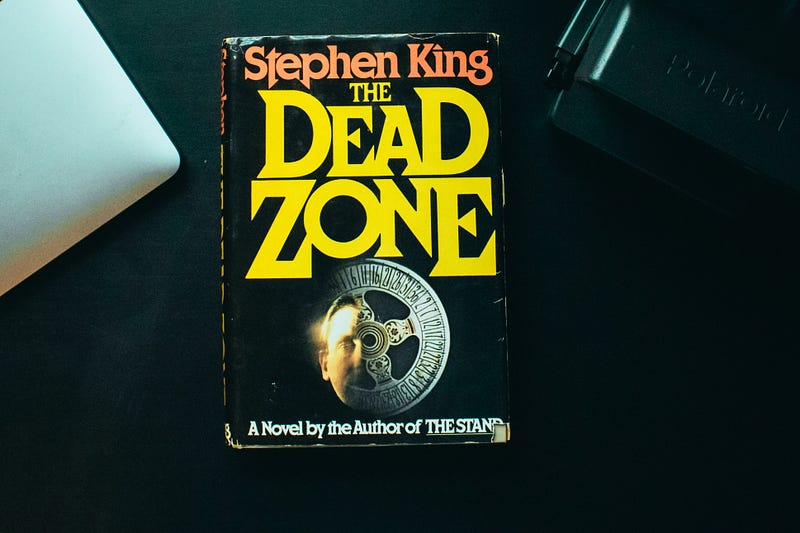
That book I quit on was called Fairy Tale. It’s about a 17-year-old hero, who befriends and helps a gruff old man, falls in love with his dog, and then discovers a trap door to a hidden world in the old man's shed outback. Once we entered this other dimension, I lost interest. But King’s setup to find this staircase down to another universe, I quite enjoyed.
Also, as a writer, I found myself thinking a lot about the particular writing style that Mr. King chose for this book. While reading Fairy Tale, I realized he used the same tactic in the previous Stephen King book I read. More often than not, Stephen King writes as a first-person narrator. A narrator who is decidedly—not a writer.
This is one of the major keys to why he’s so prolific.

Fairy Tale’s First-Person Narrator
In the case of Fairy Tale, the hero and narrator is a high school-aged boy, with a high school-aged vocabulary and thought process. This allows King to dump words on the page as he focuses on the story itself, not the eloquence or brilliance most authors strive for in connecting words poetically.
The first paragraph of the book makes it clear that the story will be told by a novice storyteller. It sets the reader's expectations that we’re hearing from a first-timer, in the same way that someone with a guitar at an open mic night might say, “This is my first time guys, so bare with me.” The audience's expectations for perfection or brilliance immediately melt away.
Here’s how Fairy Tale begins:
I’m sure I can tell this story. I’m also sure no one will believe it. That’s fine with me. Telling it will be enough. My problem—and I’m sure many writers have it, not just newbiest like me—is deciding where to start.
This causes the reader to give the author permission to use simple phrases and words. Stephen King is one of the most accomplished authors in history, but making this choice allows him to write as though he is just a high school jock, trying to recount an unbelievable tale.
Fairy Tale is over 600 pages, and I’m guessing he made that pile of words much faster than he would have with a different narrator, or had he chosen to tell the tale in the second or third person.
An unpolished first-person narrator frees the author up to not overthink each sentence, but rather, to dump the story from his mind through his fingers right onto the page.
A waterfall of ideas that needs no Pulitzer Prize judge to give notes. It’s meant to sound like a 17-year-old. It’s meant to flow downhill, like listening to a fast-talking kid who’s out of breath while telling a story.

Later’s First Person Narrator
The previous book I read by Stephen King followed the same pattern. That was a book called Later. That book, I did finish. It’s about a young boy who can see and communicate with the dead.
Here is how Mr. King's website summarizes the story. The son of a struggling single mother, Jamie Conklin just wants an ordinary childhood. But Jamie is no ordinary child. Born with an unnatural ability his mom urges him to keep secret, Jamie can see what no one else can see and learn what no one else can learn.
Below are the first few sentences from this story. Again, he’s utilizing a first-person narrator whom the reader immediately knows not to expect much from in terms of flowery language or complex sentence structure. The book is mostly simple words and blunt sentences, as you’re being recounted the supernatural story by a kid.
I was coming home from school with my mother. She was holding my hand. In the other hand I clutched my turkey, the ones we made in the first grade the week before Thanksgiving. I was so proud of mine I was practically shitting nickles.
Shitting nickles.
That’s what we can expect as readers.
Again, Mr. King has set himself up to let the story fly onto the page without needing to impress the academics in the room.

What did we learn?
Stephen King is at the point in his writing career where he’s way more concerned with entertaining you than impressing you. He doesn’t need to impress anyone at this point.
Wherever you are in your writing career, and especially if you feel stuck, it might be good to ask yourself WWSKD?
What would Stephen King do?
He certainly wouldn’t be overly concerned with flowery language or double-entendre metaphors. He’s trying to tell a good story while sticking to some basic writing principles, which you can find in his book, On Writing.
Note: I realize it's fashionable to try and discredit On Writing. There are probably well over 100 blogs on Medium about “why it’s over rated,” or “what it gets wrong,” or why “show don’t tell” is bad advice. I disagree with all 100+ of those blogs. The vast majority are just click bate. That book is a masterpiece which I nearly highlighted in its entirety. Reading it made me a much better writer. I’m happy to argue with you in the comments here if you’d like!
If you’re stuck—try using a young or simple-minded first-person narrator to break your writer's block. Stop trying to impress with your words, and just try to tell a good story with the right words. If the story is being told by a 13-year-old protagonist who is hoping to become a mermaid, you’ll have to use simple words!