
The Long Arm of Loss
A Journal of the Plague Year, Day 101
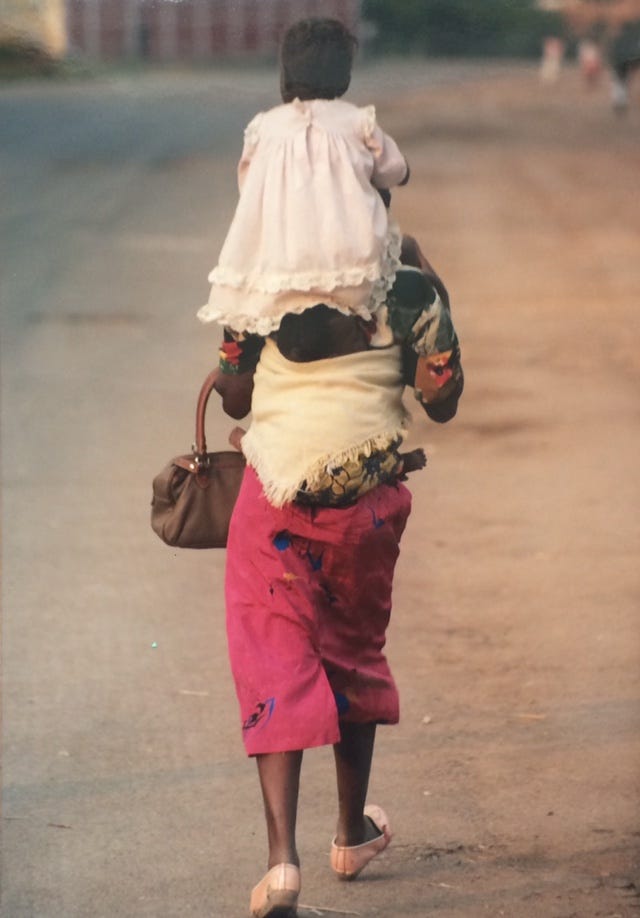
The global death toll from Covid 19 has now surpassed half a million. Here in the UK it has claimed over 47,000 victims, the highest in Europe. For months now the daily toll has been shared with us at the choreographed Downing Street press briefings, lead by a rotating roll call of Ministerial lead singers backed by a cast of scientific advisers.
It appears that by squandering the warning coming from China and Italy, toying with “herd immunity” and delaying lockdown, tens of thousands of lives have needlessly been lost. Every one of those 47,000 is a family devastated, a story cut short. The majority of the victims are elderly, at the end of long lives. But the ones who sear themselves on my mind’s eye are the parents of young children.
The first two nurses to die here were both mothers to three children. And then we were assailed by the tragic story of heavily pregnant Mary Agyeiwaa Agyapong, also a nurse, whose tiny baby daughter was cut out of her as she lay dying. This outbreak will pass, the virus will be brought to heel by a vaccine or a cure. But the life of that little girl, her family, her own future children will be indelibly scarred. The virus will reach forward through the generations, leaving its mark through Mary’s motherless child.
The last great global pandemic, the influenza outbreak of 1918, took the life of my great grandmother, Grace — my father’s mother’s mother. 102 years ago, but the effects of that loss still leach into our lives today.
She was mother to three boys and two girls, all under 14. The youngest, Percy, also died in the pandemic. They lived in India. My great grandfather, Sir Richard Burn, was a member of the British Colonial Service. After growing up in Liverpool and studying at Oxford, he sailed to India in 1891 at the age of 20. He spent his entire career in the subcontinent, becoming a reknowned linguist and numismatist, and only retiring back to the UK in 1927. In 1908 he was knighted for services to famine relief. At the time of his wife’s death he was Commissioner of the United Provinces of Agra and Oudh — essentially governor, judge and tax collector of an area about the size of New Zealand.
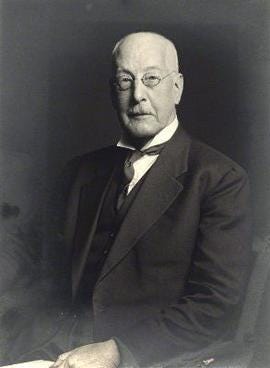
My grandmother — also Mary — was ten at the time of her mother’s death. Her life, thus far, has been spent far away from WW1, at the heart of a large family, wrapped in a world of privilege, luxury, colour and vibrancy. It must have been a dreamy childhood up to that point.
After Grace’s death, Richard tried to keep his children with him. However his job required him to tour the United Provinces, every year, for months at a time. At my parents’ house (which I now can’t visit) we have a diary that my Granny Mary kept from the year after her mother’s death. She and her younger sister were taken on tour by their father. In a caravan of porters, cooks, clerks, grooms and a governess. It would appear that the governess required her to record their journey — in a brown A5 school note book, in impeccable cursive handwriting. She recalls, with breathless 10 year old excitement, how they all had to take to the trees when a marauding tiger visited camp. Or the time when a local Maharajah sent his open topped blue Rolls Royce to collect them for a visit to his palace. As they drove through successive gates they were heralded by salutes of horses, then camels, then elephants.
After a year Richard appears to have concluded that he could not manage the children and the job. They were sent “home”, by ship to England. A country they had never visited, where they presumably knew noone. The girls were imprisoned at Cheltenham Ladies’ College. Wrenched from a life of sunshine and spice and tigers, to grey skies, scratchy sheets, starched matrons, and an absolute absence of love. Did their father ever come to visit? Very rarely, if at all.
After Cheltenham Mary went on to her father’s alma mater Oxford, to study Politics, Philosophy and Economics. This in the late 1920’s, only a few years after women were first permitted to take a degree. Following University she travelled to her parents’ home town, Liverpool, where she worked as a housing officer for some of the UK’s first social housing.
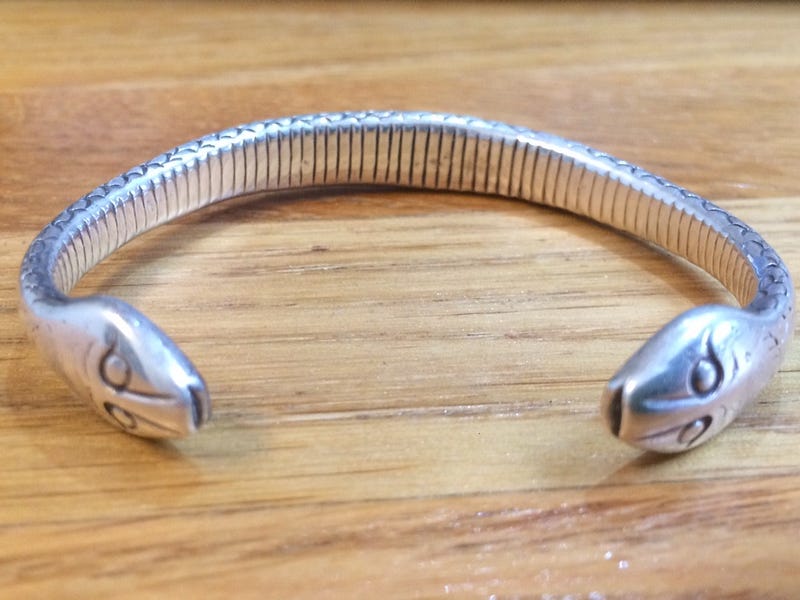
She lived for another sixty years, but she never returned to India. She clearly ached with longing for it, for that life lost. Throughout my childhood she lived two miles up the river from us, in the house where my father grew up. We used to walk or bike there, across the fields. I adored my grandmother and spent a lot of time with her, surrounded by Indian furniture, paintings and books and leather-bound albums full of atmospheric black and white photos. I still wear a silver snake bracelet that her father had made for her in Benares.
I loved to listen to her wistful reminiscences of those times. Maybe that’s the origin of my own wanderlust. I don’t remember her telling me anything much about her subsequent English life. When the first Indian restaurant opened in our market town, in the 1980s, she was their first, and most enduringly loyal customer. Attuned to her yearning, I even wrote to a BBC Children’s programme in about 1981 asking if they would send me and my Granny back to India. I never got a response.
Stranded in the UK, my grandmother met and married my grandfather. He had also attended Oxford, was also working in Liverpool as an industrial chemist. A very clever man. But also a philanderer, borderline crook, and vicious bully. I was terrified of him.
Theirs was not a happy relationship. Granny had no skills in parenting or running a household — how could she have? He would return home from his paint factory for lunch to find her sitting on the stairs, still in her dressing gown, lost in a book. She left food out uncovered in the larder which the rodents helped themselves to. And hand fed the mice that crept around her chair in the sitting room.
During the 1940’s they had a son — my father — and two daughters. Their upbringing seems to have been haphazard, at best. By all accounts my father started off the apple of his father’s eye and, as he grew into his own person, ended up the focus of his most brutal bullying. My grandmother didn’t have the means, the tools, to stand up to him.
I remember one morning as a child that we opened the front door to find that my grandfather had left a crate full of rotting plums on the doorstep. Pure spite. I believe that, when he died, he left his belongings and wealth to my aunts, and his debts to my father.
And that is how Grace’s death still bleeds into our lives today. Through the loss that cloaked my grandmother throughout her life. Through her choice of husband. Through the fact that my father was clearly made to feel that nothing he did was ever good enough. And the fact that, even now, 30 years after my grandfather’s death, it still feels like my father is trying to prove himself to his own father.
And then we jump forwards 90 years, to the story of my step daughter — I will call her Mina — and the death of her mother.
Mina was born in a refugee camp in Zambia, her parents fugitives from Angola’s civil war. She had lived in four countries by the age of five. Her parents — my husband and her mum — split up when she was six. Her dad moved to the UK to join me in 2005, when she was eight. After a prolonged illness she also — like my grandmother — lost her mother when she was ten.
For the next year and a bit, with her elder half sister, she was palmed around various family members in Angola while her father battled Angolan and British bureaucracy to secure the paperwork needed to bring her to the UK. She didn’t even have a birth certificate at the beginning of this process. During this time I think she barely attended school.
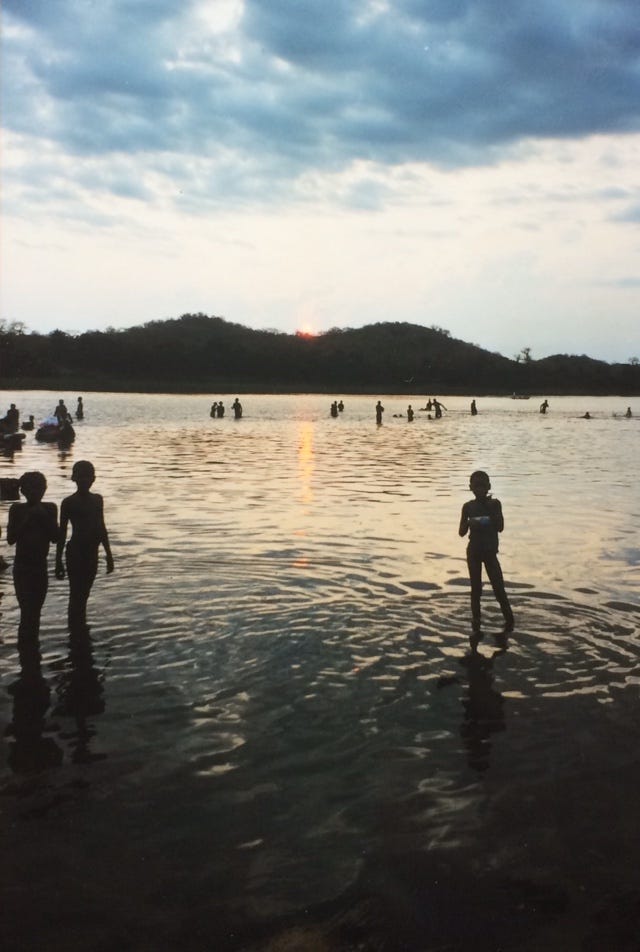
Mina’s dad finally succeeded in bringing her from Angola to the UK when she was 11. They arrived on May 15 2008. I was four months pregnant, Africa Director for the BBC’s International Development Charity, BBC Media Action, and knew nothing about being a mother.
Mina arrived an innocent, bewildered child. Far younger than her years, despite the traumas of those years. Like my grandmother Mary, shrouded with grief. Like Mary, wrenched from everything and everyone she had ever known, except her dad. From a tight knit, sun baked Angolan seaside town, to the impersonal jungle of Clapton, East London. Just off the “Murder Mile”.
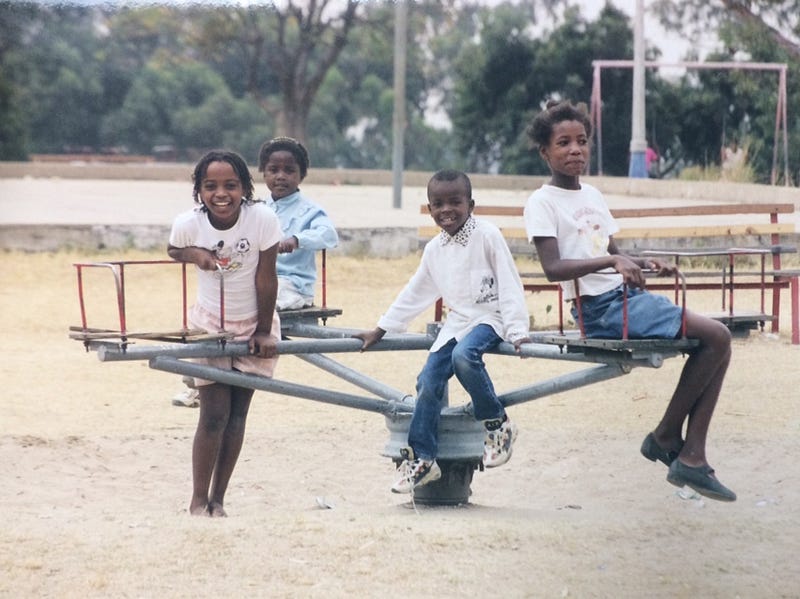
I will never forget her enchanting reactions on the day they arrived home. Taking the tube across London, Mina was scared to step onto an escalator — just like Crocodile Dundee. While her dad slept, we wandered round to the local petrol station to get some milk and she leapt backwards when the glass doors slid open automatically. Then I took her to the park. She poked me in astonishment at the sight of orthodox Jewish men and boys with hats and side whiskers. When a Muslim woman passed us with her face covered with a black abaya she flinched behind me and whispered “Bruxa!”, “Witch!”. For her as exotic as tigers in camp.
I knew nothing about the school system, knew no local parents, I’d not yet joined the world of the school gate. We plunged straight into the end of primary school. Our local school were very supportive, they allowed Mina to go back a year to learn English before moving on to secondary school.
Normally, as immigrant children acquire English, they begin to accelerate and demonstrate their knowledge of other subjects. Mina learnt English astonishingly fast. But the more she could communicate, the more it became apparent how little education she had had. She battles against Maths to this day. With better nutrition puberty kicked in. She had always been a strong character, a bit cheeky. Now she began to get frustrated, angry that her classmates knew more than she did. That she was a year older than everyone else.
That final year of primary was not too bad. I was on maternity leave. I could spend a lot of time with her, while juggling the baby. I tried to teach her maths and realised how hopeless I am at explaining it. I read with and to her — she’d come from an environment with no public libraries or bookshops, no text books, one daily state controlled newspaper. The written word was a rare luxury in war battered Angola. I foolishly tried to read “The Lion the Witch and Wardrobe” to her — thinking a story about dislocated children finding themselves in a magically threatening alien world might resonate. Attempting to simultaneously translate “beaver”, “gnome” and “faun” proved too much for my Portuguese. I attempted to help with her hair, and realised what a complicated, expensive process hair is for African women. But then I went back to work, just as Mina went to High School, and it all went very sour.
Mina was set adrift in a large local high school where no one bothered to understand her story. Despite all the transition forms I filled in, none of her teachers clocked that she’d only been in the country, and speaking English for 18 months. They dismissed her as stupid and lazy.
By the time I realised what was happening it was too late. She raged against life, against school, against loss. I hadn’t experienced enough grief to know how to help her. Her father had experienced far too much. His approach to parenting — coached by his own upbringing — was just to bark instructions at her.
Her trauma bubbled up as fury. And she focussed the heat of her rage on me — supplanter of her mother. Mina and I are complete opposites. She is an extrovert, I am an introvert. I avoid confrontation. She has always adopted offense as the best form of defence. She comes out swinging. She wouldn’t accept help, wouldn’t engage with any services. Sat sullen and silent in the face of grief counsellors and psychologists. We were at loggerheads for years. Much of the time I didn’t want to come home.
Fast forward a decade — she’s 23 now. Still trying to find her path, her drive and identity. She’s tried going back to Angola only to realise that it is not the sunny playground of her childhood dreams. She’s taken various courses but not settled on any career. Explored going to University but it’s now so terrifyingly expensive. She’s stranded somewhere between two continents, two cultures, two languages, not fully belonging in either. Still struggling with her loss and trauma.
2020 was meant to be a new start for her. She had secured a place to go to Kenya with VSO. But then Covid hit. So she is currently working as one of the domiciliary carers that we hear so much about in the news. A minimum wage, zero hours frontline heroine. With no security of employment, zero medical training, minimal PPE. But visiting multiple vulnerable people every day via public transport. I really worry for her. All of the carers I’ve heard of who have died so far were of African descent. They too were mothers of young children.
I look at Mina, held back by her demons, and I see Mary Agyeiwaa Agyapong’s tiny baby girl. I wonder how that baby will wear her mother’s loss. How it will blister up through her life. How it will shape her reactions and choices.
And I hope that Boris Johnson and his colleagues will hold the life of that baby in their hearts with every choice that they make over the coming weeks and months. As they reassess how we value and reward those recently recategorised from unskilled to essential. As they develop the policies to balance Brexit, climate change mitigation and economic revival that will shape the lives of this “Generation C”.
That they, and other leaders across the globe, consider seriously how the choices they make will impact on the life of that little girl, and all the other children bereaved by this virus.
For the next instalment, click here:


