Personal Anecdote
Nature Through a Puppy’s Eyes
We are of the earth, we tread the earth, and to the earth we return.
I am writing this, sitting on my garden swing chair, left leg tucked under me, computer on lap, right foot on the ground. I’ve just realised that I am unconsciously rocking myself back and forth, back and forth with the ball of my right foot, at walking pace. Rocking like a baby in a crib, mimicking the sensation of a child strapped to its mother’s back as she paces the earth. As we were designed to experience the world.
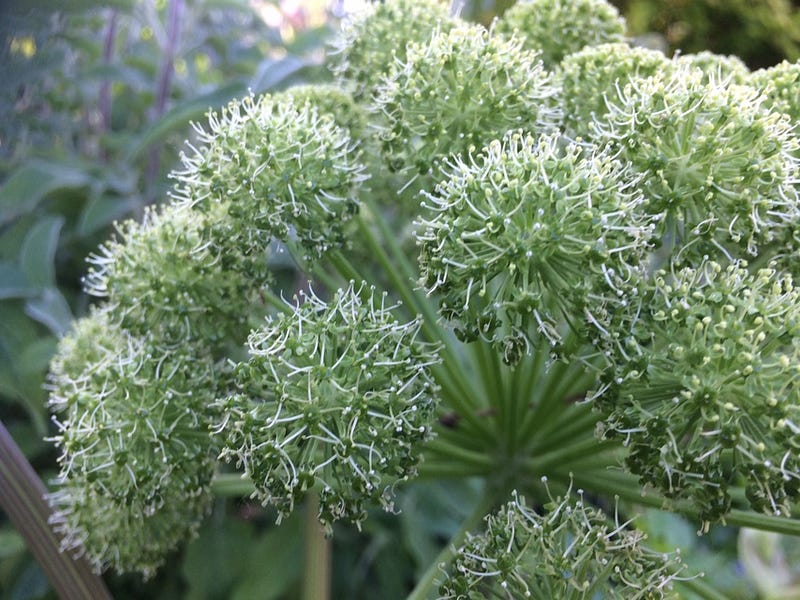
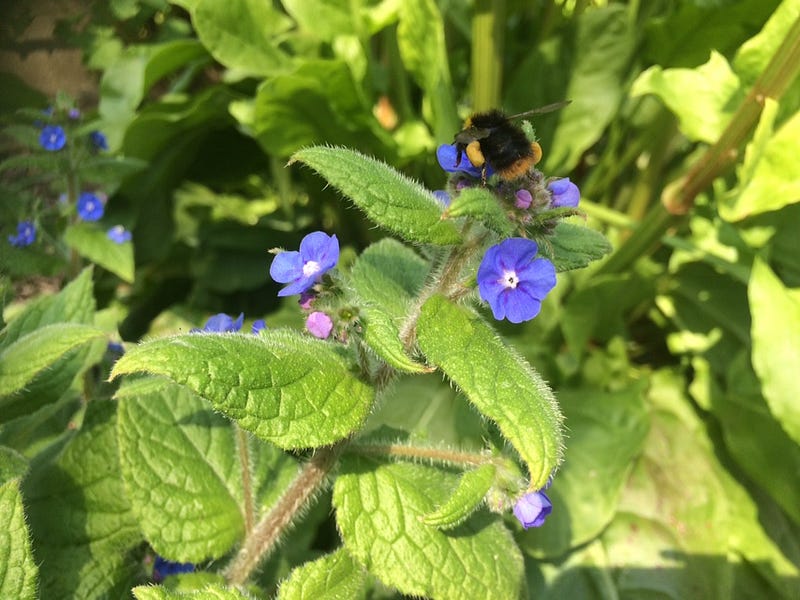
The sparrows that have made their nest in my neighbour’s gutter are swooping in, darting out, pillaging peanuts from my bird feeder. The puppy is dancing circles across the lawn in pursuit of a bumble bee. Although we’ve had barely any rain these past two months, the grass is grown shaggy and in need of mowing. The bumble bee takes refuge in the pollen heavy flower balls of the angelica which punctuates the border. The columbines are setting seed, the roses and clematis are taking up the baton and coming into bright flower. The apple blossom has morphed into olive sized fruits. This is my small patch of the earth. I have tended it for nine years now, and it has repaid me with peace, satisfaction, frustration and humility. Flowers, food, toads and hedgehogs.
This is the longest I have lived anywhere other than my childhood home. I have learnt my garden’s rhythms and moods, mapped its waterlogged patches and sunny spots, and tried to work with them. I have given thanks for its rich, dark peaty soil and improbably mild micro climate. I can measure my daughter’s life in the spread of a plum tree. Hear echoes of my childhood home every time I glimpse the currants, transplanted up the motorway and fanned against the fence. I am out of reach here of the virus. Of the radio and the internet and the dispiriting torrent of myopic manipulation that gushes forth from our politicians. In the embrace of my garden I am soothed by a thousand shades of green, distracted by the choir of birds and the countless jobs that mirror the cycle of life and demand my attention. I am grounded.
Such an interesting word. Grounded — in touch with the earth, with nature, with our roots. Solid and contented. Yet also grounded — confined to a house or a room, a punishment. The perfect word for this locked down time of stillness, connection and reflection.
For most of human history our ancestors were intimately connected to, and dependent on, their small corners of the earth. Grounded in both senses of the word. They worked it. Walked it. Nourished it and were nourished by it. The pace and pattern of their days were dictated by its needs. Nature cannot be hurried. But then the human world accelerated. Not least, here in this city of Salford where I sit. Named for its willows and water — Salix-ford — it became known instead as home to Lowry’s matchstick men and mills, Ewan MacColl’s Dirty Old Town. We moved from field to factory and in so doing, lost touch with the land. Others produce our food now, often in far flung countries. We broke our connection with nature, boxing ourselves in to trains, cars, planes, factories and offices. Experiencing the natural world through windows and screens. As incidental scenery as we speed from one confinement to another. Rushing through life, through landscape. Diluting communities, connections and dialects as we expand our world and sever our roots.
Yet in the last few months nature, in the form of a tiny particle, has brought us to a screeching halt. Transported by our accelerated lifestyles to every corner of the globe, it has grounded us. And here, in Salford, recently and counter-intuitively named as the greenest place to live in the UK, the pandemic, combined with our spaniel puppy Mabel, have given us a precious opportunity to expand our closely known patch of the earth, beyond our garden fence, to encompass the woods, fields, streams and ponds of our immediate area.
I believed, pre lockdown, that I knew our local, post industrial landscape well. For the last nine years I have biked to work through it daily. For five years I pedalled five miles towards the city centre along the majestic Manchester Ship Canal, to the BBC’s offices at the reinvented inland docks of Salford Quays. For the last four years I have pedalled the other way, four miles west along the Bridgewater Canal, the UK’s oldest, to the site of the Royal Horticultural Society’s new Bridgewater Garden. I have circumnavigated herons, goslings, and a weasel in my path, spied the white tails of roe deer bounding away into the woods, picked blackberries from the hedgerow, and been stung by nettles and scratched by brambles as I scramble down from the tow path. I have been soaked by relentless rain, sandblasted by stinging hail, and blown sideways off my bike in a gale. With my family I have walked the network of paths created from disused Victorian railway lines through our local woods and meadows, linking the sites of dismantled cotton mills and coal mines now reclaimed by nature. Yet even so, in the last two months, I have had the opportunity to develop a much more intimate knowledge of this landscape. Unable to jump in the car and head for the wild uplands that encircle Greater Manchester, only allowed out of the house once a day to exercise a restive child and puppy, we have happened upon hitherto hidden corners. We have paced out this landscape, one foot in front of the other, day after day, and had the time to linger, observing as nature infinitesimally unfurls with the spring.
When lockdown locked in we were just edging into this spring, now judged the sunniest since records began. Our confinement may have been more of a challenge had it happened in dark November or dank February. Back in March the trees were sporting blossom on branches bare of leaves. The grass was short, the weeds and wildflowers had not yet crowded the verges. The birds were just starting to contemplate nesting.
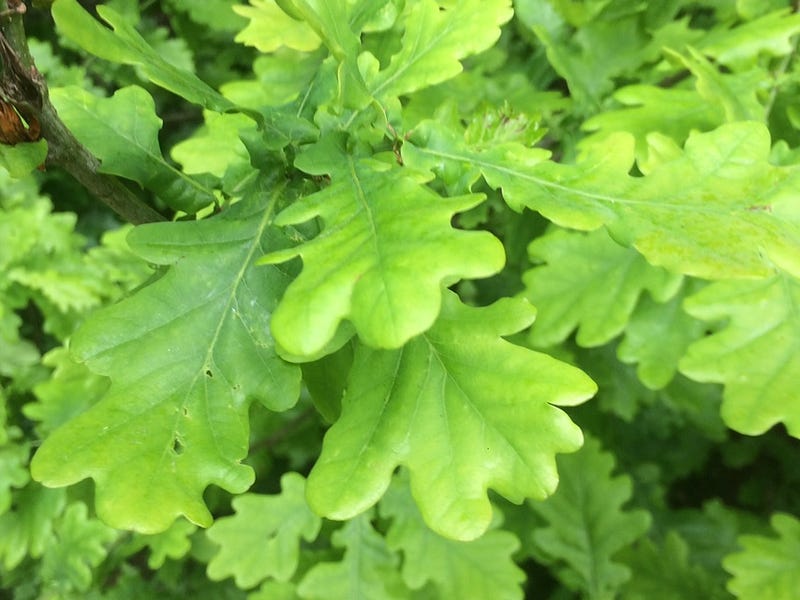
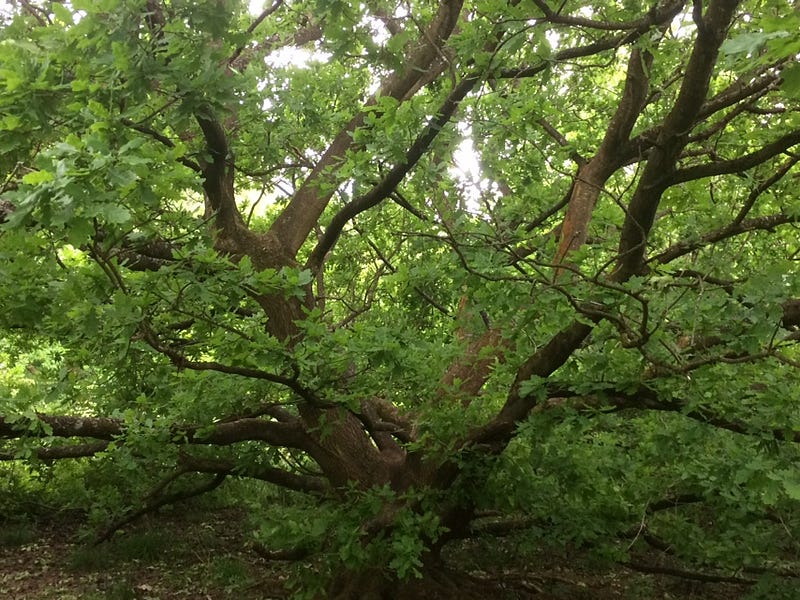
Before Mabel we mapped our walks by the trees that my daughter likes to climb. The stumpy oaks in the small marshy nature reserve up the road, the statuesque cricket bat willow on the edge of the golf course, the overgrown rhododendrons in the woods. At the beginning of lockdown the oaks were naked, she could be easily spotted by people passing by on the boardwalk below. Over the last two months we have watched, day by day, as the neon green young leaves uncurl like hands and reach out their darkening fingers until, now, she can hide away up there, unseen, eavesdropping on passing conversations. Sitting in her favourite oak she has watched a startling flock of squawking green escapee parakeets flying overhead, a proud peach-chested bullfinch singing for a mate, and a woodpecker, diligently flitting from tree to tree drilling for insects.
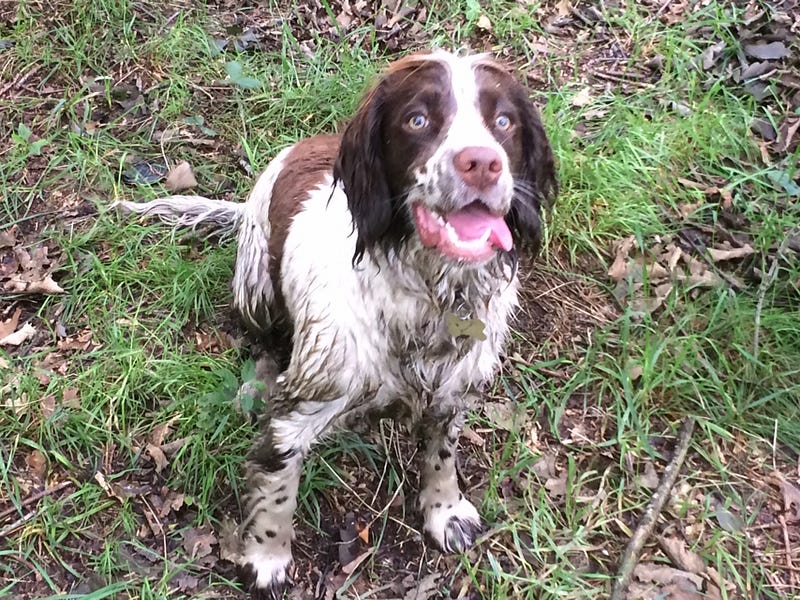
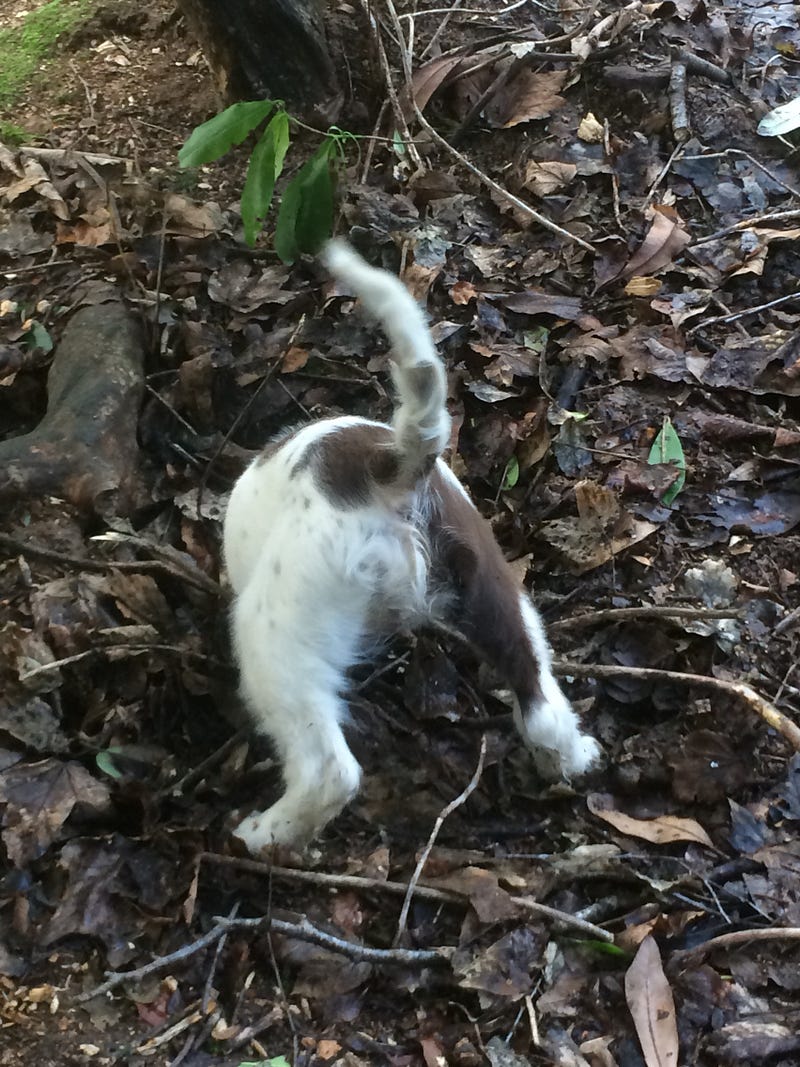
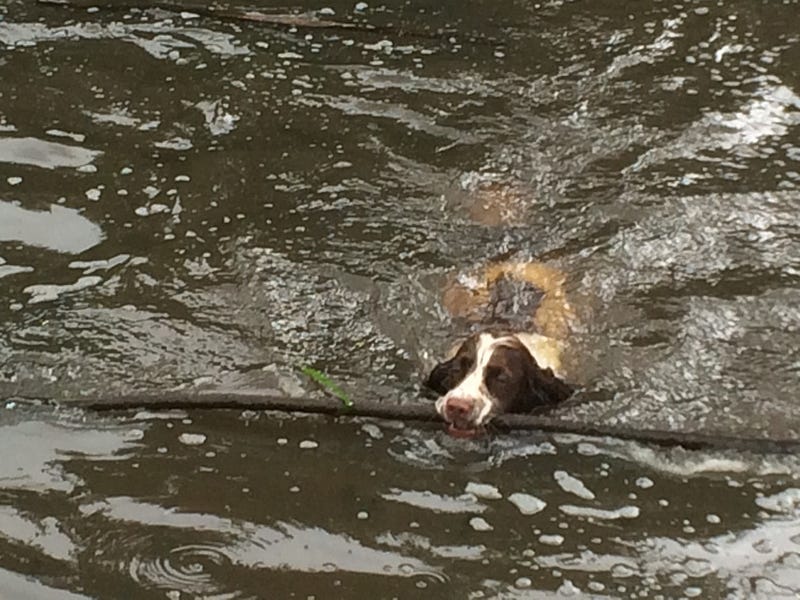
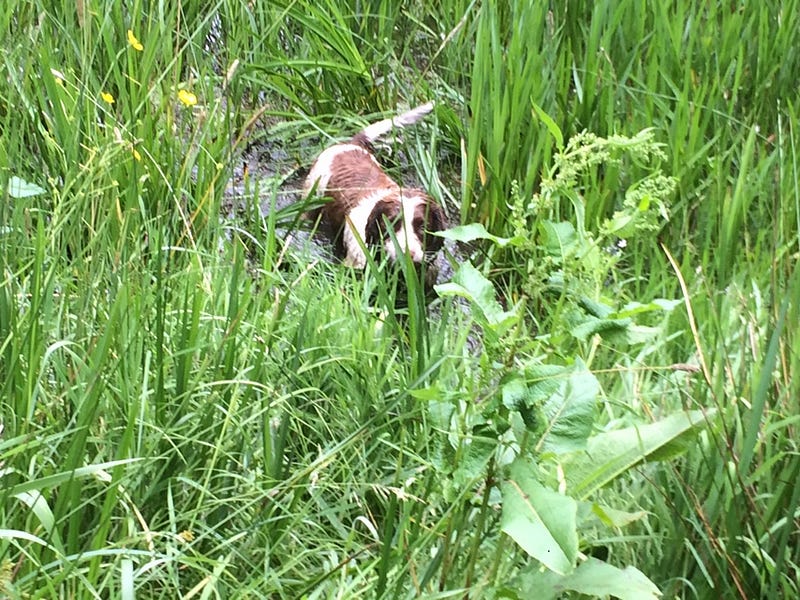
With the arrival of Mabel in our lives we have newly learnt to navigate our neighbourhood by its water courses and sources. She loves water. At the beginning of lockdown she was learning to paddle, a month in she learnt to swim, and as it starts to ease she has graduated to full on flying belly flops. There is no river at this end of Salford, but thanks to Mabel we have discovered an extensive network of intertwining streams and a patchwork of ponds, in addition to the rust red canal. Our daily walks route from one to the next, with periodic pauses for splashing, stick chasing and swimming. Mabel is always the muckiest, wettest dog on any outing.
Just one of the new corners we have discovered lies down in a valley, or clough as it’s known round here, fifty metres down a vertical slope below the disused railway line that we’ve walked, run and biked along hundreds of times. Up there it’s busy and bustling even in lockdown; before Covid the weekly Park Run swarmed past this spot every Saturday morning. But down in the shadows of the clough we rarely see a soul. It is shielded by towering ancient beech trees, probably older than the Victorian railway that has come and gone in their lifetime. Their uppermost leaves almost reach the level of the track that traversed this valley on an arched brick viaduct. The base of their smooth grey trunks are like giant elephants’ feet, their curled toes holding fast to the damp soil.
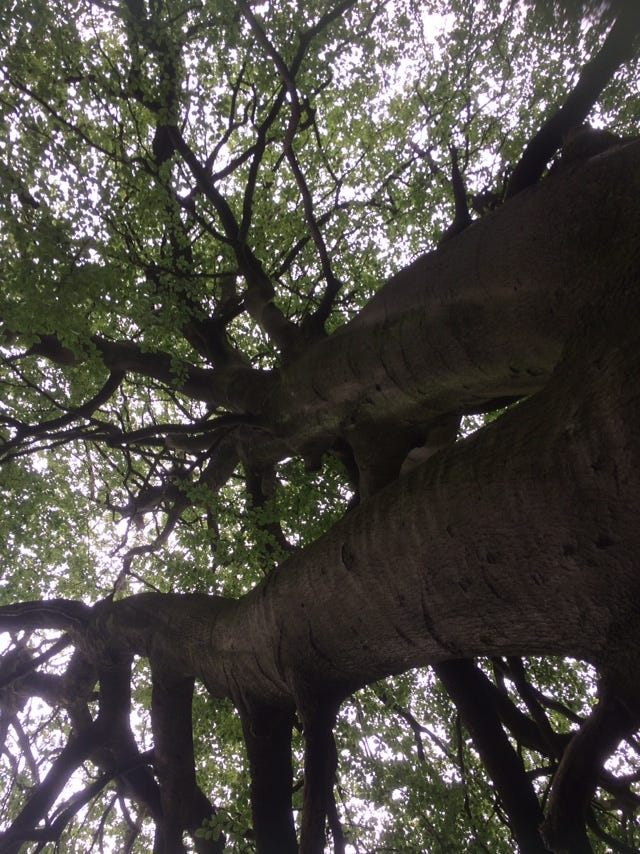
The ground is carpeted with a crisp layer of last year’s leaves. A stream runs through this clough, before passing under the viaduct and on, through the sun-baked meadow to the west where it cuts a winding gully through the sandy soil and the brown and white grazing cows. Mabel loves to charge up and down this stream, chasing sticks and eddies. From throwing stick after stick for her we now know where the water dawdles and where it races, where the deep pools lie as it curves its way down the clough. We push through an understorey of saplings to reach the banks of the stream and sit on a fallen branch, watching and listening as she plays.
At the beginning of lockdown these saplings were bare, pliable twigs. Now they have burst into leafy life, revealing themselves as the offspring of the giant beeches above. There is a pair of yellow wagtails that frequents the stream, skipping between rocks snatching hatching insects out of the air. A heavy branch has broken off one of the old beeches and slumped sideways, to be caught by another that is canting under the weight. A great tit has made its nest in the cleft left by the broken branch. As the leaves have gradually uncurled and stretched out, so the shade in the clough has deepened. Now only a few glancing shafts of sun reach the stream, shifting and sparkling on the water as the leaves high above sway with the breeze. Down here the valley floor is carpeted with a luxuriant crop of wild garlic. Over the last two months we have seen it push its first leaves up through the bare winter soil and leaf litter, gradually smothering the ground with dark, arching, pungent leaves. We have watched the flower spikes poke their heads up, bloom white and gradually set green seed. We have harvested heavy handfuls of their leaves and borne them home to become pestos and garlic butters. The garlic is dying back now, cow parsley, nettles and willow herb are pushing through to replace it. The dog and the wild flowers are both grown thigh high over the course of this sun baked, pandemic spring.
Thanks to the puppy and the pandemic I could describe to this same level of detail umpteen other dips and dells that we have walked and watched in these past ten weeks. We must have clocked up hundreds of miles, one step at a time. In nine years I have never felt so connected to the soil on which our community stands, to the nature that coexists with us. So grounded. From next week our lives will start to speed up and become more crowded again. My daughter is amongst the first to return to school on Monday. The routine of alarms, timetables and packed lunches will start to hem us in again. We must make sure to hold onto the gifts of this unprecedented pause, the chance to breathe, to listen, to reflect and connect. To just be, in nature. We need to make space and time for nature in our cities. To carry it forwards into our reshaped lives when the great pause comes to an end, and not allow it once again to become something we only experience at unnatural speed as we hurry across the earth. The more we care for it, the more nature will nurture us in turn.