
The Little Mermaid Does Not Promote the Patriarchy
It is not sexist either and nor are fairy tales inappropriate for children
Over the last decade, it has become increasingly popular to bash all fairy tales, especially Disney ones. A recent study even shows that 40 percent of those under the age of 30 think that fairy tales are inappropriate and that they perpetuate gender stereotypes.
I agree, but here is my problem with this, everything in some way perpetuates a stereotype of some sort. The strong independent woman is a stereotype.
The only reason that the stereotypical view of women in fairy tales — and this is just in my opinion — was a problem, was because there was no alternative. It was the only view, and this was not just a female problem, there was only one image of men as well.
These views have now been shattered on both counts thanks to the massive boom in offering different perspectives and stories and characters. This matters because something only perpetuates a gender stereotype if that is the only thing that exists, but if there is a variety, then there is no problem because then people can choose which they like best.
If I’m being honest, I often think that some of the fears that many have in regard to letting children — especially young girls — watch fairy tales, is that they fear their children might actually decide they like them more than the opposite and want them more than the opposite.
If they did, that would be their choice and denying them the chance of watching a fairy tale — which let’s be honest, when you are a child are magical — denying them the chance to watch them out of such a fear would be robbing them of that choice, the exact thing we are fighting against.
Of course, this is just my opinion, but it’s why I happily let my two daughters watch fairy tales, and they love them, they love superhero flicks as well, and often take turns playing a beautiful Princess that needs rescuing, and a superhero saving her — normally Wonder Woman or Ironman.
But I don’t want to get into a general discussion of what I see as the silliness of the modern world when it comes to fairy tales, and how many truly seem to believe such stories have the power to trick us “poor” and “naive” women into willfully submitting to the patriarchy.
What I want to talk specifically about is The Little Mermaid, which I did not think people could ever think promoted gender stereotypes. Yet, I came across a post on TikTok — which I’m not going to share because it’s silly — but I came across it and it made such a claim, and the comments were mostly all in agreement.
I suspect the post was most likely made as a means to try to gain lots of likes and attention by offering a fairy tale bashing view, and I suspect most who were in agreement likely have never even watched it — especially considering most appeared to be young men and the girl who posted was attractive. Note guys, a way to get with girls is not sucking up to them, it’s being real with what you actually believe.
But I’m going to imagine that the poster was being serious and that she genuinely believes that The Little Mermaid is a film about a woman who is brainwashed into changing herself for a man, and is trapped in a world of male subjugation and the patriarchy. She is not, and it’s not, at least not in my opinion.
What The Little Mermaid is really about
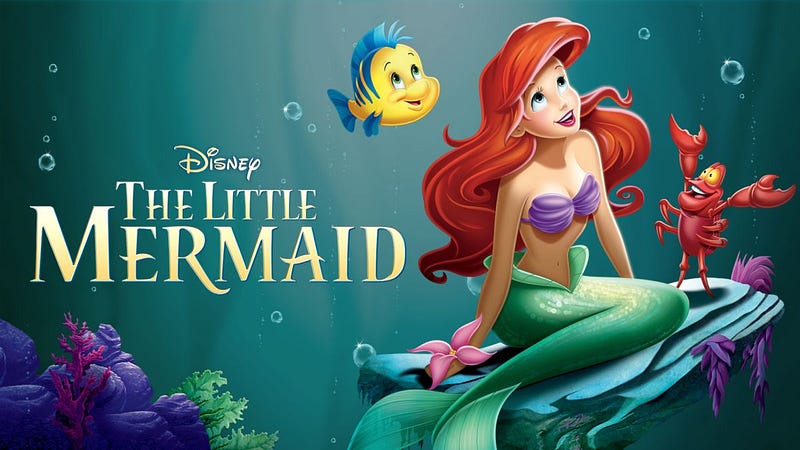
When I watch The Little Mermaid what I see is not the shallow and short-sighted view of a film about a woman trapped in patriarchy changing herself for a man, what I see is a story of a young woman who has lived under the shadow of a loving but powerful and overly protective father. A woman who despite having lived a highly protected life, in an effort to find herself, goes on a journey of empowerment in which she not only saves the day, but finally moves out from her father’s protective blanket and makes a life for herself in a new world — a world of her own creation.
I see the story as a giant metaphor of the story of a woman leaving home to go to university at a faraway place, and managing to find herself and her feet — see the metaphor? But then, metaphorically speaking, she is forced back home because her father needs her, or perhaps because university has ended and so she goes back home.
Whichever, the battle with the evil witch Ursula in my view is a metaphor for the strain she feels battling the desire to continue this new life she has made for herself in this new world, and the desire to remain home under the protective blanket of her father.
So, I see the story as a giant metaphor for the battle between the desire to remain home in the sanctuary of a powerful but loving family, and the desire to move away to a new world that you have found and made for yourself.
This is why it’s a brilliant coming-of-age story even down to the metaphor of her getting her legs and finding her feet. In my view, that makes Ariel one of the strongest characters in Disney and one of the most relatable, everyone at some point will go through the process of leaving home and stepping out into the world on their own two feet.
This story perfectly encapsulates the feelings that often come with that journey, the push and pull of the sanctuary of home versus a brave new world of your creation. The safety of the known versus the lure of the unknown.
That means rather than being disempowering to women, I argue it’s empowering to women, both young and old, and men as well, because all can on some levels relate to Ariel’s journey.
Final words
It’s my view that The Little Mermaid is not remotely a story of a woman trapped in the subjugation of the patriarchy who changes herself for a man, it’s not sexist, it’s not antifemale, it’s the opposite. It’s a story of a woman leaving the sanctuary of a loving family home to make a new life for herself that she has chosen and created. That makes it a story of empowerment. But perhaps I am watching something different to everyone else. If you disagree, let me know in the comments.
But even if you do disagree, all I will say to finish is this, if we are afraid of letting girls watch fairy tales for fear that somehow by doing so, it will hinder their futures and send them on a path to “male subjugation” i.e. the life of a housewife, we clearly have a very dim view of women, men, and housewives. I for one, think more of all, and think all deserve to be given a lot more respect.
So, bash fairytales all you like, they aren’t for everyone, but don’t try to claim watching them is dangerous and antifemale, it’s not and never will be, only trying to shame people for enjoying what they enjoy is — sadly, the fairy tale bashing is entering that territory, it needs to stop.
Thanks for reading! If you enjoyed this, you may also enjoy the following: