
Revealing the Roots of Behaviors and Addictions
The Liquor is Still Next to the Coffee
On facing my fat and how my friends will react to me without alcohol
I like the peace in the back seat. I don’t have to drive. I don’t have to speak. I can watch the countryside And I can fall asleep. — Backseat, Arcade Fire
Dryuary Day 2
I dreamt of my daughter, Ella, in ballet toe shoes, the kind that are ripped and worn with tattered ribbons. She was twirling around on the carpet. I awoke at 9, then 10, then 10:40.
I’m not drinking today. It’s the first thought to curl up into my conscious mind at the moment of waking. I stretch and roll out of bed in a way I’ve become accustomed, so as not to strain the muscle injury deep in my left gluteus.
Scale — 69.9 kg (154 lbs) This is no surprise. I am not upset about the weight so much as I am about my torpor in doing nothing about it. I’ve forgotten what it feels like to be light on my feet. I wonder how much of it is bloat, as if 20 lbs of “bloat” will just fall off me since I won’t be running a keg tap into my mouth soon.
Sweats, shoes — kitchen. All the bourbon, bitters, Irish cream, and empty cans of tonic are still congregated around my coffee press. I ate half a banana and drank some water, vowing that today, Day Two, will be a booze clean-up day.
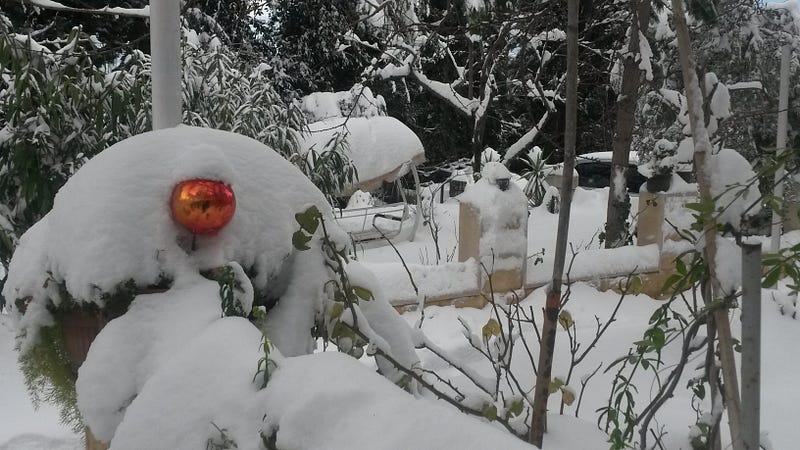
Out the door for a short walk, as I can’t do a long one yet. The air is crisp, but not as cold as I’d feared. Still, upon awakening at nine, I should’ve gone out when the sun was shining, brilliant, and warm. Now there are clouds and it’s grey and chilly.
I am not yet walking for cardio or weight loss. My walking is in a stage of Purpose. I walk to feel my legs scissor in long strides. I concentrate most on my quads, my groin, and my ass as these are danger zones for me. Past injuries make me very prone to muscle spasms and strain. I go to feel the cold air burn my lungs, burn my cheeks, I can hear a rattle in my chest. My eyeballs water. I go to get to know the road again, how it feels under my feet, where the cracks and potholes are — the waft of garbage and carrion, the song of winter birds. I go to remember the death of January in this place — the long, lonely grey of the weeks ahead — and to expect the warmth and the jasmine of spring to come.
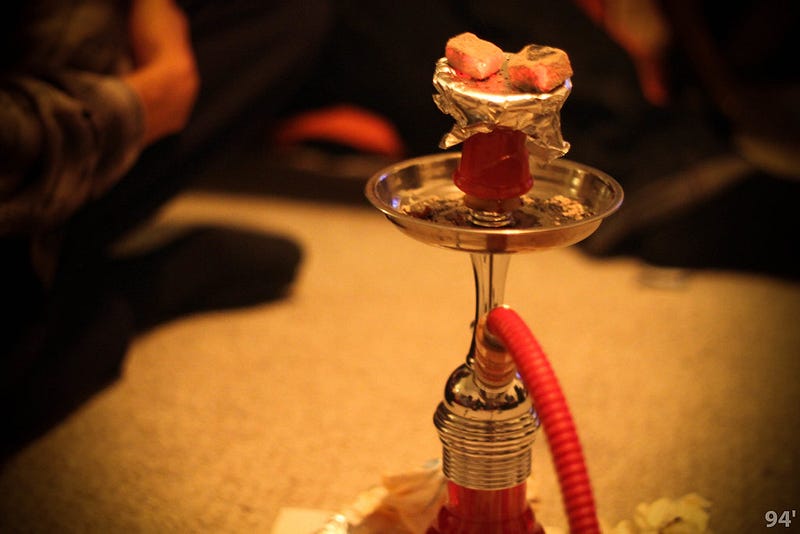
Hammana is three thousand feet above sea level on a steep rise above the clatter and noise of Beirut below. Fig trees grow out of the stone walls that slither through the town. Old men sit in front of their storefronts drinking coffee and smoking cigarettes or hookah pipes. I walk through the smoke.
My feet bend and connect with the road; it’s very mechanical. I am not yet free enough to enjoy the splendor of flight, that feeling on a run where time and place just disappear, and you are left only in spirit, floating above the asphalt.
Post walk: Water, coffee, boiled egg. My left butt cheek hurts. Gilbert (my cousin through marriage, my friend because I like him a great deal) is coming today so we can go to a local gym. “Gilbert” is such a nerdy name in the United States. In Lebanon, it’s pronounced in the French zheel-BEAR. I’ve never been to this gym. It’s located inside the Valley View Hotel up the mountain. I look forward to doing some much-needed, slow strength training. I feel as flaccid as a dead bird.
At home, I am safe, but I fear invitations. I fear dinner out or at someone else’s house. I know I’ll say no to a drink. This is not the problem. The problem is the looks, the quizzical twists of faces, the questions.
I guess I want people to acknowledge that I’m not drinking, but I don’t want them to ask me why or say anything stupid or insensitive because then I’ll have to work through the emotions of considering the barrage of questions to be my fault.
“You’re not drinking?”
“Don’t you want some wine?”
“Josie's not drinking.”
“Why not?”
“Whew! You needed to slow down, anyway.”
And then, as I type this, I realize there is no one else’s voice attached to these musings other than my own.
I’m going outside to have a cigarette. I can’t do everything at once.
Josie Elbiry, 2021
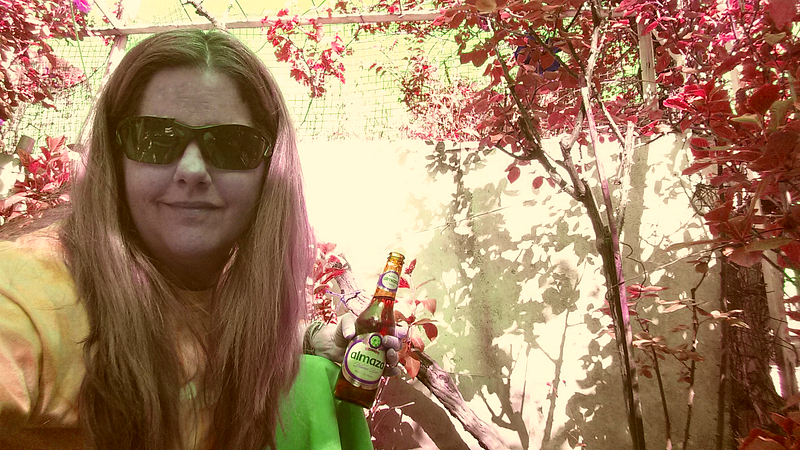
The Roots of Behaviors and Addictions is a series of short memoirs written during a month of abstention from alcohol. I learned surprising things about my ticks, proclivities, and past traumas. A hookah is a water pipe. The Lebanese call it nargileh (nar-GEE-ley) with hard g. The bowl of the pipe is filled with tobacco soaked in fruit jelly. My town of Hammana in Lebanon was settled by Druze princes many centuries ago. Christians came to settle in the eighteenth century. In the photo for this post, I am holding an Almaza beer. Almaza is Lebanese Arabic for diamond.
You can catch Day One of the journey here:


