
COVID
The Lingering Emotional Damage of Covid: Thick Skin and a Fragile Heart
Beyond the physical symptoms of the virus
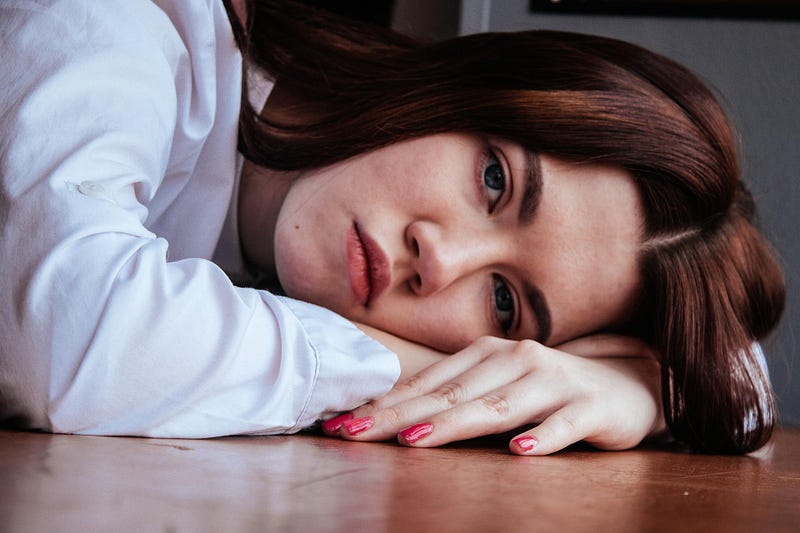
I have never been diagnosed with or had any concern about depression.
Until now.
And I’m pissed.
I took Moderna vaccinations in 2021 as a precaution and socially conscious choice. Many of my own family and friends refused to take preventive action. To me, that seemed foolhardy, but I respected their choice to play with fire. My life is lived in a bubble and consists of my grandson and me. We enjoyed a low risk of exposure to Covid or any variations.
However, I was unaware that the story doesn’t end with a vaccination, masks, and limited exposure to society.
What I didn’t know, until I tested positive a few weeks ago, was that there is an end date to the protective bubble I had elected to wrap myself in. There doesn’t seem to be general information at the ready or frequently promoted to prepare for annual vaccinations.
There is indeed a shelf life for the effectiveness of vaccinations.
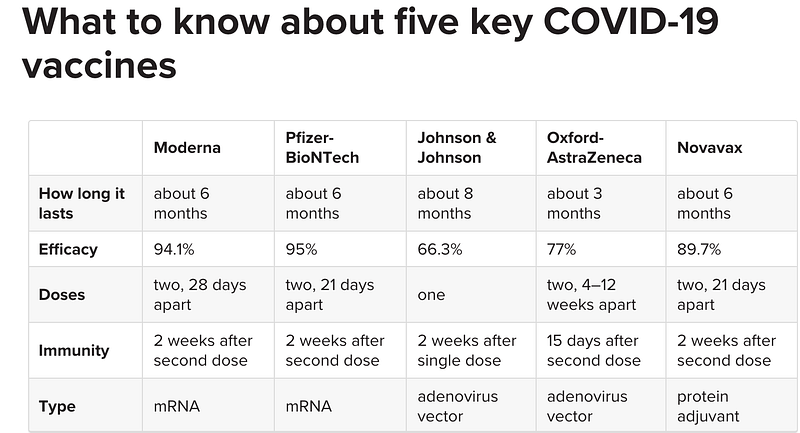
My shroud of protection expired on June 27, 2022. Obviously, according to the chart above, it was much sooner, but I tested positive on that day.
Dr. ‘Google’ revealed my Omicron variant a few hours after my screaming legs, total body ache, sore throat, and lightheaded fuzzy brain made themselves known.
Physical Effects of Covid
My physical symptoms lasted roughly a week. Hot, cold, hot, cold was a common theme for the better part of those seven days. My loss of smell was short-lived and my taste was altered for a few days only. The leg aches were the first to settle. The lightheadedness was the last symptom to clear though it ran neck and neck with the sore throat.
Still present is life-interfering fatigue.
I’m just tired.
A lot.
I deal with lethargy and forced physical function to keep life the same for my grandson. Soldier on. It’s what we do as parents and grandparents. My brain, though, has a different agenda and I struggle to combat the direction it insists on taking.
Emotional Effects of Covid
According to the Mayo Clinic, in part:
What are the other symptoms of post-COVID-19 syndrome?
· Neurological symptoms or mental health conditions, including difficulty thinking or concentrating, headache, sleep problems, dizziness when you stand, pins-and-needles feeling, loss of smell or taste, and depression or anxiety
The good news is that many people bounce back quickly with no lingering emotional damage. Many people do not.
I believe highly sensitive people are doomed.
Me.
I am doomed.
The cup is half full. The cup is half full. The cup is half full.
I repeat this often as a reminder. It is reassuring that I am aware of my resulting funks. I feel better equipped to tackle the numbness before it consumes me.
My insight allows me to focus on retraining my brain out of the blues. I don’t particularly appreciate how they make me feel and recognize that my internal dialogue has dramatically changed. My comfort zone is that my depression is situational, not clinical, and I am grateful.
Many people have not fared as well.
My natural sunny disposition takes a back seat at times and these thoughts and behaviors jockey to drive the ship:
- I am going to die alone.
- Poor me ~ my story was not chosen for the top ten. There were probably only eleven submissions, and mine was so horrible that laughter and sneers overtook the judges.
- I am not a writer. Not a good one.
- Every draft is unfinished because they were stupid stories.
- More than half of my ‘friends’ only care about what I can do for them.
- People are mean, judgemental, and insensitive.
- Only a few people care about others; most are self-serving at all costs.
- No one cares about my grandson and his best interests ~ they prevent his adoption but don’t give him or me the time of day.
- There is a cloud of suspicion surrounding the people in my life ~ what is their true motive?
- Why meet new people who will add to the number of people I don’t trust?
- My four-year-old grandson will date before me.
- I am going to die alone.
I snap myself out of these dramatic streaming thoughts. There exists some truth to them, but not to the extreme my mind visits. I feel fortunate for this understanding and have compassion for those who cannot see the tricks being played by the virus.
The relationship between our physical ailments from Covid and our mental health is revealed in various medical studies.
WebMD explains,
While experts still need to study the long-term effects of COVID-19 on the brain, over half of a U.S. COVID-19 survivor sample reported symptoms of depression months after recovery, those with more severe COVID symptoms being more likely to have depression.
Further,
When your body is stressed, it turns on a part of your nervous system called the autonomic nervous system. This system is “automatic” and not under your control. The portion of this system that lights up in an emergency is the sympathetic nervous system and prepares you for a “fight or flight” situation. This results in your body’s initiation of an inflammatory response, which is a central theory that explains how infections such as COVID lead to psychiatric illness.
As research unfolds, it supports the real effects of depression as a resulting symptom of Covid long after the physical ailments have cleared.
As reported by Psychology Today, researchers previously believed the brain had its own impenetrable “wall” known as the blood-brain barrier. However, we now know open channels exist between the brain and elements of the immune system.
What Does Depression Look Like?
I am rarely satisfied to let physical or mental changes have the reins. Researching first and then implementing helpful changes works for me. I start with analyzing the root.
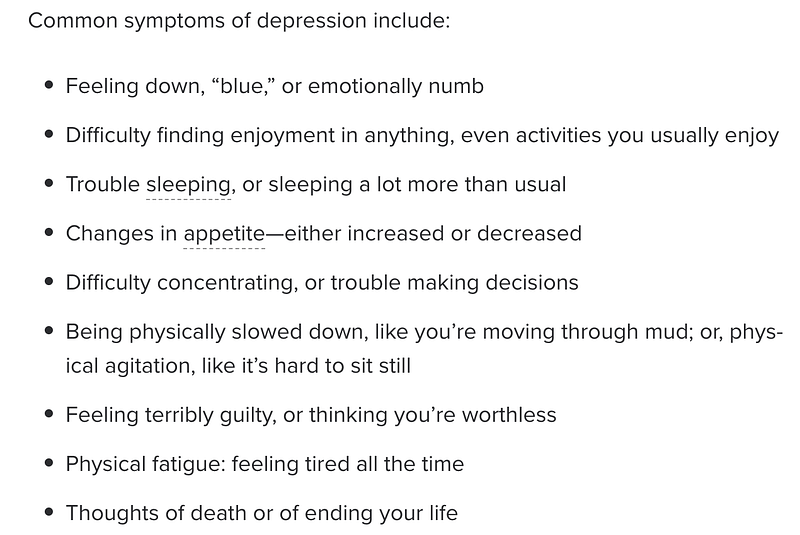
Out of the 9 listed common symptoms of depression, I suffer 6 of them. At this point, I know they are surmountable. They aren’t worsening. I am a tad stuck and work daily to override the negative thought patterns.
Treatment Options for Depression
- Effective approaches in combatting your situational depression can include cognitive therapy such as retraining your brain and how you think. I am currently incorporating this approach daily. Awareness of negative thought patterns allows us the ability to stop the train and change the course to positive inner dialogue.
- Moving your body, physically doing something, helps clear out the cobwebs of depression and provides a mental distraction. Start by adding one small physical change each day. Go for a walk. Physical activity such as yoga, dancing, and strolling with a friend, all help to minimize depression.
- Get proper sleep. Depression and sleep patterns are closely related. Practice relaxation methods prior to sleep and schedule it as a ritual for wellness. Your body will respond by creating a healthy circadian rhythm. I find my sleep improves on the days I exert some physical energy by power walking.
Depression can be debilitating. Consult your physician for assessment and direction if needed. Clinical depression may also require antidepressants such as SSRIs (Selective Serotonin Reuptake Inhibitors) and your doctor can advise you accordingly.
The most important thing to know if you are experiencing post-covid depression is that you are not alone. Early reports indicated more than 50% of those sickened with Covid experience depression.
“People who have been ill with COVID-19 can experience depressive symptoms for many months after their initial illness,” said lead researcher Dr. Roy Perlis.
Be aware, be present, and be your best advocate.
If you need professional help beyond your homeopathic, cognitive, and self-care abilities, seek it immediately.
You are not alone.
Please consider becoming a Medium member by joining with my referral link below ~ a small portion of your membership will help support my efforts. Thank you.
You can also follow me by subscribing to Medium or any of these other sites.
Substack | Simily | Kindle Vella Nonfiction | Kindle Vella Fiction
Copyright © 2022 Lisa Gerard Braun. All rights reserved.