
The Life of an Ancient Egyptian Princess
What do we know?
Princess. The word is ripe with meaning and subtext in western consciousness. Because of that, female members of aristocratic and monarchal families are often fantasized about.
That can lead to controversial decisions, such as labelling a Native American chieftain’s daughter a “princess” (Looking at you Disney). But it can also lead to interesting discussions of what life was like for people whose voices weren’t often heard throughout history.
Over on the AskHistorians Sub-Reddit, I was asked a question regarding Egyptian Princesses.
What exactly would a royal young woman in Ancient Egypt spend her day doing?
Education & Responsibility
First, let’s get the title out of the way.
What we might call a “Princess” would be called a “King’s Daughter” in Egypt. For this article, I’ll use the more familiar “princess” to describe the office.
They might also serve the role of “King’s Great Wife,” which could mean either they had the responsibility to act as a sort of First Lady in Egypt or they literally married their fathers…
The good news is the former is more likely to be correct due to the absence of children between the father and daughter relationships on record.
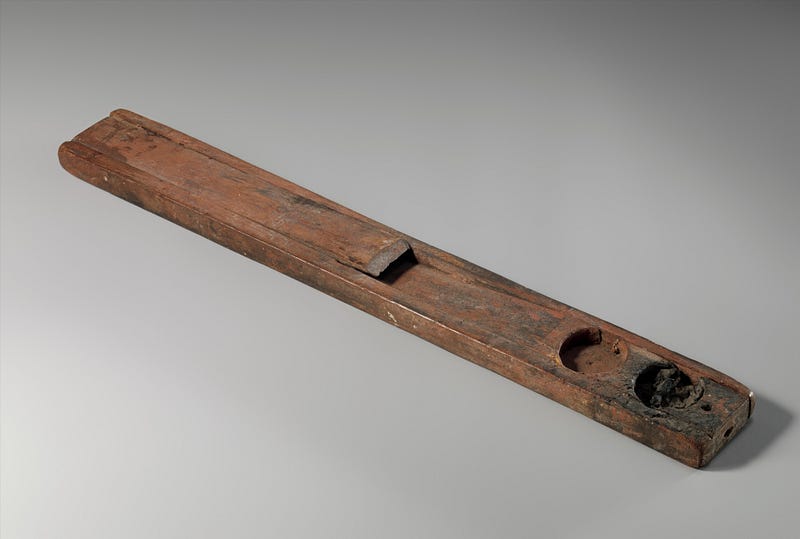
When it comes to education, we can’t say for sure if all princesses were tutored equally. We do have 2 scribal palettes (used for writing practice) that belonged to Princesses of the Amarna period though, so some obviously learned to read and write.
It seems the Princess’ daily life mostly took place in a Harem. That would usually be in a large palace which could accommodate hundreds of women.
As an example, the Mittani Princess married to Amenhotep III was said to be accompanied by some 317 ladies-in-waiting. These ladies would likely have used much of their day weaving the nice clothes that a Princess was expected to wear.
Even at a young age, a Princess had obligations. Starting in the 18th Dynasty, one such responsibility was the position of “God’s Wife of Amen”. This was an influential religious position that required a ritual of masturbation for the statue of Amen in Thebes.
As the statue made his travel rounds, perhaps the God’s Wife might’ve followed, getting a chance to take in her country. The job might not have been glamourous by our standards, but it came with perks.
Amen was an extremely influential God with a Priesthood that would later on command a large part of the Egyptian population. The lands ascribed to his priesthood would’ve been extensive, and perhaps navigating diplomatic relations between the royal family and priesthood was part of a Princess’ job.
We can’t be certain on much, but it doesn’t seem that Princesses merely waited around to be married. Instead, learning to read, write, and share in religious services, shows a much more dynamic life than we might stereotypically ascribe to most pre-modern royal women.
Fun
A young princess might play with rudimentary toys such as spinning tops and miniature weapons. One Mechanical toy of note was a cat that had jaws which could be moved up and down by string.
Wealthy nobles often had garden pools that allowed for swimming on their private estates. They could also be expected to witness courtly entertainment, like the dancers and musicians that would play before the nobles of Egypt.
One Vizier’s wife is actually pictured playing a harp herself in one of our reliefs. So learning an instrument was another option for entertainment.
Banquets and parties were standard, and general merriment seems to be how the rich would like to have passed their time. Balance was a religious constant in Egypt, so drunkenness wasn’t encouraged, but it obviously happened.
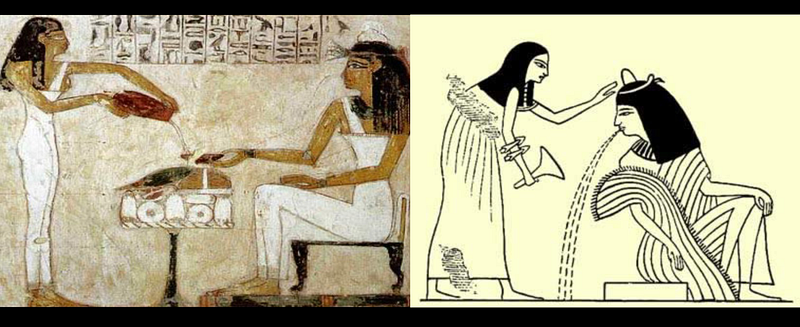
One of the famous “Harpers’ Songs” included these lyrics:
“Spend the day merrily; put unguent and fine oil to your nostrils, and lotus flowers on the body of your beloved. Place singing and music before your face. Spend the day merrily, and weary not therein; lo, none can take his goods with him.”
So it would seem that having fun was a big part of life for the Egyptian people, and as is normally the case, nobles in particular.
Family time
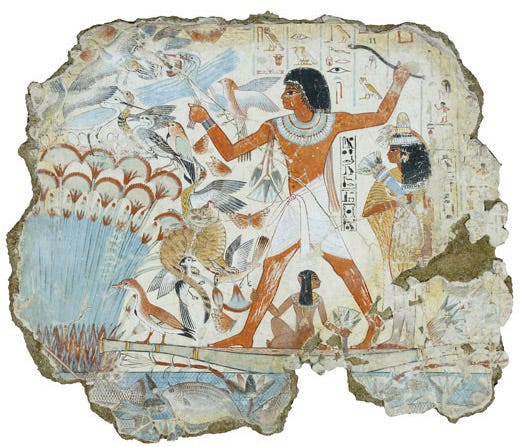
We have some images (as pictured at the top) of a nobleman named Nebamon bringing his daughter on a hunt. While some scholars feel this may be symbolic, others take it as a display of affection. Perhaps some noblemen enjoyed being with their families. A difficult concept for some to grasp, but a human one nonetheless.
Being that this represents the upper nobility of Egypt, it’s safe to say that it wouldn’t be far off from what the Pharoah himself would do.
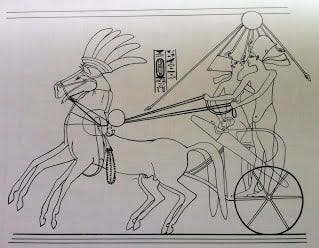
Another significant look into the life an Egyptian Princess comes from the Amarna period and involves King Akhenaton and his daughters. We have intimate family reliefs that show him, his wife Nefertiti, and their daughters on chariot ride through the city.
As far as choice of husband goes, at least till Ramesses II, royal women were forbidden to marry commoners.
And probably my favorite quote from any King ever is Amenhotep III’s reply to King Kadashman of Babylon for a marriage alliance.
When asked for one of his daughters, his reply:
“From time immemorial no daughter of a king of Egypt is given to anyone.”
Mind you, the man already had a couple of Babylonian Princesses for himself!
While this was likely just posturing, and there are records of Egyptian princesses being given in marriage, it still rings familiar. Egyptian Princesses might have known a thing or two about overprotective fathers.
The Princess Diaries
Unfortunately, we have little in the way of a firsthand account from an Egyptian princess. It would be great to find some treasure trove of letters written by a Princess, but I’m unaware of any.
The few accounts and writings that we have are enough to tell some wonderful stories, though.
An outstanding example of one Princess who rose above society’s expectations is of course the legendary Hatshepsut, who claimed the very kingship. I could say much about this former King’s Daughter and God’s Wife of Amun, but I’ll save it for another time.
Still, even those who didn’t become Pharoah captivate the imaginations and fantasies of many. I hope this article has shed some light on their reality.
Sources
- “The Amarna Letters” by W.L. Moran (1992)
- “1177 BC” by Eric Cline (2014)
- “The Pharaoh: Life at Court and on Campaign” By Garry Shaw
- “Ancient Egypt: Anatomy of a Civilization” by Barry Kemp
- “Property and the God’s Wives of Amun” by Betsy Bryan (Free)
- “The Woman Who Would Be King” by Kara Cooney
- “The Complete Royal Families of Ancient Egypt” by Aidan Dodson/Dyan Hilton
- “Red Land, Black Land” by Barbara Mertz
- “The Tomb in Ancient Egypt” by Aidan Dodson
- “The Rock Tombs of El-Amarna” by Norman De Garis Davies (Free)
Note: This article contains affiliate links.