
The Life and Legacy of Rafer Johnson, Olympic Gold Medalist
How one man rose to fame from the backwoods of Texas to the halls of fame worldwide
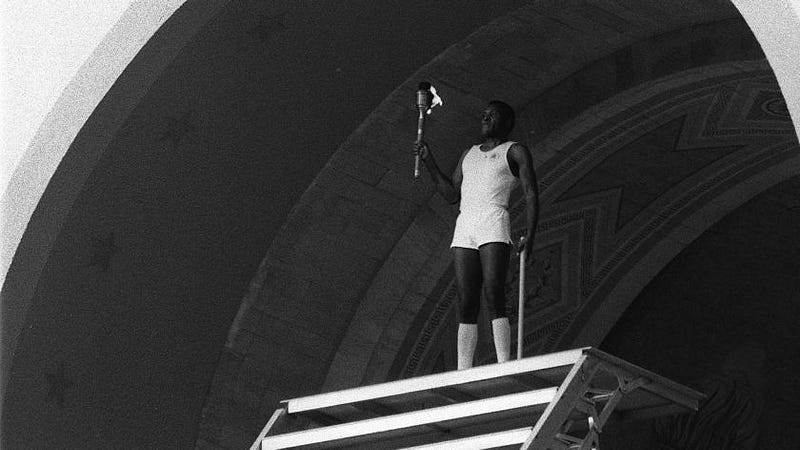
American History includes another iconic figure, Rafer Johnson, a deeply religious man, who above prepared to light the Olympic flame at the Los Angeles Coliseum opening the 1984 Summer Games. Mr. Johnson legacy was intertwined with the history of Los Angeles as he begun his performances as a world-class athlete at UCLA and as a hero when he helped to disarm Robert F. Kennedy’s assassin at the Ambassador Hotel.
He was a native of Texas and was the son of a farmworker who later moved with his family to California, thereby becoming the World’s Greatest Athlete. He was the U.S. team’s flag bearer, the first Black American, at the 1960 Rome Olympics. Mr. Johnson as a trailblazer went on to break racial barriers, had unexpected role in the international relations of the Cold War, became a international political activist and 1969 founded the California Special Olympics for disabled children where he served for 10 years as president and was a vocal advocate for fair play and good sportsmanship.
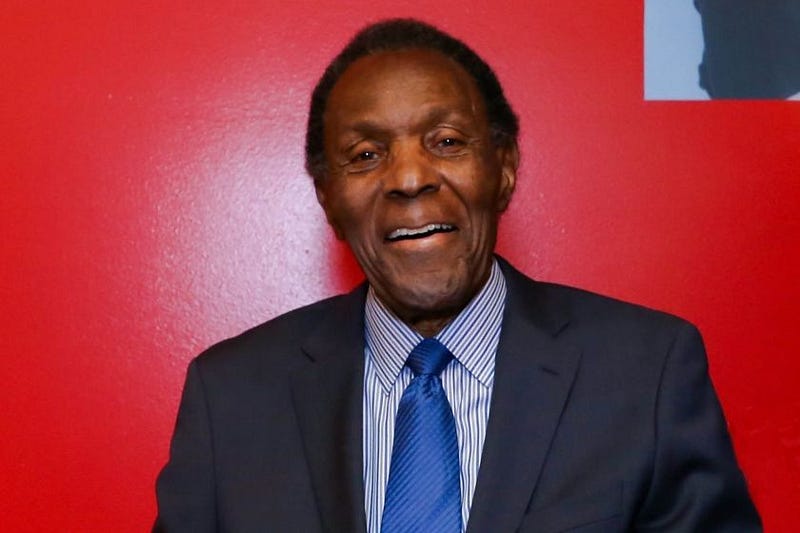
Rafer Lewis Johnson was born Aug. 18, 1934, in Hillsboro, Texas, had five siblings and was the second born to Lewis Johnson, a cotton picker and farm handyman, and Alma Gibson Johnson. As life was difficult, he traveled with his family at a young age from Texas to Oklahoma, returned to Texas to settle in a Dallas home that had no electricity or indoor plumbing. When he was nine, his family move to San Joaquin Valley town of Kingsburg, a mostly Swedish areas, they were the only Blacks. He and his siblings had to pick cotton after school, on weekends, holidays and summers with their parents. .
In high school, Mr. Johnson was a four-sport star in high school, lettering in football, baseball, basketball and track. Afterwards, he attended UCLA following Jackie Robinson, who broke the racial barrier in Major League Baseball, and Ralph Bunche, the first Black American to be awarded the Nobel Peace Prize. Given these two history makers, Johnson yet faced racism on campus where on white lady that he was dating was forced to choose between him and her sorority membership. In another case, a fraternity rejected Johnson’s membership because he was Black, but Pi Lambda Phi, a national fraternity at UCLA, accepted him where he became the first Black American to join. Also, Johnson was elected student body president at UCLA, which brought him tons of hate mail, as one read, “ “Who do you think you are, black boy?”
In a short time frame, he ascended as a decathlete drawing national attention wining the Pan American Games in 1955, appeared on the “The Ed Sullivan Show” and broke the world record for the decathlon, established himself as the 1956 Olympics favorite, but a knee injury and torn stomach muscle sidelined him that caused him to finish second at the Games in Melbourne, Australia.
With the Cold War tensions , the world’s attention was drawn to the first U.S.-USSR track meet, in 1958, that was held in Moscow and the spotlight was on the battle to be the World’s Greatest Athlete between Johnson and Vasili Kuznetsov, who held the world record at that time. All was labeled the battle between communism and the free world, a role that made Johnson uncomfortable and he stated, “I was fully aware of the irony that a Black man was an emissary of a nation where discrimination raged and racists got away with lynching's and I found myself affected by the political overtones despite my efforts to ignore them.”
Even under much pressure, Johnson performed his best decathlon ever, beating Kuznetsov as he broke the world record which caused the Soviet crowd to rush to the field and as Johnson assumed they were going to attack him but instead they raised him on their shoulders and shouted his name.
Being unstoppable and determined, in 1958–59, Mr. Johnson played basketball for legendary UCLA coach John Wooden and trained with Yang, a Taiwanese athlete who attended UCLA who emerged as a decathlete a great competitor for Johnson. Later, these to competitive rivals developed a unique friendship as stated by Johnson, “Ours was the purest of rivalries,” Johnson recalled. “We each wanted the other guy to do well, but we wanted even more to win.”
With all this fame, you would think his Olympic success would allow him to cash in, but it was quite the contrary, due to the rules of amateurism that wasn’t a reality, he even had to turn down a film role in “Spartacus” not to endanger his eligibility status that forced him to end up flipping burgers at Culver City’s Hamburger Handout.
A back injury in a 1959 car accident, forced him to sit out a year’s worth of competition, uncertainty surrounded his state but he erased that doubt and won the 1960 Olympic trials, setting a new world record in the process. He and Yang in Rome, had a two-day battle, the first day’s event interrupted by downpours, kept the athletes on the track until nearly midnight. Johnson lead Yang by a small margin of 55 points, they were the leading competitors. The second day, Johnson led Yang by 67 points with only the final event- the 1,500 meter run, which Yang had a leg up on Johnson being better at it. Uneasy, not wanting the gold to go to Yang, he stayed on Yang’s heels lap after lap and ran the fastest 1,500 meters of his life and finished just 1.2 seconds behind Yang, claimed the gold medal. Exhausted, he announced his retirement from the sport. With his worldwide fame, in 1961, the Los Angeles Rams picked him in the NFL draft and the Harlem Globetrotters offered him a spot on their team. Forgoing all offers, chose to dabble in the movies, landed supporting roles in films, TV shows, a TV reporter covering the 1964 Olympics for NBC and a sports anchor for KNBC in Los Angeles. Also, he hung with the likes of Kennedy, and when Kennedy ran for president in 1968, Johnson was one of his biggest supporters across news medias, meetings, new conferences, addressing rallies along with Roosevelt Grier, a former Rams football player and they became Kennedy’s bodyguards.
June 5, 1968 as Kennedy gave a speech at the Ambassador Hotel in Los Angles after winning the California Democratic primary upon his exit, was shot and killed as Johnson and others attacked the gunman, Sirhan Sirhan and he grab Sirhan Sirhan’s gun and later turned it over to the police.
Traumatized by Kennedy’s assassination, he chose a new direction launched the California Special Olympics for disabled children and remained involved for the rest of his life. 1983–92, he was the president of the Special Olympics Southern California, thereafter had a long career with Continental Telephone where he rose to vice president of personnel.
Other credits included being summoned by L.A. Mayor Tom Bradley, to be on the board committee, bringing the 1984 Summer Olympics to the city. There was much speculation as to who would be the final torchbearer and ten days before the July 28 ceremony Johnson was asked to light the flame and it was announced at the very last minute.
During the ceremony, he raised the torch to the gas jet attached to the bottom of the arch. Flame flamed and rose through the rings and up to the cauldron, then erupted in fire and as they say the rest is history.
Mr. Johnson’s brother, Jimmy Johnson, whom he saved from drowning when they were young, went on to play with the San Francisco 49ers and was induced into the Pro Football Hall of Fame.
In conclusion, Mr. Rafer Johnson will be forever remembered in the fabric of American History, as he chronicled his legacy in his 1998 autobiography, “Thinking about picking cotton brings tears to my eyes to this day, just from remembering how hard my parents had to toil to earn a meager living.” His life was be summarized, “he was a breathtaking Olympic gold medial winner who became an adored symbol of good sportsmanship and civic generosity,” per the Los Angles Times. At age 86, he retired from duty and ascended back to God. R.I.P.
For additional reads:


