avatarEP McKnight, MEd

Free AI web copilot to create summaries, insights and extended knowledge, download it at here

2022

Abstract

pended, he was warned of doing something similar. Prior, he had thought of dropping out but chose to wear a black beret to show support for the Black Panther Party and other civil rights organizations. Not only did he not adhere to the warnings by the Olympic officials but made a bigger and broader stance than his teammates, in addition to raising his fist on the medals stand, like them.</p><p id="898e">Mr. Evans as a civil rights activist joined the Olympic Project for Human Rights speared headed by Mr. Harry Edwards who was the group architect and revered Mr. Evans highly, “Lee Evans was one of the greatest athletes and social justice advocates in an era that produced a generation of such courageous, committed and contributing athlete-activists.”</p><p id="7ef0">Mr. Evans and his teammates, Smith and Carlos were college starts at San Jose State “Speed City” teams. He and his two teammates earned a platform at the Mexico City Games with a record setting performance on the track. After Mr. Evans ran his 43.86 in the 400, he anchored the U.S. 1,600-meter relay team to a world record of 2:56.16. The 400 record stood until 1988. The relay record stood until 1992. Other credits to his legacy, Mr. Evans won five U.S. titles at 400 meters and was a member of both the USATF and U.S. Olympic halls of fame.</p><p id="dcf7">With track in his DNA, Mr. Evans coached at Washington, San Jose State and South Alabama and was the director of athletics for the Special Olympics and went on to coach national teams for Qatar, Cameroon and Nigeria.</p><p id="4ee4">In conclusion, as a Olympian champion, humanitarian and activist, he came and went as he touch many lives, affected many lives and gave so many renewed hope in humanity. Mr. Evans lived what he was a “true champion!” R.I.P.</p><p id="1cfa">For additional reads:</p><div id="2360" class="link-block"> <a href="https://readmedium.com/ms-lusia-harris-stewart-a-pioneer-of-womens-basketball-and-first-female-nba-draft-7768e3d1061"> <di

Options

v> <div> <h2>Ms. Lusia Harris-Stewart, a Pioneer of Women’s Basketball and First Female NBA Draft</h2> <div><h3>How one pioneer was born into a family of basketball players and received national and international fame</h3></div> <div><p>medium.com</p></div> </div> <div> <div style="background-image: url(https://miro.readmedium.com/v2/resize:fit:320/0*Gzq10aDfoEGU7ckp.jpg)"></div> </div> </div> </a> </div><div id="e653" class="link-block"> <a href="https://readmedium.com/the-life-and-legacy-of-jim-mudcat-grant-the-first-black-baseball-pitcher-613d667c4eff"> <div> <div> <h2>The Life and Legacy of Jim “Mudcat” Grant, the First Black Baseball Pitcher</h2> <div><h3>How Mr. Grant won 20 games in American League was an activist, singer and musician</h3></div> <div><p>medium.com</p></div> </div> <div> <div style="background-image: url(https://miro.readmedium.com/v2/resize:fit:320/1*yqbdMIdHts15e1Awz9pc7Q.png)"></div> </div> </div> </a> </div><div id="2c19" class="link-block"> <a href="https://readmedium.com/before-mrs-rosa-parks-there-was-mrs-martha-white-the-louisiana-bus-boycott-b77b82dfc428"> <div> <div> <h2>Before Mrs. Rosa Parks, There Was Mrs. Martha White, The Louisiana Bus Boycott</h2> <div><h3>The life and legacy of Mrs. Martha White, a civil rights pioneer who refused to give up her seat on the bus</h3></div> <div><p>medium.com</p></div> </div> <div> <div style="background-image: url(https://miro.readmedium.com/v2/resize:fit:320/0*fmweol9jTIWb8IGl.jpg)"></div> </div> </div> </a> </div></article></body>

Celebrating the Legacy of an Iconic Figure, Mr. Lee Evans, Olympic sprinter

How Lee Evans made a stance for what was right, justice for all and protested racism at the 1968 Games
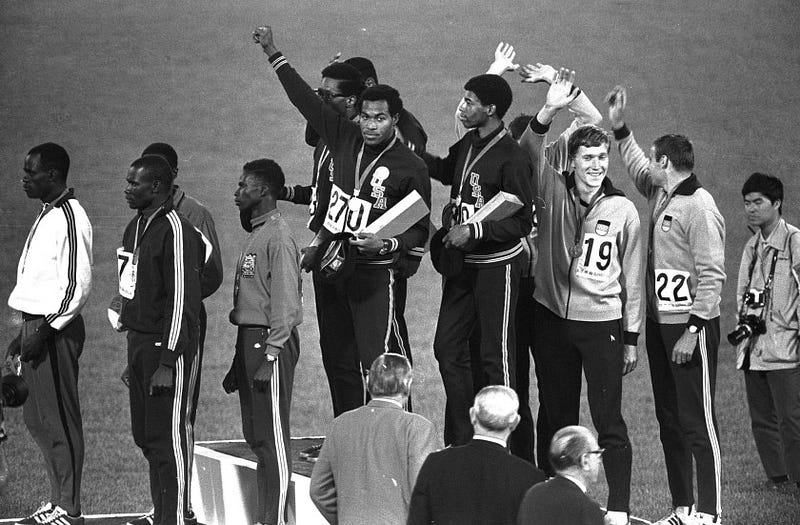
Photo by Associated Press

Sprinter Lee Evans, above, holds up his fist after winning a gold medal at the Summer Olympics in 1968.

“If you don’t stand for something, you will fall for anything.”

Mr. Lee Evans was the record-setting sprinter that many may not know of or heard of for taking a stance with his talent and ideology. He was a record-setting sprinter who wore a black beret in a sign of protest at the 1968 Summer Olympics thereby becoming a life activist and humanitarian for social justice until the day he died at age seventy four.

Residing in Nigeria temporary while coaching a high school team, suffered a stroke which attributed to his demise as his family had begun a fundraiser to bring him back to the United States for medical care. According to this school, Mr. Evans was given the 1991 Nelson Mandela Award, for those who stood for the values of equality, friendship and respect of human rights, against apartheid and any form of racism. As a non-stop humanitarian, he worked on the Madagascar Project that helped provide fresh water and self-sustaining farming techniques.

Mr. Evans was the first man wo cracked 44 seconds in the 400 meters, winning the gold medal at the Mexico City Games in 43.86. Before his victory, his teammates, Tommie Smith and John Carlos, were sent home from the Olympics for raising their fists on the medals stand and their goes Mr. Evans fist in the air in solidarity to an injustice toward his teammates as he held his medal in his opposite hand.

After his teammates were were sent home or suspended, he was warned of doing something similar. Prior, he had thought of dropping out but chose to wear a black beret to show support for the Black Panther Party and other civil rights organizations. Not only did he not adhere to the warnings by the Olympic officials but made a bigger and broader stance than his teammates, in addition to raising his fist on the medals stand, like them.

Mr. Evans as a civil rights activist joined the Olympic Project for Human Rights speared headed by Mr. Harry Edwards who was the group architect and revered Mr. Evans highly, “Lee Evans was one of the greatest athletes and social justice advocates in an era that produced a generation of such courageous, committed and contributing athlete-activists.”

Mr. Evans and his teammates, Smith and Carlos were college starts at San Jose State “Speed City” teams. He and his two teammates earned a platform at the Mexico City Games with a record setting performance on the track. After Mr. Evans ran his 43.86 in the 400, he anchored the U.S. 1,600-meter relay team to a world record of 2:56.16. The 400 record stood until 1988. The relay record stood until 1992. Other credits to his legacy, Mr. Evans won five U.S. titles at 400 meters and was a member of both the USATF and U.S. Olympic halls of fame.

With track in his DNA, Mr. Evans coached at Washington, San Jose State and South Alabama and was the director of athletics for the Special Olympics and went on to coach national teams for Qatar, Cameroon and Nigeria.

In conclusion, as a Olympian champion, humanitarian and activist, he came and went as he touch many lives, affected many lives and gave so many renewed hope in humanity. Mr. Evans lived what he was a “true champion!” R.I.P.

For additional reads:

Racism
Life
Life Lessons
Education
Startup
Recommended from ReadMedium