
Leadership
The Journey of High Performing Teams
Building the team so strong that we don't know who the boss is
If someone asks, “What is the best indicator of team development?” what would you say? For us, it would be the ratio of WE’s to ME’s. The hero team players are usually filled with ME’s, and the most caring supporters of the team are usually filled with WE’s.
💭 How can we bridge this gap?
💭 How do you identify the current stage of team development?
When ‘I’ is replaced by ‘we’, even illness becomes wellness.
While conversing with a colleague about building high-performing teams, I introduced them to the idea of Tuckman’s stages of team development and was asked a lot of questions. I seized the chance to turn those questions into this article to help every individual, sailing on the same boat, understand the journey of team development.
In this article, I have mentioned the popular Tuckman’s model for team development along with the strategy for the leadership to adopt in each of the phases.
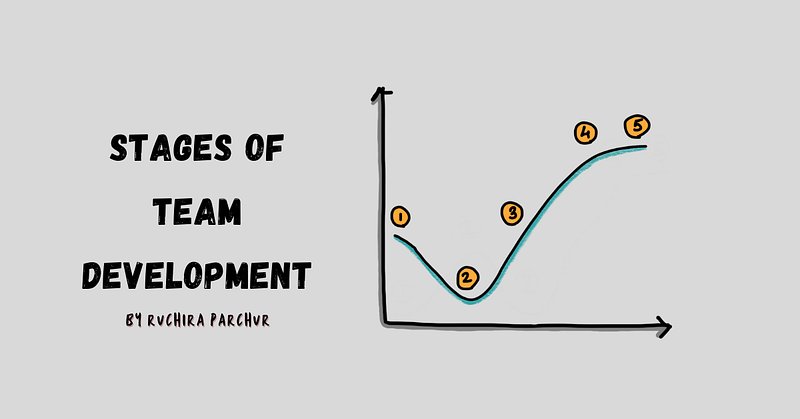
1. Forming 2. Storming 3. Norming 4. Performing 5. Adjourning
According to Wikipedia, the Tuckman’s stages of team development were published by an American psychological researcher named Bruce Wayne Tuckman. When he created this theory in 1965, it had four phases, later in 1977, he added the fifth phase jointly with Mary Ann Jensen, called Adjourning.
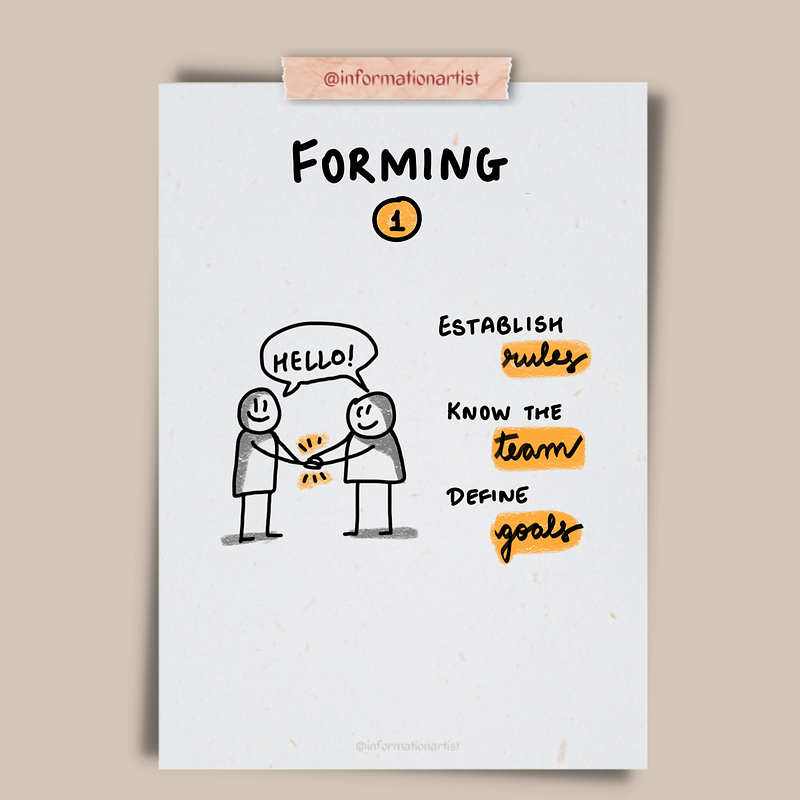
1. Forming
Leadership strategy — coordinating behaviours
This stage marks the beginning of the individuals who have grouped to form a team working towards a common goal. The teams I worked with kick-started our formation by,
- defining our backlog
- establishing our working agreements
- getting to know each other
I call it the ‘honeymoon’ period, as it is a short duration of the beginning of a new activity when everything goes well and is free of problems. It is the starting phase of team development, where the best (superficial) behaviours are showcased. During this phase, the team is highly uncertain about the team goals and also the team members.
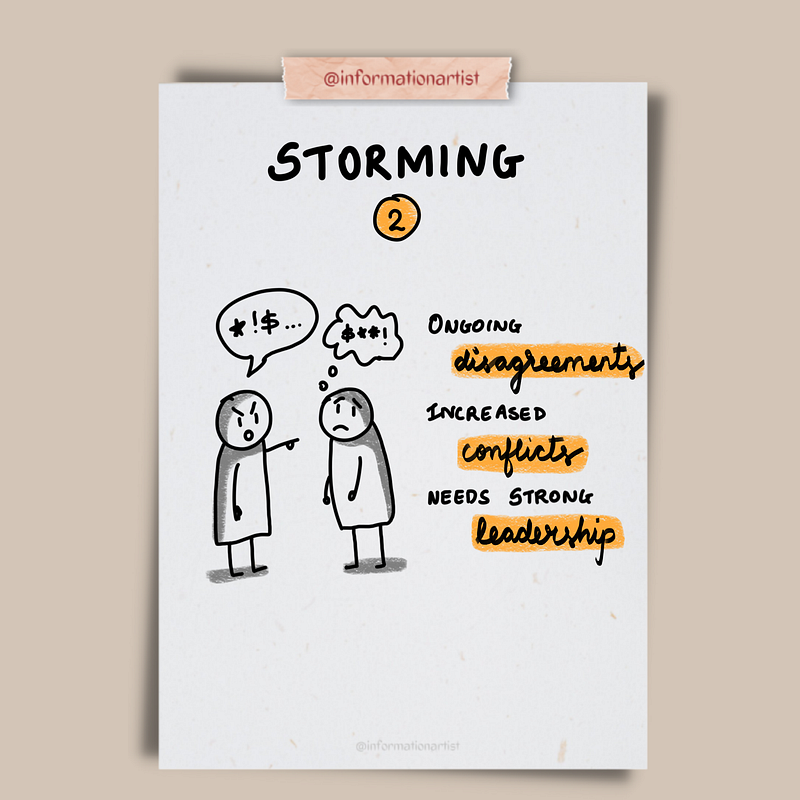
2. Storming
Leadership strategy — coaching behaviours
As the honeymoon period ends, it's time to zap back to the reality of pushing boundaries, and disagreements and understanding the bond. During this stage, we noticed personality clashes, friction between decisions and conflict in agreements. However, if you abide by the values you have set for the team, it can help you ride through the potholes. For example, one of my previous team had an agreement to listen to all the opinions and disagree respectfully and if we fail to showcase it, we would hold ourselves accountable. RESPECT & COACHING— helped us sail through the storm.
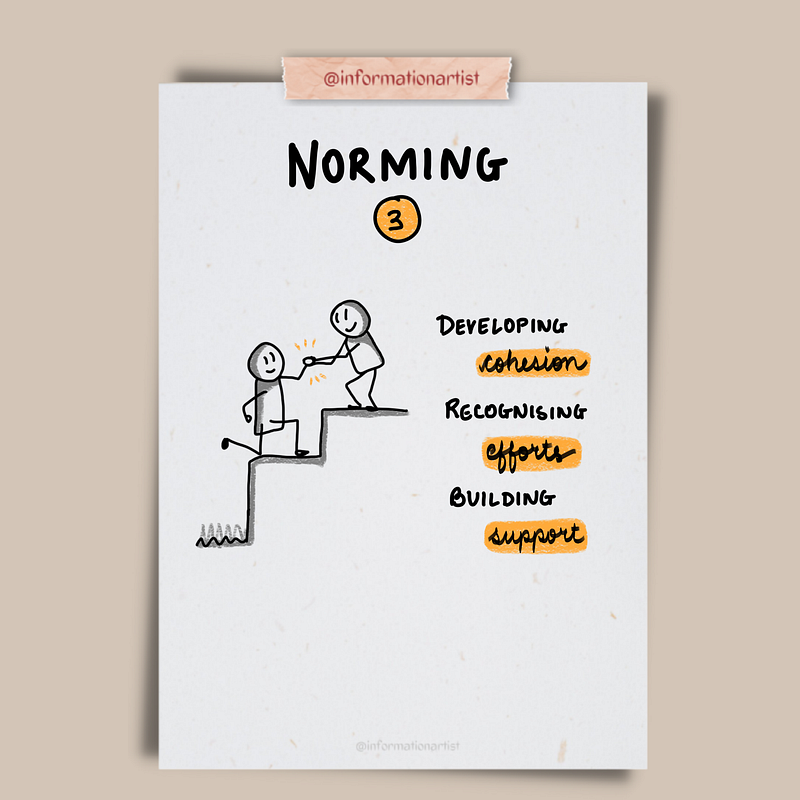
3. Norming
Leadership strategy — empowering behaviours
I call this phase the ‘calm after the storm’. This is the time when things start to settle down and the team members move towards recognizing each other’s efforts. More focus is seen in understanding the roles & responsibilities, revisiting the Ways of Working agreement, and looking for improvement.
It is important to develop a collaborative and inclusive culture for building trust and working towards a shared purpose.
4. Performing
Leadership strategy — supporting behaviours
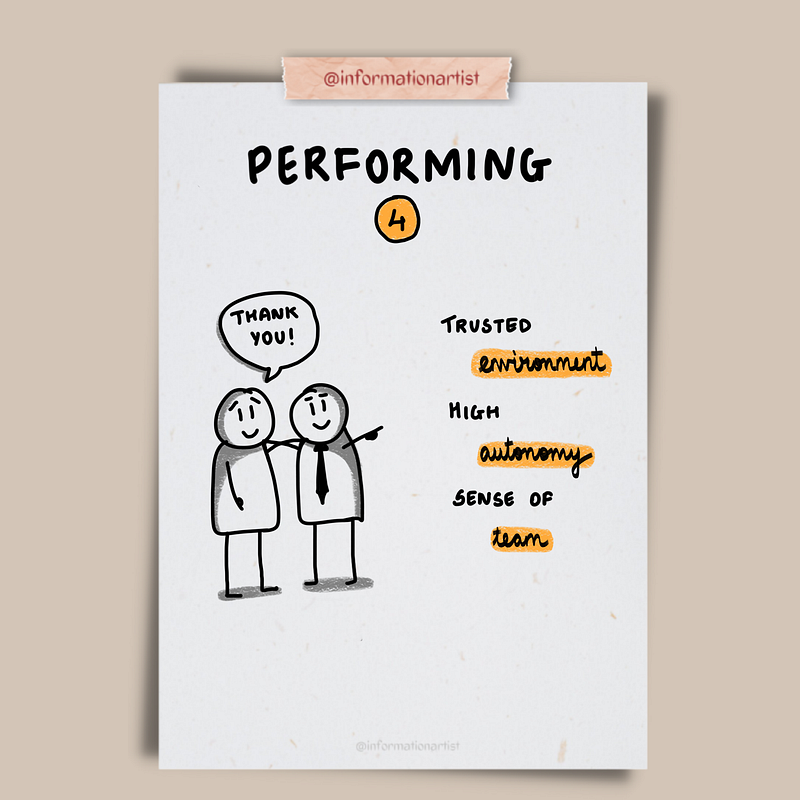
In this stage, you are trusted and positively challenged. It is a stage where the members are highly motivated and are familiar to operate without unhealthy conflicts. The processes are now structured, and the focus shifts towards improvement and measuring success. Usually, collaborative practices such as mob programming, pair programming, chairing team meetings on Rota, etc. appear during this stage where every individual has the autonomy to deliver the shared outcome. This is the time when individuals sense belongingness towards the team. More WE’s and fewer ME’s.
5. Adjourning
Leadership strategy — appreciating behaviours
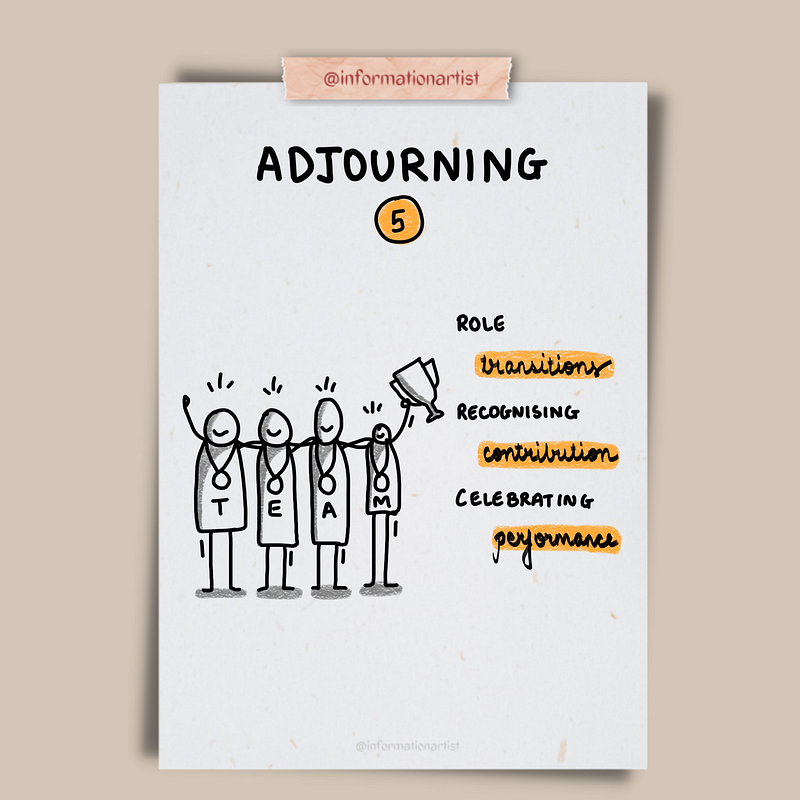
The final stage of Tuckman’s team development model is where the goals are delivered and the team may disband. For the very same reason, some call it mourning, too, as members experience the loss of a great working relationship that united them towards the delivered goal/product. As the leaders and the team recognize and celebrate the achievements, the individuals now plan to transition to a different goal/vision.
What feels like the end is often the beginning of something great…
💭 Can you identify what stage your team fits?
💭 What challenges do you see in your current state?
💭 What success did you notice so far?
If you loved this article, how about sharing it with your friends and colleagues too? Please tag my illustrations with due credits, it takes a lot of learning and effort to make such complex theories look simple.
If you’d like to go the extra mile to support me as a writer, please consider buying me a coffee or joining Medium using my referral link. Thank you :)