
Enthrall 4.4K+ Poetry Enthusiasts Today!
“The Jester is Brother to the Sage,”
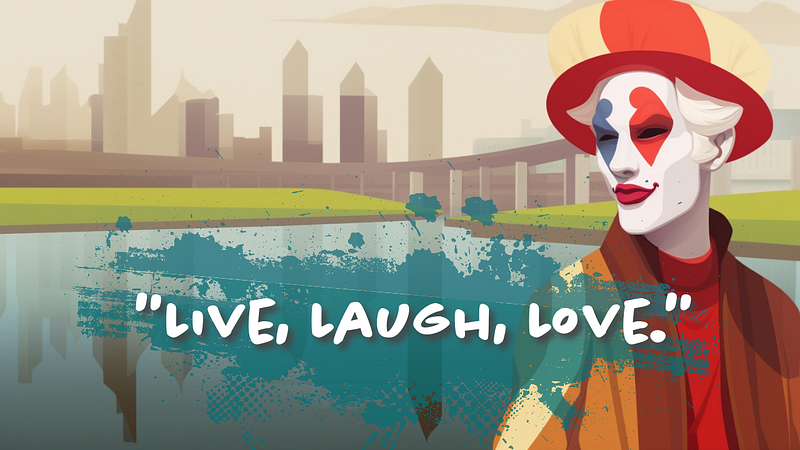
In the silent halls of thought, I have seen them, The jester and sage — two sides of a coin flipped by destiny. I am caught between their echoes — laughter and wisdom, Their voices blend in an extraordinary symphony.
You see, dear reader, both wear masks painted with life’s hues. One hides his tears behind smiles; another tucks knowledge under furrowed brows. Yet they are brothers bound not by blood but perception - A shared understanding that neither sorrow nor joy can be ours alone.
Consider this: The jester is brother to the sage For it takes courage similar to understand folly or age; To transform pain into gaiety; silence into spoken truth And still stand before us human — unfettered youth.
We might assume one foolish for his antics played out loud, While we revere the other dressed humbly as time allowed. But what if jesters don cloaks woven from sagacity? What if sages whisper through their quiet hilarity?
Herein lies my revelation: Within me dwells these souls twain- Part Jester who dances on rainbows created from midnight’s strain; Part Sage whose thoughts reside beneath a star-kissed night sky- An intimate weave of serious humor and reflective sighs,
They teach me respect for each moment’s fleeting grace: Every tear has its purpose just like every smile leaves trace. Life isn’t merely about being wise or making others laugh… It’s finding balance within ourselves on our unique path
That leads us toward deeper meaning stitched in heartbeats’ subtle song — Where Wisdom finds Humor humming along! Oh! To dwell at such intersection where creation stirs innovation… Is perhaps why “the Jester is Brother to the Sage” deserves celebration!
“The Jester is Brother to the Sage,” a profound quote by Arthur Koestler, a renowned British writer, subtly hints at an intriguing interconnection between humor and wisdom. These two contrasting characters, a jester known for his comedy and a sage recognized for his insightful wisdom, surprisingly share a bond — a distinctive way of perceiving the world and articulating thought-provoking perspectives.
In Koestler’s work, “The Act of Creation,” he compellingly connects the dots between humor, science, and art, and their combined role in birthing creativity. His idea blurs the line between the jester and the sage, insisting they both play key roles in unveiling truths and contesting norms. The jester, with his comical satire, and the sage, with his profound wisdom, each serve society in their unique ways.
Born in Budapest on September 5, 1905, Koestler was a prominent writer who experienced and chronicled many dramatic events of the 20th century. Throughout his life, he embraced and rejected various ideologies, including communism, Zionism, Lamarckism, and the belief that Ashkenazi Jews are descendants of the Khazars. Koestler’s works ranged from journalism to fiction, with his best-known novel being “Darkness at Noon” (1941)


