
The Isolation Era: You’re an Island Cut off From the World
From 9/11 to now: how we’ve isolated ourselves
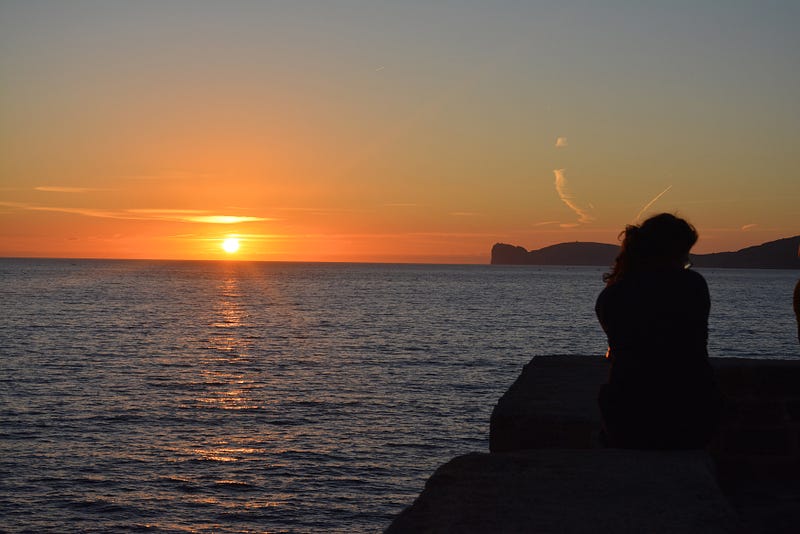
The Age of Isolation? Both 9/11 and the Pandemic, the turning points of this century, centered on divisive yet largely invisible enemies.
More than 56 percent of Americans, in late April, told the Kaiser Family Foundation they are feeling: “worry or stress related to the coronavirus outbreak.’’ That majority reported one or more negative effects on their mental health or well-being, including:
- Problems with sleeping or eating.
- Increased alcohol use.
- Worsening chronic conditions.
The meaning of isolation:
To isolate means to keep people apart, creating a virtual island. Insula is Latin for “island,” while “iso’’ is Greek for equal, identical, or isometric parts. In short, transforming your space into an island by splitting it away from the mainland.
Nearly half of Americans experience a mental illness in a lifetime. After the pandemic began, prescriptions for anti-anxiety medications spiked by 34 percent while sales of hard liquor soared by 75 percent.
Alcoholism and other substance and behavior abuses are diseases of isolation, an escape that cut you off from the world around you. Despite lockdowns of most businesses in 42 states, none of the closure orders applied to drug stores, liquor stores, or marijuana dispensaries (all were deemed “essential’’ services while states discouraged religious establishments from remaining open).
“I have my books and my poetry to protect me,’’ Paul Simon wrote. “I am shielded in my armor. Hiding in my room, safe within my womb. I touch no one and no one touches me. I am a rock. I am an island. And a rock feels no pain. And an island never cries.’’
From American Century to Century of Isolationism?
While the 20th century was called “the American Century,’’ could the 21st century be “the Century of Isolationism?’’ The trend toward dividing and isolationism has been growing throughout the past 20 years.
All “isms’’ represent different ways, practices, systems of thought, or philosophies. They can include:
- Religions and similar spiritual belief systems (including Catholicism, Protestantism, and atheism).
- Ideologies (including capitalism, communism, socialism, globalism, nationalism, populism, and feminism).
- Artistic movements (like impressionism, or expressionism).
- Behaviors/pathologies cutting us away from much of the world (alcoholism, racism, sexism, and even a colloquialism).
After a post-Cold War “New World Order’’ of globalism championing free trade, the notion of “one world’’ was shattered on September 11, 2001. The War on Terror wasn’t against a place but against often unseen enemies who could attack without warning. Two decades later, that war on terror never officially ended though international engagements have lessened.
With the goal of security and safety, numerous search and surveillance services began, including the U.S. Department of Homeland Security monitoring everything from telecommunications to air travel.
Similarly, the pandemic impacting more than 180 nations, is called an “invisible war.’’ Wear masks, stay at home, keep safe distances, we are warned along with a list of new emergency orders. Again, we are warned to stay home to stay safe.
As John Donne wrote: “No man is an island, entire of itself; every man is a piece of the continent, a part of the main,’’
Free us from all anxiety?
Americans were already battling an opioid epidemic against an over-reliance on prescription pain medicines, and now experts are worried about the growing use of anti-anxiety drugs like Xanax, Valium, Ativan, and Klonopin (the number of prescriptions shot up from 8 million to 14 million between 1996 and 2013).
I met Derek when we were attending the University of Michigan. He was a veteran of Afghanistan, who had already organized a growing national nonprofit (in a graduate-level management course, we worked on a plan that helped the organization grow 10-fold).
He was winning awards, and people were talking about him running for national office. He graduated and was running a tech company, and life accelerated before things crashed.
Part of the Millennial generation that was told, “You must have Attention Deficit Order. Here’s a prescription” during childhood, suddenly he was being told to take antidepressants. He followed doctor’s orders before he realized things were getting worse, and doctors were mainly just prescribing medicine without therapy. His life returned to normal when he replaced the drug with natural treatments like going to the gym daily and getting back in good shape.
During the 2020 pandemic, gyms were closed but many exercised outside, particularly in state and local parks.
Government data show the percentage of outpatient mental health visits that involve only medication and no psychotherapy jumped from 44 percent to 57 percent between 1998 and 2007 while the percentage receiving psychotherapy without drugs dropped from almost 16 percent to 10.5 percent. The percentage who receive a combination of medications and therapy dropped from 40 percent to 32 percent.
Even psychiatrists are asking whether all these drugs hurt more than they help: “Emotional suffering is inevitable in life. But it has meaning — a purpose,” Drs. Peter Breggin and David Cohen write. “Suffering is a signal that life matters… Specifically, it is usually a signal that something in our lives that matters a great deal needs to be addressed.’’
Isolation, the inability to act with others, Hannah Arendt argues, “may be the beginning of terror; it certainly is its most fertile ground; it always is its result.” Diablo is a Spanish word for the devil but it’s based on the Greek word “diabolos,’’ which means demon but also “the one who divides.’’
“If we were not islands, we would be lost, drowned in each other’s tragedies,’’ Neil Gaiman explains. “We are insulated (a word that means, literally, remember, made into an island) from the tragedy of others, by our island nature, and by the repetitive shape and form of the stories.’’