The Internet Is Slowly Dying, Thanks to User-Generated Content
How big brands use sleeper influencers for covert marketing
A few months ago, I went on a date with a U.G.C. creator.
After a handful of failed attempts to understand what she did for a living, I finally just pretended — saying “Wow, that’s cool”, and we moved on.
But, it always stuck with me.
And, after realizing what her job entails, I was introduced to the dark underworld of user-generated content.
Here’s how it’s single-handedly ruining the internet…
First, what is it?
If you’ve never heard of user-generated content (U.G.C.), it’s essentially sponsored social media for… unsponsored creators.
Instead of amassing large followings and then partnering with brands to create sponsored posts, micro-influencers can now leverage their small audiences through “authentic” content.
Otherwise known as U.G.C.
This could be in the form of:
- Top-tier lists
- Food reviews
- Posting/re-posting news
The main distinction between U.G.C. and influencer marketing is that it’s covert —often not requiring creators to show their faces or disclose being sponsored.
And, has sneakily become one of the most powerful marketing practices for big brands…
Today, everyone’s an influencer.
It’s every young person’s dream to grow up and make a difference in the world.
According to a marketing study by Morning Consult, 57% of Gen Zers want to become influencers when they grow up.
Today, the idea of becoming a social media influencer is akin to a micro-celebrity. Money, fame, notoriety (what the kids call “clout”). But, as is the law of supply and demand, as influence grows, its power diminishes.
And, brands need new ways to market.
Insert, the sleeper influencer.
If you’ve ever been on TikTok, Instagram, or Facebook, you’ve likely seen micro-influencers — regular people who seem to be trying a little too hard to become famous:
- The stay-at-home mom who reviews diapers
- The business bro who rants about stock prices on his way to work
On the surface, these may simply look like ambitious individuals at the beginning stages of their entrepreneurial journeys.
But, many of them, are already well on their way— even with no following at all.
How cringy creators carry brands.
In the past, I always felt bad for those who poured their heart and soul into their social media content without ever seeing growth.
It seemed as though they were actively trying (and failing) at their goal. Something I empathize with, but still… makes me cringe a little.
But, after having had my eyes opened to the world of U.G.C., I realized they aren’t working toward something at all — they’ve already arrived. And, many of them are earning great part-time or full-time incomes, even with small (or no) audiences.
Here’s how U.G.C. creators make money…
I’m quite introverted by nature. And, at times, dating acts as my only escape from my home office. So, I don’t mind “bad” first dates, at all. With every missed connection comes a story.
And, inevitably, I learn something new about the world.
For example, after my date with a self-proclaimed U.G.C. creator, I became very curious about the topic.
So, I did a little research.
And, I discovered the root cause of so many endlessly cringy social media reviews. The dark, underground world of U.G.C.
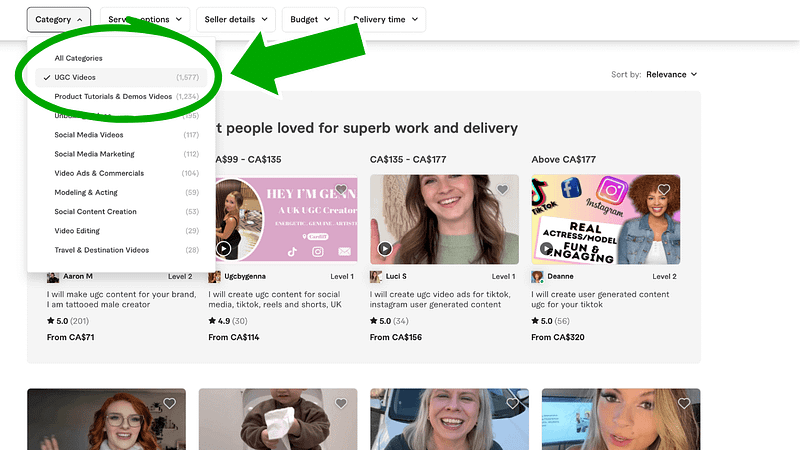
Essentially, brands will reach out to micro-influencers who advertise being U.G.C. creators, either through:
- Marketing agencies
- Freelance websites
Or, U.G.C. creators will reach out to brands directly to promote their products. In U.G.C. marketing, the name of the game is discretion.
If you scroll through Instagram, you’ll notice ads get a fraction of the engagement of posts from authentic users. And, when any company introduces ads to their platform, they are instantly lambasted for it.
The truth is:
- People hate ads
- People hate being sold
- And, most of all, people hate being lied to
So, brands have adapted. And, have begun hiring “regular people” to post “authentic” content about their products, services, or stories.
All of which, can be used to create mass influence. Even if individual U.G.C. creators have none…
U.G.C. creation is killing the internet.
In the mid-2010s, Tai Lopez and Mike Chang became the two most-hated men on the internet, simply for utilizing YouTube ads before ad-blockers existed.
Unable to skip past their cheesy get-rich-/get-ripped-quick advertisements, millions of viewers turned on the entrepreneurs, downvoting their products and creating hit-piece videos/blogs. Although lucrative, both brands lost all creditability and went dark for years before re-branding.
Today, people hate ads.
Gone are the days of accepting television commercials. And, ad-free platforms like Netflix, YouTube Premium, and other streamers have conditioned viewers to consume content free of pesky advertising.
Because of this, companies have begun going undercover, turning regular people into guerilla marketers.
Sleeper-cell influencers.
Activated with a simple short-term contract, these imperfect (and therefore trustworthy) influencers slip into our social media feeds and plant ideas in our brains — before swiftly cartwheeling into the night.
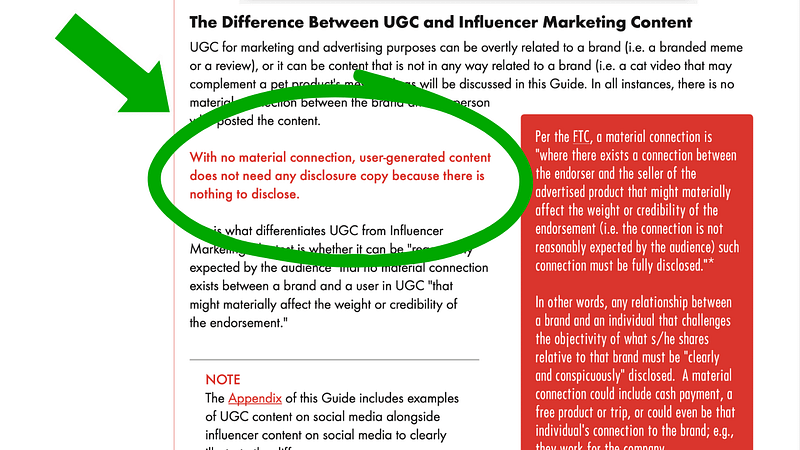
And, according to the Federal Trade Commission, because there is “no material connection between the brand and the consumer”, U.G.C. creators do not need to disclose they are running ads.
Making it appear more authentic.
This marketing tactic has become incredibly popular for brands to use on Instagram, TikTok, and Facebook reels. After commissioning the content, brands will hire marketing companies to help the posts gain traction. Or, use it to run relatable ads.
As if the barrier to entry needed to be any lower, micro-influencers can now earn hundreds (if not thousands) of dollars per post without having to build a sizeable audience.
The problem is, it’s killing the internet…
How to avoid being a cog in the wheel
I’ve never been a big social media person.
Maybe it’s my skeptical nature, but anytime I see people investing time and/or energy to create content, I think, ‘What’s the payoff?’. And, after briefly exploring influencer marketing myself, the answer became obvious… as it normally is.
Money.
In a startling statistic, Morning Consult conducted a study revealing 61% of young people trust influencers.
I call this statistic startling because if I’ve learned anything over the years, it’s that money breeds misinformation.
And, in the wrong hands, misinformation can lead to widespread manipulation. Not just to promote (possibly crappy) products but to instill harmful ideologies and/or promote hate.
So, if you find yourself on the wrong end of misinformation or are not sure who to trust anymore, here are a few things you can do…
#1. Be wary of TikTok reviews:
I know it’s a bold statement, but TikTok represents everything I believe to be wrong with social media.
Instant gratification.
Materialism.
Ego.
The list goes on.
And, although there is a lot of great information being shared, you must ask yourself, ‘Why is this person taking the time to create this content?’
If it’s a sponsored post — great. You have your answer. If it’s their passion, amazing. But, if you lower your b.s. blinders when scrolling through social media, you’ll be able to pick out bought-and-sold content.
#2. Cross-reference:
Today, it’s more important than ever to do your own research. And, going further, to cross-reference any information you find online.
Algorithms have a sneaky way of giving you the information you want to see as opposed to what you need — or, what’s real.
So, whenever you’re making a buying decision, simply give the product, service, or story a Google. You’ll see the good, the bad, and the ugly. And, will ultimately have more ammunition before pulling the trigger on a purchase or forming an opinion.
#3. Use your brain:
One of the most positive byproducts of the development of A.I., is how valuable critical thinking has become.
Some of the most popular and influential humans on Earth, today, simply use their brains — as opposed to outsourcing their thoughts to ChatGPT. In a world of cookie-cutter A.I. chatbots, the ability to speak is more valuable than ever. And, writing without spellcheck puts you in rarified air.
So, if you can’t distinguish user-generated content from a real opinion, simply use your brain.
Your human brain.
And, check in with your gut as well. Luckily, most social media creators are bad actors.
Final thoughts: change is the only constant.
I’ve recently stopped resisting the changing ways of the world.
The Earth spins every day, we all get older, and your life changes with every second you exist.
So, I always find the best way to navigate unfamiliar territory is to simply keep updating my map. Although U.G.C. is objectively annoying, it’s also avoidable. And, staying informed is the first step to curating your social media.
Any time I see misleading content or a fake review, I tap “not interested” to actively curate my feed.
Or, you can simply put your phone down.
It’s important to remember that the online world is not real. It ceases to exist with electricity. And, you have more control than you think.
Hi, I’m Hudson. I write about living healthier, happier, and more mindfully. To see my stories pop up on your feed, I’d love for you to follow me (Hudson Rennie). And, to have stories sent directly to you, subscribe to my newsletter.👇
💸 Join 1,000+ people to learn how to make money writing online. ✍️