
The Industrial Metaverse, Not Destructive but Unifying
The notion of transformative, disruptive technologies sounds bold and exciting. However, when we quickly glance at the history of cryptocurrencies, we see that the industry has moved away from such a structure during its maturation process.
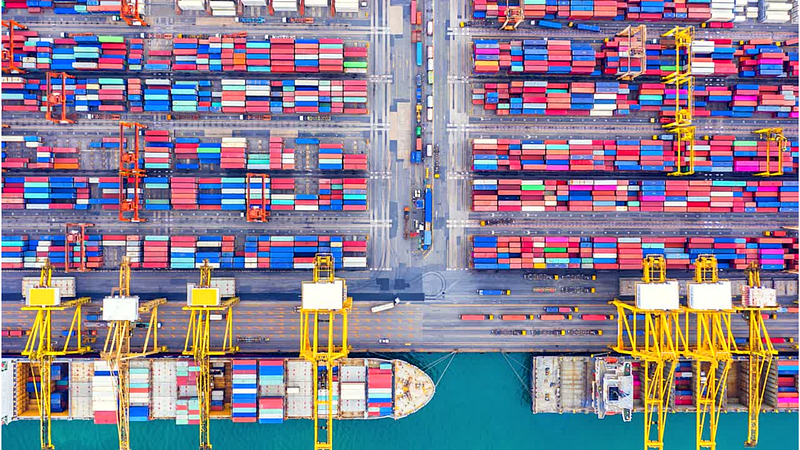
The notion of transformative, disruptive technologies sounds bold and exciting. However, when we quickly glance at the history of cryptocurrencies, we see that the industry has moved away from such a structure during its maturation process. It has shifted towards finding a middle ground and adopting an attitude inclined towards solving existing problems. The investments from traditional economic actors, the interest shown by banks, and regulatory involvement have naturally paved the way for this evolution. We find ourselves in a period where cryptocurrencies strive to be unifying and developmental rather than incendiary and destructive.

A natural part of this process is the repetition of business models in the cryptocurrency sector. Almost every new venture tends to mimic its predecessor, making it challenging to find truly unique business models. Instead of exploring undiscovered business niches, the industry has focused on solving existing problems. Currently, this trend is peaking with the tokenization movement, with NFTs serving as a prime example.
NFTs seamlessly integrated into existing marketing projects, incentive-driven interactions, and loyalty programs of brands from the very beginning. They quickly found their place by addressing ready-made solutions. Unlike the challenges faced in finding original business models, explaining NFTs to brands didn’t pose much difficulty.
Now, when we talk about the Metaverse, a utopian but realistically achievable ultimate goal is set before us. However, unlike NFTs, the Metaverse was initially introduced as a disruptive, transformative technology. The absence of a proper infrastructure led to a relatively short-lived surge in its popularity. This is because there was nothing tangible to showcase.
The concept of the Industrial Metaverse emerged as a brilliant solution to the dilemma within the broader concept of the Metaverse, much like how cryptocurrencies found a middle ground. This trend, combined with the concept of digital twinning, relies on creating virtual replicas of existing physical models. Therefore, when we mention the Metaverse, don’t immediately think of a decentralized structure. At least, that wasn’t the initial goal.
An article from Siemens about its Nanjing factory shared last year illustrates how the industrial Metaverse can be integrative and developmental. Before constructing the factory, a virtual twin is created in the digital realm. By resolving small and large issues beforehand, the production efficiency of the factory increased by 200%, and effectiveness by 30%. This serves as a beautiful example of real-world applications frequently associated with tokenization.
China, despite banning cryptocurrencies, continues to invest in the Metaverse and blockchain spaces. The country has started allocating space for the industrial Metaverse in its new Metaverse plans. In the Henan region, where iPhones are produced, there are plans to establish a 100 billion Yuan to industrial Metaverse ecosystem by 2025. Whether you view 100 billion from the perspective of NFTs or the Metaverse, it is a utopian figure. Therefore, it’s essential not to disregard the involvement of cryptocurrencies and the eventual integration of NFTs into Metaverse initiatives, even if they initially appear centralized. Centralized simulations are still referred to as Metaverse because of their interactivity.
The possibility of these projects never eventually merging with NFTs seems very low to me. Let’s consider Central Bank Digital Currencies (CBDCs) as an example. A country tokenizing its own currency makes it almost impossible for the cryptocurrency sector’s mainstay, Bitcoin, to remain untouched. Believing that silver can be used in trade while ignoring gold is akin to this. Therefore, I predict that Metaverse initiatives, centralized as they may be, will eventually be equipped with products in the form of NFTs.
As for use cases, the creation of digital twins of products allows users to test and familiarize themselves with products without traveling. Errors in factory setup can be anticipated and resolved before they occur, and decisions about purchasing a car can be made in advance. Taking it a step further, let’s imagine a product introduction in the defense industry. When an agreement is reached on licensing the product, the ability to view NFT parts of the product in the Metaverse is provided. Since the images reflected by NFTs are generally stored in a centralized location, it might be possible to censor images in areas where a license has not been granted. In short, the industrial Metaverse can be defined as part of an advanced and monetized simulation.
A completely decentralized, secure infrastructure equipped with NFTs is, of course, the dream and goal for all of us. However, given that even the main blockchains lack the necessary infrastructure for widespread adoption, there is still a long way to go before achieving such Metaverse goals. Until then, it is crucial to ensure a sustainable economy and ecosystem that the cryptocurrency sector’s web2 players prefer. This requires solutions grounded in real-world issues. Hence, non-destructive and unifying paths, such as the industrial Metaverse, are needed.


