The Importance of Communication in the Workplace
Drucker said that “the most important thing in communication is hearing what isn’t said”

Without effective communication businesses, society and indeed relationships cannot flourish.
The keyword of note is — ‘effective’.
Companies today are too often consumed with communication for the sake of communication, rather than ensuring that the message is delivered to the relevant audience in a meaningful and efficient manner.
This following will discuss all the elements of communication, elements that all leaders must understand and master in order to be effective.
Communication flow
The ultimate goal of all communication is to induce a response. That response can be simply that your message is heard and understood.
The Shannon & Weaver Model segmented how people interact with each other, highlights where information loss lies in terms of interpersonal communication.
The graph below illustrates this flow of communication and the elements that make up this process.
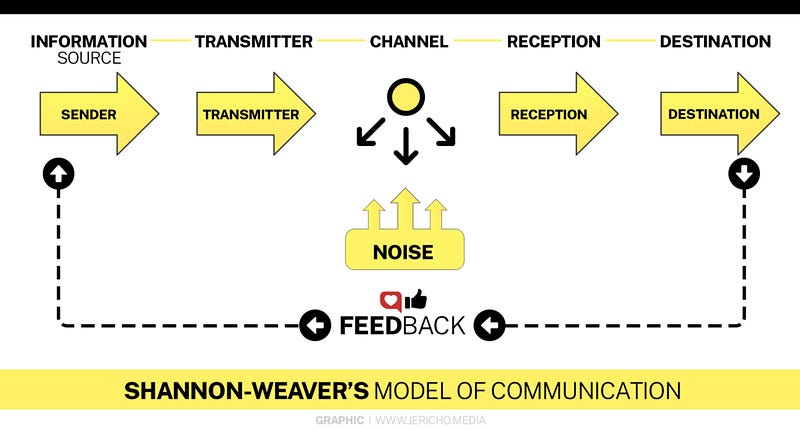
This model also labels key communication steps, the components of communication, which include: sender, message, transmission, noise, channel, reception, and receiver (or destination).
Noise
Noise, as illustrated above, are barriers that arrest effective communication. These include perception, semantics, non-verbal communication, ambiguity, and defensiveness.
- Perception — How people interpret information based on what they already believe to be true. This can give rise to messages being misunderstood, which can happen subconsciously, without intent.
- Semantics — Certain words have different meanings to different people.
- Non-verbal — How a person’s body language, manner of speaking or facial expressions can impact the message being delivered.
- Ambiguity — The lack of absolute clarity being conveyed by a leader’s intended message for example.
- Defensiveness —A mechanism used by the recipient to shield themselves from communication they’re uncomfortable with — deflecting the message being conveyed.
Drucker (2001) said that:
“The most important thing in communication is hearing what isn’t said.” — Peter F. Drucker
While the musings of Drucker are lauded given his enlightened leadership guru status, the above quotation offers valid food for thought.
For a leader, knowing that his or her messages may contain noise is one thing, managing such noise is paramount for a message to be heard and adopted.
Communication failure
Failure to communicate leads to low uptake, weak execution which in turn results in poor performance, loss of respect, credibility and integrity internally and externally with staff, clients and partners.
Effective communication evolves with practice and experience but the understanding of both nature and nurture (and indeed personality) of the receiver are important for the effective transfer of a message.
The wrong interpretation can result in delays or conflict.
The 1948 Shannon (an American mathematician and Electronic Engineer) and Weaver (an American scientist) article establish exactly what effective communication between the sender and the receiver looks like.
Their article, entitled “Shannon-Weaver model of communication”, proposed the model above, clarifying the various stages to simplify our understanding of the communication process.
Leadership rhetoric
Leaders undertake many roles in team governance; an art form deployed by a combination of traits and qualities.
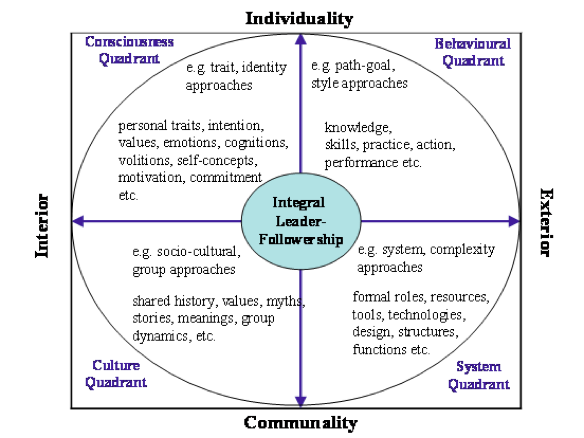
One of the most important traits is the ability to clearly and systematically communicate in a unilateral fashion.
A leader who possesses key leadership traits but has poor communication skills can instantaneously diminish their impact, their effectiveness.
As such, they might never reach their full potential.
On the other hand, a higher level of interpersonal competence increases the likelihood of organizational success and personal achievement.
Effective communication is vital for business.
Communicate the mission
The ability to articulate an organization's vision, mission, and values while promoting discipline, accountability and strategic alignment are crucial for leadership — essential to gauge how leaders motivate and inspire people.
Through communication, an organization not only motivates staff but also sells products and services through the promotion of its value proposition.
“Empowerment is any process that provides greater autonomy” (Newstrom, 2011)
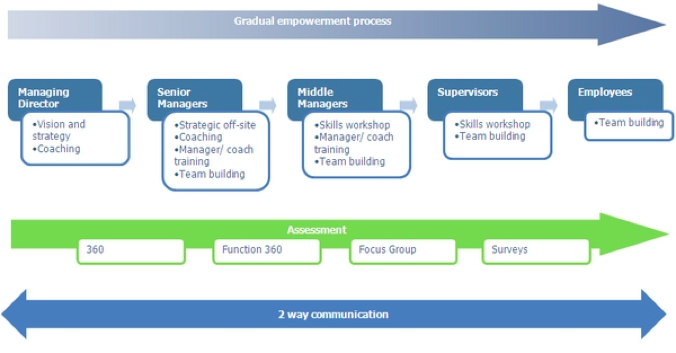
A communicative environment whereby managers and employees are clear about collective goals, promotes business performance, reducing costs by eliminating errors while enhancing motivation and improving efficiencies.
Organizational communication has a direct impact on performance.
New age communication
At a macro-level, the impact of communication is more obvious today than ever before given the evolution of the internet. The increased flow of content through technology has empowered all stakeholders to part-take, both internally and externally.
Mobile communication offers overwhelming evidence of this trend.
An article in the Irish Times in 2013 noted:
“Revenue from mobile ads, which appear on smartphones, represented 49 percent of Facebook’s total advertising revenue in the third quarter, or roughly $988 million. Mobile ads generated roughly $150 million in the same period a year ago, when Facebook was just beginning to develop its mobile ad business” (The Irish Times, 2013).
This is a clear indicator of the macro-communication shift. The impact, however, is the risk of information overload, due to ever-increasing traffic, interfering with intended messages. And indeed the truth.
Non-verbal communication
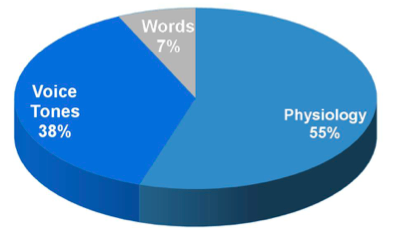
This can be overlooked as a key component in the communication process.
- Voice (7%)
- Tone (38%) and
- Physiology (55%)
All three are important ingredients for every human interaction and therefore critical for effective communication and leadership.
A handshake and a smile, a compliment or recognition, a pay rise, an award or being punctual for meetings are examples of the different types of non-verbal communications.
The unsaid messages that have meaning, convey a message, positive or negative.
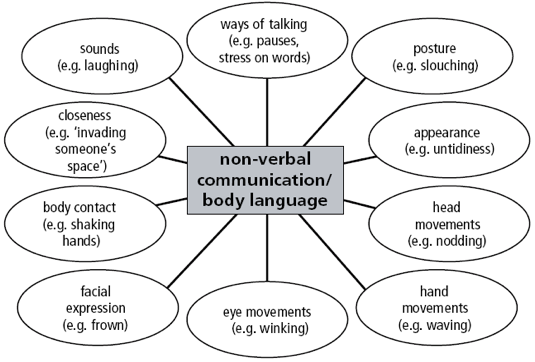
Similarly, a perceived mismatch between words and actions can result in a disconnect, a loss of confidence or credibility, virtues that are of paramount importance for effective leadership.
Credibility takes time to earn and develop yet momentary errors can destroy trust in a single moment.
The window of self
An established model that illustrates self and interpersonal communication is the Johari Window. A quadrant developed by Joseph Luft and Harry Ingham.
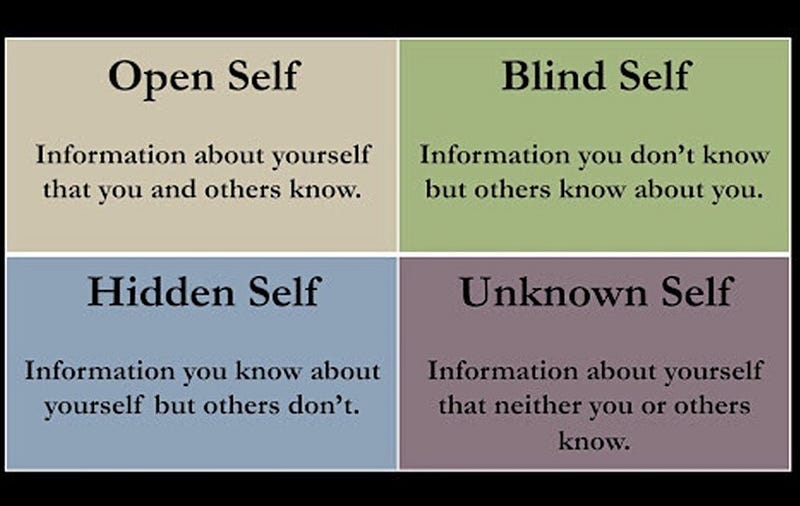
An extensive analysis of this concept was critiqued by author Charles Handy, an organizational behavior and management specialist.
What we can learn from Luft, Ingham, Handy and indeed Lao Tzu is that self-awareness is becoming an appealing trait in modern leaders who reveal more of their true-self, compared to previous generations, as it's linked to effective communication.
Effectiveness
Effective leadership is the driving force, the key attribute that facilitates effective communication; but communicating a decision effectively may indeed take more time than making the decision.
Effectiveness is all the more complex when personality types are taken into consideration, along with situational forces.
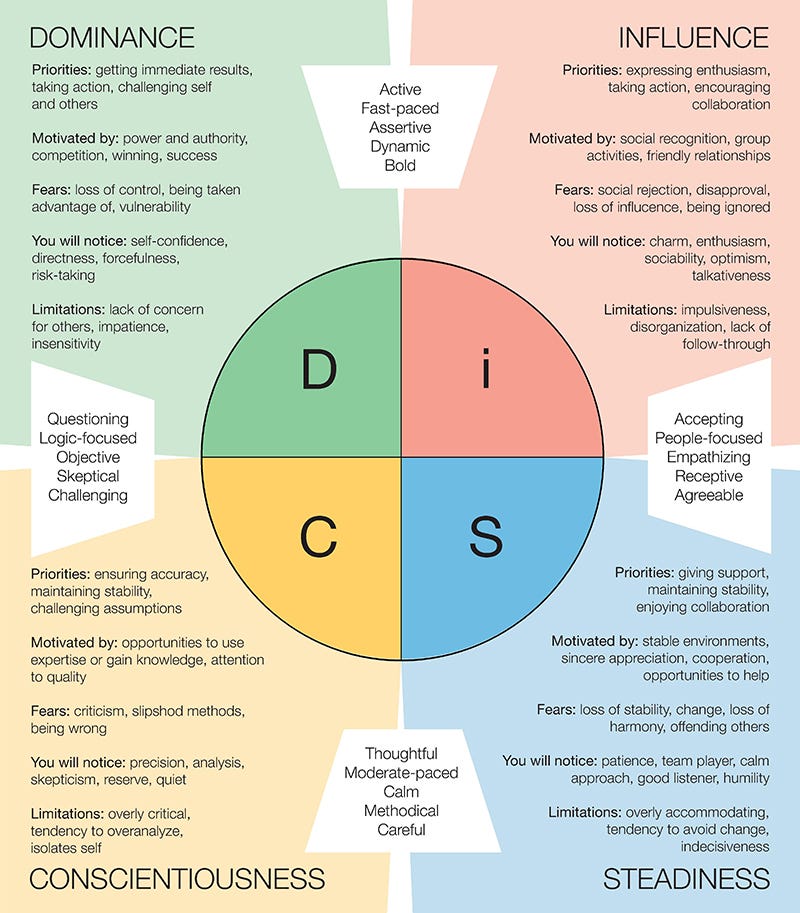
Repeating any decision or message will undoubtedly increase its effect.
In parallel, visionary leaders are expected to predict the future today — the impact of their peer-to-peer communication must enlighten followers as to what tomorrow might bring to the company and what this means to them.
“Effective communication is 20% what you know and 80% how you feel about what you know.” — Jim Rohn, American entrepreneur, author and motivational speaker.
Final thoughts
In today’s business climate, controlling the flow of information presents a challenge but a must-have in a company’s communication strategy.
For instance, the volume of internal emails from various departments (not aimed at the relevant audience) can and will reduce productivity and at times may create pockets of confusion in an organization, if mismanaged.
Proper filtration, guidance, and training with respect to the flow and targeting should exist across all levels of a company.
There are a number of steps that a leader can implement to improve communication effectiveness, such as:
- Record and manage communications training and instructions in a policy, ensuring that it is easily accessible for reference
- Utilize technology and content tools to auto-select the correct audience
- Social gatherings
- Regular team briefings, like a town-hall
- Ensure compatibility between management culture and communication styles
- Enable horizontal communication across departments through projects, tasks or geographical connections
- Create a culture of trust and open communication channels
Open and candid communication can facilitate performance improvements by helping people to fully understand their roles better and feel more involved.
When employees feel more involved and responsible for delivering an organization's objectives, they will respond favorably.
References
- Gallen, P., 2020. Reduce Your Blind Spots And Lead With Grace. [online] The Irish News. Available at: https://www.irishnews.com [Accessed 14 March 2020].
- Gregory G. Dess, et all. Organizational dynamics: Changing roles, Leadership in the 21st Century (p.18–34)
- Ralph Stayer (1990) “How I learned to let my workers lead”. Harvard Business Review (November-December) (pp. 3–9)
- Study.com. 2020. Shannon-Weaver Model Of Communication: History, Features & Application | Study.Com. [online] Available at: https://study.com [Accessed 14 March 2020].