
Leadership and the Important People Factor
A company’s most valuable asset is its people

Firstly, I’d like to begin this article with a challenge, to think outside the box.
Without lifting the pen from the paper (or finger from the screen), connect the nine dots below with FOUR straight lines:

I’ll leave that with you to chew on, for now, you’ll find a solution at the end.
The Way You Think Governs The Way You Act.
Introduction
Organizations have existed for thousands of years. Many organizations have been successful; however, many others have been relegated to the graveyard of industrial history.
- Fundamentally, organizations are a fascinating collection of people
- The challenge for leadership and management is to make them productive, profitable and beneficial to society
- This necessitates an understanding and comprehension of the idiosyncrasies of people and the intricacies of leadership and management
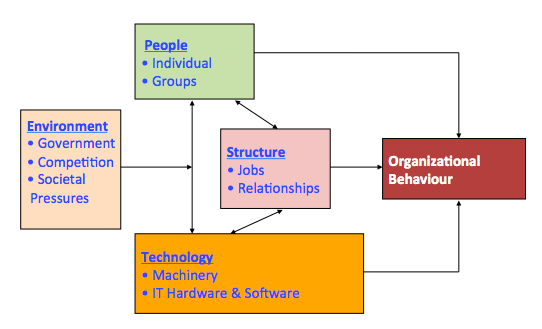
Conceptual frameworks and theoretical concepts
According to Charles Handy concepts properly used and understood should:
- Help people to explain the past which in turn
- Helps people to understand the present
And thus,
- To predict the future which leads to
- More influence over future events and
- Less disturbance from the unexpected
The onus is therefore on leadership to ensure their people can ‘understand the present’ in order to feel they ‘have more influence over future events’.
The people factor
We are all living, thinking, feeling beings who work at organizations to achieve our own and collective objectives — organizational goals.
- According to Newstrom (2010), people make up the internal social system of an organization
- This system consists of individuals and groups
- These groups can be both informal or formal
- Formal or informal groups are dynamic in the sense that they can form, change, and adjourn
Today’s organizations are richly diverse. From an employee context, this diversity is evident from the array of educational backgrounds, ethnic backgrounds, talents, and perspectives.
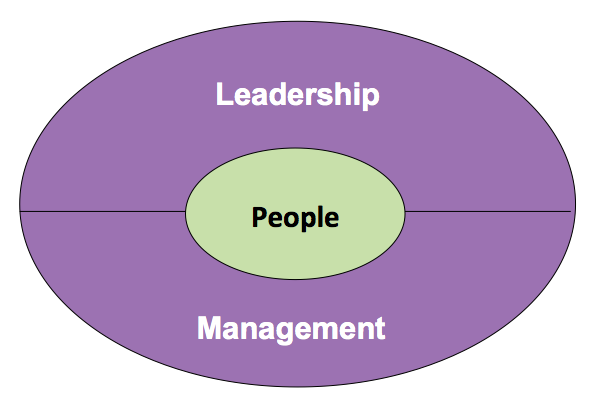
The image above illustrates the fact that people are at the core of organizations — period.
The implication for leaders and managers is that they need to tune into these diverse patterns and trends and be prepared to adapt.
In this respect, leadership and management practices must change to match the ever-evolving conditions this century.
Human capital defined
“A company’s human capital asset is the collective sum of the attributes, life experience, knowledge, inventiveness, energy, and enthusiasm that its people choose to invest in their work” — Leslie A. Weatherly
The significance of the people factor
- People drive performance
- People are critical to an organization’s competitive advantage
- According to David Maister higher levels of employee commitment results in ‘a demonstrable and measurable improvement in financial performance’
- Everything an organization does is either done by and for its people
The importance of the people factor
- According to Jim Pinto, people are assets that must be valued, measured, and developed (www.jimpinto.com).
- People are not hard assets that depreciate in value and can be written off; they are dynamic assets that can increase in value with time.
- People are therefore primary assets (www.jimpinto.com).
“Human capital” represents the remaining assets of a business after everything else has been eliminated.
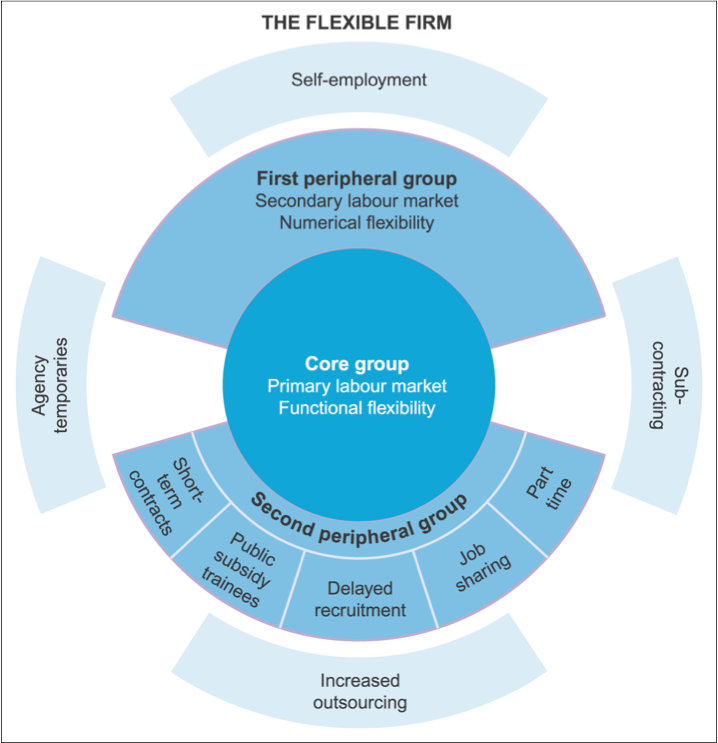
- The systems created to recruit, reward and develop people form a major part of any company’s value — more than other assets like cash, property, plants, equipment, and intellectual property
- Company value and, therefore, shareholder value suffers when human capital is mismanaged (www.jimpinto.com)
The nature of people
People are complex. Our complexity is evident from our unique:
- Differences
- Perceptions
- Motivation/drivers
In addition, in an organizational context it is important to recognize and value the ‘Whole Person’ and understand the individual’s desire for involvement.
The nature of organizations
- Social Systems
- Mutual Interest
- Ethics
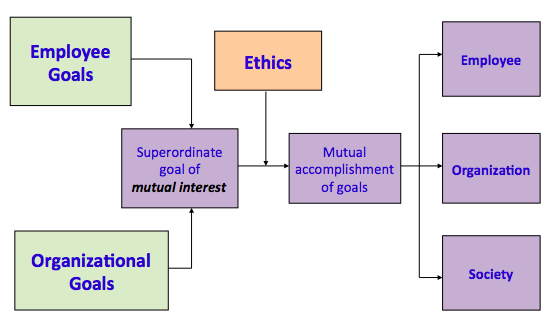
Goal alignment
Aligning individual goals with organizational goals and vice-versa enhances the success of the people factor.
Interestingly, “author Daniel Pink notes in his book Drive: The Surprising Truth About What Motivates Us, as the number of jobs that require cognitive skill increases, people are more important than ever.” (Ferres, 2015)
Final thoughts
While all organizations routinely say that people are their greatest asset “few practices what they preach, let alone truly believe it.”
When companies claim they are “people orientated” it’s “corporate hypocrisy.” (Drucker, 1991)
What Do You Think?
After all, how can companies lay off thousands of employees yet reward leaders with bonuses?
According to Dan Pink, all the above is grounded in motivation.
Lastly, remember the challenge above? One solution is this:

“If you want one year of prosperity, grow grain.
If you want 10 years of prosperity, grow trees.
If you want 100 years of prosperity, grow people.”
— Chinese proverb
References
- Ferres, Z. (2015). The Human Element: Your Most Important Business Resource. [online] Entrepreneur. Available at: https://www.entrepreneur.com/article/245848 [Accessed 6 Mar. 2020].
- Griffin, Ricky W., and Gregory Moorehead (2011). Organizational behavior: Managing people and organizations. CengageBrain.com, 2011. (p.292–322)
- Handy, C. (1993). Understanding organization. London: Penguin.
- John, W. Newstrom, Organisational Behaviour (2010), Tata Mc-Graw Hill, 12th Edition. (p.1–9)
- Luft, Joseph, and Harry Ingham (2004) “Johari Window.” The Power of the 2 x 2 Matrix: Using 2 x 2 Thinking to Solve Business Problems and Make Better Decisions (2004): 255.
- Peter F. Drucker (1991), Essential Drucker: Management, the Individual and Society, Routledge


