
The Impact of an EMP Blackout
No Phone, No Internet, No Tv, No power…Could you survive?
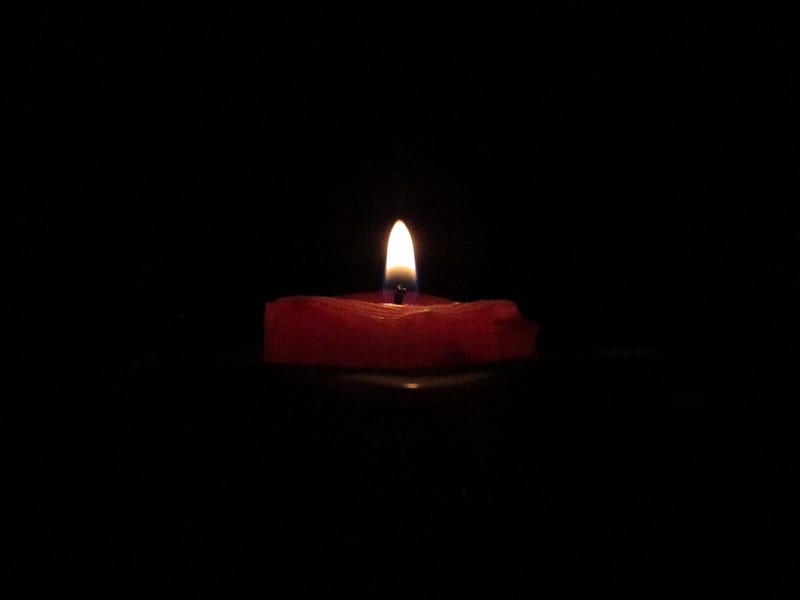
It’s one a.m., and silence awakens you. Your house, normally alive with TVs, computers, and gaming devices, is eerily silent. Noticing that the power appears to be out, you reach for your phone, so that you can check the app for the power company.
There was no storm or bad weather that would be an obvious reason for the outage. The app could tell you what happened and when it’s expected to be repaired.
But your phone isn’t working.
Nor is your partner’s phone.
So, you fumble around for a flashlight. Maybe you have one handy, maybe you have to search for one.
At first, you aren’t worried, after all, many things could knock out the power. A car wreck, broken equipment, or a blown transformer, but nothing that would keep it off for too long.
So, you make the best of it. You eat the snack foods on hand because you have no way to cook. You can’t even eat canned food, because all your can openers are electric. But again, you aren’t worried; you have a pretty well-stocked pantry. And the power is never out for very long.
By this time tomorrow, you’ll be eating that lasagna you had planned for later today.
Once again, you try your cell phone, but it won’t even turn on. And now there is nothing but a black screen. So, you check your laptop, it too, is black. Both should work, as they were fully charged when you went to bed two hours ago.
Computer, nothing.
Tablets, nothing.
Many of these devices were fully charged, and at minimal 1/2 charged, as they are used often. Why isn’t anything working?
Then one day turns to two, and then three.
What if, as the days go by, you realize this isn’t the normal outage? The panic is creeping in, for so many reasons. You do not know what’s going on. Or how long it’s expected to last.
The tv, computer, phone, and internet are all dead. Black screens of death. By now, you know that it’s not a normal outage. So, you load up the family, intending to go into town to find out what’s going on. Surely someone at the grocery store or coffee shop will know what’s going on.
Is it just your house? No, because the entire neighborhood is clearly without power. But does it extend outside the neighborhood? I guess you will find out…
In the back of your mind, you wonder if it’s bigger than that. You find the silent stillness of your normally bustling neighborhood is unsettling, as you load your family into the car.
There were no kids playing.
There are no cars on the road.
No one was outside, except a small group of people gathering at the end of the block.
You want to leave, to see if you can find out what’s going on…But your car won’t start.
Not so much as a click or sputter. Nothing at all…just like everything inside. Black screen of death. This makes no sense because it’s a brand-new car, with no issues prior.
Now fear is really setting in. The power isn’t working, nor are the phones or cars.
You tell your partner to take the kids back to the house, while you go talk to the neighbors. It doesn’t take but a few steps before you hear the women sobbing and the hushed whispers of EMP.
You now know the US has been hit with an EMP. There is no electricity and there will not be any for the foreseeable future.
No power.
No water.
No way to communicate.
Only the supplies are on hand.
Things are about to get bad.
Could you survive if the country was plunged into chaos?
Would you know where to start?
- First, and pretty importantly, locate a battery-operated or emergency radio. This will be one of the few POTENTIALS for information on what’s going on.
2) Determine if it is safer to stay where you are or go somewhere else. Large cities will be chaos and a mess, so you are much safer away from larger cities. But getting out of the city could be difficult and or dangerous as well.
3) Fill your bathtub(s) and sink(s) with water, if possible. As well as any containers you have on hand, you will need water later.
4) Organize the food that you have on hand. Eat the food in the fridge first, as it will spoil first. Pack frozen foods into coolers with any ice you have on hand.
5) Establish a way to cook and boil water.
6) Gather all first aid supplies and put them in a backpack or easy-to-carry bag. If you have to leave quickly, you want to take first aid supplies.
7) Gather all important paperwork in case you have to leave quickly.
8) Weapons, ammunition, or ways to defend yourself. People go crazy in times of high stress. Even the most passive person has to be prepared to defend themselves.
We would like to hope this will never happen. But with all that’s going on in the world right now, it’s more possible now than ever before.
The best thing that we can do is to prepare for emergencies now. Make sure that you have at LEAST 72 hours’ worth of food and water PER PERSON in your household, a heat/cooking source, battery operated radio/flashlights with extra batteries. You should also have an abundance of first aid supplies, like band-aids, and antiseptic.
Just having a few emergency basics on hand will make all the difference should an emergency happen. More is better. But a little is better than none.
Whether you are without power for a few hours, a few days, or for the unthinkable…a little preparation goes a long way.
@rowenquinn is a Mother, Wife, Domestic Violence Victims Advocate, community volunteer, and nature lover. Most of her time is spent with her family or volunteering in her community. Rowen has a degree in Psychology, with a concentration in Family Counseling and Minoring in criminal justice. Writing has been her passion since high school, and she enjoys using it to help others.
Evacuations, It could happen to You? | by Rowen Quinn | ILLUMINATION | Medium


