
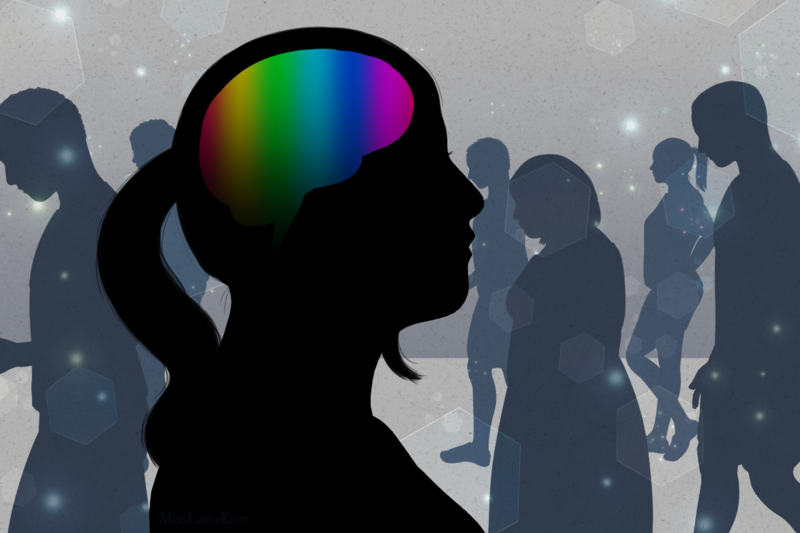
The human brain is like the universe, only on a smaller scale. The similarities may surprise you.
When we look at the human brain and the universe, we see a lot of similarities. However, mere similarity in terms of appearance and structure is not enough. There are more resemblances.
What if the network of neurons in the brain could be compared to the large-scale structure of the universe? As they thought, so they did. Two Italian scientists, an astrophysicist, and a neuroscientist decided to compare these two of the most fascinating structures in the universe.
The universe is a brain on a larger scale
The characteristics of the brain allow us to make these associations for a reason. Just look at studies showing the networks into which neurons connect in the brain. Connectomics specialists have been studying and mapping the complete map of neuronal connection networks, the so-called connectome, for years using extensive microscopic techniques.
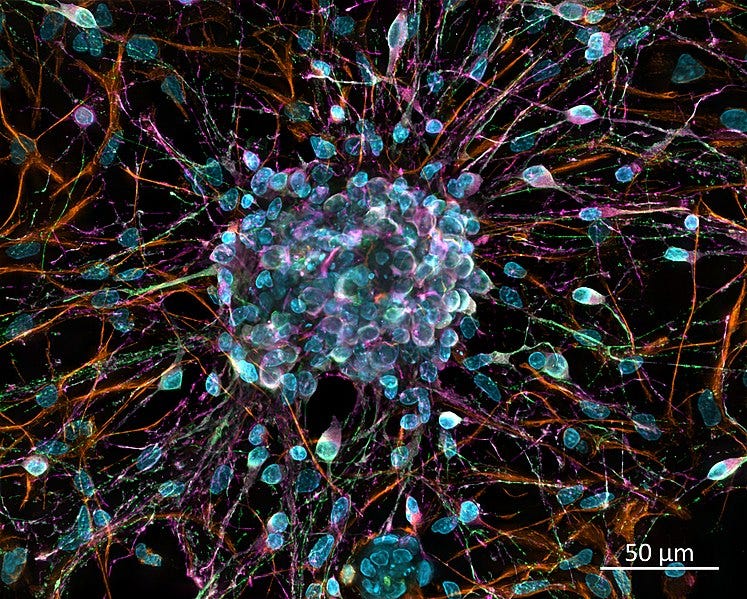
If we then look at graphics showing the large-scale structure of the universe, made from observations with telescopes and from cosmological models, the similarity is striking to anyone, no matter how interested we are in one area of science or the other.
Although locally in the universe galaxies appear to be randomly scattered across space, a look at a much larger scale changes this picture dramatically. Only then can one see how whole clusters of galaxies are connected to each other by vast gas filaments stretching for hundreds of millions of light-years, in which millions of galaxies find their place. In between the filaments are vast regions with almost no galaxies. These filaments occasionally merge at junctions with other filaments of the cosmic web. It is at these locations that superclusters are formed, consisting of colliding clusters of galaxies. On average, 3–4 other fibers emerge from each of these locations. The same is true of the network of neurons in the brain.
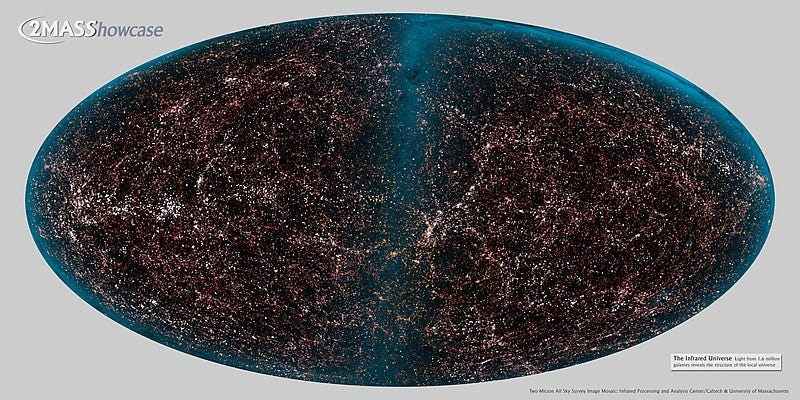
Researchers have discovered through advanced models that there are nearly 100 billion neurons in the brain. The universe, on the other hand, contains 350 billion large galaxies — so there are several times more, but the scale is still similar.
As if that weren’t enough, neurons make up only 30 percent of the total brain mass. The same is true for galaxies, which, consisting of dark matter and baryonic matter, also account for 30 percent of the mass/energy of the universe. The remaining 70%-75% is water found in the brain. In contrast, to paraphrase such water in the universe will be dark energy.
The researchers saw the same similarities when they analyzed the spectral density of galaxies and neurons and the number of connections coming out of each node where the long fibers connect.
Perhaps it is just physics
All of the above connections when analyzed separately seem suspicious and surprising. However, when analyzed together, one consistent conclusion emerges.
In the universe, the laws of physics are similar if not the same everywhere. Self-organization of cells and complex systems, therefore, occurs very similarly. Their Dynamics are very much convergent — the scale does not matter much here.
Cool that you made it to the end of this article. I will be very pleased if you appreciate the effort of creating it and leave some claps here, or maybe even start following me. Thank you!


.jpg)
