
The House On the Canal
Chapter 6 of The Family Business
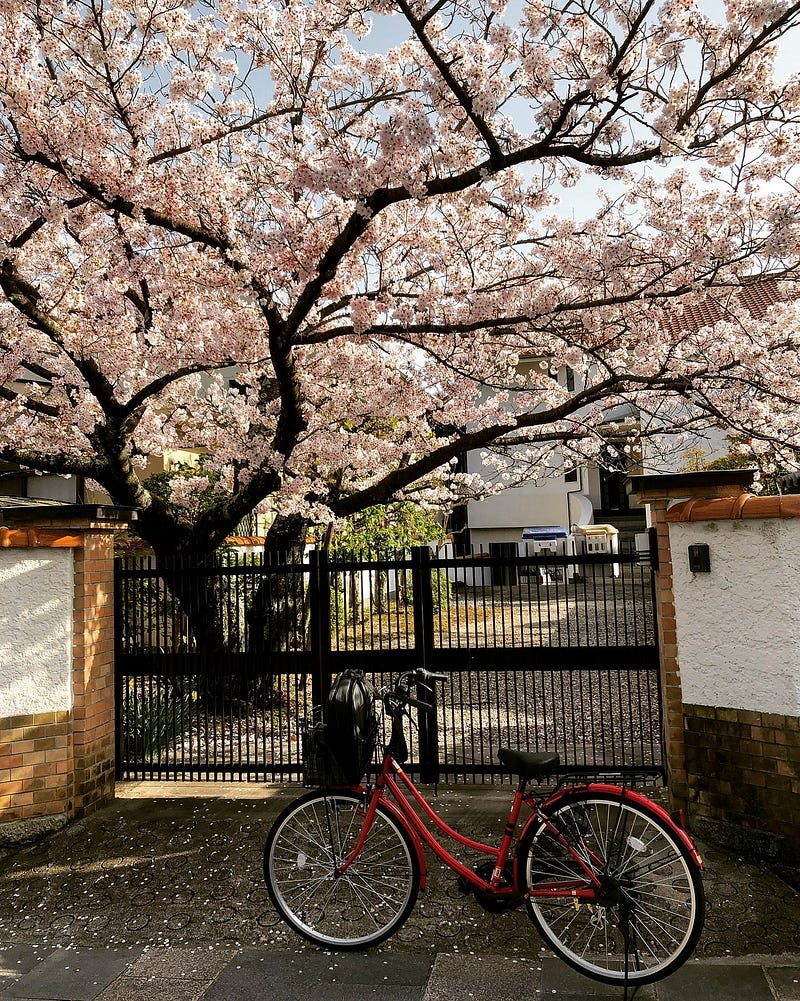
Itami, 1969
We lived in a big house in Itami, surrounded by Japan. We were the only westerners in our town. Or, at least, the only ones of whom we were aware.
Once I stepped away from school, Gaijin (foreigner or outsider) artifacts became fewer and grew less prominent with each step toward home, and by the time I stepped into the house, I had been completely surrounded by things Japanese. Inside the house, of course, I was suddenly and noticeably again in The West. Well, mostly, anyway.
Our house was the largest house — compound, really — in the neighborhood, surrounded by a high fence to keep us safe from prying eyes and would-be thieves, with outbuildings, a “public” gate, an entrance with a formal Japanese garden, a “private” gate and entrance for the family, and an internal fence separating the public and private areas. Our neighbors secretly referred to it as the “mansion” or “manor house,” because it dwarfed all of the other properties close by.
The house served two purposes, the first being that of a residence, and the second being that of a meeting place.
As the residence, it housed our family of six (My parents, myself, a younger brother, and two younger sisters) in a residential wing, with my bedroom and a guestroom being on the upper floor. It also provided a home for our housekeeper and her son, who lived in a suite of rooms above the detached single-car garage, overlooking the high stone wall surrounding our compound.
The other, maybe equally important use for our house, was that it doubled as a gathering place and classroom for English lessons and Bible classes for the local community. The English lessons were used as a bribe to lure the unsuspecting to Bible Class, so that my father, the Missionary, could proselytize them.
My father came from a long line of Baptist preachers, going back to the seventeenth century and the British Colonies. My siblings and I were conscripted to provide forced labor for The Family Business. As soon as we were old enough, we were pressed into service teaching English Conversation to the natives. At some point we each became aware that this was the first step of an elaborate entrapment process.
In the house, I spoke English with Mom and Dad, Japanese with our housekeeper, and either language, including an easy mix, going back and forth between Japanese and English, with my siblings. Outside the house, unless related to school, the ability to speak and understand Japanese was an absolute necessity.
In those days, our house was nestled into a cluster of streets and smaller houses along a canal, bordering a patchwork of rice paddies and vegetable fields. As the years passed, the rice fields began to disappear, slowly at first, and then more quickly until the entire neighborhood became crowded with small houses.
On this crisp autumn evening in 1969, as the sun set slowly over the maze of rice paddies, the area was still a bit rural, and a great chorus of frogs and crickets filled the evening with sound. The pungent smell of night-soil, human waste collected and used as fertilizer in the vegetable fields, hung heavy in the air.
I closed the gate to the private entrance behind me, quickly crossed the courtyard, and entered the house, kicking off my shoes and leaving them askew in the genkan as I stepped up to the main level ignoring the lonely slippers waiting hopefully for someone to fulfill their purpose.
I imagined hearing the slippers give an ever-so-slight sigh of resignation.
We strictly followed the Japanese tradition of removing footwear when entering a residence. Slippers were recommended to protect feet and keep the feet clean, but I preferred to go about in my socks, or better yet, barefoot. My feet required freedom.
“Martin-chan?”
I heard the voice of our housekeeper calling from the kitchen.
“Tadaima!” I yelled, giving the greeting expected of any family member returning home after being away from the vicinity of the house.
“Straighten out your shoes,” she yelled. “You need to set an example for your siblings.”
I mumbled something, returned to the entrance, took my shoes, and placed them purposefully in the shoebox standing expectantly beside the door for that specific purpose.
How did she know? She must have telepathic vision to be able to see through the wall and notice the disorderly entrance. I nudge the hopeless slippers so that they were no longer perpendicular, and smirked.
“And wear your slippers,” she said in a loud voice.
I left the unfortunate slippers where they were and approached the kitchen. They were too small, anyway.
“What’s for supper?”
My standard question upon returning home.
The housekeeper, Mrs. Tanaka, was facing away from me, bent over the counter, chopping some vegetables.
“See for yourself,” she said.
Not a good sign.
I walked to the stove and lifted the cover of the large pan, then wrinkled my nose, dropping the lid with a clang.
Liver and onions… There were very few dishes I disliked, but liver was at the top of my list.
I turned and fled the scene, quickly exiting the kitchen towards the family wing, turning right at the vestibule, and rushed up the back stairs to the welcome refuge of my room, flopping onto my bed.
For the next hour, I plotted, scheming to see if there was any logical way to avoid the unavoidable, offal meal, completely forgetting the pieces of paper waiting patiently in my bookbag.
I could feign sickness, a stomach ache… No, my brother had used that last time, and my parents would suspect something afoul.
I could hide it in a napkin and pass it under the table to the dog… Except that the dog wouldn’t touch it, or he would spit it out on the floor. He would eat anything, I knew, except liver. He’d probably pad over to my dad and place it at his feet. Good dog!
I could wrap it in a napkin and sneak it away and somehow dispose of it. But my brother had tried that, too, and had forgotten the “dispose” part of the strategy. Mrs. Tanaka had found it in his trouser pocket while collecting laundry, and had set it aside, thinking she should dispose of it herself to save my brother almost certain punishment.
Of course, my father found it a few days later. It had become a bit odiferous as it sat there waiting to be disposed of. Mrs. Tanaka was given a stern lecture and accused of something or other, and she wouldn’t speak to my father for a few days.
Fortunately for my brother, she had refused to cough up the name of the perpetrator.
A few days later, the police came knocking on our door, and I was expecting Mrs. Tanaka to be taken away in handcuffs. But, much to my relief, they were just stopping by to inform us about a disaster preparedness drill to be conducted in our city.
I could…
“Martin! Supper,” my dad yelled up the stairs, interrupting my thoughts.
Out of time and without a plan, I slowly slid myself off the bed and shuffled down the stairs to face the inevitable.
The evening meal was in the kitchen, as were most of our family meals. Mrs. Tanaka, having finished with meal preparation, was back at her apartment above the garage, no doubt breathing a sigh of relief, leaving the six of us — family — to dine together.
Dad ruled from the head of the table, the kids sat along both sides, and my mother at the other end, facing my father.
Pre-meal rules were strictly enforced. Not a morsel of food was to be tasted, nor a sip of liquid to touch the lips, prior to the blessing.
Sometimes one of us was asked to say the prayer, and it would be short. More often than not, dad would launch into a rather long-winded sermon of a prayer, diverging into various petitions after the basic request to bless the food for the nourishment of our bodies, while his faithful family waited quietly for some foretelling of a conclusion.
Tonight was no exception, and I was unexpectedly, unusually happy to prolong the inevitable as he began.
“Heavenly Father, we thank you for this food…”
Sometimes I imagined that one of my younger siblings might lose consciousness from hunger, or worse, starve to death at the table, as my father continued to speak. The man could pray for days on end.
This evening, he was especially thankful for many things. Across the table, I heard an anonymous stomach rumble with hunger. I chanced a peek to see who it might be, and was rewarded to see an ear-to-ear smirk appear on the face of my brother, who had his eyes wide open. Or was it a grimace?
After a prolonged period of prayer for the lost souls of various persuasions, and petitions for mercy for various sins which might or might not have been committed, the “blessing” finally ended and the family chorused a loud “Amen,” to put finality to the event, and to move on to the next.
By this time the food on the table had begun to cool.
“Now,” began my father, “I expect everyone to eat a piece of this delicious liver.”
“It’s good for your health, and very high in iron,” continued my mother, looking hopefully at each of us, with a silent telepathic message: “do not antagonize your father…”
“Mmm-hmm,” back to my dad, with the pair playing good cop, bad cop.
My siblings all took small bites, quickly following up with mouthfuls of vegetables or rice. I sighed to myself, stabbing the meat with my fork, then shoving it to one side of the plate. I cut off a small corner and put it on the tip of my tongue, as I felt my stomach start to contract and a retching sound start from the back of my throat. I quickly stifled it, and in the process, the morsel flew from my mouth and onto the floor.
One of our cats walked over to it, sniffed, then wrinkled her nose and walked away.
“Martin!”
I glanced at my dad. His face was red with anger, and he could barely speak.
“Think of all the starving children in Biafra! Give me your plate!”
I passed the plate down to him. He scraped off the vegetables and rice, and handed it back.
I looked down, seeing a big fat juicy piece of liver covered in sauce, with one lonely sliver of onion clinging on for dear life.
“You will sit there and eat your liver. You will not leave the table until you have eaten it. Do I make myself clear?”
I nodded, unwilling to give him the satisfaction of a verbal reply.
I had fully intended to try to comply. But this changed things, and put me into resistance mode.
I sat and stared at my plate while the others finished dinner. My eyes started to blur. At one point, the onion became a worm slowly writhing its way across the meat to gain its freedom.
One by one, my brother, then my sisters, finished their meals, excused themselves, and left the table. Then my dad, silently, without even a word, stood, glared at me, and then stormed out of the room.
Mom looked at me, sadness in her eyes.
“Try to eat it, son,” she said. “What’s the worst that can happen? It won’t kill you.”
She stood and busied herself with the dishes and cleanup. Soon, my sisters joined her. There were whispers and some giggles as they talked quietly amongst themselves.
I looked at the wall clock. 7 PM.
The room became empty, then quiet, except for the occasional noise of the refrigerator running.
I looked at the clock. 7:23 or so. It seemed almost that time was starting to slow and even run backwards. I could have sworn it was 7:25 just a minute ago. I decided to try to ignore the clock.
In the quiet room, I could hear the clock ticking the seconds.
Tick, tick, tick, tick, tick, tick, tick, tick…
I closed my eyes, determined to sleep in my chair if I had to. I turned my focus inward and tried to tune out the world.
All I could think of was how much I hated liver, and of how much I hated my father.
I became lost in thought, wallowing in sorrow and self-pity.
Someday, I thought, I would be away from all of this. Someday, I would have a chance to be the person I really wanted to be, instead of the person everyone expected me to be.
Eventually, I stopped noticing the movement of shadows around me, and the various sounds of the evening blended together and became gentler and less defined. White became grey became dark, and I started to drift. I was soon transported to some place between the worlds, thinking thoughts I would not recognize, and dreaming dreams I would not remember.
I awakened, startled by some sound or other, tugging on the thin blanket of my unconsciousness, probing for some sign of life.
The kitchen was dark. My plate had been cleared from the table. I looked around and noticed my mother standing beside my chair, her hand on my shoulder. The clock read 10:30.
“Go up to bed, son,” she said in a low voice. “You fell asleep in your food.”
My nose itched. I reached up to scratch it and felt something warm and wet.
She handed me a damp dishtowel.
“Here, use this,” she said.
I carefully cleaned my face. The sliver of onion had somehow become my best friend during my reverie, and I carefully removed it and wrapped it in the cloth.
I handed the towel back to her, and slowly got up from my chair.
“We’ll talk about his in the morning,” she said.
I nodded, and very quietly left the kitchen and ascended the back staircase to my room.


