
Personal Health
The Heart is a Mighty and Fickle Beast
Metaphorically as well as physically, it seems
This is a story about how I had a cardiac ablation to treat periodic bouts of Atrial Flutter; or, in plainer words, how a doctor burnt a little section of my heart muscle to stop a funny heartbeat.
It all started a few years prior when I had to get cardioverted (shocked) in Whistler while on vacation. That, of course, is a story that deserves its own telling (and you will find the link at the end).
After my first unprecedented bout of the funny beat in Whistler, I was advised to consult with a cardiologist, which I did. I met the nice gentleman doctor, and while I was not currently having any episodes of the Atrial Flutter, I did have some other funny beats called Premature Ventricular Contractions (or PVCs).
I can’t say that I won’t write about the PVCs at some point, but for now the quick synopsis is that they did a series of tests including a cardiac stress test which showed that the PVCs went away during exercise which indicated that they were benign (harmless).
Meanwhile, the cardiologist said that the A-Flutter could come back tomorrow; or never. It was just kind of a waiting game to see if I had any additional episodes.
So, wait I did. About a year later I had an episode that lasted a few hours and went away spontaneously. The third time lasted about a day, although it seemed to slow down periodically. I could just feel when it happened, my chest felt a little funny and when I took my pulse it was fast (often around 150 beats per minute).
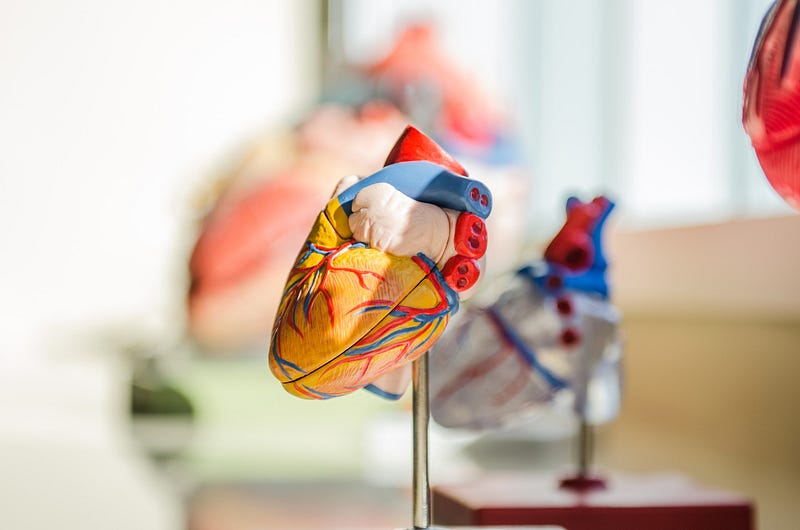
I will try not to get too technical, but a quick anatomy lesson might help explain what is going on.
Your heart beats because a little section of muscle, called the Sinoatrial (SA) node, in the upper right-hand section sends out an electrical signal. That signal causes the top sections of your heart to contract.
After that, the signal travels downward and is momentarily delayed by the Atrioventricular (AV) node which sits between the top sections and bottom sections of your heart. Think of it as a roundabout of sorts that is located very close to the valve between your right atrium (top section) and right ventricle (bottom section).
The beat-pause-beat cycle is something you hear in a stethoscope if you place it over your heart. It is described as a “lub-dub” sound.
Listen here
What happens in Atrial Flutter is that the electrical signal decides that, instead of just progressing downward, contracting the muscles in the lower section then dissipating, that it will take a few quick laps around the right atrial valve.
Sometimes the AV node doesn’t block all the errant signals as whisk round and round the valve and some escape downward, making your hear beat faster. The speed of the signals are such that, if none are blocked, your heart could beat somewhere around 300 times per minute.
Needless to say, that is much too fast to be reasonably effective and causes major problems. Fortunately, your AV node is relatively efficient and blocks many of the signals. Often, then, A-Flutter presents at rates that are factors of 300: like 150, 100 and 75.
A heart rate of 75 is normal, 100 is mildly elevated and 150 is considered too fast for someone not exercising.
So back to the story at hand. I had several more episodes at varying rates from 150 to 75, all of which spontaneously resolved on their own. Yet, it was still troubling that they were occurring, so I went back to the cardiologist. Of course, the first person had left the practice, so I was assigned to a new doctor — whole new exam, series of tests etc. but ultimately, we agreed that she should go in and fix it.
So, we set about to do just that. The “fix” for A-Flutter is very effective in stopping the arrhythmia permanently. What they do is go in and burn a section of the valve enclosure where the electrical signal circles. That creates scar tissue which blocks the electrical conduction along that path and eliminates the problem.
This is done by inserting a catheter in the femoral vein and guiding it up into the right atrium where radio frequency energy is used to cauterize the tissue in just the right place. Sounds fun, huh?

They use conscious sedation for comfort, but I was awake during the procedure. Fortunately, the nurse-anesthetist was excellent at his job!
The premise, as the cardiologist explained it, was that it might take a few different takes to completely block the signal conduction. They use electrical stimulation to recreate the arrhythmia event then burn a section and repeat until no signal will transmit past the scarred area.
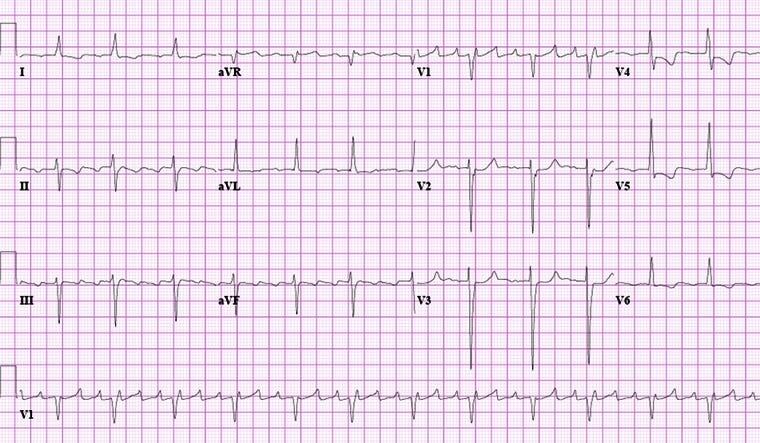
At first, watching the monitors where they have your heart’s electrical activity displayed from several different angles was interesting; at least to me, as I was very familiar with reading 12-lead EKGs as a paramedic. However, the procedure drug on and on.
While what the cardiologist was doing didn’t really cause pain, per se, it was uncomfortable. Fortunately, my anesthetist friend noticed every time my hands started to clench into a fist a little and hit me with a little more fentanyl and versed. Thank you, angel of opiate and benzodiazepine delivery!
It wasn’t a world record or anything, but forty-three burns later I was all done. A few more than the cardiologist made it seem like it would be. I am guessing they underplay the fact that it might be more than “a few” up front. Or who knows, forty-three might be “a few” to some.
I am happy to say that nearly 10 years later I am still free from any more episodes of Atrial Flutter. Yay!
But I am betting that you are dying to hear about my first episode and getting shocked out of it in the clinic at Whistler BC? Read that story here:
Plus, I am not the only one I know who had a run in with Atrial Flutter in Whistler. I had a friend who had a similar, but much more seriously presenting, event that you can read about here:
If you liked this article, you may also like:
Timothy Key spent over 26 years in the fire service as a firefighter/paramedic and various fire chief management roles. He firmly believes that bad managers destroy more than companies, and good managers create a passion that is contagious. Compassion, grace and gratitude drive the world; or at least they should. Follow me on Instagram, Facebook, and Twitter, and join the mail list.


