
Nature and hiking
The Happiest Moments in Life
My Best Photographic Mountain Hikes: 1. Blånebba, Romsdalseggen
Author’s note: This story is the first published with the new Medium publication Happy Hiking. Happy Hiking is open to readers and contributors from all over the world. We aim to present outstanding stories on hiking, telling individual stories of people who love walking in nature.
We also look forward to sharing amazing photos that show us the beauty and the vulnerability of humans and nature.
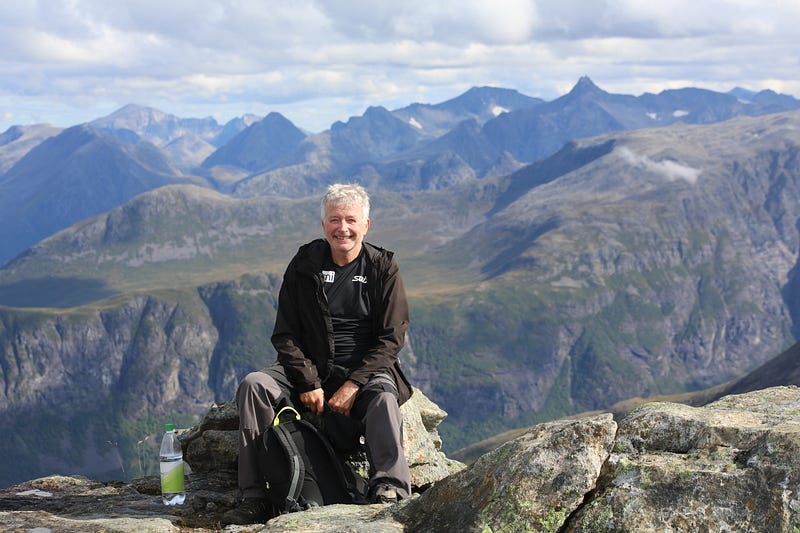
Is happiness absence of pain?
Is happiness when suffering ends?
Or is it something else?
They say that life is suffering. — Is it really so that life is suffering?
Obviously it is.
History is full of stories about suffering.
Suffering exists. Suffering is real
Suffering is in the center of human existence.
Humanity’s culture is built on suffering.
But what is the meaning of suffering?
What is the sense?
What is in the suffering?
What’s in it for me, for you?
If yes, if life is suffering — does life have to be suffering?
Does life have to be only suffering?
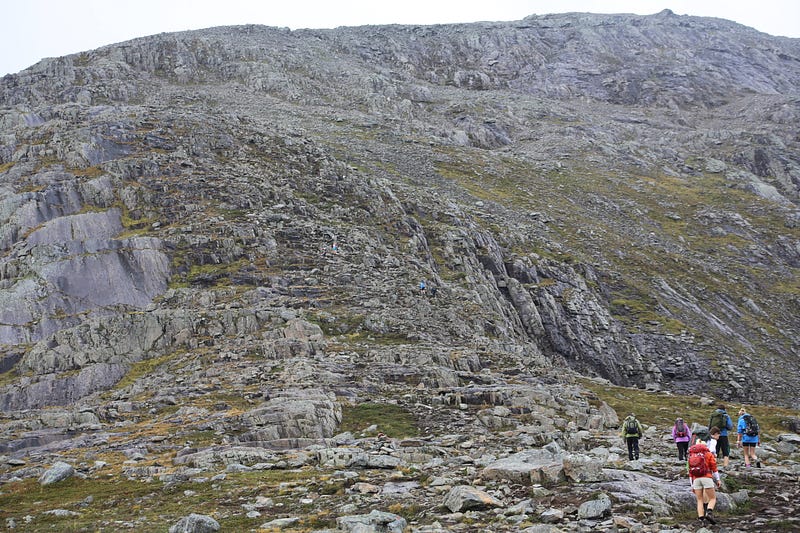
The struggle upwards
Some time ago I climbed a mountain.
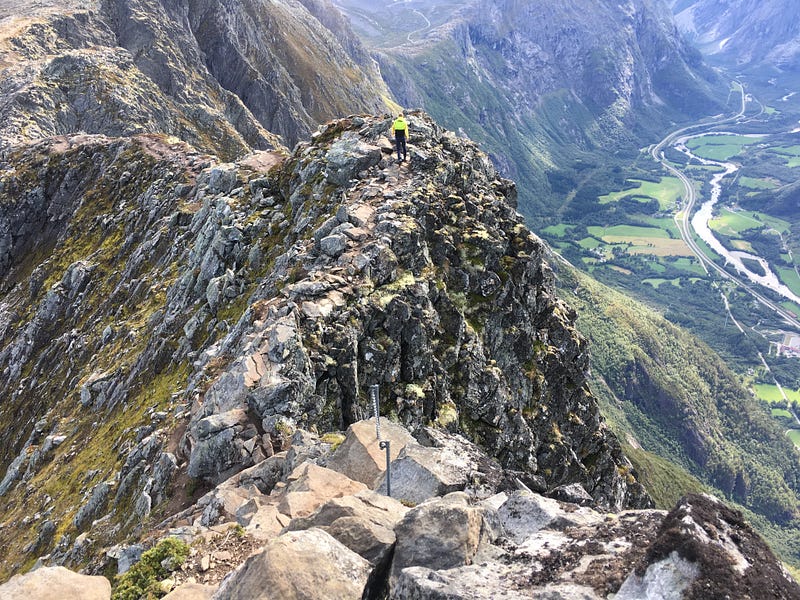
I was fighting my way up the hillside. I was striving with these thoughts on human existence as I slowly moved myself upwards that steep mountainside. I lifted one foot after the other, I lifted the weight of my body, feeling the pain in my muscles, moving slowly up, always one step up, up towards the peak.
In this steep hillside I was in the first phase of an 6 to 8 hour mountain walk, across Romsdalseggen (Norway). I had gotten up early in the morning, I had driven my car some 180 kilometers to arrive at the starting point in right time.
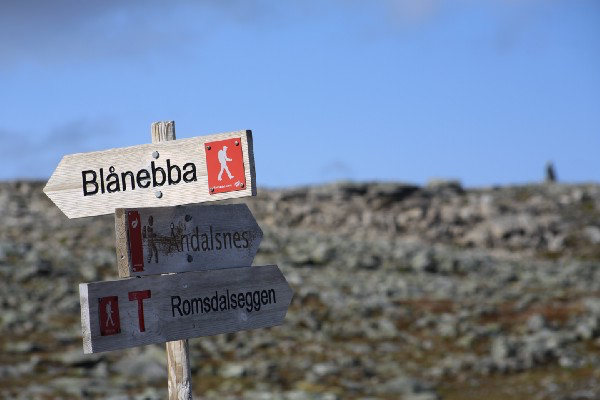
As I walked, I felt physical pain, but also something else.
I felt lifted, elevated, I felt something that was not suffering.
While climbing slowly I felt something that I will say is close to a pure form of happiness. My body at work, my body and I fighting, defying the gravity.
Not far from the top I stopped. I took my camera and lifted the eyes.
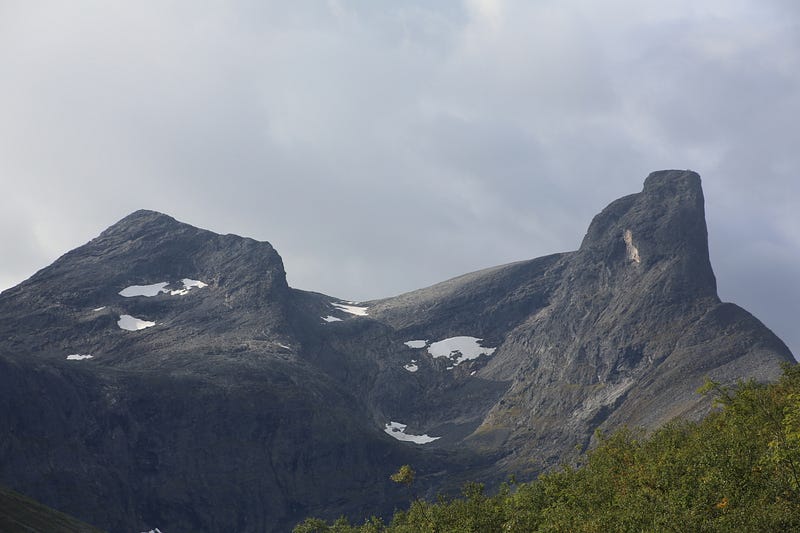
I watched the magnifique panorama, the beauty of the landscape, the row of mountain peaks far away, the magnificent wonder of mother nature.
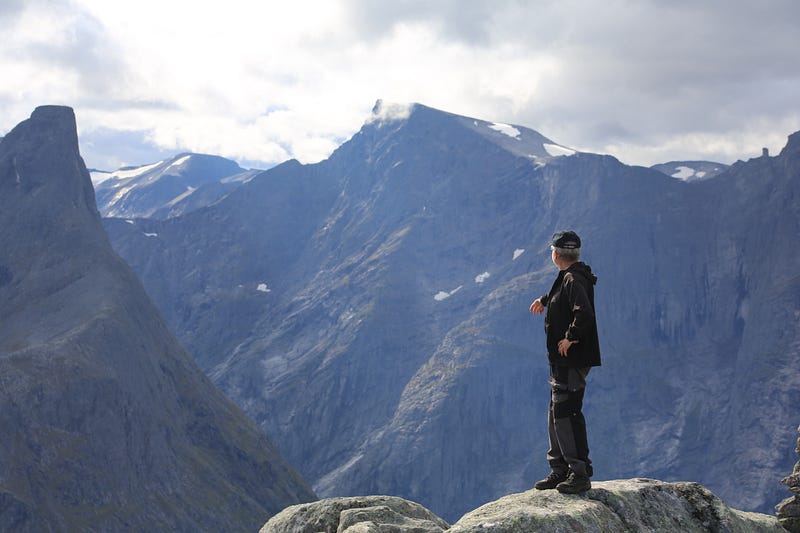
At the top I felt happy. I had to endure much suffering in the sense that I had to use all my forces to climb 1000 meters above sea level. That’s a hard job. But I did it.
After the suffering came the reward. The feeling of being lifted, the exaltation and the happiness. It was a great moment.
Life is not always suffering, but suffering belongs to life. Suffering is a part of life.
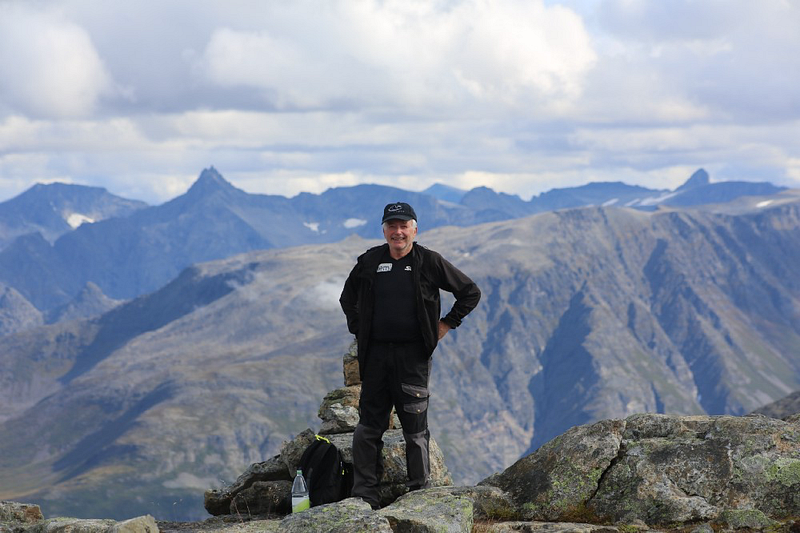
If we want to experience happiness, we also must accept the pain and the suffering on the road towards the goal.
Could happiness be defined as how I feel when I have climbed to a mountain top and I have reached my goal for this day?
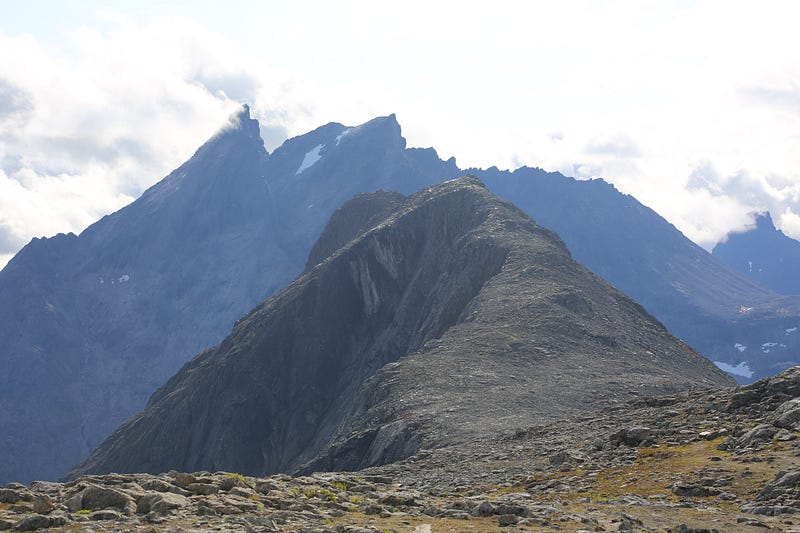
Could it be how I feel when I see a woman who comes up there after me and she nodds to me. She nodds and smiles, like some people do when they have struggled for an hour or two against the force of gravity, and they know that they have won!
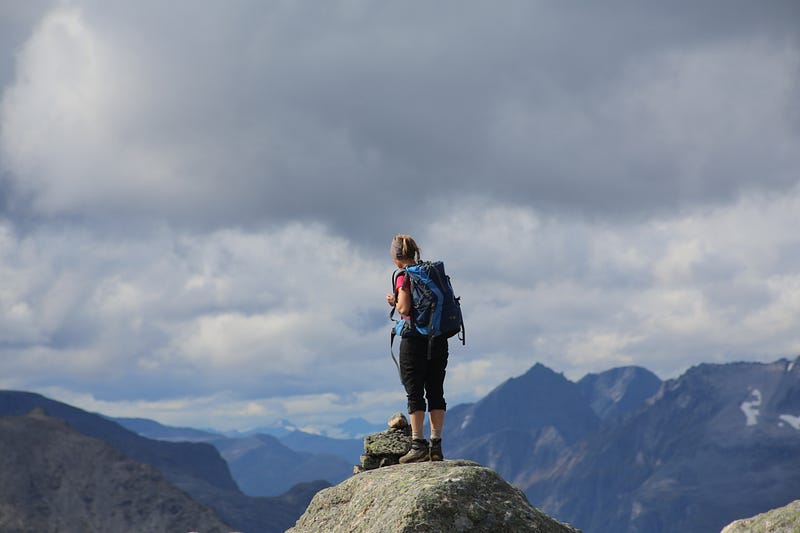
Happiness. — Could it be the feeling that dominates when I sit down on the rock and I open my backpack and take out my bottle of water, my thermos bottle with coffee and my two slices of bread with ham and cheese?
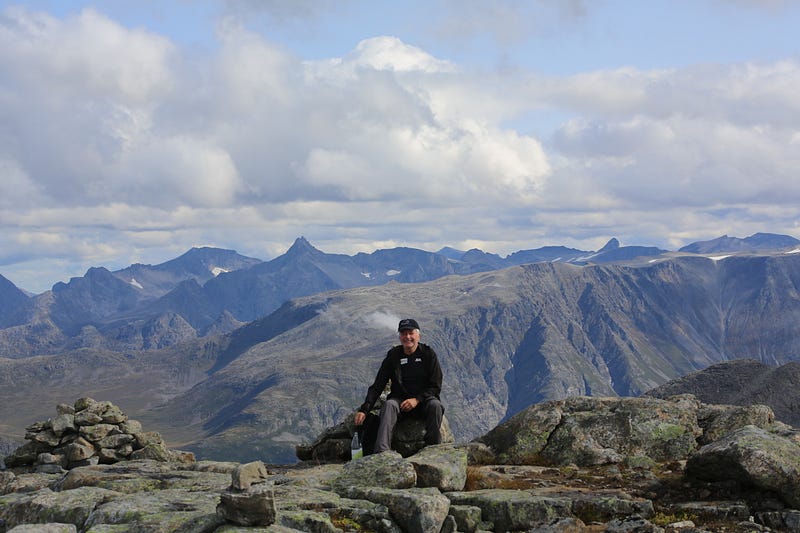
I sit and look at her. She steps up on a big stone, the highest position of the summit. She takes off her backpack, she takes a sweater from the backpack and puts it on.
She turns towards me. I notice her face. She seems open-minded. There is smile in her eyes.
When she talks to me, it’s like bright summer sunshine. I realize that she maybe is interested in having a dialogue. Nothing more, just that, I say to myself.
Two complete strangers, exchanging a few words as we’re both randomly and simultaneously experiencing a moment of happiness on this same mountain top.
We are there, each of us on our own rock, some meters from each other. We are open minds, we look around is. We look at the magnificent landscapes around us, and we are all smile, all happiness.
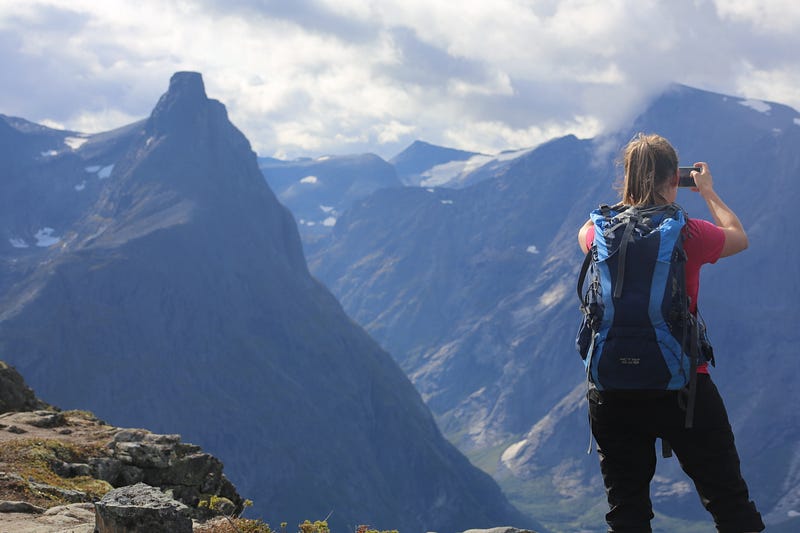
She starts taking pictures. I ask if she can take some photos with my camera. She nodds. Of course! We help each other taking photos. She first, with the big camera. Then she gives me her mobile. I take the photos she has come up here for.
People change when they climb to a mountain peak and meet others who have gone through the same voluntary physical challenge, experiencing the same pain, enduring the same suffering.
People open up to others, people smile, people talk.
It never fails.
We exchange a few words about the landscape, and on the friendly mentality of people we meet in the montains during our hikes.
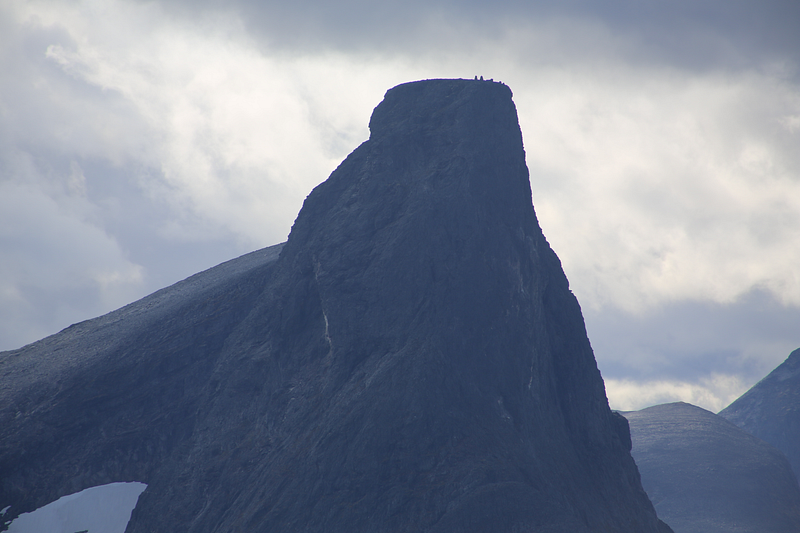
I asked if she was hiking alone here, on these montains.
She said she had come together with two friends, but they did not want to climb this additional peak that we climbed on, so they were waiting further down, towards the end of the trekking path.
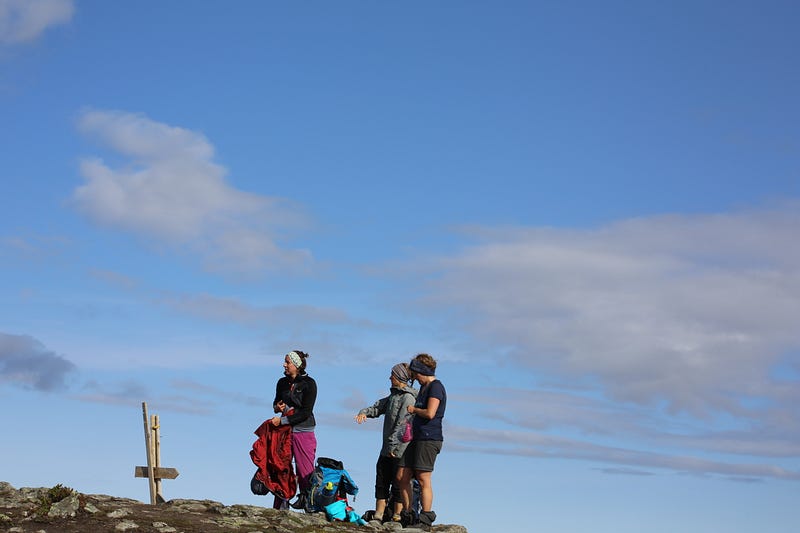
She told me that she had to go and join them now. She said goodbye and started the difficult descent from the top.
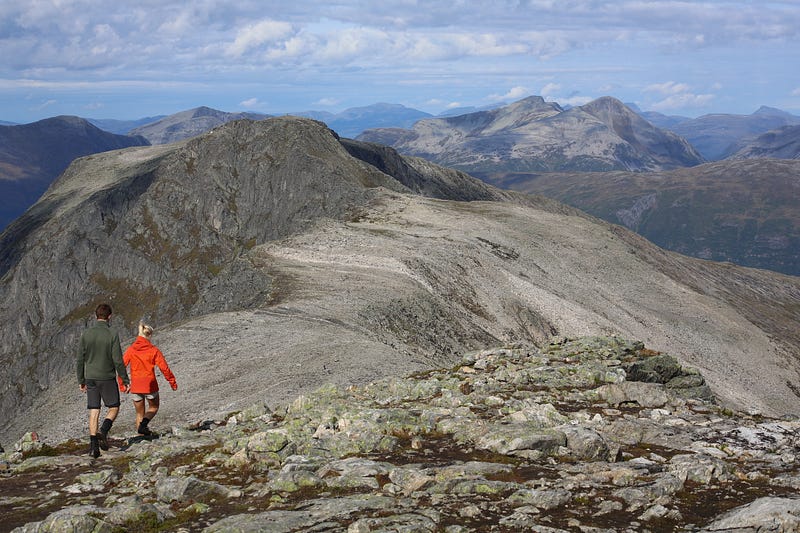
I also started my descent. After a little while I was again close to her. She had stopped and was talking with a couple of hikers. Then she turned, and we walked together for a while, side by side. I asked a few questions about how things are in her country of origin. She told me, and talked again about how nice it was trekking in the montains there.
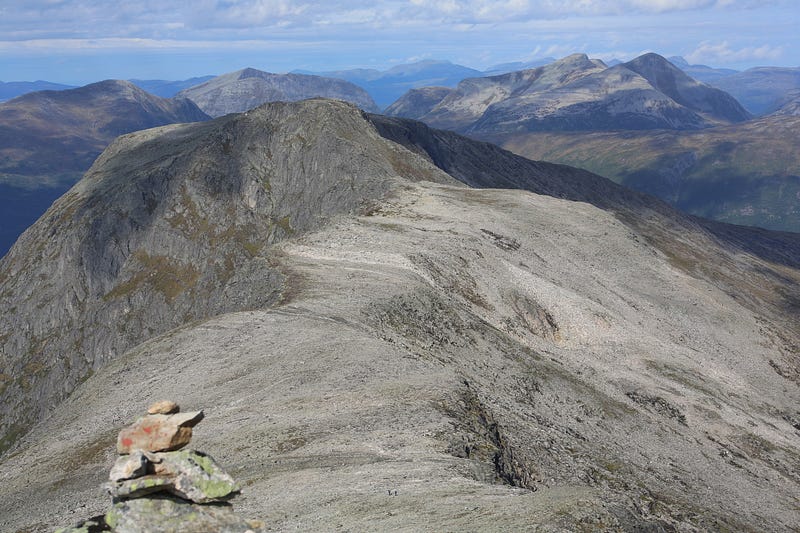
She said she had to go faster. Then she was gone, busy to catch up with her friends ahead.
The descent. The ground hit me.
When I walked down from this top, I experienced the nightmare of a hiker. I fell, my right hand, my camera, my face and my breast hit the ground
When I fell, I didn’t know what happened. The ground suddenly hit my face. I felt the stones on the ground hitting my face. I knew instinctively that this was not good.
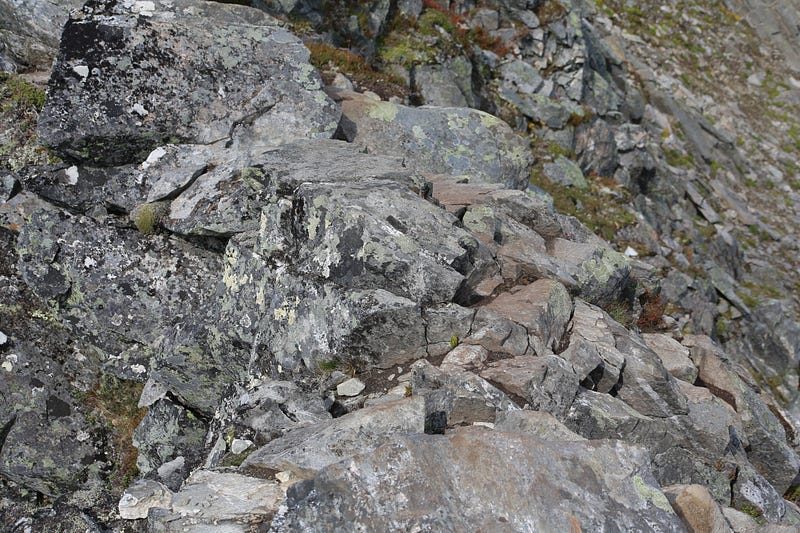
I lay there. I needed two seconds to realize it. I lay there like a slaughter. I had stumbled, my boot had hit an elevated stone, and my body had tumbled forwards. Inadvertedly I fell like a — yes, like a stone that was dropped from 1.74 meter height. Defenseless, like a dropped stone I lay on the ground.
My reflexes had delivered only a minor, absolutely too slow and weak reaction. My right hand had instinctively tried to protect me from the weight, the energy of my falling body.
I carried my heavy camera in my right hand, and the solar filter on the lens took some of the damage. It broke. Small pieces of glass lay on the ground where I fell.
After a few seconds I tried to get myself upright. I felt like a slaughter.
I could move my arms, my right hand made me feel pain. My legs were intact.
I got myself up in a standing position.
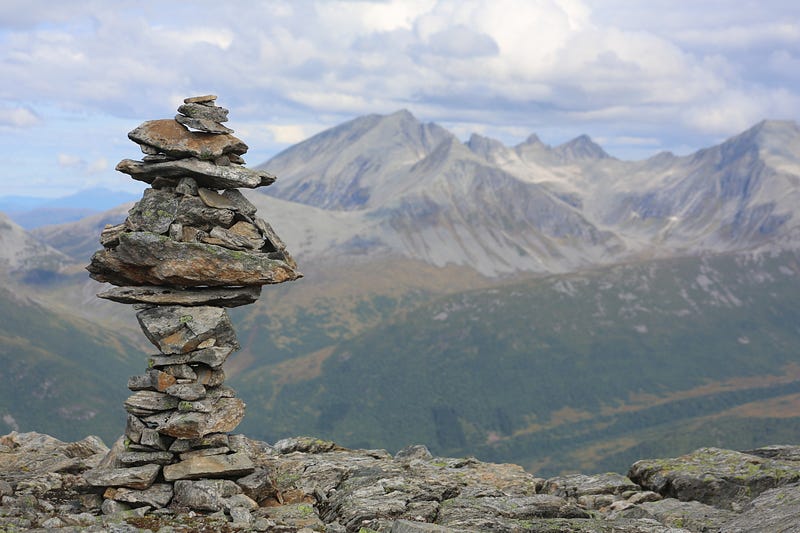
I could feel liquid running down from my forehead between the eyes. I put my finger on it. My finger was red. Drops of blood dropped on my boots, on the ground. No doubt, I was bleeding.
I went two steps further, away from the spot where I hit the ground. I had to make up status, summarize the situation. I had to find something to wipe off the blood. And more important: to stop the bleeding from the wounds on my forehead.
I needed to sit down. I had no paper tissues, no adhesive plaster, no plastics, no compression. I opened the backpack and took out the content. The thermos, the plastic bag with the rests from my lunch. A black T shirt I had in reserve.
Unexpectedly there was no one near me. Nobody had seen me falling. I was grateful for that. I held the T shirt on my forehead, after a few attempts I succeeded stopping the blood from floating. At least that’s what I thought.
After some twenty minutes I collected my items and put everything except the T shirt in the backpack. I put the camera, an expensive Canon EOS Mark III with a 75–300mm lens, in the backpack. I lacked the energy and the courage to test if it was intact. I deferred to later that decisive moment of truth.
I walked much more carefully on the stones now, much slower. I realized I had been careless, I had not paid attention, and this was the outcome of it.
I had the time to think. To reflect around the incident. The accident. Yes, I must avoid belittling! It was an accident!
I was between three and four hours from the end of the hike.
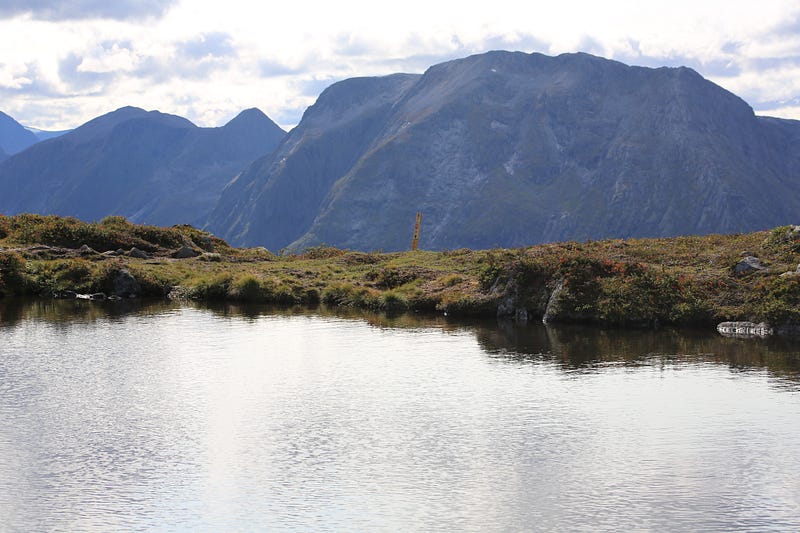
After nearly one hour of careful descent I decided to make a pause. I stopped near a small pond, a mini lake on the edge, at some 900 meters of altitude. I took off the backpack, I lay down in the grass. The sun came from behind the clouds. I sensed the warmth on my skin. I closed the eyes for a little while.
Then I heard the sound of someone stepping on the hiking path. I opened my eyes. I saw a woman walking alone downwards. She lifted the hand. She said Hi. I responded, I raised my hand and I waved to her. She went on, out of my field of view.
There was silence again. A kind of peaceful silence in my mind.
I started to feel better. My body was battered by the pain from my weary muscles. But I began to feel better. The mood was on the way up.
I had barely avoided the effects of a serious accident. Up there, alone, I could have lost consciousness and laid for hours on the ground, vulnerable, maybe at risk of head fracture, or inner bleedings.
When something goes bad, you don’t think it can go even worse.
Or — do you?
I’m not sure.
I know things can go from bad to worse.
And even from worse, from really bad, to a disaster. To something fatal.
But always, as long as there is life, there is hope.
Suffering exists.
Suffering is real.
Pain and suffering can sometimes be bearable. Like the pain and the suffering connected to a long and intense physical effort. Or the pain and the injuries and the damage from a physical incident, or accident, for instance a traffic accident.
But I also know, pain and suffering can sometimes be far beyond what a man or a woman can bear. Sometimes pain kills, suffering kills.
I think of my life. I have lived for many decades. I have been an adult for at least five decades. I have experienced both happiness and the opposite. I have done stupid things. I have acted badly towards people who were close to me, people who are still near me.
I am not proud of everything I did.
I know that to say that would be a lie.
No matter who says it, it’s a lie if they say they’re proud of everything and that they don’t regret anything.
That’s how life is.
Acting right.
Acting wrong.
Pain, suffering.
And hopefully new insights,
some good moments,
some glimpses of happiness.
September 9, 2018
Thank you for reading!
Share if you like.
All rights reserved. © Øivind H. Solheim, author of novels, poetry, articles, essays, short fiction and experimental writings. Contact: [email protected].
Read more?
© Øivind H. Solheim —
Øivind H. Solheim is a novel author and a nature photographer from Norway who loves writing fiction, essays, and articles helping others understand life, other humans, and themselves. He has published five novels, two non-fiction books, and a poetry book.
Visit Øivind H. Solheim’s profile
Become a Medium member, read thousands of writers and support my writing.
“Make Your Dream Be Your Future”


