avatarDark Energy Articles

Free AI web copilot to create summaries, insights and extended knowledge, download it at here

2639

Abstract

os, who ruled there in the 4th century BC. Mausolos. From his name, in later times similar tombs were called mausoleums;</li><li><b>The Colossus of Rhodes</b>, built on the island of Rhodes off the coast of Turkey. Only 66 years after its completion, it toppled into the sea in a massive earthquake;</li><li><b>The Alexandria Lighthouse</b> on the islet of Pharos at the entrance to the harbor, which was put into service in 279 BC. It was the first largest structure of its kind (122 meters high). It survived many earthquakes until 796 AD. In 1477, the fortress Fort Kait Bey, which still exists today, was built on its ruins.</li></ul><figure id="a6e4"><img src="https://cdn-images-1.readmedium.com/v2/resize:fit:800/1*riSgHBJ5OtqRff4n2rzEoA.png"><figcaption>A collage of The Seven Wonders of the (ancient) world — [Photo: The original uploader was Mark22 at English Wikipedia., Public domain, via <a href="https://commons.wikimedia.org/wiki/File:SevenWondersOfTheWorld.png">Wikimedia Commons</a>]</figcaption></figure><h1 id="8dd7">What were the Hanging Gardens of Semiramide and when were they built?</h1><p id="cc28">Of all the Seven Wonders of the Ancient World, the hanging gardens of Semiramide are of<b> the greatest interest to researchers and historians.</b> Neither their existence nor their exact location has still not been definitively confirmed. They were thought to have been built at the turn of the sixth and seventh centuries BC by order of Nebuchadnezzar II, king of Babylon from 604–562 BC. It is worth mentioning that it was during his reign that the ancient Semitic state lying in Mesopotamia became a powerhouse.</p><h2 id="8674">During the reign of Nebuchadnezzar II in Babylon were built, among others:</h2><ul><li>Ishtar gate;</li><li>Marduk’s E-sagila temple;</li><li>a triple wall system.</li></ul><p id="3fa0">According to publicly available sources, the hanging gardens of Semiramis were a gift from the Babylonian leader to his wife, Princess Amytis. The woman was from Media, and the lush vegetation characteristic of that part of the world, located in the gardens of Babylon, was meant to remind her, at least for a while, that she belonged to her homeland. The gardens were most likely named after the legendary queen, founder of the city and creator of a vast empire, <b>Semiramis</b>.</p><p id="71c6">The Hanging Gardens of Semiramide consisted of seven separate terraces measuring 5 meters by 1.5 meters, or a total area of about 40 square meters. The roof of each individual level was insulated with tar and lead coating to avoid flooding or inundation. Overhanging vines from the terraces covered

Options

the walls of the palace, making them appear to be suspended in the air.</p><p id="46bb">It was very important to provide plants with adequate water on a regular basis. Systems of canals and drains were very helpful, thanks to which plants had constant access to water coming from the Euphrates River.</p><figure id="614a"><img src="https://cdn-images-1.readmedium.com/v2/resize:fit:800/1*mzK_d9obV1jU2cg1FMe3mA.jpeg"><figcaption>[Photo: <a href="http://www.plinia.net/wonders/gardens/hgpix1.html">http://www.plinia.net/wonders/gardens/hgpix1.html</a>, Public domain, via <a href="https://commons.wikimedia.org/wiki/File:Hanging_Gardens_of_Babylon.jpg">Wikimedia Commons</a>]</figcaption></figure><h1 id="0bd8">What happened to the hanging gardens of Semiramide?</h1><p id="0281"><b>It is believed that the Hanging Gardens of Semiramide were destroyed in the 1st century BC as a result of an earthquake. </b>Proof of their existence is to be found in excavations carried out at the site of their presumed location. Research by archaeologists has confirmed the presence of the remains of Nebuchadnezzar II’s extensive palace, as well as a special structure of terraces and wells.</p><p id="eb06">Crucial in uncovering the secrets of ancient Babylon proved to be the findings of Robert Koldewey, who was stationed in the Middle East for nearly two decades. The result was the German archaeologist’s discovery of the Etemenanki ziggurat and the Ishtar gate. In addition, he developed a method for identifying the clay bricks from which the hanging gardens of Semiramide were built.</p><div id="14a7" class="link-block"> <a href="https://readmedium.com/a-tourist-has-found-an-ancient-treasure-in-the-swiss-alps-it-was-found-in-an-ancient-cult-site-5082498159c5"> <div> <div> <h2>A tourist has found an ancient treasure in the Swiss Alps. It was found in an ancient cult site</h2> <div><h3>Archaeologists say a tourist accidentally found a place of worship where offerings were made to the gods in ancient…</h3></div> <div><p>medium.com</p></div> </div> <div> <div style="background-image: url(https://miro.readmedium.com/v2/resize:fit:320/1*jIT6cn4BJwZvbnrSOOUwpw.jpeg)"></div> </div> </div> </a> </div><p id="5f64"><b>Cool that you made it to the end of this article. I will be very pleased if you appreciate the effort of creating it and leave some claps here, or maybe even start following me. It would be nice if you also left a tip! Thank you!</b></p></article></body>

The Hanging Gardens of Semiramis — one of the seven wonders of the ancient world that still hides secrets

The Hanging Gardens of Semiramis were built during the reign of Nebuchadnezzar II and were a gift to his wife. Although they are considered one of the seven wonders of the ancient world, to this day it is not known whether they actually existed and where they were located.
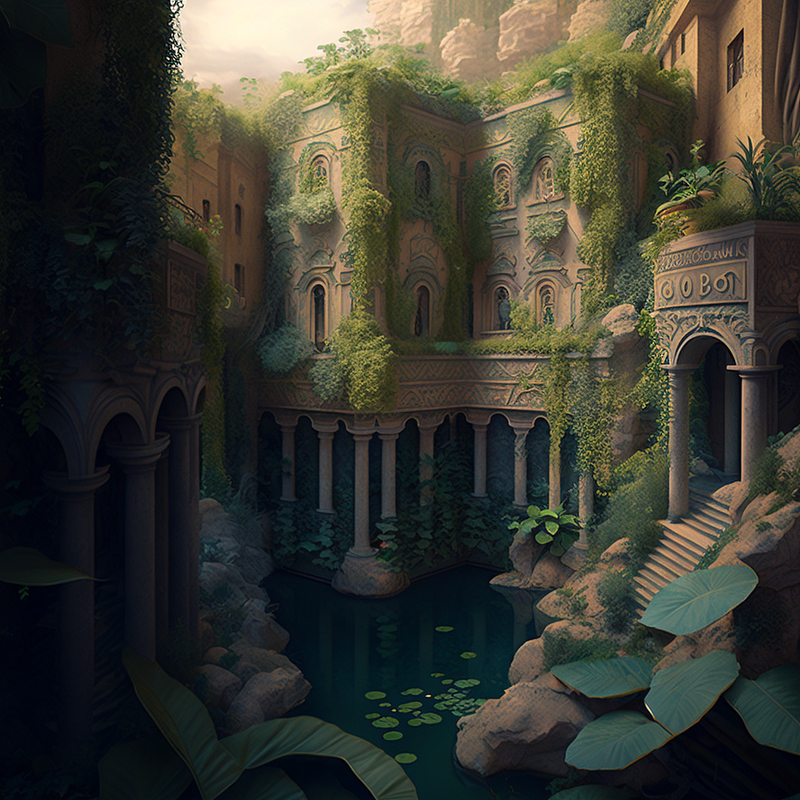
[Photo: MidJourney, Paid Member License]

The era of antiquity saw the construction of many fascinating buildings that still inspire awe and wonder today. Although there is not a trace of some of them, their past still intrigues historians. As in the case of the Hanging Gardens of Semiramis — one of the seven wonders of the ancient world, whose existence is still unconfirmed.

7 wonders of the ancient world

The ancient world had seven wonders that were considered sacred due to their exceptional characteristics. These wonders were distinguished by their extraordinary size, unique construction techniques, or simply breathtaking beauty.

The first such list of the most famous buildings was compiled more than 2,000 years ago by the ancient Greek poet, Antipater of Sidon. The compilation was intended as a sort of guide to the eastern Mediterranean.

Antipater listed:

  • The Pyramids of Giza — built by the Egyptians five thousand years ago. They are the oldest and also the only surviving wonder of the ancient world;
  • The Hanging Gardens of Semiramis — existing only in human consciousness as a paradise in the desert. They were located on the banks of the Euphrates River in Mesopotamia (now Iraq);
  • A statue of Zeus chiseled by Phidias, set up around 433 BC in a purpose-built temple in Greece’s Olympia. When the temple crumbled in Roman times, it was transported in 394 A.D. to Constantinople, where it was probably destroyed in a fire;
  • The Temple of Artemis in Ephesus with 127 columns and a turbulent history. In 336 BC it was set on fire by Herostrates. It was rebuilt at the behest of Alexander the Great in 250 BC. It disappeared from the face of the earth in 262 AD due to the wandering tribes of the Goths;
  • Mausoleum in Halicarnassus, the capital of Karia in present-day Turkey. It was built as a royal tomb by Mausolos, who ruled there in the 4th century BC. Mausolos. From his name, in later times similar tombs were called mausoleums;
  • The Colossus of Rhodes, built on the island of Rhodes off the coast of Turkey. Only 66 years after its completion, it toppled into the sea in a massive earthquake;
  • The Alexandria Lighthouse on the islet of Pharos at the entrance to the harbor, which was put into service in 279 BC. It was the first largest structure of its kind (122 meters high). It survived many earthquakes until 796 AD. In 1477, the fortress Fort Kait Bey, which still exists today, was built on its ruins.
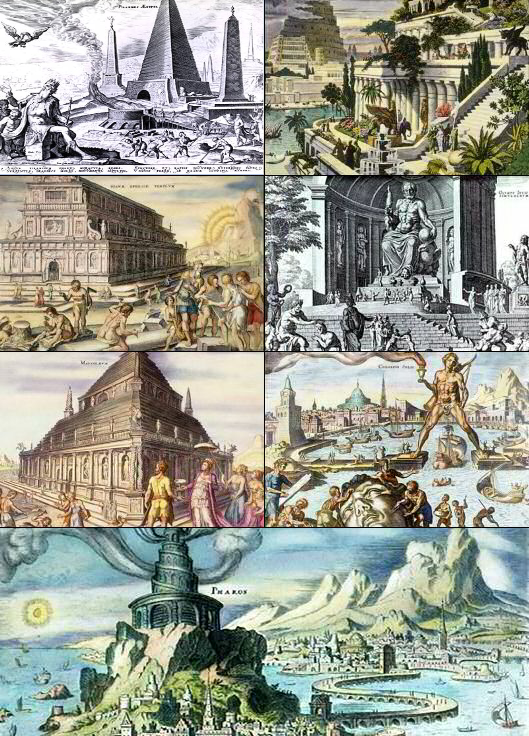
A collage of The Seven Wonders of the (ancient) world — [Photo: The original uploader was Mark22 at English Wikipedia., Public domain, via Wikimedia Commons]

What were the Hanging Gardens of Semiramide and when were they built?

Of all the Seven Wonders of the Ancient World, the hanging gardens of Semiramide are of the greatest interest to researchers and historians. Neither their existence nor their exact location has still not been definitively confirmed. They were thought to have been built at the turn of the sixth and seventh centuries BC by order of Nebuchadnezzar II, king of Babylon from 604–562 BC. It is worth mentioning that it was during his reign that the ancient Semitic state lying in Mesopotamia became a powerhouse.

During the reign of Nebuchadnezzar II in Babylon were built, among others:

  • Ishtar gate;
  • Marduk’s E-sagila temple;
  • a triple wall system.

According to publicly available sources, the hanging gardens of Semiramis were a gift from the Babylonian leader to his wife, Princess Amytis. The woman was from Media, and the lush vegetation characteristic of that part of the world, located in the gardens of Babylon, was meant to remind her, at least for a while, that she belonged to her homeland. The gardens were most likely named after the legendary queen, founder of the city and creator of a vast empire, Semiramis.

The Hanging Gardens of Semiramide consisted of seven separate terraces measuring 5 meters by 1.5 meters, or a total area of about 40 square meters. The roof of each individual level was insulated with tar and lead coating to avoid flooding or inundation. Overhanging vines from the terraces covered the walls of the palace, making them appear to be suspended in the air.

It was very important to provide plants with adequate water on a regular basis. Systems of canals and drains were very helpful, thanks to which plants had constant access to water coming from the Euphrates River.
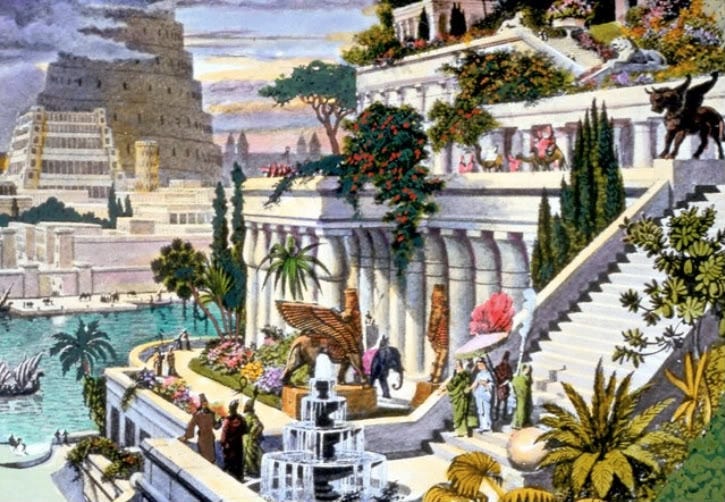
[Photo: http://www.plinia.net/wonders/gardens/hgpix1.html, Public domain, via Wikimedia Commons]

What happened to the hanging gardens of Semiramide?

It is believed that the Hanging Gardens of Semiramide were destroyed in the 1st century BC as a result of an earthquake. Proof of their existence is to be found in excavations carried out at the site of their presumed location. Research by archaeologists has confirmed the presence of the remains of Nebuchadnezzar II’s extensive palace, as well as a special structure of terraces and wells.

Crucial in uncovering the secrets of ancient Babylon proved to be the findings of Robert Koldewey, who was stationed in the Middle East for nearly two decades. The result was the German archaeologist’s discovery of the Etemenanki ziggurat and the Ishtar gate. In addition, he developed a method for identifying the clay bricks from which the hanging gardens of Semiramide were built.

Cool that you made it to the end of this article. I will be very pleased if you appreciate the effort of creating it and leave some claps here, or maybe even start following me. It would be nice if you also left a tip! Thank you!

History
Art
Culture
Science
Life
Recommended from ReadMedium