
A tourist has found an ancient treasure in the Swiss Alps. It was found in an ancient cult site
Archaeologists say a tourist accidentally found a place of worship where offerings were made to the gods in ancient times. Researchers at the site discovered various artifacts.
.jpg)
In the summer of 2020, a hiker decided to go on a mountain hike in the Swiss Alps. He decided to trek off the traditional trail. While hiking, he found a coin that looked very old. The man immediately notified the Archaeological Service of the Canton of Bern (Archäologische Dienst des Kantons Bern). Due to lockdown and pandemic restrictions, excavations did not begin until two years later.
Archaeologists have found an ancient Roman cult site in the Alps
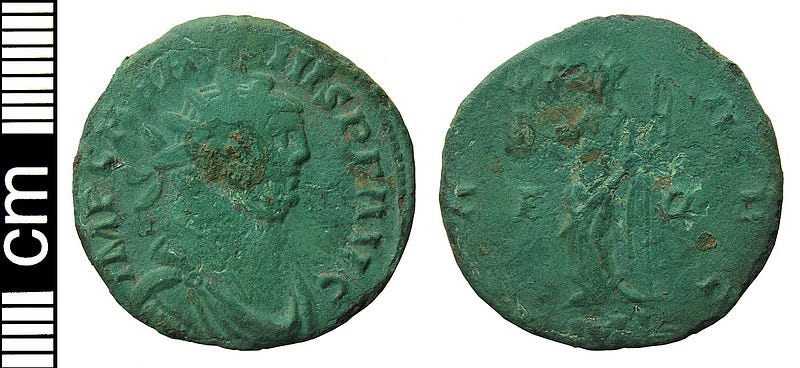
During the archaeological survey, the team unearthed a total of about 100 coins, 27 small crystals, 59 Roman shoe nails, decorated brooches and a fragment of a leaf-shaped votive tablet. Researchers say that in ancient times it was probably a place of worship where offerings were made to the gods.
“Ancient Rome. However, this site at the foot of Ammertenhor is unusual mainly because of the size of the treasure and its location,” Regula Gubler, an archaeologist and chief excavation manager, told Newsweek.
“Roman artifacts were usually discovered on mountain passes. This site, however, is very far from human settlements, both modern and ancient,” the scientist adds. The Swiss researcher emphasizes “that in ancient times people lived in the Alps, but just like today, they usually lived in valleys.”
The site was the destination of ancient pilgrimages
Meanwhile, the place of worship was located at an altitude of 2,590 meters above sea level on a plateau between the Ammertenhorn and Wildstrubel mountains. To reach the nearest trail from here, one must expect a hike of several hours.
“In order to carry out the excavations, we had to get there with tents and supplies for many days. We camped at the site, which was also an unusual experience,” admits Gubler.
Mountains have always been strongly associated with the gods. Majestic and huge massifs, which seemed to touch the sky, were a kind of gateway for people leading to the skies and a place for encounters with higher forces. It was on Mount Sinai that Yahweh revealed himself to Moses, and it was at the top of Mount Olympus that the Greek deities resided. The same was true in Slavic mythology. The peoples who inhabited today’s Czech Republic, Slovakia and Poland believed that Radogost, among others, could be met on the mountain trails.
Archaeologists say the plateau may have been a pilgrimage site in ancient times. The artifacts found are similar to those deposited at other sacred sites that are known to date back to Roman times. Moreover, a Roman shrine dedicated to the gods of the mountains was found several kilometers away in the past. In the city of Thun, on the other hand, there were several temples from the Imperial period. In one of them a tablet was discovered that mentioned an unknown female deity.
Switzerland was under Roman rule for nearly 500 years
“The discovery shows that the Roman population of the region worshipped the mountains not only from afar, but also went on hikes to be close to the gods,” Gubler says. — “Our research is in its preliminary stage for now, but we can already conclude that people came here to ask the gods for various favors or to thank them for good fortune,” the scholar adds.
Gubler also points out that the presence of crystals may be a clue. — “The crystals we found occur naturally in these mountains, but perhaps that was the reason why people considered this place sacred,” the archaeologists say.
Switzerland was under Roman rule from around the first century BC until around 401 AD. To this day, there are many remains of ancient Roman buildings throughout the country, and archaeologists have repeatedly uncovered various artifacts from the period.
Source: Archäologische Dienst des Kantons Bern
Cool that you made it to the end of this article. I will be very pleased if you appreciate the effort of creating it and leave some claps here, or maybe even start following me. It would be nice if you also left a tip! Thank you!