
Travel / Road Trip / Photography
The Greenest of all the Greens Known to Human and Animal
Globetrotters March Writing Prompt / Challenge — Green Around the World
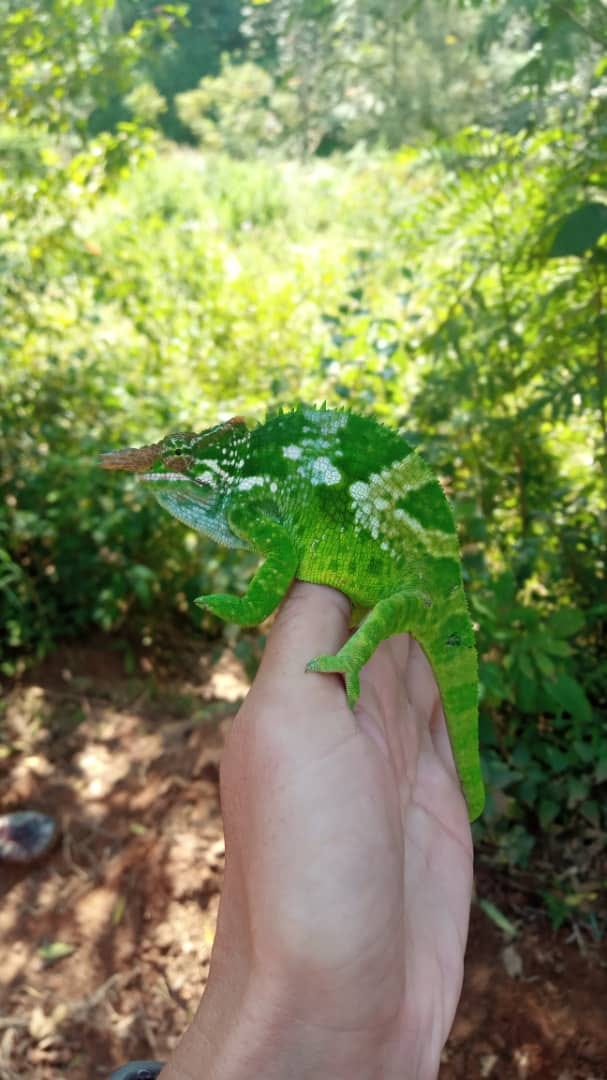
This month, presumably because it includes the yearly Festival of the Patron Saint of Ireland / the Bringing of Christianity to the Emerald Isle / Reason to cut loose at the tail end of winter, the fine folks at Globetrotters have exhorted us to detail and describe our encounters with this colour and its various shades, around the world in our travels.
I’ll admit, at first I wasn’t all that inspired. Maybe that’s the wrong word. I wasn’t all that prompted, but that’s no one’s fault but my own, since I focused on that particular colour in the February Globetrotters writing challenge on the topic of the impact of terrains in our travels.
But then I was on the train on the way home from work this afternoon and I’d finished the book I was reading and thought that I’d do a quick scroll through the various photos, travel and otherwise, that have accrued on my phone the past five years.
And sure enough, a few stuck out in their….unfiltered greenness and got me going.
I lived in Dar es Salaam, Tanzania from July 2018 until June 2021. It is a huge, teeming city on the East Coast of Africa directly on the Indian Ocean. It’s not the capital of the country, mind you, but it is certainly the economic hub of the place. Constantly humming is one way to describe it.
I consider myself lucky to have had the chance to live and work there as a teacher at the local International School. I was always conscious that my status there as an expat (as opposed to a migrant, an immigrant or a refugee) enabled me to live a very charmed and comfortable existence. One that 99% of the people living there don’t have access to.
One such privilege that I was afforded was the opportunity to travel extensively within the country. Shorter trips, closer to the city, had been frequent enough in the first year and a half.
Hiking in the Pugu Hills near Dar with student groups on the weekends, in preparation for a bigger outdoor challenge in the months ahead. A Saturday morning drive up the coast to a lively fishing village called Bagamoyo. A Friday late afternoon hour and a half hydrofoil ride to Stone Town in Zanzibar to spend a long weekend on that incredible island. A week-long October break on an island to the north called Pemba. A propeller plane flight to an island to the south called Mafia for a few swims with the whale sharks. A longer road trip as far south in the country as we’d ever get to Kilwa and ancient ruins from the pre-European Swahili trading kingdoms. And of course to the area known as South Beach an hour from the city on nearly every possible remaining weekend.
Each of these adventures could be the subject of their own article. And perhaps they will be. My time in Tanzania meant many things to me and there is a lot that I miss about it. But after navigating my first winter back in Vancouver in many years and marvelling at the many shades of grey and types of rain that dominate here, the one thing that sticks out in mind is the vividness of the endless varieties of green in this part of sub-Saharan Africa.
The United Republic of Tanzania was a strange place to be while the rest of the world attempted to navigate the opening months of the Covid pandemic. There were opportunities to leave, early on via evacuation flights, but it made sense to stay, since going home (ie back to Canada) would have meant spending the lockdown indoors.
Those working in International education typically use the summer break to return to their home country. This particular summer was different since there was no exiting a country that had declared the pandemic over, dealt with and no longer requiring any lockdown, nevermind face masking of its inhabitants.
Instead, the decision to stay put provided a much wider opportunity to really see the country, in the form of an epic road trip. It took the form of a 4200km, three-week counterclockwise circle of a road trip in a very trusty and tested 2002 Toyota Prado Landcruiser that took us to some truly incredible spots. Ones that we would likely never have gotten to if we had spent the entire summer outside of the country, as usual. It was an opportunity that could not and would not be missed. Here are the greenest of the highlights:
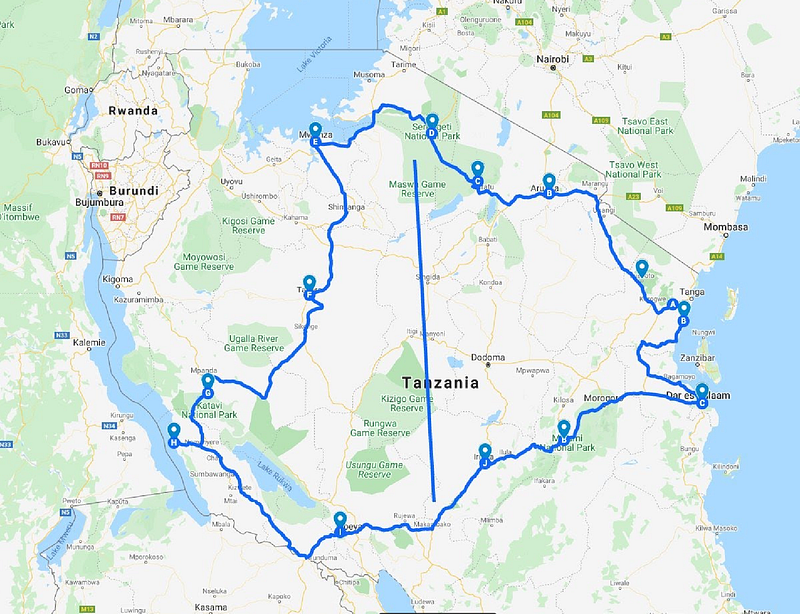
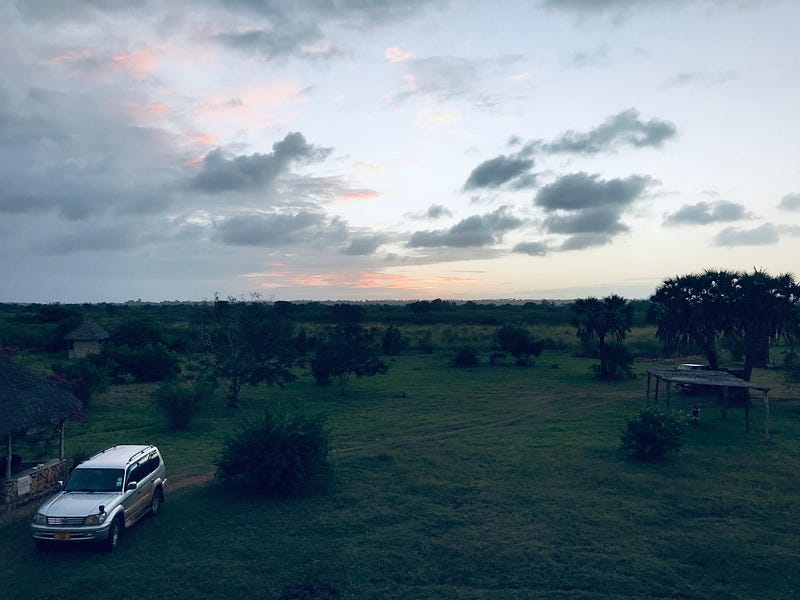
Pangani. Fishing village on the northernmost coast of Tanzania, just south of the border with Kenya.
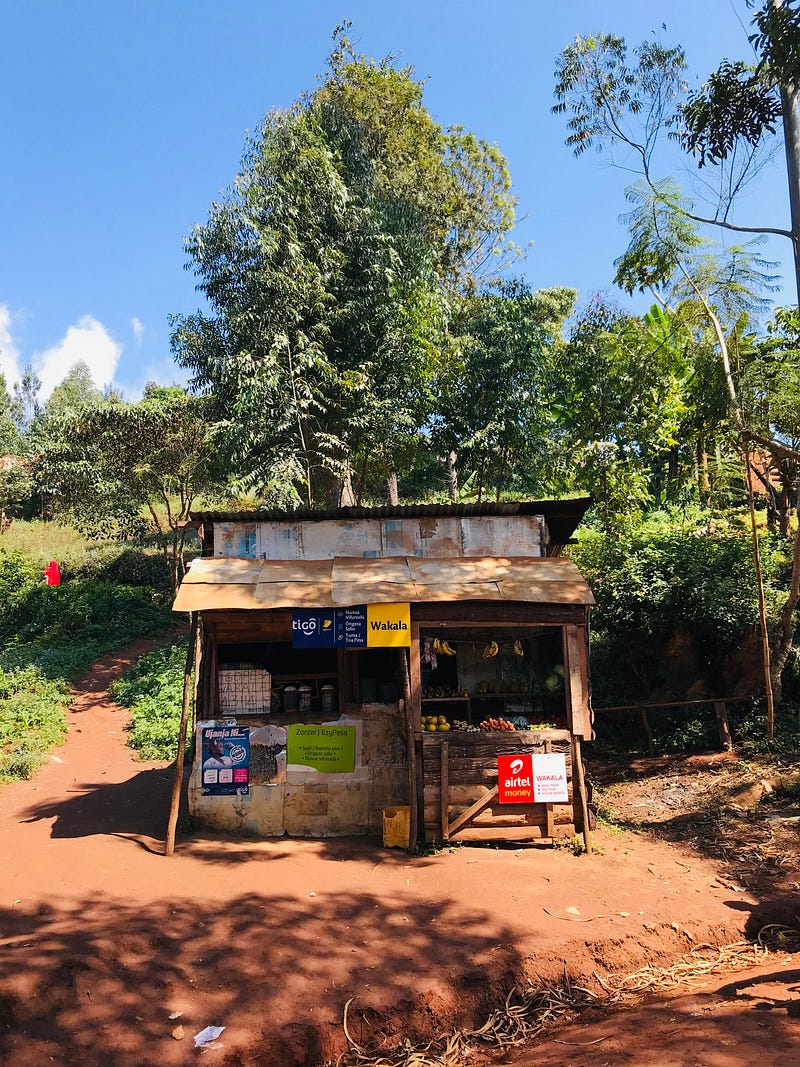
Lushoto. Mountain town in the West Usambura Mountains in the north-central part of Tanzania. A fascinatingly winding road to get up there from the main highway and a long walk in the lush and foggy backwoods, doing my best to spot lizards in the trees but trumped by the guide and my partner every time.
Ngorogoro Crater. An incomparable place in the world. In the north-central part of the country as well, and incredibly isolated. Driving through Masai villages and into the crater itself cannot be described adequately.
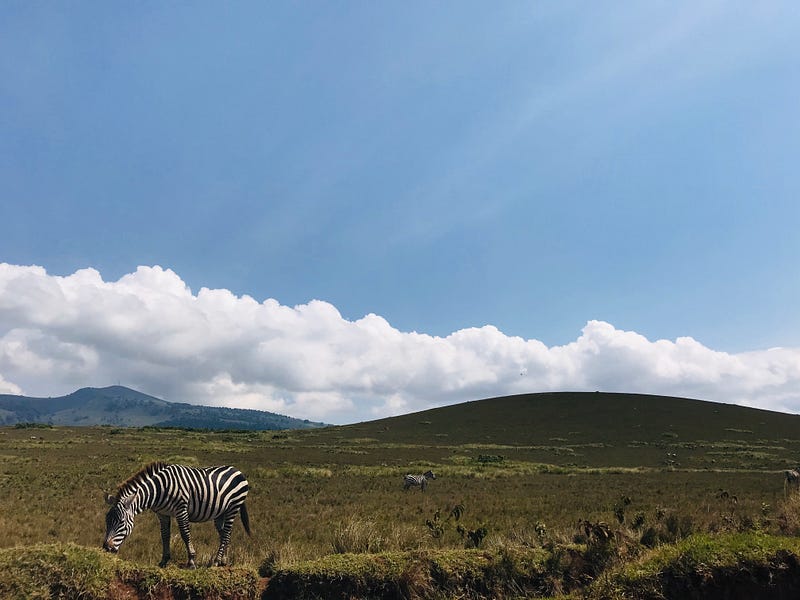
Serengeti National Park. Perhaps the second most famous place in the country, besides Kili. Camping on the vast savannah, amongst the passing wildlife.
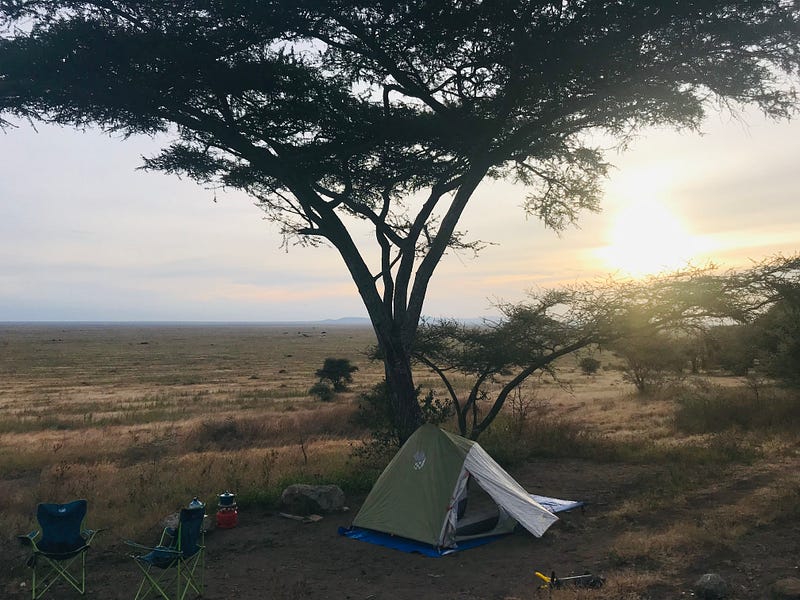
Mwanza. The largest city on Lake Victoria and a welcome rest stop.
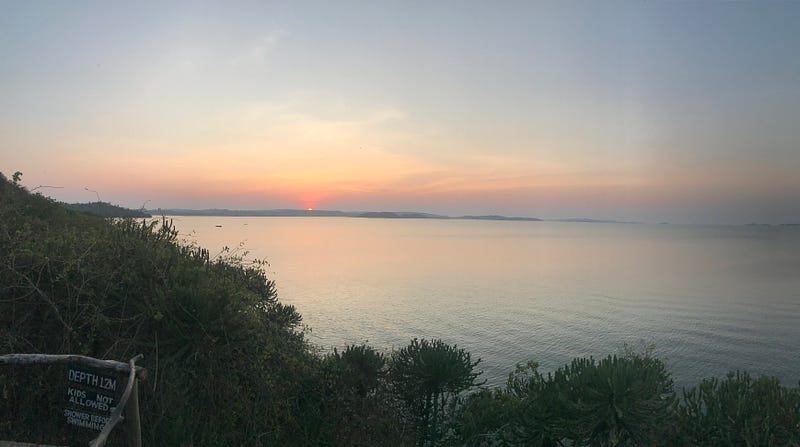
Tabora. A major rail hub when Tanganyika was German territory. Just an overnight for us, between there and there.
Katavi National Park. I’ve never been an animal guy, but after so many animal-related trips in Africa, I eventually became one. I still think safaris should be capped at three hours, however.
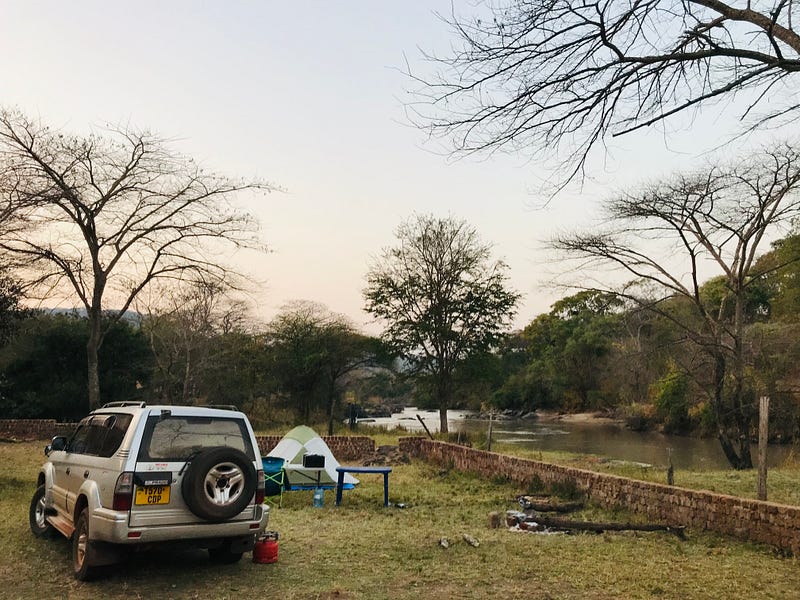
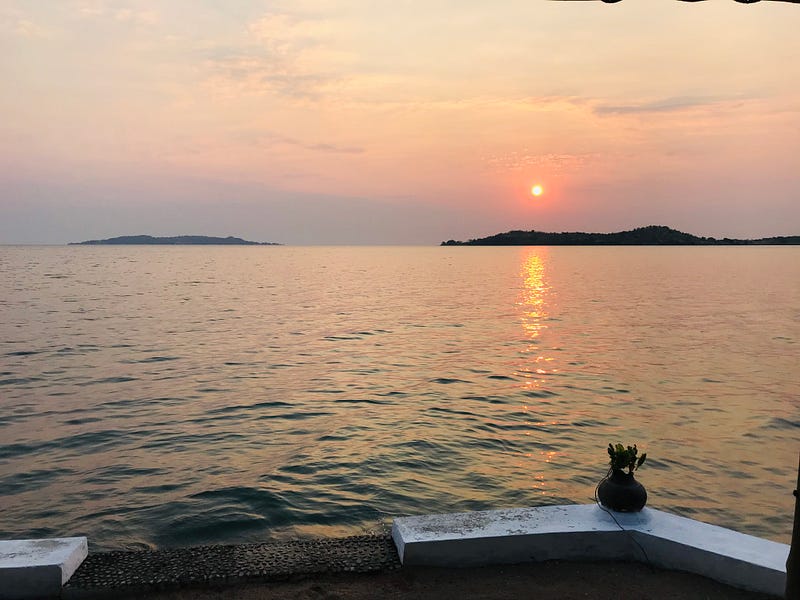
Kipili, Lake Tanganyika. An amazing hotel called the Lake Shore Lodge, run by two wonderful South Africans. Across the way is the Democratic Republic of the Congo.
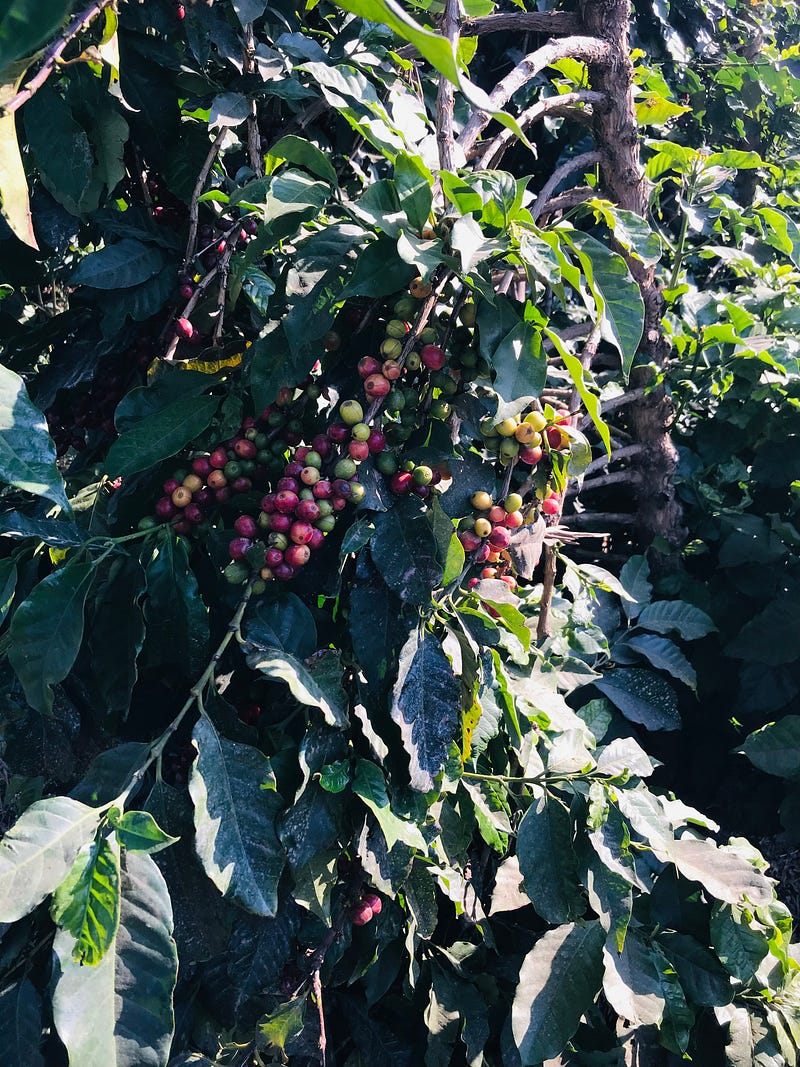
Mbeya. The main city in the coffee-growing highlands of south-central Tanzania.
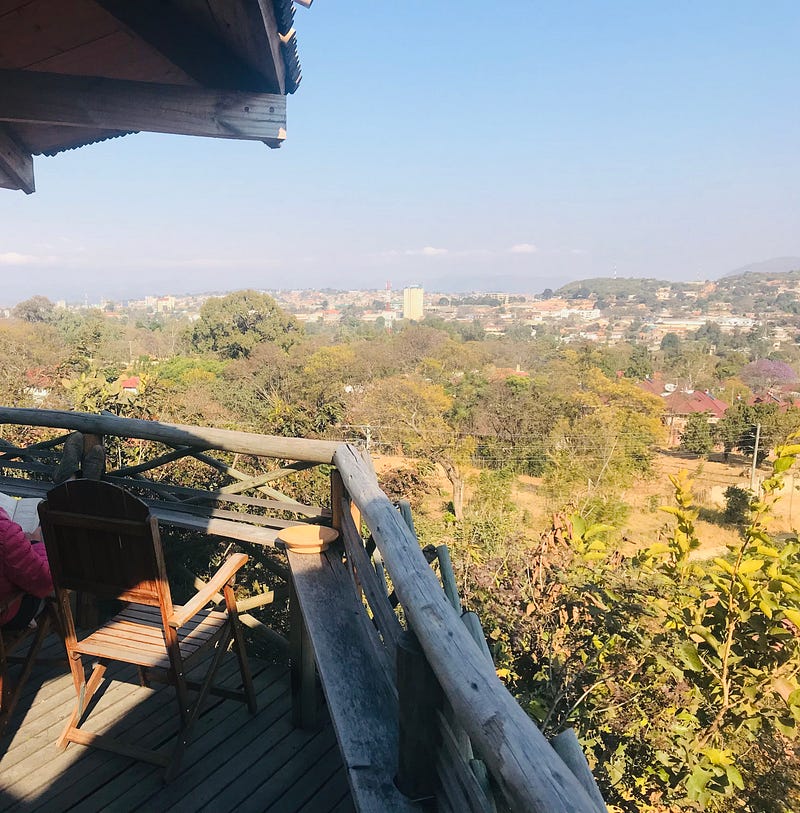
Iringa. More cool breezes in the central highlands.
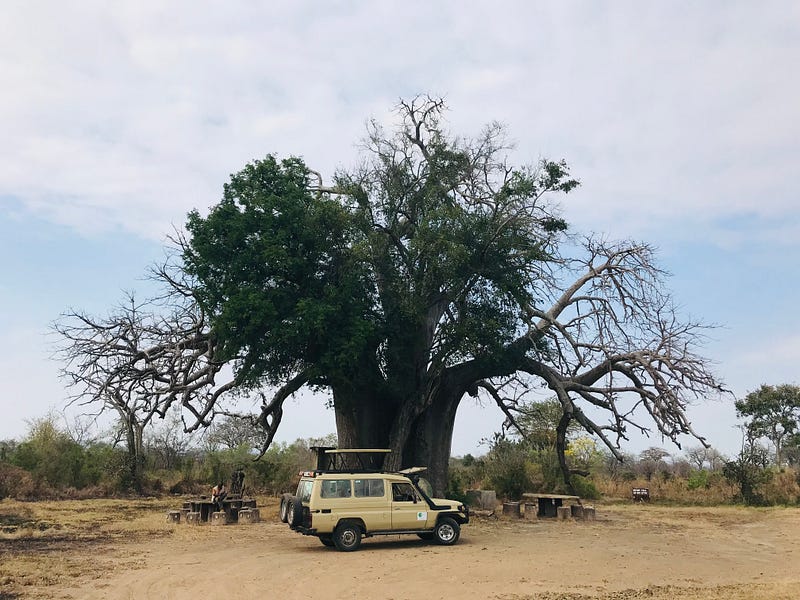
Mikumi National Park. Another safari. More animals. And the last stop before the return to Dar es Salaam.
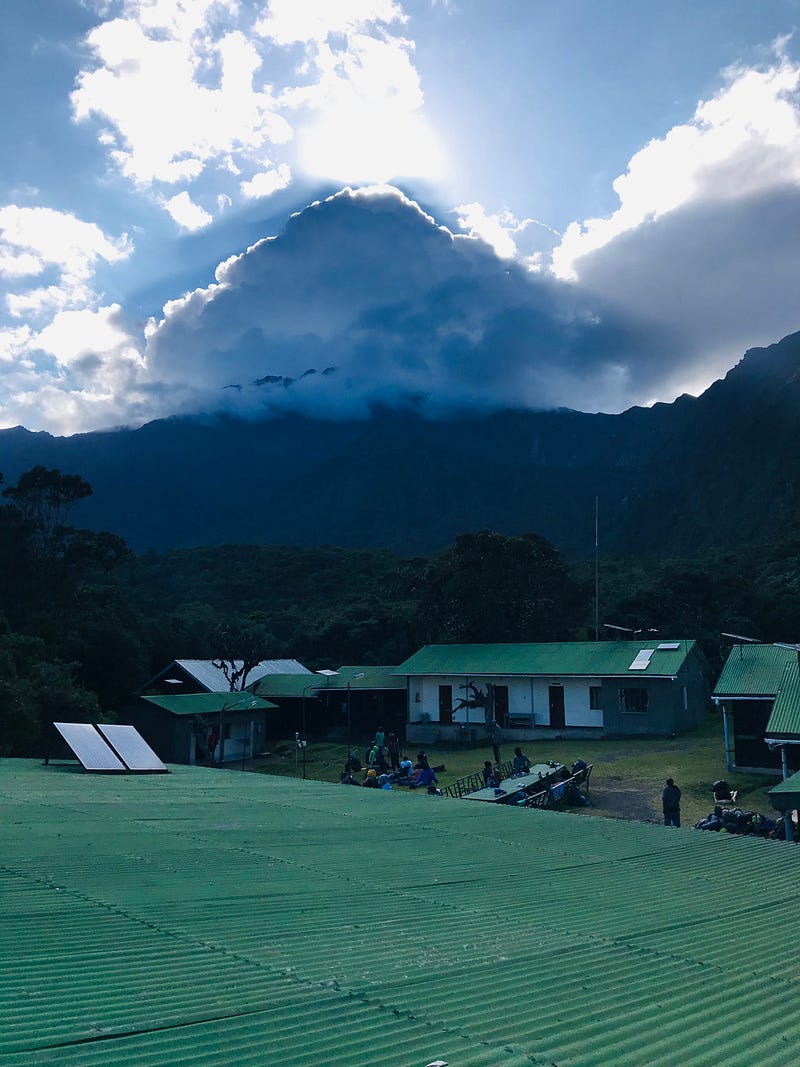
Finally, I alluded earlier to a bigger outdoor challenge. In successive years, I helped lead groups of Grade 7s and 8s up and down Mount Meru, the second-highest mountain in the country (next to Kilimanjaro). If Kilimanjaro seems like a bit more of a chew than you want to bite off, then I can highly recommend this three to four-night — and much cheaper — option.
Two articles on Globetrotters on this topic have stood out to me lately:
Rhonda Carrier’s article on the green of Northern Ireland, which I have also experienced
Monica Ray’s article on finding NYC on foot (which is really the only way)


