The Green City as a Driver of Sustainability
We need nature. Nature does not need us.
“Welcome to Almaty the Green City of Eastern Europe, Kazakhstan.”
This way the TedxTalk in Bratislava, Slovakia by the famous urbanist Milota Sidorova begins. She talks about the greenery in the city and our relationship with nature and “who needs who,” as Milota describes.
She compares two cities in Kazakhstan Almaty-the the green city and Astana (the current capital city) which was built recently in an arid climate without any greenery whatsoever in the city.
Almaty was rebuilt after the 1887 earthquake and was redesigned to fit trees around the whole city. Almaty in translation means apple tree and it is true the whole city is a one big apple orchard. It is one of the greenest cities in the world.
Astana is the opposite of the Almaty. Today’s name is Nur-Sultan and it is a city full of skyscrapers and futuristic buildings. Astana is a rich city because it gets profits from oil. Thus, it attracts many architects and designers from all over the world who build their dream buildings.
The only component missing in the city is the lack of green, the lack of trees. Hence the citizens of Astana mostly live indoors, completely disconnected from nature. Milota asks the question:
“Is this our future of living in the city?”
It is a beautiful contrast between seeing both cities. She continues, we as humans detached ourselves from nature. We do not see ourselves as a part of it, but we see nature as our servant and ourselves as the kings. This mindset allows us to think about how we can exploit nature to satisfy our needs.
What is the price that we pay for it?
The disconnection between humans and nature creates a new set of problems that are detrimental to humans. I will explain these later.
How come we don’t plant trees in the cities, today?
You may say what is the big deal, just plant the trees but hang on for a second. We live in an economy that measures everything by growth. Growth is measured by production and that determines the economic success in the country.
Production is the main component of our neoliberal economy where the environment is futile and does not bring a profit. For us, trees are only what they cost to plant and maintain, nothing else.
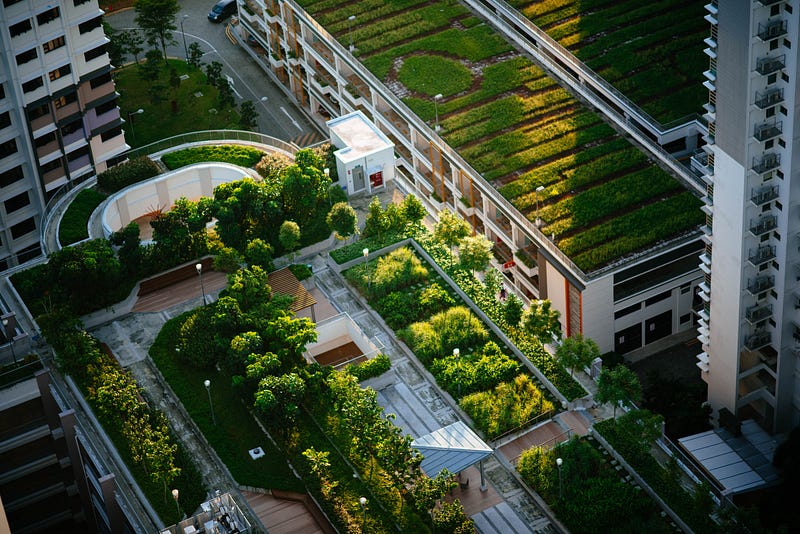
But trees are not only for the design, or an aesthetic look but trees are vital importance to our lives and future survival. A city should be planned and built around trees without killing them.
We should not destroy all the trees to build, then plant the trees, again. And then wait twenty years for trees to grow. That is backward thinking.
Climate change is influencing our current life. For example, last summer Granada, Spain had experienced a temperature as high as 47 C in the city. Because of extreme heat, residents of the city needed to stay indoors the whole day, sometimes until 11 at night.
This situation will get worse in a few years. This is a concrete example of how the problem of climate change is impacting our lives today.
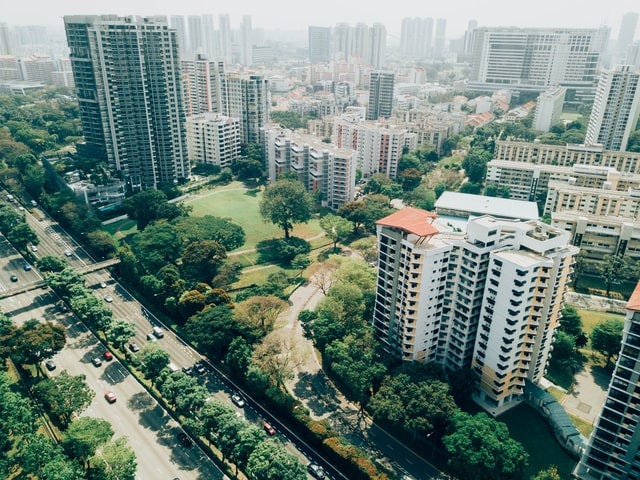
Two Reason why we need to build Green Cities
1.Dry periods and the heat
2. Increasing the intensity of rainfall and rain may cause flooding.
Today and the absence of green infrastructure, the water inside cities, will increase very quickly because the drainage system could not handle so much water.
For example, in the center of Granada, the green is missing. Don’t get me wrong Granada is a beautiful historical city and we have green areas but only around Alhambra Palace, the rest is cobblestone.
Too much drought, warmth, and too much rainfall also has health impacts. Whether related to heatstroke, mold formation, or dust, which is related to respiratory diseases. All this will cost a lot of money and human lives.
What can we do?
We need to systematize cities all over the world. In the streets, we need to get trees to create a kind of circulatory system that will accompany roads, trails, squares in a parallel position.
Today, people, especially in the cities in their arrogance and ignorance, complain about falling leaves.
But the trees are the key and the most powerful means for preserving a good climate in the city. Today we have foliage in squares, we have parquet and foliage on the periphery.
Well, life in the city needs trees in the streets, where we will move around the city.
For urbanists, politicians, and people it means understanding that we need to look under the surface, redesign the pipes under the streets, into the walkways to plant trees.
Planting trees and strengthening green in cities is one solution for two problems. I recently read an article about how much water a tree holds on average and what that means from a financial standpoint.
Because the water that flows through the city pipeline has its costs. Yes, it has its costs but as I explained above we need nature. Otherwise, it will cost us money and human lives in the future.
Today we do not need to do cosmetic repairs, to plant trees or flowers into pots, to build the path of black asphalt and the cobblestones.
We must go literally under the ground and plant the trees into the soil. This means joining and engaging all those who oversee urban networks, this is the beginning.
Trees play an essential role in making Sydney an attractive, healthy, and sustainable city. They provide significant benefits by improving air quality, reducing stormwater runoff, lowering radiated heat from the road, and improving the streetscape.
Or we can plan a city like the High Line Park in New York City; from a former New York Railroad green park was designed.
The abandoned spur has been redesigned as a “living system” drawing from multiple disciplines which include landscape architecture, urban design, and ecology. Since opening in 2009, the High Line has become an icon of contemporary landscape architecture.
We need nature, nature does not need us.
This is my day 12 in 30 days challenge to sustainability.