
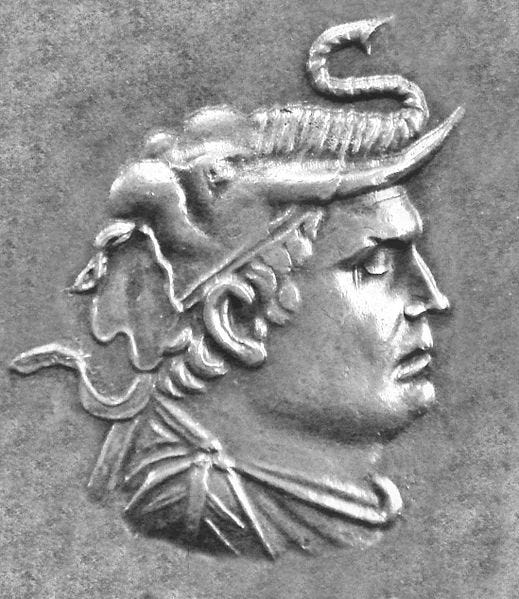

The Greco-Bactrian Kingdom
The Greeks that thrived in Afghanistan
The Greco Bactrian Kingdom was the final and furthest outpost of Alexander the Great’s legendary conquests. Serving as the Eastern buffer for the Hellenistic World, this unique kingdom developed into the richest state of Central Asia, and had been known as “that great empire with a thousand cities.” For all of its splendour and glory, the Greco Bactrian Civilization is shrouded in mystery. From its meteoric rise to sudden fall, much remains unknown about the ancient kingdom, but the scholars of antiquity paint a glorious state that was a victim to the ticking clock.
Conquests of Alexander
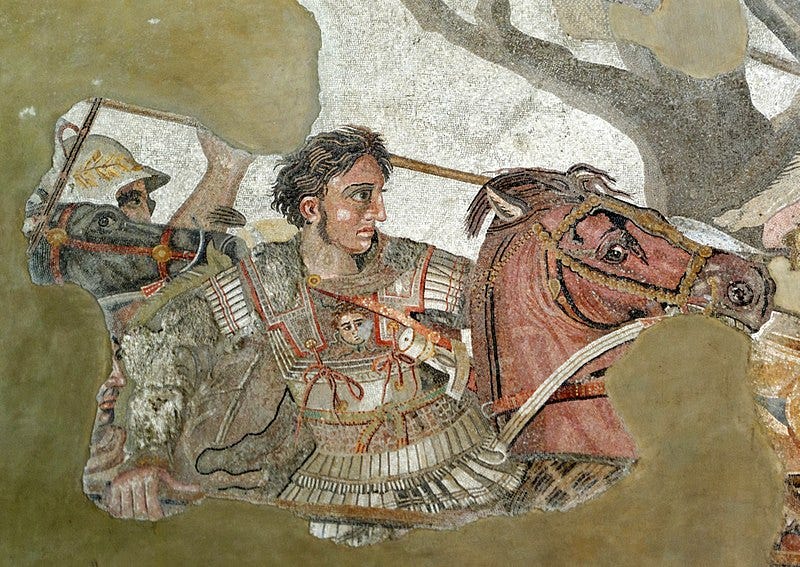
As the main Persian Satrapies fell, the remaining nobles and generals fled to remote Bactria and turned it into a fortress that resisted the Great Macedonian. Despite the attempts of the talented Bessus of Bactria, the Satrap was betrayed by his followers and executed by Alexander, thus marking a new age of Hellenism in Central Asia.
Alexander considered Bactria a key territory to control, as its daunting forts and militaristic culture were essential to preventing Nomadic Invaders in the North from attacking the Empire. However, retaining control was difficult, as Zoroastrian customs, such as leaving the dead to be eaten by dogs horrified the invading Macedonians, and swift action was taken to ban these practices. After a hard-fought revolt, Alexander finally crushed and subjugated the territory, before marrying a Bactrian Noble and dying in 325 B.C.

Rise of the Bactrians: Beginning of the End
Following the death of Alexander in 325 B.C, the Bactrians sided with Seleucus, the founder of the Seleucid Empire. Although the Seleucid hegemony in Bactria was nominal, the Seleucid-Mauryan War established the borders between the Greeks and Indians respectively. This border would be an obsession for the Greco Bactrians in the following centuries, as they aimed to project power into Northern and Central India.
Although the decentralization and weakness of the Seleucid Dynasty allowed for the Satraps of Bactria to consolidate themselves and eventually declare independence, the seeds of destruction were sewed from the beginning. With the initial declaration of independence headed by Diodotus I in 255 B.C, the Seleucids failed to respond and were crippled by the loss of the rich and fertile Eastern Satrapies. However, the independence of Bactria and the reduction of the Seleucids had unforeseen consequences for both. The Parthians, a North Eastern Iranian group, revolted alongside the Bactrians, and the rise of this new Persian Power crippled the Hellenistic East.
Diodotus I was a capable Monarch, and he ensured the prosperity of his infant Bactrian Kingdom. However, the Seleucids made a sporadic attempt to reconquer their Eastern Provinces under Antiochus III the Great, which led to a Bactrian defeat at the Battle of the Arius. Under the Bactrian King Euthydemus I, the kingdom retreated to the Royal Capital of Bactra and held out against their former overlords for two long years. However, the Seleucid King saw the importance Bactria held as a buffer against the Nomadic Tribes from the North, which convinced Antiochus to recognize the Bactrian King, Euthydemus, as an equal monarch.
“…for if he did not yield to this demand, neither of them would be safe: seeing that great hords of Nomads were close at hand, who were a danger to both; and that if they admitted them into the country, it would certainly be utterly barbarised.”
– Polybius
Although the foresight of Antiochus was responsible for the survival and growth of Bactria, it did not prevent the cold fate of the country, as Hellenistic Central Asia had competing enemies from all sides.
The Decline in the Golden Age
The height of Greco Bactrian prosperity came during the reign of Demetrius I and Eucratides I. Demetrius succeeded Euthydemus I to the throne, and he conquered Northern and Central India in a few short years. Although the cultural impacts left from the conquest were staggering, it squandered the wealth of the Bactrians, and the lack of a King in Bactra exposed the kingdom to potential usurpers. As a result, the conquests of Demetrius paralleled the situation faced by the Seleucids, as both were enormous and militarily powerful states that suffered under the strain of overextension.
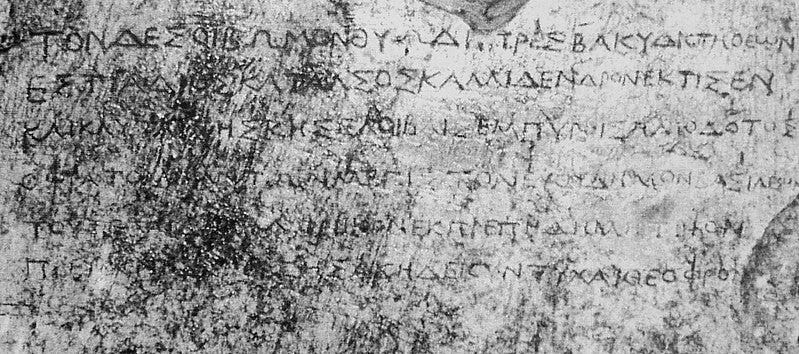
While the successors of Demetrius attempted to consolidate their distant Indian holdings, a general by the name of Eucratides overthrew the Euthydemus Dynasty in Bactria, thus causing a split between the Indo and Bactrian Greeks. Eucratides was a powerful King, who defended against the rapidly expanding Parthians from the West, the jealous Indo-Greek princes from the South, and increasing nomadic raids in the North.
“ Eucratides, however, carried on several wars with great spirit, and though much reduced by his losses in them, yet, when he was besieged by Demetrius king of the Indians, with a garrison of only three hundred soldiers, he repulsed, by continual sallies, a force of sixty thousand enemies. Having accordingly escaped, after a five months’ siege, he reduced India under his power.”
-Justin, Epitome of the Philippic History of Pompeius Trogus
The Mystery of the Collapse
The Kingdom was artificially kept from collapse through the sheer charisma of Eucratides but with his assassination at the hands of his own son in 145 B.C, the Greco Bactrian Kingdom was swept away by devastating raids from the Scythians and Yuezhi from the North-East. As the death of Eucratides was a world-shattering moment akin to the death of Franz Ferdinand, the collapse of the Greco Bactrians had numerous underlying causes and long-term consequences.
However, the reasons for the fall of Hellenized Bactria remain mysterious and unclear. The traditional assessment was that a wave of nomadic invaders destroyed the Kingdom in a swift invasion, but recent arguments look at a wider scope. The decentralization resulted from Demetrius’s Invasion of India, the dynastic warring caused by the Wars of Eucratides, and the aggressive expansion of the Parthians must have had a part in the undoing of this fascinating Greek Kingdom in faraway Afghanistan.
As a result, the rise and fall of the Greco Bactrians provide a stunning example of how civilizations fall. From isolation to overextension, the Greco Bactrians collapsed for several reasons, and it does modern society well to learn from the lessons and faults of this ancient Greek civilization in the bare land of Afghanistan.
Find out about the fate of the Indo Greek Civilization: https://readmedium.com/the-greco-indian-civilization-11b5a5af8ce8
Like what you see? Follow our publication for daily content (Mon-Fri)
Sources:
Rawlinson, George, Bactria: The History of a Forgotten Empire, Yardley Pennsylvania (Westholme Publishing, 2013),
Simonin, A. (2021, June 17). Greco-Bactrian Kingdom. World History Encyclopedia. https://www.worldhistory.org/Greco-Bactria/.