avatarSimon Whaley - Author | Writer | Photographer

Free AI web copilot to create summaries, insights and extended knowledge, download it at here

6037

Abstract

ps://cdn-images-1.readmedium.com/v2/resize:fit:800/1*AITs4ss6xvSfIGYMDr32yw.jpeg"><figcaption>The canon outside Ludlow Castle © Simon Whaley</figcaption></figure><p id="45f3">A plaque on its vast wooden frame revealed it was actually captured from Sevastapol in 1855, and isn’t a genuine castle canon. Still, it’s a great place for a photo!</p><p id="b791">We drive through steady rain, from Richard’s Castle, deeper into North Herefordshire and within minutes we stumble across castle number four — <b>Croft Castle</b>, now in the care of the National Trust.</p><figure id="8593"><img src="https://cdn-images-1.readmedium.com/v2/resize:fit:800/1*bulf_r31Zvr9MMpy0AYu8g.jpeg"><figcaption>Outside Croft Castle © Simon Whaley</figcaption></figure><p id="7e18">It’s crenelated 14th century walls are imposing, but the building itself is more like a stately home, with over forty windows in the front façade and huge double-doors that look like they need several men to open them. Mind you, Croft Castle is reputedly one of the most haunted properties in the West Midlands with, not one, but seven spooky spirits wandering the corridors. That’s enough to deter many from entering!</p><p id="e07f">All this talk of ghosts makes my nephew a little nervous, so it’s back to the car in search of castle number five. It doesn’t take us long to find it.</p><p id="60df">Eight miles north, back in Shropshire, I pull off the main road onto a tiny lane with grass growing down the middle. The hedges caress the side of my car, as we creep up on castle number five.</p><figure id="caec"><img src="https://cdn-images-1.readmedium.com/v2/resize:fit:800/1*Km5sD4pB0QOFeZjec0N37w.jpeg"><figcaption>Hopton Castle © Simon Whaley</figcaption></figure><p id="2f0f"><b>Hopton Castle</b> was besieged during the English Civil War, leaving it as the ruin we see today. It’s perched on a grassy mound, with a small pond, the only remains of a moat, offering a reflective opportunity.</p><p id="c9f0">Hopton is a proper castle. Its square keep stands defensively, and as we climb in through the main entrance, we spot the walls are at least two feet thick, if not more. Although a ruin, the alcoves, windows, arrow slits, and even the remains of a chimney, convey a sense of what the building once looked like.</p><figure id="167d"><img src="https://cdn-images-1.readmedium.com/v2/resize:fit:800/1*4ircynSAE2teU7LpGrtoqA.jpeg"><figcaption>Hopton Castle © Simon Whaley</figcaption></figure><p id="fa11">My nephew climbs into one of the smaller alcoves with a stone slab windowsill and peers through the open frame.</p><p id="f908">“What can you see?” I ask.</p><p id="a30f">“Forty-three sheep,” he replies.</p><p id="3f2c">Well, it makes a change from goats!</p><p id="479a">From Hopton it’s a hop, skip and a jump to castle number six: Clun. <b>Clun Castle</b> is also a classic square-shaped stone keep, although, unusually, the keep stands at one end of the large earthwork motte, and not it its centre.</p><figure id="ccc2"><img src="https://cdn-images-1.readmedium.com/v2/resize:fit:800/1*n_jGIz_wlixvPUNGmZH7WQ.jpeg"><figcaption>Clun Castle © Simon Whaley</figcaption></figure><p id="f2f5">Its moat is the River Clun, curving around three sides. The fourth side is protected by the village’s bowling green, which probably isn’t an original feature! Although built as a defensive castle, it was converted by the Fitzalan family into a hunting lodge in the 14th century, but was largely destroyed during the English Civil War.</p><figure id="10c9"><img src="https://cdn-images-1.readmedium.com/v2/resize:fit:800/1*m8yXxkEhujM_zHFux4_r3g.jpeg"><figcaption>The ruined shell of CLun Castle © Simon Whaley</figcaption></figure><p id="ace6">Some scaffolding allows us to reach the keep’s windows and gaze northwards along the border. Like the others, its position is clearly strategic. The River Clun runs west to east, through the Clun Valley, epitomised over a century ago by AE Housman’s poem, A Shropshire Lad, when he wrote:</p><p id="7060" type="7">Clunton and Clunbury, Clungunford and Clun,</p><p id="fb37" type="7">are the quietest places under the sun.</p><p id="2abc">It’s not completely quiet though. High in a brightening sky we hear the tuneful song of a skylark singing its heart out.</p><p id="844d">“There he is!” cries my nephew, pointing at a pinprick in the sky. It’s amazing such a tiny bird is capable of making such a big noise.</p><figure id="44e4"><img src="https://cdn-images-1.readmedium.com/v2/resize:fit:800/1*goyi2ALADduXXgizUMhcVw.jpeg"><figcaption>Montgomery Castle © Simon Whaley</figcaption></figure><p id="c3c2">Fifteen miles later, it’s not a skylark we’re watching, but a peregrine falcon. It soars above our heads then swoops downs settling on a rock face somewhere below us. We’ve crossed into Wales, and now find ourselves wandering along a gentle incline to a rocky promontory, sticking out into the Severn Valley, where <b>Montgomery Castle</b> was built. Peering over the hedge on our right, the roofs of the houses of Montgomery sit below us, and the views stretch back into Shropshire.</p><p id="8fc9">Two bridges carry us over huge grassy moat-like ditches to the impressive ruins of the main castle gate, towering above us.</p><p id="2d2f">“Whoa! Look at that!” My nephew points to the stone groove, where the portcullis once slid.</p><p id="2d9c">Just inside the gateway, a plaque tells of a curious death. Not of a soldier from an attacking army, but of a woman mysteriously killed when she came looking for the return of a cooking pot she’d lent to someone in the castle’s kitchen. An accident? Or was it murder?</p><figure id="9612"><img src="https://cdn-images-1.readmedium.com/v2/resize:fit:800/1*wD6DVTQw2Sbq5WnYKaV2IQ.jpeg"><figcaption>Montgomery Castle © Simon Whaley</figcaption></figure><p id="61ee">Passing through the large masonry gate towers, the huge grassy courtyards convey the size of this defensive stronghold, dating back to the 13th century. On our left a wooden platform, padlocked for safety, hi

Options

des the castle’s well. To secure a safe water supply they had to excavate over 200 feet of rock. No mean feat in those days!</p><p id="8e4c">We’re drawn to the furthest end of the castle, where the land drops abruptly into the Severn Valley before us, offering an advanced warning of any attack from North Wales. In the distance, perched on a wooded ridge about fifteen miles away, stands the red-stoned, fortified palace of Powis Castle. Is this castle number eight in our quest?</p><p id="eaf5">But my nephew stifles a yawn. I think we’ve found the answer to this morning’s challenge. Seven castles conquered in one day. That’s more than most armies achieved. Time to head back to the car.</p><p id="78aa">Still, had my nephew had the stamina, we could have gone on to conquer the following castle ruins:</p><h2 id="f6c9">Oswestry Castle</h2><figure id="b7f9"><img src="https://cdn-images-1.readmedium.com/v2/resize:fit:800/1*DCJkWKBD1qAQVerHaIj6mA.jpeg"><figcaption>Oswestry Castle — not much left of those ruins © Simon Whaley</figcaption></figure><h2 id="e1f5">Acton Burnell Castle</h2><figure id="c474"><img src="https://cdn-images-1.readmedium.com/v2/resize:fit:800/1*UXCcAEzBfgdOIw8cKl8D4g.jpeg"><figcaption>Acton Burnell Castle © Simon Whaley</figcaption></figure><h2 id="00bd">Dolforwyn Castle</h2><figure id="08cc"><img src="https://cdn-images-1.readmedium.com/v2/resize:fit:800/1*vjQVMxrmmukaH-b7bhx2OQ.jpeg"><figcaption>Dolforwyn Castle near Newtown, Powys © Simon Whaley</figcaption></figure><h2 id="9f8a">Moreton Corbett Castle</h2><figure id="4f9c"><img src="https://cdn-images-1.readmedium.com/v2/resize:fit:800/1*mHlTLaMBafgyBjBVU1bl7A.jpeg"><figcaption>The ruins of Moreton Corbett Castle © Simon Whaley</figcaption></figure><h2 id="26e8">Bridgnorth Castle</h2><figure id="0f8c"><img src="https://cdn-images-1.readmedium.com/v2/resize:fit:800/1*1O8y_mEYdJXBe1UbuqBy5Q.jpeg"><figcaption>Bridgnorth Castle ruins © Simon Whaley</figcaption></figure><p id="1331">Interestingly, Bridgnorth Castle ruins lean at an angle of fifteen degrees, which is greater than the angle of the Leaning Tower of Pisa (Five and a half degrees).</p><h2 id="a368">Whittington Castle</h2><figure id="232a"><img src="https://cdn-images-1.readmedium.com/v2/resize:fit:800/1*4bNp19VVRVXu5Ht6BKp5DA.jpeg"><figcaption>Whittington Castle © Simon Whaley</figcaption></figure><p id="2c3f">I suppose we can leave these ruins until another time, when my nephew has a bit more energy.</p><p id="16d5">But if you’re looking for ruins then come to the Welsh Borders. There’s practically one around every corner here!</p><p id="b679">And if you successfully pass all these ruined castles and cross the border into Wales, then check out <a href="undefined">Liam James H</a>’s piece about <a href="https://readmedium.com/conquering-the-highest-mountain-in-wales-3bbfeccc20af">Conquering the Highest Mountain in Wales</a>. Despite the news stories of it being so busy you’re queuing for hours to get to the top, Liam’s piece shows it is possible to experience this majestic mountain, but it should always be respected at all times (read to the end!).</p><p id="bb91">And, not all UK ruins are castles — some are much older. Check out <a href="undefined">Susie Kearley</a>’s piece on <a href="https://readmedium.com/britains-ancient-stone-circles-and-burial-mounds-74dca2f95da2">Britain’s Ancient Stone Circles</a>. I’m envious of her doing Stonehenge-it’s on my list to do one day!</p><p id="950c">For more of my travel piece, check out:</p><div id="a2cd" class="link-block"> <a href="https://simonwhaley.medium.com/list/0bb49100d307"> <div> <div> <h2>British Travel</h2> <div><h3>Learn more about the places you knew, and discover the surprises of the places you didn't know.</h3></div> <div><p>simonwhaley.medium.com</p></div> </div> <div> <div style="background-image: url(https://miro.readmedium.com/v2/resize:fit:320/0*05764edd40aa78b564c266795ef42c16bb3a809c.jpeg)"></div> </div> </div> </a> </div><div id="c0a7" class="link-block"> <a href="https://simonwhaley.medium.com/list/854babdd32b6"> <div> <div> <h2>British History</h2> <div><h3>Uncovering the British history that time forgot</h3></div> <div><p>simonwhaley.medium.com</p></div> </div> <div> <div style="background-image: url(https://miro.readmedium.com/v2/resize:fit:320/0*b422c7683ecebc9080019ea3c38fb9b5a05e65db.jpeg)"></div> </div> </div> </a> </div><div id="b310" class="link-block"> <a href="https://medium.com/the-slow-journeyman"> <div> <div> <h2>The Slow Journeyman</h2> <div><h3>To truly experience a place, you should savour it slowly. Take time to observe and you will be rewarded with sights and…</h3></div> <div><p>medium.com</p></div> </div> <div> <div style="background-image: url(https://miro.readmedium.com/v2/resize:fit:320/1*l3KAg04pmKzD44dh9Fchcw.jpeg)"></div> </div> </div> </a> </div><div id="76b6" class="link-block"> <a href="https://simonwhaley.medium.com/membership"> <div> <div> <h2>Join Medium with my referral link - Simon Whaley</h2> <div><h3>Read every story from Simon Whaley (and thousands of other writers on Medium). Your membership fee directly supports…</h3></div> <div><p>simonwhaley.medium.com</p></div> </div> <div> <div style="background-image: url(https://miro.readmedium.com/v2/resize:fit:320/0*Ix-sAXJyeJriMHne)"></div> </div> </div> </a> </div></article></body>

The Great Welsh Border Castle Challenge

How many ruined castles can you visit in one day?
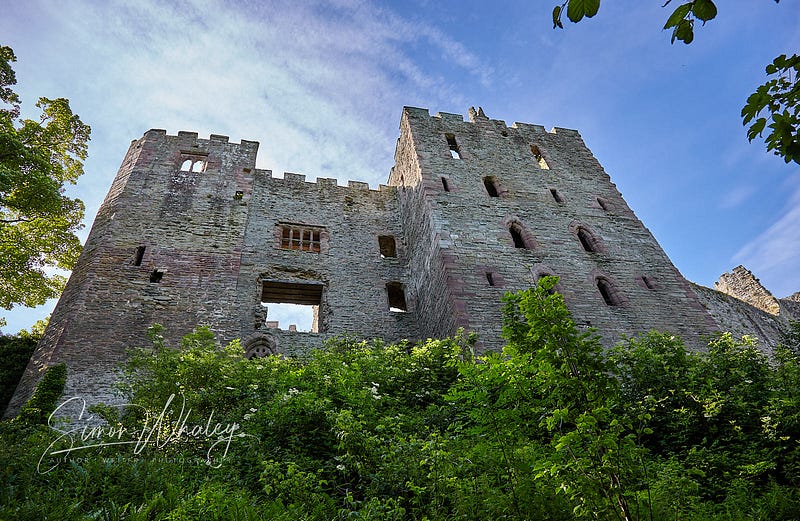
Ludlow Castle ruins © Simon Whaley

“Uncle Simon, why is there a goat on top of that castle wall?”

My nephew stares at the white adult goat fifteen feet above us. A series of frantic bleats fill the air and, suddenly, three sure-footed kids join their parent on the narrow, stony ridge. “And how did they get up there?”
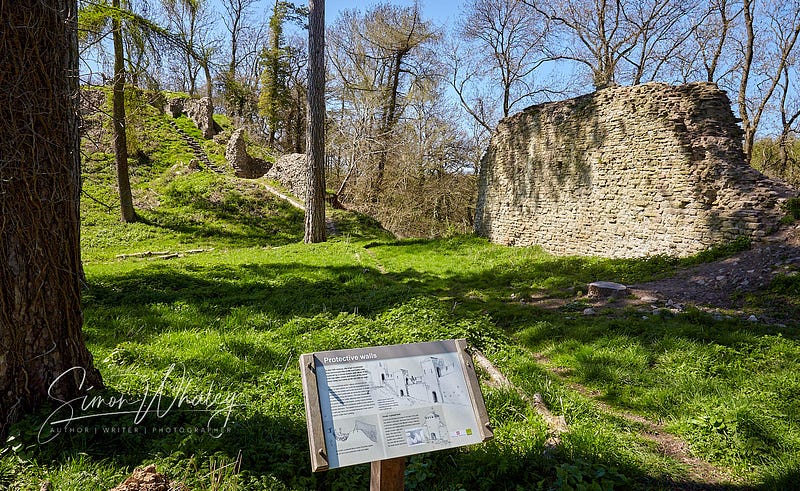
Richard’s Castle © Simon Whaley

We’re in Richard’s Castle, on the Herefordshire — Shropshire border. Although just a collection of isolated ruins erupting from the rolling earthworks, these crumbling walls are substantial enough for any young nephew, to imagine attacking forces advancing from the south. We leave the goats bleating incessantly, and clamber up a series of eroded steps to the stone foundations of a tower, perched at the castle’s highest point.

“I can see for miles!” my nephew exclaims.
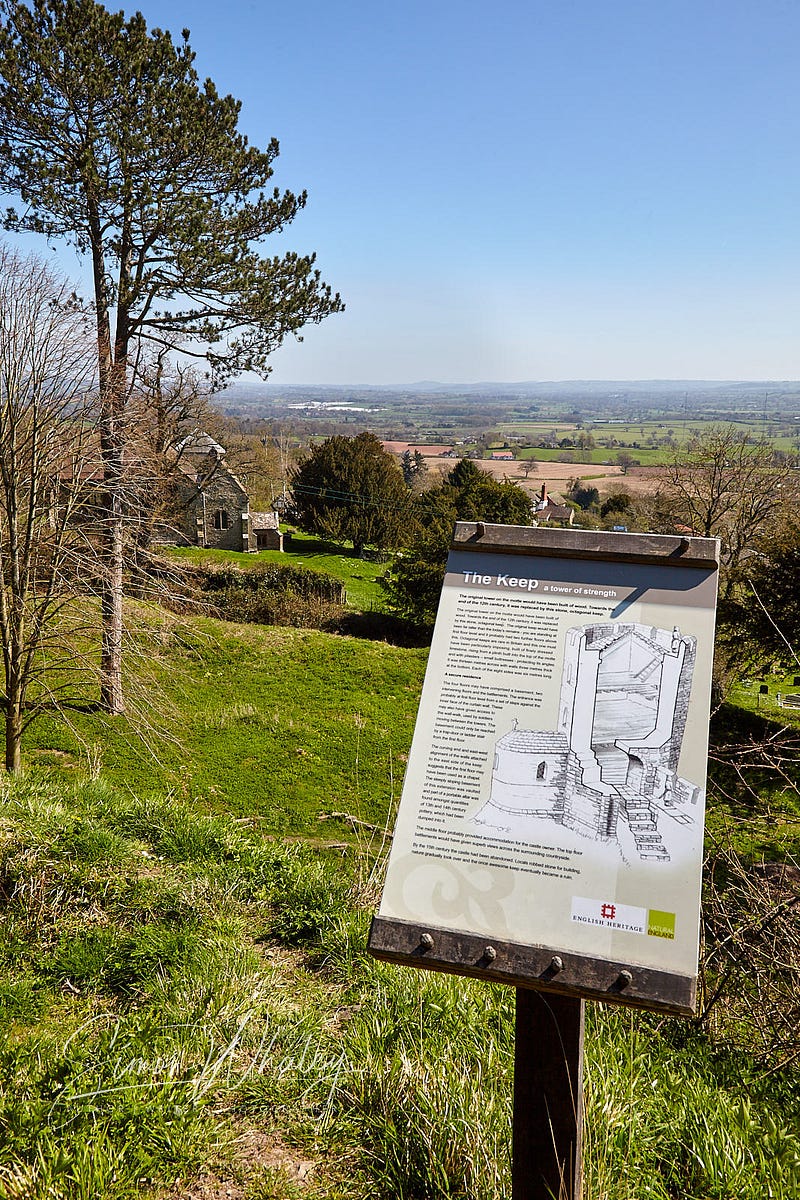
The view from Richard’s Castle © Simon Whaley

I point out the Malvern Hills, nearly 25 miles away, whose outline is reminiscent of a sleeping dragon.

My nephew finds an information plaque and practises his reading skills. “The original tower on the motte would have been built of wood,” he reads. “Towards the end of the 12th century it was replaced by a stone, octagonal keep. Octagonal keeps are rare in Britain, but were thought to be a better shape for repelling attackers during skirmishes. What’s a skirmish, Uncle Simon?”

Skirmish rather makes light of what went on here. People died during these historic border conflicts. Securing this remote and low-populated region wasn’t easy, and even today, travel around the Welsh Borders isn’t quick or simple, for there are no motorways or dual carriageways.

Wales has more castles per square mile than anywhere else in the world, and the Welsh Borders has many of those (well, it’s a border, you need the odd castle or two to keep the wrong people out!).

With so many castles built here for this reason, I knew I could lay down a challenge to my nephew first thing this morning.

“How many castles do you think we can visit in one day?” I’d asked.

“Three!” he confidently declared.

Richard’s Castle was already our third castle, and it was only eleven o’clock!
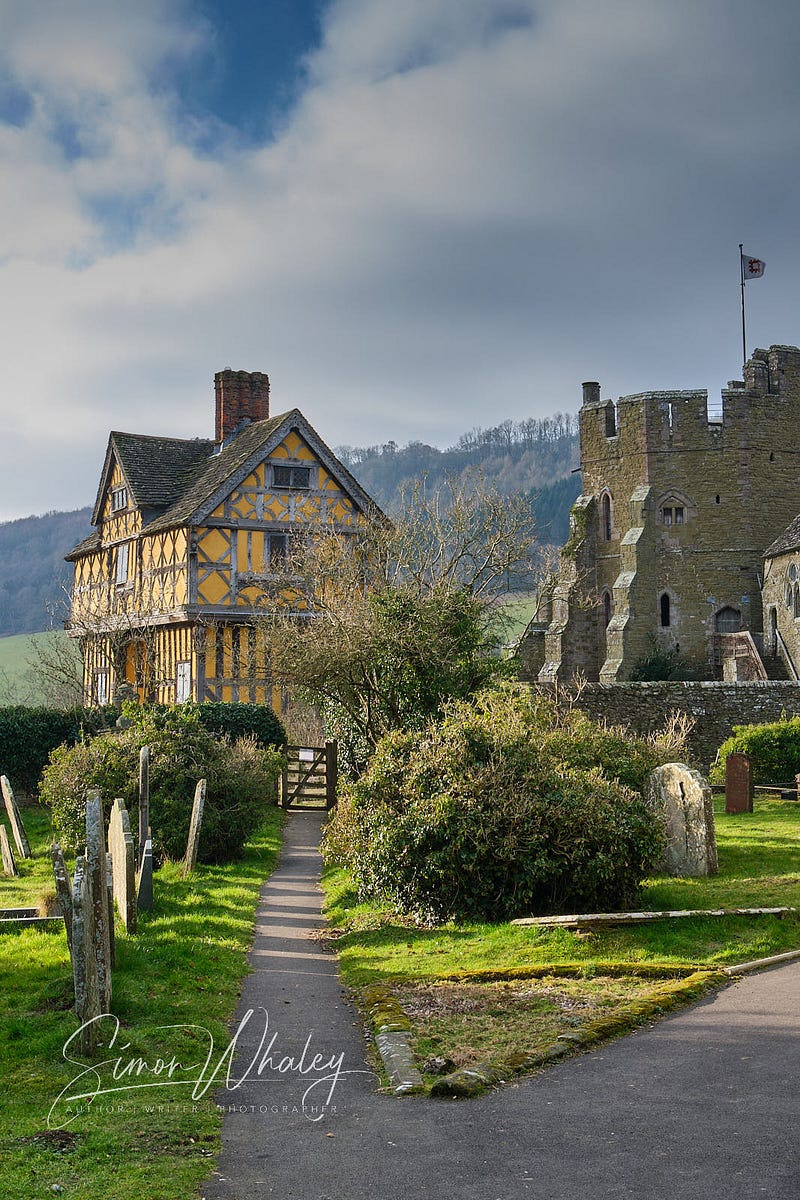
Stokesay Castle © Simon Whaley

We’d started at Stokesay Castle, just south of Shropshire’s Craven Arms, which, technically, isn’t a castle but a fortified manor house. Its crenelated South Tower gives it that castle-like appearance though. What did look out of place was the bright yellow-and-black timber-framed 17th century gatehouse. Stokesay is unusual because it was built by a wealthy merchant, Laurence of Ludlow. Continuously inhabited until 1800, it is today one of the finest fortified manor houses in England.
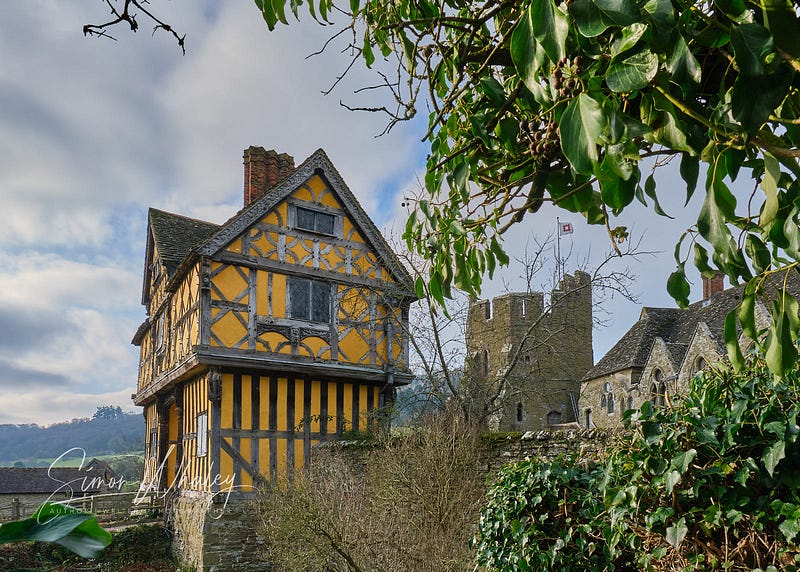
Stokesay Castle © Simon Whaley

Perhaps because it wasn’t really a castle, it didn’t come under attack, so considering its age, it’s survived pretty well. As castles go, this one is pretty short of ruins!
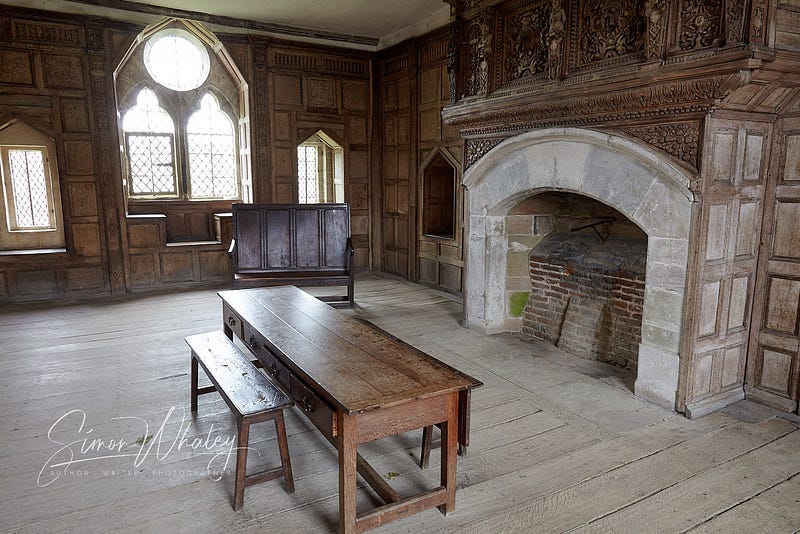
Inside Stokesay Castle © Simon Whaley

“Oh no!” my nephew cries.

A cold splat of rain runs down my neck. Unlike Stokesay Castle, Richard’s Castle doesn’t have a roof.

“Retreat!” I yell.

We dash down the steps, passing the still-bleating goats, to my car, parked in the tiny lay-by.
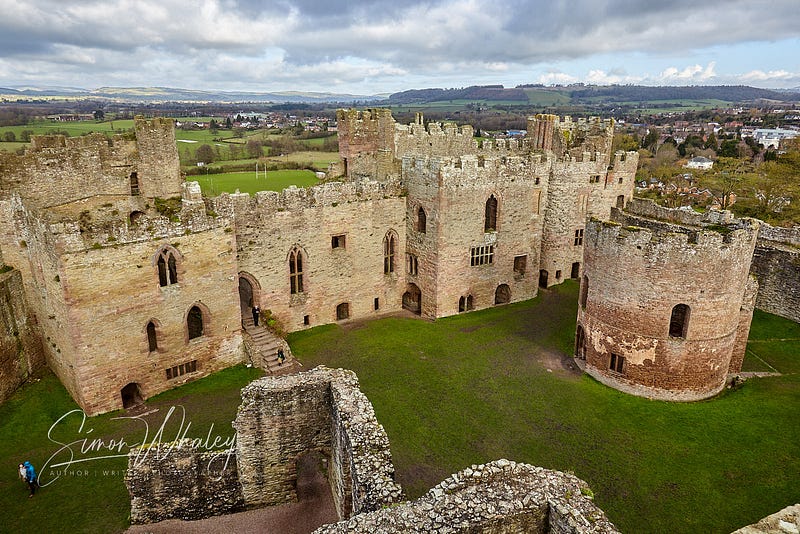
Ludlow Castle © Simon Whaley

Ludlow Castle was our second stop on our castle challenge. Built soon after the Norman conquest, it was continuously expanded and improved over the next 600 years. Perched high above the River Teme, in a horseshoe bend, it has a natural moat, and the castle walls were extended to include most of the grid-like patterned streets of Ludlow’s town. This worked well because over 500 of Ludlow’s medieval listed-buildings survive today.
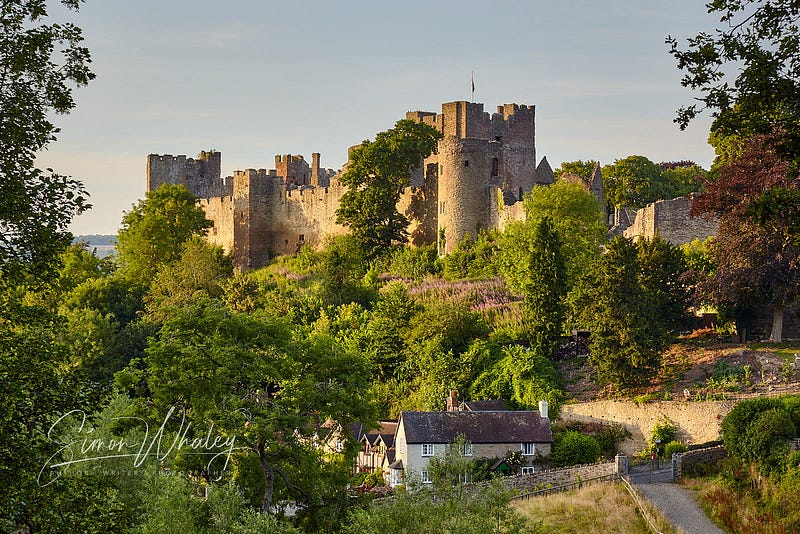
Ludlow Castle © Simon Whaley

Ludlow Castle was a royal palace during the 16th and 17th centuries, and Henry VIII’s brother, Prince Arthur, honeymooned here with his new 16-year-old wife, Catherine of Aragon. (Yes, the same Catherine of Aragon who later married Henry VIII!) Sadly, Prince Arthur died here only six months later. (Marriage clearly didn’t agree with him, but then I suppose you could argue it didn’t agree with Henry VIII either!)

However, for most of the 15th and 17th centuries, Ludlow Castle was the administrative capital of Wales and the Welsh Borders, despite it being well within the English border.

“Cor! Look at this canon,’ my nephew called. “I bet it was loud when it was fired.”
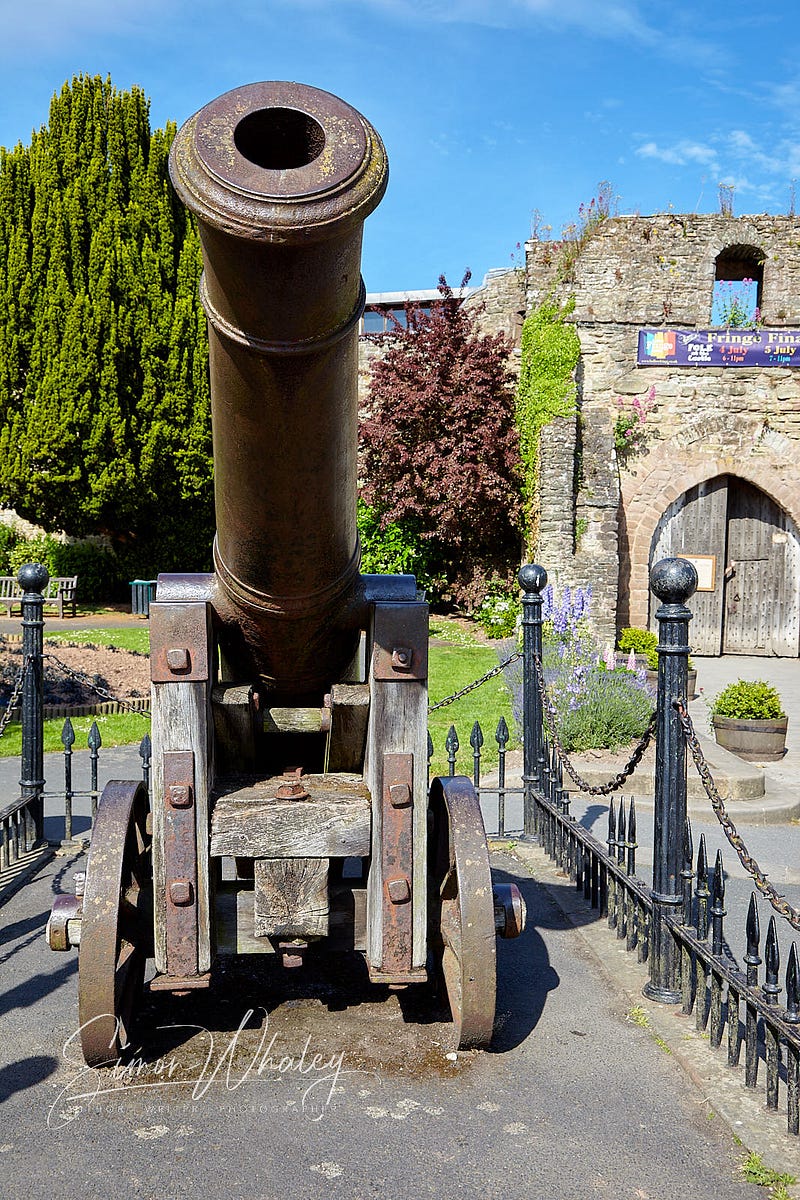
The canon outside Ludlow Castle © Simon Whaley

A plaque on its vast wooden frame revealed it was actually captured from Sevastapol in 1855, and isn’t a genuine castle canon. Still, it’s a great place for a photo!

We drive through steady rain, from Richard’s Castle, deeper into North Herefordshire and within minutes we stumble across castle number four — Croft Castle, now in the care of the National Trust.
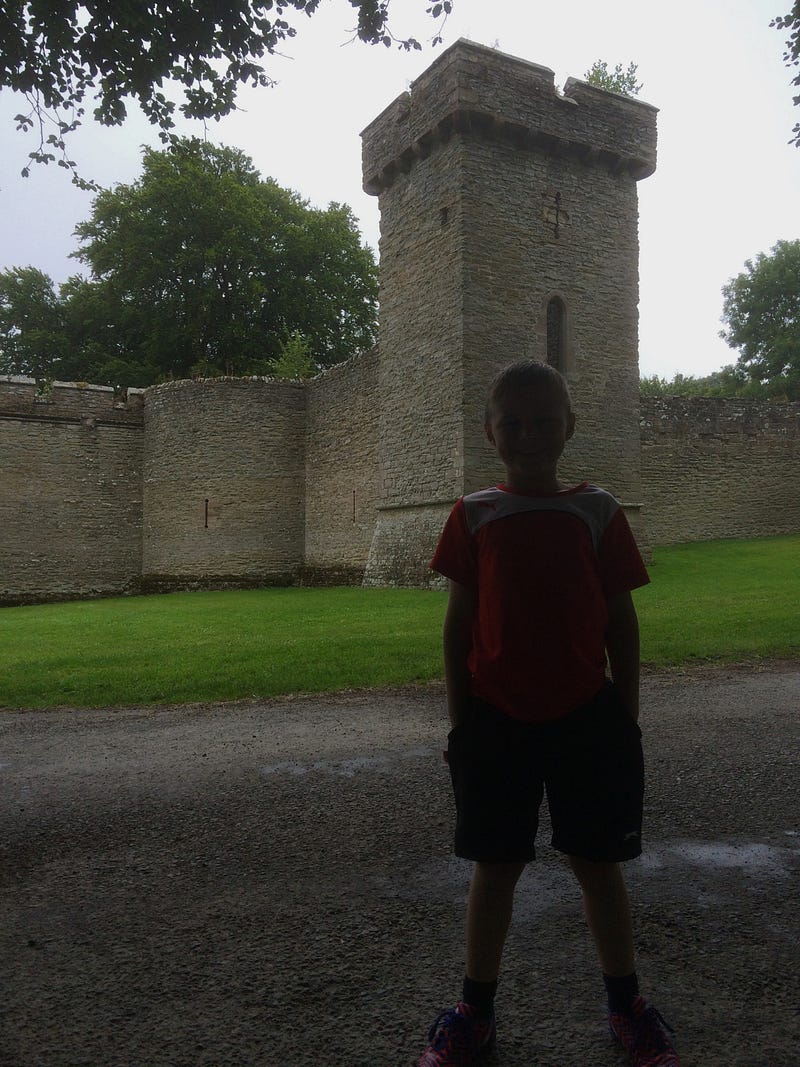
Outside Croft Castle © Simon Whaley

It’s crenelated 14th century walls are imposing, but the building itself is more like a stately home, with over forty windows in the front façade and huge double-doors that look like they need several men to open them. Mind you, Croft Castle is reputedly one of the most haunted properties in the West Midlands with, not one, but seven spooky spirits wandering the corridors. That’s enough to deter many from entering!

All this talk of ghosts makes my nephew a little nervous, so it’s back to the car in search of castle number five. It doesn’t take us long to find it.

Eight miles north, back in Shropshire, I pull off the main road onto a tiny lane with grass growing down the middle. The hedges caress the side of my car, as we creep up on castle number five.
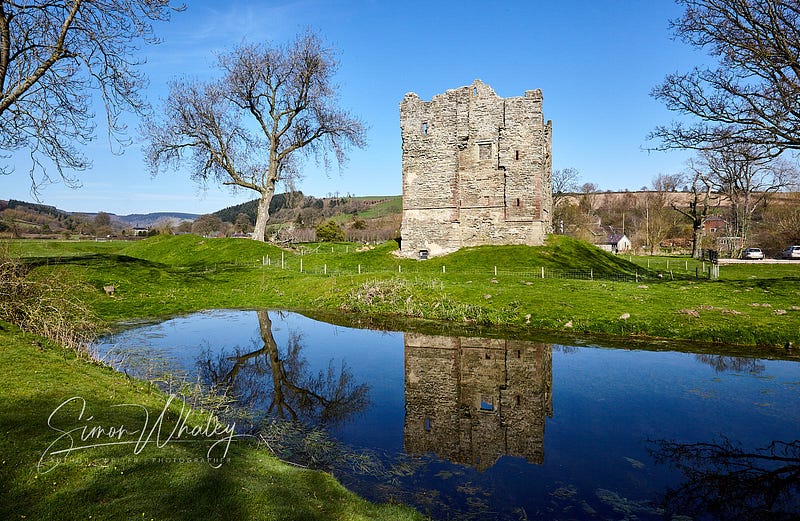
Hopton Castle © Simon Whaley

Hopton Castle was besieged during the English Civil War, leaving it as the ruin we see today. It’s perched on a grassy mound, with a small pond, the only remains of a moat, offering a reflective opportunity.

Hopton is a proper castle. Its square keep stands defensively, and as we climb in through the main entrance, we spot the walls are at least two feet thick, if not more. Although a ruin, the alcoves, windows, arrow slits, and even the remains of a chimney, convey a sense of what the building once looked like.
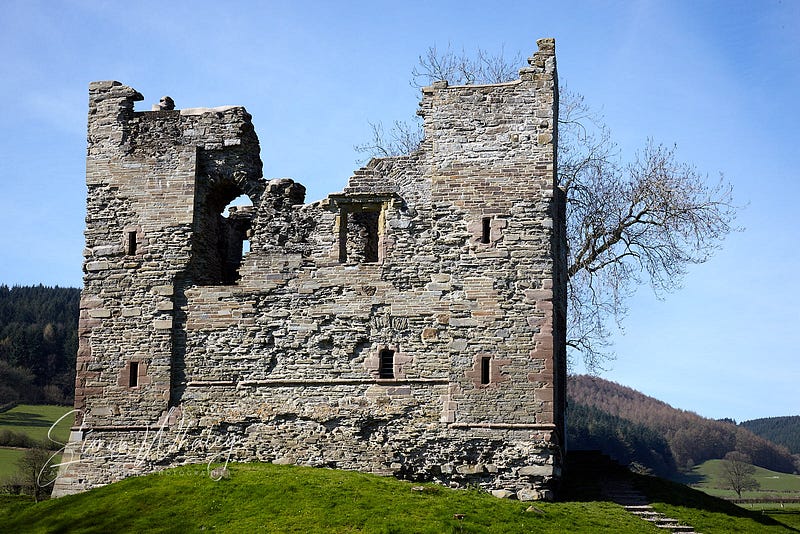
Hopton Castle © Simon Whaley

My nephew climbs into one of the smaller alcoves with a stone slab windowsill and peers through the open frame.

“What can you see?” I ask.

“Forty-three sheep,” he replies.

Well, it makes a change from goats!

From Hopton it’s a hop, skip and a jump to castle number six: Clun. Clun Castle is also a classic square-shaped stone keep, although, unusually, the keep stands at one end of the large earthwork motte, and not it its centre.
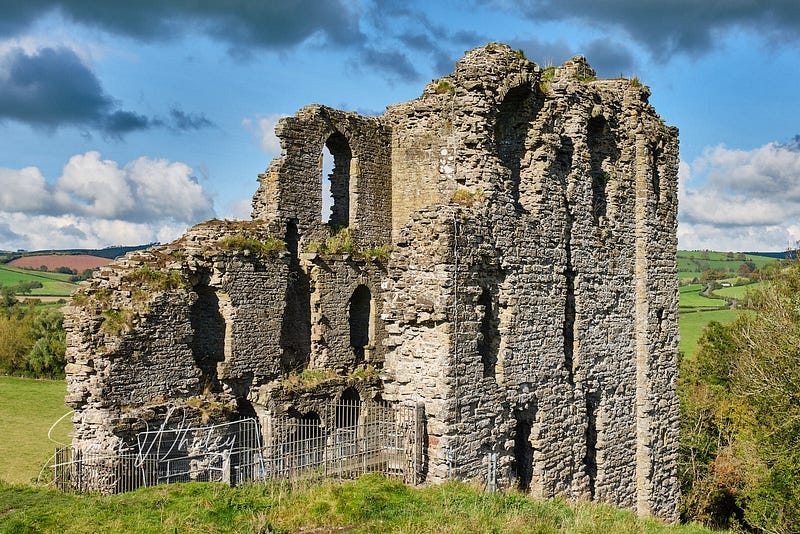
Clun Castle © Simon Whaley

Its moat is the River Clun, curving around three sides. The fourth side is protected by the village’s bowling green, which probably isn’t an original feature! Although built as a defensive castle, it was converted by the Fitzalan family into a hunting lodge in the 14th century, but was largely destroyed during the English Civil War.
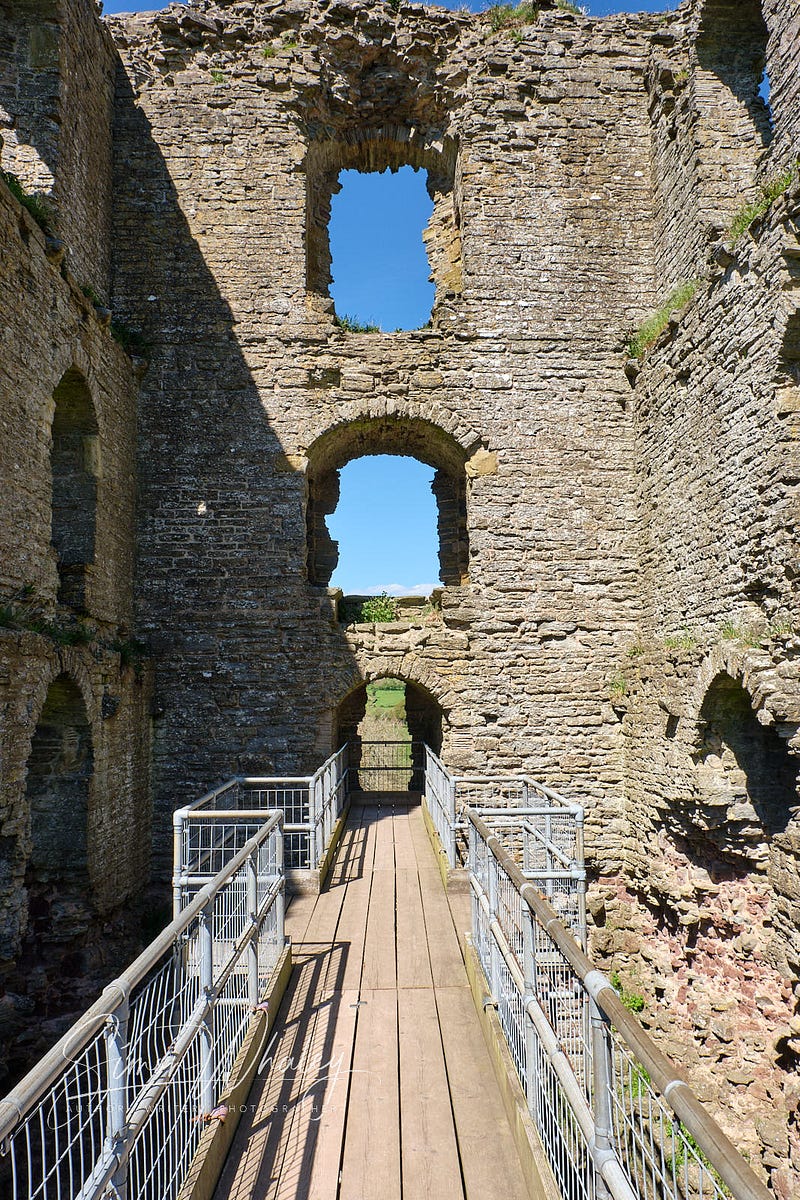
The ruined shell of CLun Castle © Simon Whaley

Some scaffolding allows us to reach the keep’s windows and gaze northwards along the border. Like the others, its position is clearly strategic. The River Clun runs west to east, through the Clun Valley, epitomised over a century ago by AE Housman’s poem, A Shropshire Lad, when he wrote:

Clunton and Clunbury, Clungunford and Clun,

are the quietest places under the sun.

It’s not completely quiet though. High in a brightening sky we hear the tuneful song of a skylark singing its heart out.

“There he is!” cries my nephew, pointing at a pinprick in the sky. It’s amazing such a tiny bird is capable of making such a big noise.
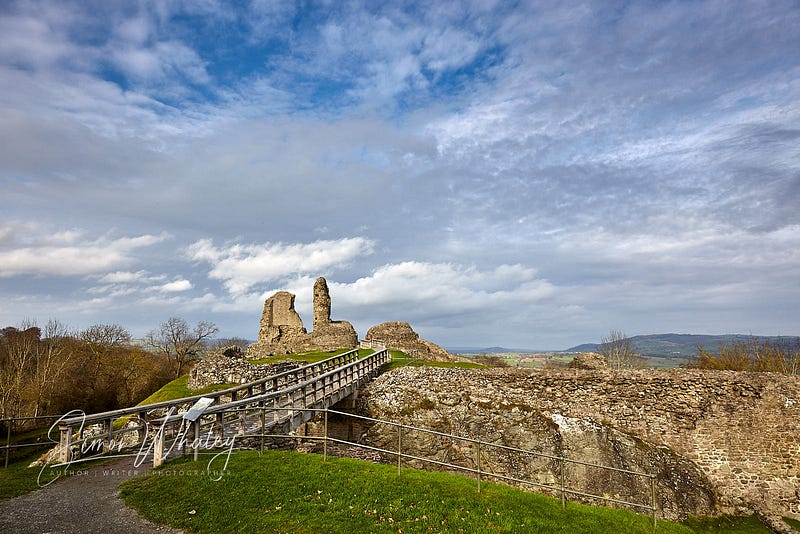
Montgomery Castle © Simon Whaley

Fifteen miles later, it’s not a skylark we’re watching, but a peregrine falcon. It soars above our heads then swoops downs settling on a rock face somewhere below us. We’ve crossed into Wales, and now find ourselves wandering along a gentle incline to a rocky promontory, sticking out into the Severn Valley, where Montgomery Castle was built. Peering over the hedge on our right, the roofs of the houses of Montgomery sit below us, and the views stretch back into Shropshire.

Two bridges carry us over huge grassy moat-like ditches to the impressive ruins of the main castle gate, towering above us.

“Whoa! Look at that!” My nephew points to the stone groove, where the portcullis once slid.

Just inside the gateway, a plaque tells of a curious death. Not of a soldier from an attacking army, but of a woman mysteriously killed when she came looking for the return of a cooking pot she’d lent to someone in the castle’s kitchen. An accident? Or was it murder?
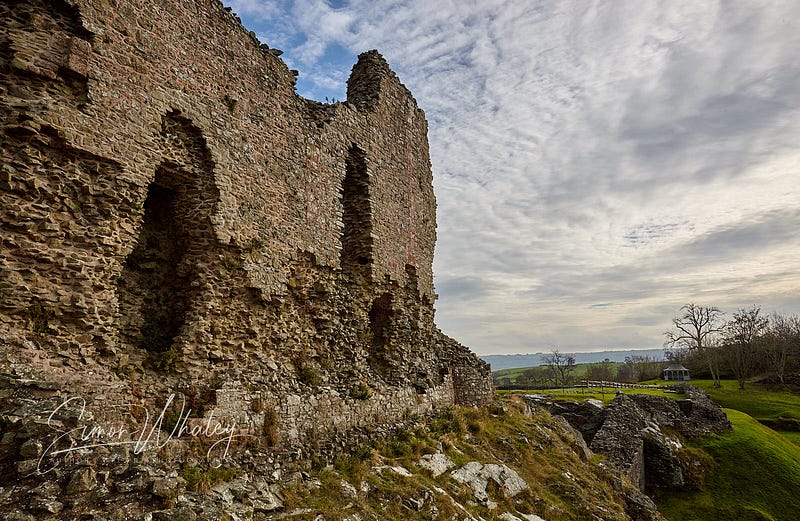
Montgomery Castle © Simon Whaley

Passing through the large masonry gate towers, the huge grassy courtyards convey the size of this defensive stronghold, dating back to the 13th century. On our left a wooden platform, padlocked for safety, hides the castle’s well. To secure a safe water supply they had to excavate over 200 feet of rock. No mean feat in those days!

We’re drawn to the furthest end of the castle, where the land drops abruptly into the Severn Valley before us, offering an advanced warning of any attack from North Wales. In the distance, perched on a wooded ridge about fifteen miles away, stands the red-stoned, fortified palace of Powis Castle. Is this castle number eight in our quest?

But my nephew stifles a yawn. I think we’ve found the answer to this morning’s challenge. Seven castles conquered in one day. That’s more than most armies achieved. Time to head back to the car.

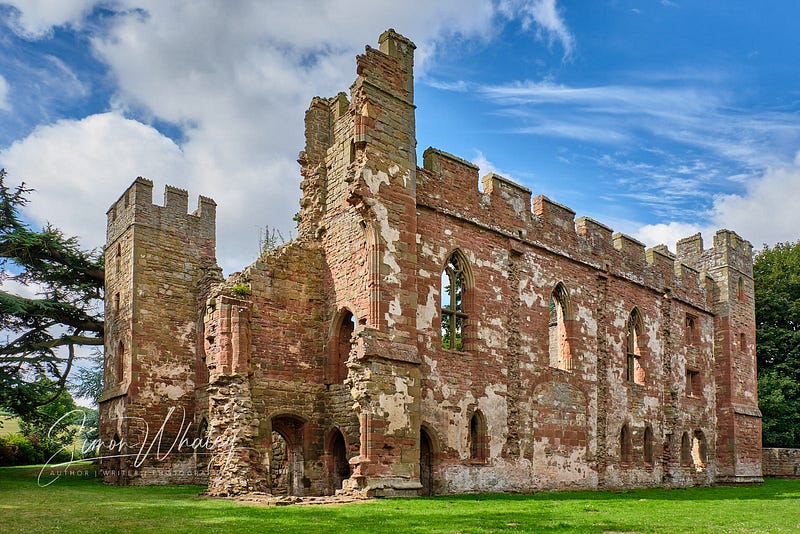
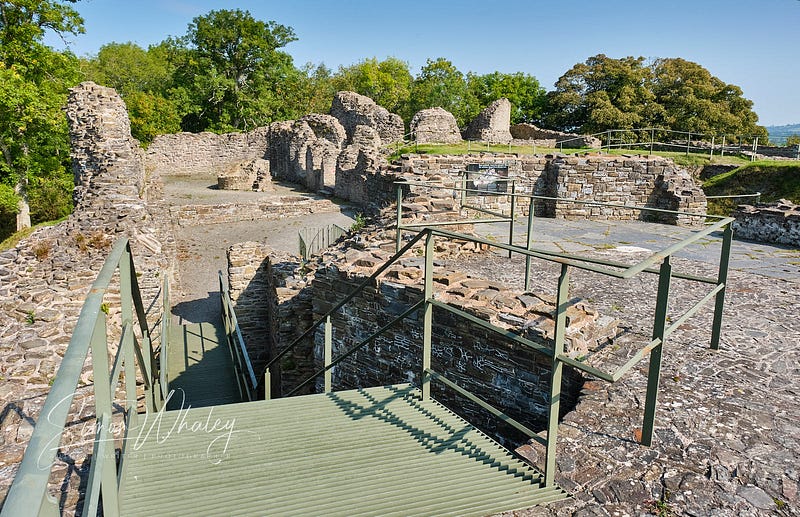
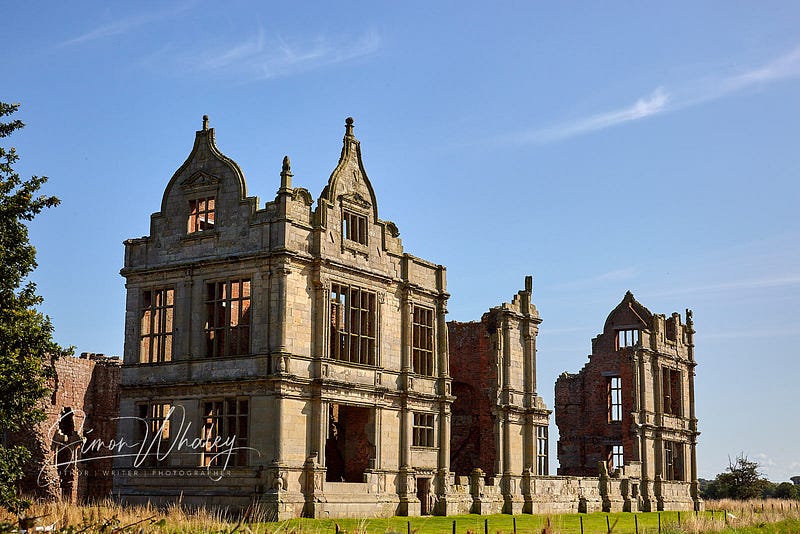
Still, had my nephew had the stamina, we could have gone on to conquer the following castle ruins:

Oswestry Castle
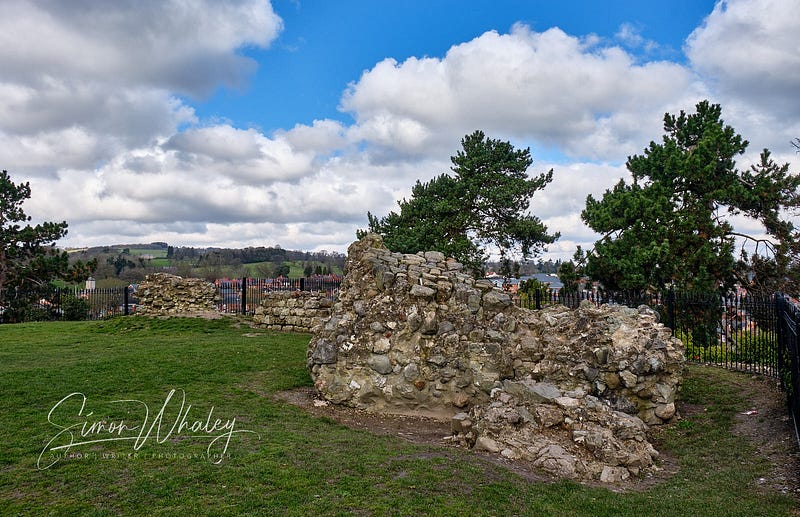
Oswestry Castle — not much left of those ruins © Simon Whaley

Acton Burnell Castle

Acton Burnell Castle © Simon Whaley

Dolforwyn Castle

Dolforwyn Castle near Newtown, Powys © Simon Whaley

Moreton Corbett Castle

The ruins of Moreton Corbett Castle © Simon Whaley

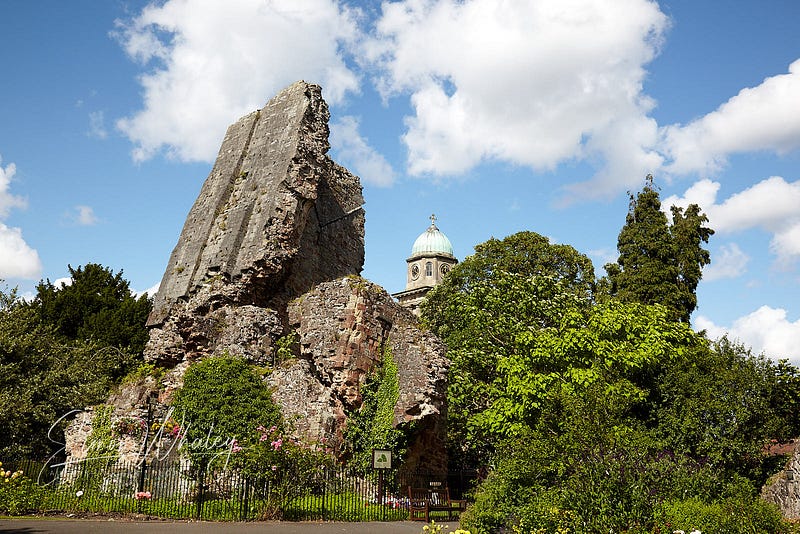
Bridgnorth Castle

Bridgnorth Castle ruins © Simon Whaley

Interestingly, Bridgnorth Castle ruins lean at an angle of fifteen degrees, which is greater than the angle of the Leaning Tower of Pisa (Five and a half degrees).

Whittington Castle
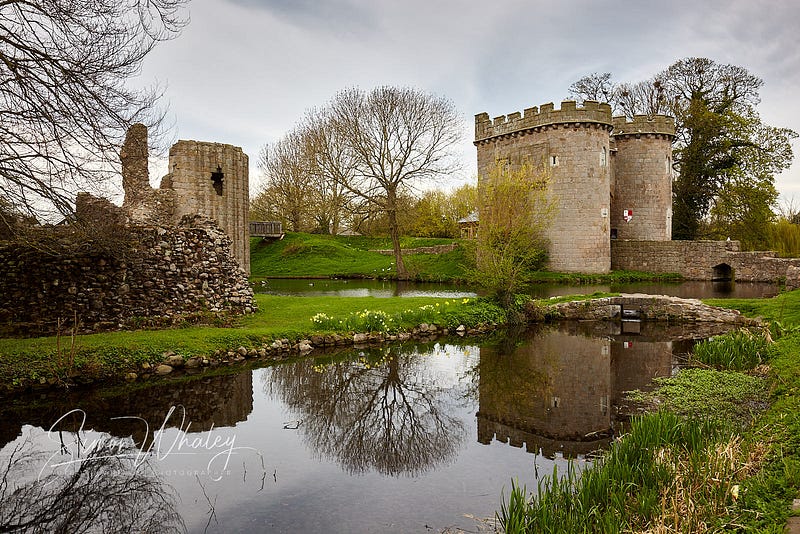
Whittington Castle © Simon Whaley

I suppose we can leave these ruins until another time, when my nephew has a bit more energy.

But if you’re looking for ruins then come to the Welsh Borders. There’s practically one around every corner here!

And if you successfully pass all these ruined castles and cross the border into Wales, then check out Liam James H’s piece about Conquering the Highest Mountain in Wales. Despite the news stories of it being so busy you’re queuing for hours to get to the top, Liam’s piece shows it is possible to experience this majestic mountain, but it should always be respected at all times (read to the end!).

And, not all UK ruins are castles — some are much older. Check out Susie Kearley’s piece on Britain’s Ancient Stone Circles. I’m envious of her doing Stonehenge-it’s on my list to do one day!

For more of my travel piece, check out:

Travel
Castles
UK
Wales
Monthly Challenge
Recommended from ReadMedium