
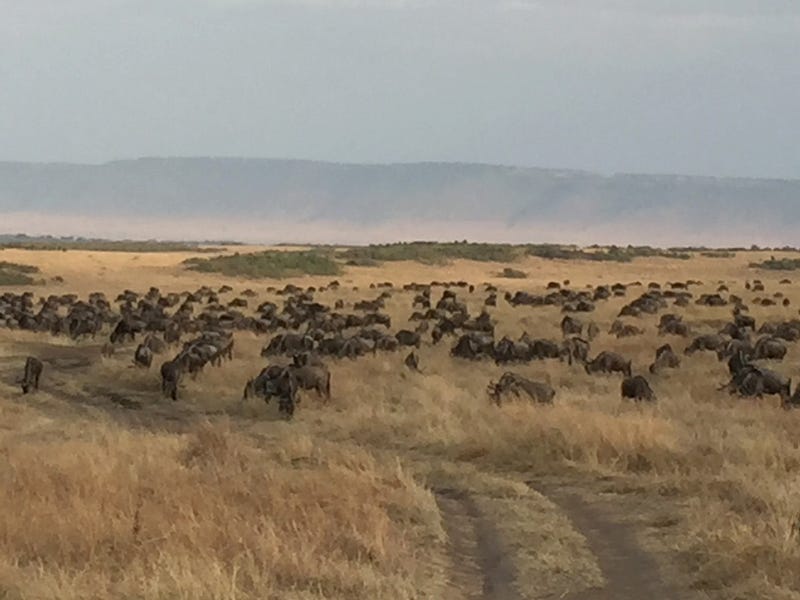
The Great Migration: Nature’s Wildest Spectacle
A once in a lifetime experience and the greatest show on earth
Witnessing the Great Migration atop a safari vehicle alongside my husband, our guide, and three of our best friends — one of whom made all of this possible — was unlike anything I’ve ever experienced.
It was our second trip to the southeastern region of Africa. On this adventure, we traveled to Tanzania and Kenya to view this once-in-a-lifetime spectacle.
The Great Migration — during which millions of animals travel north in search of sustenance — is considered by many as one of the great wonders of the world.
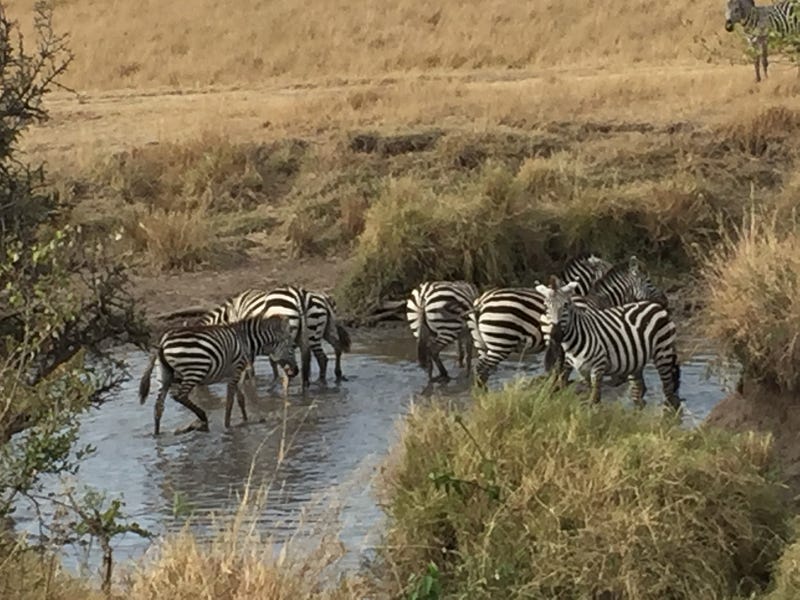
Yearly, in the time of drought, wildebeest, zebras, antelope, gazelles and other species make this incredible pilgrimage as they travel hundreds of miles across Tanzania’s Serengeti grasslands.
This famously treacherous journey is filled with drama. It’s the wildebeest calving season — babies are born and within ten minutes join the herd in migration.
It’s not unusual to spot a newborn picked off by a lion prowling for a youngster or an elderly or injured animal.
After the lion finishes his meal, three-foot-tall Lappet-faced vultures swoop down to clean the bones. Nothing is wasted.
In Kenya we watched the migration from a safe vantage point near the Mara River. As animals stampeded down the river banks there were those who stumbled and fell upon the rocks.
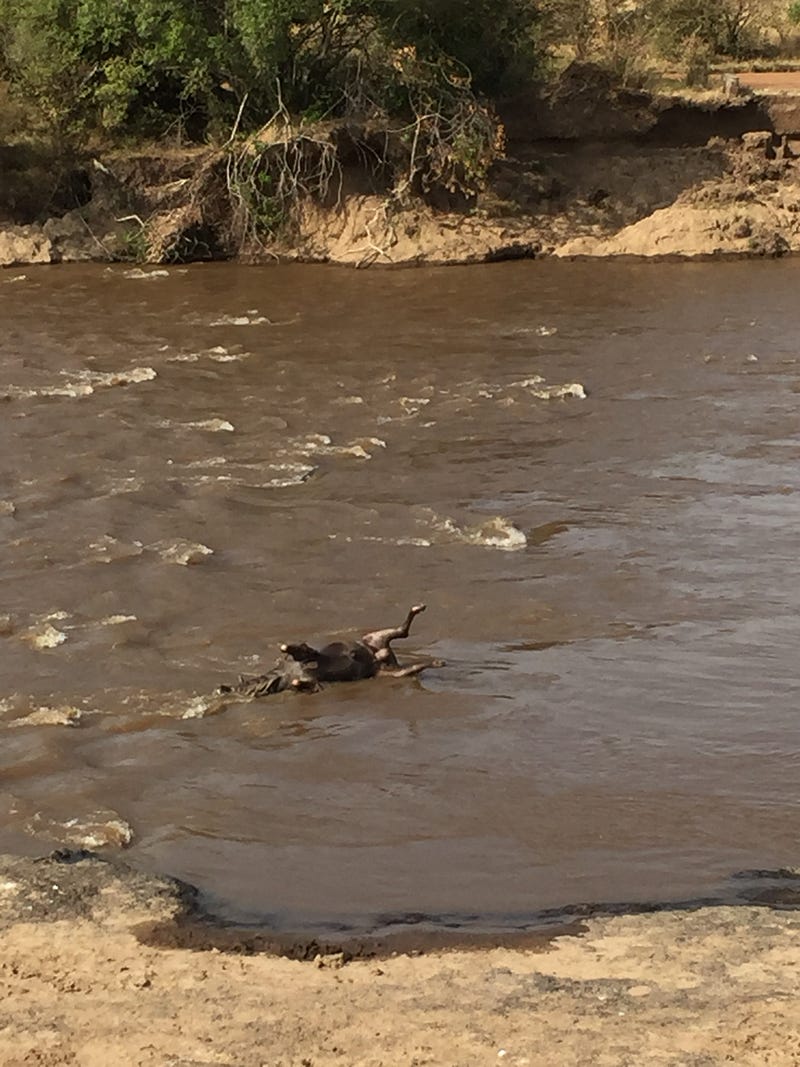
Huge crocodiles peeked from the water, ready to pounce upon the unfortunate victims with broken limbs. Wild splashes of bloody water was a reminder that the Great Migration is a classic game of survival of the fittest.
The sheer magnitude of the migration is breathtaking — as is the wildebeests’ swarm intelligence.
Although the migration looked to us like panicked, frenzied chaos, researchers claim wildebeest herds — without any natural leaders — possess swarm intelligence, whereby they systematically detect and overcome obstacles as a unit.
The Great Migration provides a rich study of its role in the ecosystem. Animals are born, thousands more die — providing sustenance for others throughout the food chain.
Every part of an animals’ carcass is used — from its meat, hooves, feathers and bones. Truly, nothing is wasted.
Mother Nature probably planned it that way.
For another adventure on that trip read below:
If you like my stuff and want to read more from me, please use my referral link! Your $5 monthly membership fee supports me and all other writers on Medium. You’ll get full and unlimited access to every story, every day https://medium.com/@deborah.camp/membership
OR
Maybe you’d like to write for Medium too (unleash your inner writer! Beginning writers are welcome.) Use my link to get started: https://medium.com/@deborah.camp/membership


