
The Gnawing
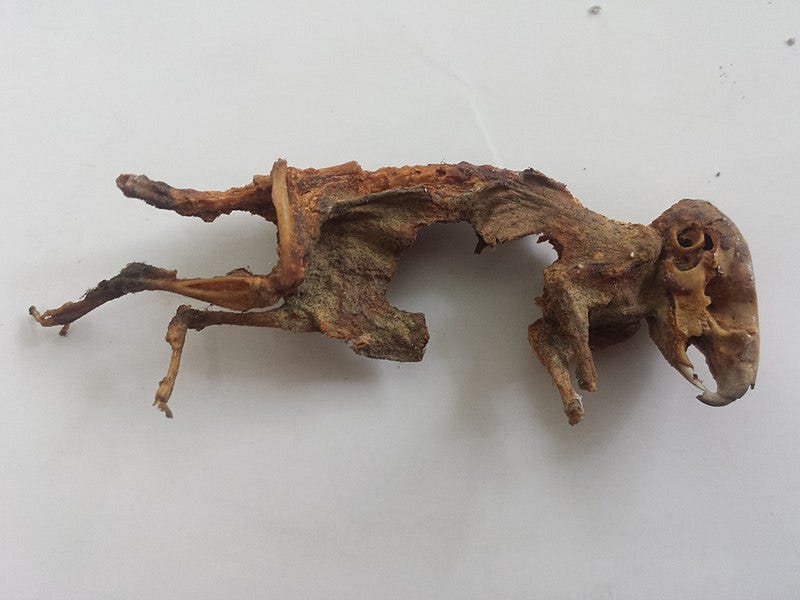
These are the dark days of summer.
Memory of the thirteenth August of his life. Spenser, unpuddled from sleep, his treacle-coloured dream gone forever as his eyelids open to his grandfather’s waking touch.
Breakfast is cereal with tepid milk that carries strange, earthen scents. His grandparents’ fridge doesn’t so much chill things as gently shield them from becoming room temperature. There is a bowl of apples on the kitchen counter beneath the wrinkled windowframe, and Spenser takes one on his way out the door. The apples here are warm to his touch, and soft too. At home the apples are in the fridge, cold and bright, their skin ready to snap under your teeth. Here when he bites into the apple from the bowl the flesh is skullcoloured and feels spongey against the roof of his mouth. His grandfather eats the whole thing, core, seeds, everything. Yesterday there was a long tendril of spiderweb floating from the stem and his grandfather ate that too.
These are the dark days of summer. His grandfather said this to him yesterday afternoon as they walked the property line. Spenser doesn’t know what it means but the sentence won’t stop rattling in his head. He hears it as he scrabbles for trinkets or omens in the dirt behind the shed. From time to time he wishes Tristan was with him. His younger brother had awoken with a head cold the morning they were to leave for a week at the farm, and Mom and Dad had decided to keep him home. So Spenser was there by himself, examining dull-eyed chickens through hexagonal wire, helping his grandmother bake bread, riding the tractor with his grandfather. Days of aimless wandering. Everything new and different but somehow lonely too.
He is digging in the dirt behind the shed when he spies the clutch of white eggs on the ground. These are the dark days of summer. Spenser hears the sentence when he picks up the fist-sized rock and gently lobs it at the sunbleached nest, not really aiming that carefully, but interested to see what might happen. The rock misses the eggs and clatters against the shed. He picks it up again and moves one step closer to the nest. He looks over his shoulder back toward the house. The kitchen window is an opaque square chiseled into the yellow siding.
After he has smashed all of the eggs he hurls the rock into the weeds. The contents of the eggs spill out into the dust, brighter than Spenser would have imagined, flashing in the sun like little pools of fire.
He walks back to the house.
In a small, cool room in the basement there are rows and rows of old Westerns on the shelves. Spenser is fascinated by the muddy browns and oranges of the covers, all of which seem to follow a tripartite formula: profile of a cowboy looming large in the centre, gritting his teeth as he draws his gun or loads a punch or maybe reels from a gutwound; a half-dressed woman off to one side, sometimes locked in an amorous embrace with our cowboy anti-hero; a scene of violence on the other half: fist fight or pistol duel or horses wheeling. Valley of the Painted Shadows (Proteus Press, 1956). Thirteen Steps to the Hangman’s Noose (Proteus Press, 1956). Los Cazadores (Proteus Press, 1959). First Law of the Gun (Turnbull Publishing, 1970). Third Law of the Gun (Turnbull Publishing, 1971). Spenser has developed a technique to use his thumb to shuffle through pages, scanning for particular words that signal passages that he wants to read in more detail. Cock. Thrust. Tits. Tongue. Fuck.
A voice calls down into the damp air, asking Spenser what he is up to. Little bolls of Slavic honey melting in the corners of his grandfather’s mouth and on his tongue when he speaks. Lviv or Kyiv — Spenser can never remember which. Snippets of a family history drift through Spenser’s mind. Fleeing westward, just ahead of unspoken violence. Endless nights working amidst the screams of the engine room on a steamer chugging through the endless blue. His grandfather still carried a half load of bugshot in his white calf, pepperscarred.
No, not bugshot — buckshot. Spenser has seen the word while flipping through the Westerns. He thinks about this. It’s not the dark days of summer. It’s the dog days of summer.
So he finds himself looking at the old black lab that spends the day panting in a midden of hay beneath the wooden steps leading to the front door. Some kind of grey rot weeping from the corners of its eyes. The dog is feverishly working on a large bone, cutting its gums on the sharp edges so that little bubbles of blood and slaver are spattered on its muzzle and tongue. When it levers the bone in its back molars the air cracks like a rifle shot. This is not a pet but a farm dog, maybe half coyote (his grandmother’s word, two syllables) and it has little interest in Spenser’s attempts to call it out from under the steps, is lazily immune to Spenser’s trills and broken whistles. Even when Spenser clutches his hand into a fist and pretends he is hiding some secret morsel, the dog only flicks its eyes — to Spenser’s hand, to Spenser’s face – then returns its attention to the bone after a long blink. Little blades of light cut through the steps and puzzle the dog’s dark shape.
Spenser is orbiting the farmhouse when his grandfather waves him over to where he is kneeling beneath the dining room window. There, in a thick crack in the foundation of the house, a coven of baby rats writhes as if they are experiencing as one some terrible unseen agony. Born deaf and blind, his grandfather says. Come on, son, we’d best get rid of these.
Spenser follows in his grandfather’s wake as they walk to the shed. His grandfather pulls out a large white bucket from under the workbench. He removes a few rusty items from the bottom and the two of them return to the mewling brew of rats. With his bare hand Spenser’s grandfather scoops up each rat and gently places it in the bottom of the bucket. Then he carries the bucket to the opposite side of the house and picks up the green hose. Spenser follows.
Turn the water on, his grandfather says, pointing to the brass valve. High as she goes.
Spenser spins the valve and moves to his grandfather’s side. The rats momentarily disappear in the milky froth made by the jet of the hose as a tight beam of water stings the bottom of the bucket. Once the bucket is about a third full, the froth subsides, and what comes to the surface is a thrashing raft of teeth and tails and pink bodies, a writhing mass of verminous suffering. His grandfather makes sure the hose lashes each rat in turn with a precision and attentiveness that reminds Spenser of the hummingbirds he has watched traverse the pink cluster of flowers along the walkway out front.
Spenser stares into the vile cauldron and watches each rat die. Then he goes back inside the house. He doesn’t know where his grandfather puts the dead rats. He thinks the bucket must go back in the shed.
That night at the dinner table some ort of sausage crunches in Spenser’s back teeth. Cartilage or bone. He feels a wretch roiling in his hot guts and at the back of his throat so he excuses himself and hurries to the bathroom. As he vomits into the cold toilet all he can think about is the rats. They’re in his teeth, he thinks. Like some witch’s spell.
He never thinks about the eggs. Never once.
←PREVIOUS EPISODE← →NEXT EPISODE →
To start at the first episode, CLICK HERE