
A silver lining in 2020
Benefits of the Pandemic — Inspiration and Philosophy
How social distancing, working remotely and quarantine might change our lives for the better.

Many of us have gotten to see parts of ourselves through this pandemic that we have never seen before. For some of us, this is painful. For all of us, this has the potential to be beautiful.
Who am I?
Who am I — really?
Who am I without my job? Or without my commitments?
Who am I when it’s just me and I have nowhere to be?
Can I handle being alone with myself?
Can I handle not having anything outside of myself to ‘fix’?
Who am I, then?
Who am I when no one is waiting for me or depending on me?
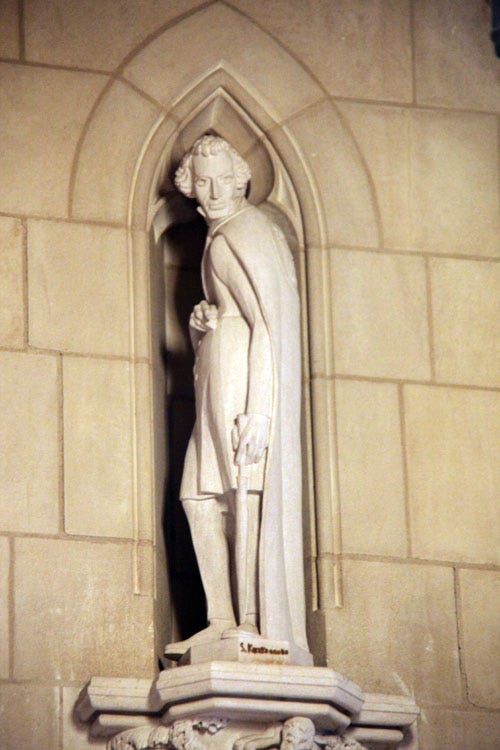
If you name me, you negate me. By giving me a name, a label, you negate all the other things I could possibly be.
— Søren Kierkegaard*
This is one of my favorite quotes — one sentence that changed my life, forever.
The concept is usually perceived as opposition to being labeled by others. When other people label me, they negate me. This is a half truth. Labels given to us by others matter very little, compared to the labels we give ourselves.
We all play our own roles in this world and the lives of those around us. Being stripped of our roles can feel very uncomfortable, especially when we identify with these roles to a point where they become part of our identity. However, if these labels negate us, many of us were given a once in a lifetime opportunity, thanks to Covid-19.
Especially in Western Society, the world tells us to label ourselves. We are taught that we should have a place in this world and play a specific, usually well thought out, role. You must label yourself or you are not a productive member of society. Of course, we are all here to play our part in all of this, but we do not simply play our part, we often become it. We mix the doing with the being.

Childhood is where it all began. We are so free and curious—exploring the world, always in the moment. We learned naturally and we followed our hearts. Until one day, when we start hearing that question — a question that will become louder with every year we age.
What do you want to BE when you ‘grow up’?
We are taught our entire lives that whatever roles we choose result in who we are.
We are not told to ‘parent a child’ — we are told to ‘be a parent’. We do not decide to ‘accept a job healing people’ — we decide to ‘be a doctor’.
They tell us to figure out what we want to be, not what we want to do. As a result, the roles we play in this world get all mixed up in our identity. This is how we have been taught to label ourselves and ultimately how we negate ourselves.
The outside world may attempt to limit us. Sometimes it may feel like there’s a ceiling above us — and sometimes, there is. These ceilings are not what truly limits us though. The limits we place on ourselves are what stop us from moving to a different room with a higher ceiling — or better yet, going outside.
Identifying with the roles we play and letting them become who we are leads to fruitless pain and inevitable suffering. We may be able to hold up these versions of ourselves for years, almost lifetimes in some cases. But eventually, our kids grow up. Our career time ends. Things change. And, when roles change, you lose yourself in whatever role you lost.
Refusal to dis-identify — with our transient world roles — leads to midlife crisis, addiction, failure to launch, suicide, chronic depression, oppression by others and dependence on others— not to mention a plethora of other crippling challenges.
The pain and hardship brought by this pandemic has been accompanied, for many, by a life-changing opportunity to spend time with ourselves and break away from the roles of our world that bind us.
Although being stripped of these roles leaves us with an almost unbearable uncertainty, it is this uncertainty that, if we allow it, can lead us to ourselves and set us free.
Written by Holly Kellums
*Exact wording of this quote has become debatable between many sources and translations, usually paraphrased as ‘Once you label me you negate me.’ which has never actually been written exactly that way by him, but you get the point he was making either way.
Find more of my work and engage with me on Facebook, Twitter, Instagram and LinkedIn
If you loved this article, you may love these as well 🙂