
The Genius of Claire Keegan
One of the world’s finest novelists shows why awards judges have showered her with honors

In a good novel, every sentence pulls its weight. In a great one, every sentence pulls two or three times that: It reveals character, advances the plot, and evokes a time or place, or otherwise does double or triple duty.
Claire Keegan’s fourth book isn’t a novel but a story first published in an abridged form in The New Yorker. Keegan has described Foster as long short story: “It is definitely not a novella. It doesn’t have the pace of a novella.”
But Foster pulls more than its weight line-by-line in the 92-page U.S. (and 88-page U.K.) edition. The title gives a hint of how Keegan does it. Foster can be a verb or adjective, and it works as both here.
Foster describes a pivotal summer in the life of a perceptive but neglected girl taken by her father to live with relatives on the Irish coast while her mother awaits the birth of another child they can ill afford.
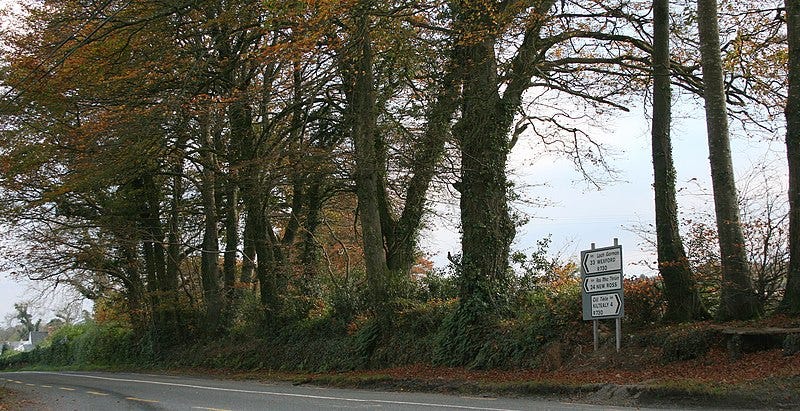
The temporary hand-off falls within a long tradition of “fostering” in Ireland. As the retired Limerick, Ireland, teacher Vincent Hanley writes:
The old Gaelic chiefs used fostering to create alliances and maintain peace accords with local rival chieftains — they were less likely to attack a neighboring chieftain if they realized that their young son or daughter was being raised there. In essence, the child was seen as a kind of hostage but as Declan Kiberd points out…‘the more positive motive was the hope that the second family might educate the child more fully than might the first, in the ways of the world.’ I
Keegan’s unnamed heroine receives such an education during a hot and sunny summer when republican hunger strikers are dying in Northern Ireland, suggesting that the year is 1981. Her short-term minders are a maternal aunt and uncle, John and Edna Kinsella, and John calls the blossoming girl “Petal.”
The Kinsellas’ surname means “proud” in Irish Gaelic, and, though not rich, the couple take pride in standards that would be a luxury for the parents of their young relative. Petal’s father tells John, in dropping off his daughter, that she eats ravenously, but he can work her hard.
“There’ll be no need for any of that,” John says. “The child will have no more to do than help Edna around the house.”
At first the summer has the air of an idyll, perhaps a fairy tale. “Petal” has pocket money for the first time. Edna kisses her goodnight, buys her proper clothes and books like Heidi and The Snow Queen, and shows her how to do agreeable tasks such as making tarts, polishing the furniture, and weeding the flower beds.
But the girl senses that mysteries lie within the Kinsellas’ farmhouse in County Wexford. One involves the wallpaper pattern in her new bedroom: trains of every color with a boy off in the distance waving. A cruel neighbor eventually will unlock one secret in a way that teaches her to value a view that John tries — you might say — to foster in her: Sometimes life hands you “a perfect opportunity to say nothing.”
Keegan tells this engaging story in the continuous present tense to emphasize that it reflects the evolving perspective of a child, who appears to be somewhere between ages 7 and 9.
Petal’s perceptions at times seem too wise or acute for a girl of her age and background, which raises the question that has caused decades of debate among readers of To Kill a Mockingbird: Is the story told from the point of view of a child or from that of an adult looking back on her childhood? Or does it shift between the two?
The ending of Foster also has less impact than the shattering conclusion of Keegan’s brilliant novel Small Things Like These, which dealt with the hidden child abuse in Ireland known as the Magdalene Laundries scandal.
The stakes are lower and the outcome more ambiguous than in that book: Some critics have called Foster “heartbreaking,” but that may be too sentimental. Foster supports an alternate reading: This is the story of a neglected child whose life may be forever improved by the kindnesses shown to her during a brief time away from home.
However you see its point of view or ending, Foster shows again that Keegan is one of the world’s finest living fiction writers. She began winning prizes for her first two books, the short story collections Antarctica and Walk the Blue Fields, and every subsequent title has brought her more honors. For Small Things Like These alone, she was shortlisted for the Booker and won the Orwell Prize for Political Fiction and Irish Novel of the Year Award.
Quite often, critics and awards judges shower authors with honors belatedly in an attempt to make up for past slights. How nice to know that — this time — they got it right by honoring a worthy author from the start.
Jan Harayda is an award-winning journalist who has been a vice president of the National Book Critics Circle and a judge of its annual awards, one of America’s three most prestigious literary prizes. She is a former book columnist for Glamour and book editor of Ohio’s largest newspaper.
You might like my review of Claire Keegan’s Small Things Like These:


