avatarGauri Sirur

Free AI web copilot to create summaries, insights and extended knowledge, download it at here

1177

Abstract

of oak gall wasps. As their name suggests, oak trees are the insects’ particular favorites.</p><p id="48f4">Galls can form on the oak’s stems, leaves, or flowers.</p><p id="cecc">They begin with the wasp injecting its egg into the plant tissue. The insect’s saliva then triggers the plant’s growth hormones resulting in abnormal cell growths — the galls.</p><p id="c2c3">The gall grows around the wasp’s larva and provides shelter and sustenance for its tiny resident. The larva pupates within the gall. When it reaches adulthood, the wasp chews its way out of its former home.</p><p id="9a4c">The gall’s growth period is brief. During this time, it draws nutrients from the oak. Once growth is complete, the gall discontinues its food intake.</p><p id="0bae">Oak apples cause little harm to mature trees — unless the tree is heavily infested. But they can adversely affect the health of young plants.</p><p id="e34f">Other insect gall-builders are beetles, aphids, flies, and moth caterpillars.</p><p id="4340"><b><i>Thanks for reading! </i></b>🌻🌼</p><p id="140b">Some more of my stuff:</p><div id="c128" class="link-block"> <a href="https://readmedium.com/a-shou

Options

tout-to-the-gingers-dancing-in-my-garden-da1aaac8aa73"> <div> <div> <h2>A Shoutout to the Gingers Dancing in My Garden</h2> <div><h3>Ornamental or Culinary — I love you all</h3></div> <div><p>medium.com</p></div> </div> <div> <div style="background-image: url(https://miro.readmedium.com/v2/resize:fit:320/1*[email protected])"></div> </div> </div> </a> </div><div id="555e" class="link-block"> <a href="https://readmedium.com/a-nimfy-notice-to-the-muscovy-ducks-in-my-neighborhood-bc328f5a31ad"> <div> <div> <h2>A NIMFY Notice to the Muscovy Ducks in My Neighborhood</h2> <div><h3>Six Word Photo Story: Freestyle</h3></div> <div><p>medium.com</p></div> </div> <div> <div style="background-image: url(https://miro.readmedium.com/v2/resize:fit:320/1*[email protected])"></div> </div> </div> </a> </div></article></body>

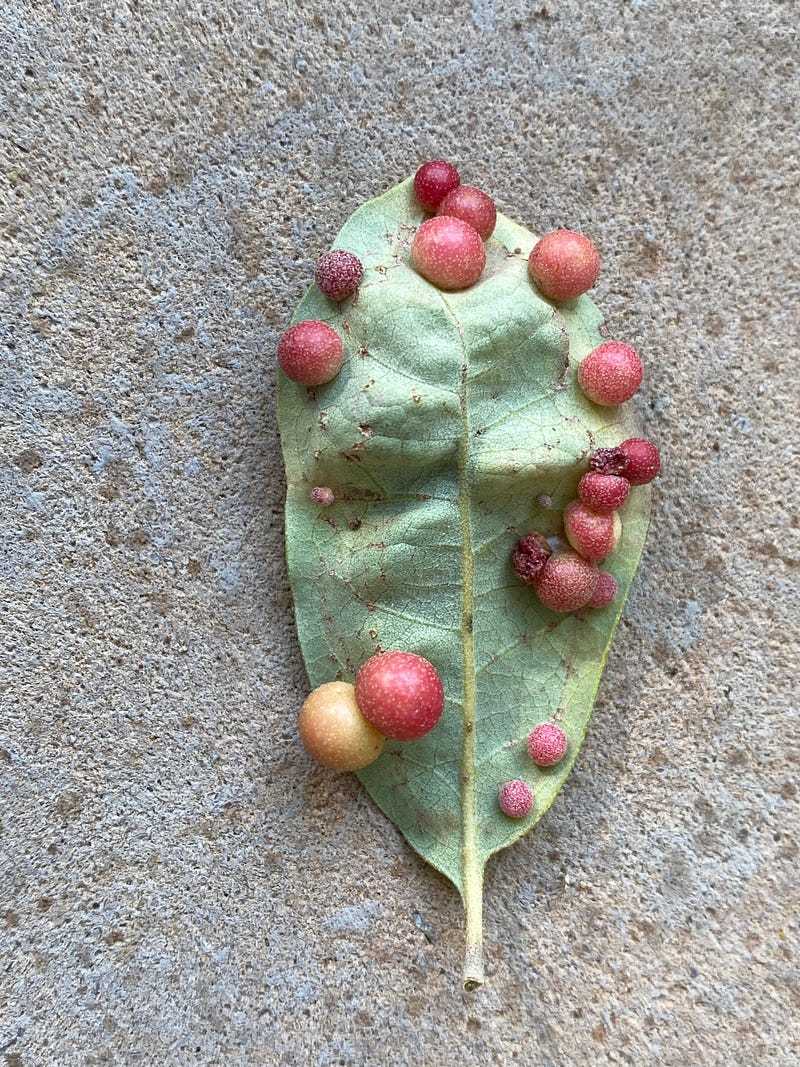
“OAK APPLES” Image by Gauri Sirur

The Gall of This Tiny Wasp

October Six Word Photo Story Challenge: “Collections”

A Collection of Rosy “Oak Apples.”

Last weekend, I spotted something curious in my daughter’s backyard. It was a fallen live-oak leaf stuck with what looked like miniature apples.

The “apples” looked too large to be insect eggs. But I knew they weren’t fruit either.

I later identified these objects as Oak Galls — also known as “Oak Apples.”

Galls are abnormal plant growths caused by insects, mites, nematodes, fungi, bacteria, and viruses.

Galls are akin to benign tumors in animals.

The creature responsible for “oak apples” is a tiny wasp belonging to the family of oak gall wasps. As their name suggests, oak trees are the insects’ particular favorites.

Galls can form on the oak’s stems, leaves, or flowers.

They begin with the wasp injecting its egg into the plant tissue. The insect’s saliva then triggers the plant’s growth hormones resulting in abnormal cell growths — the galls.

The gall grows around the wasp’s larva and provides shelter and sustenance for its tiny resident. The larva pupates within the gall. When it reaches adulthood, the wasp chews its way out of its former home.

The gall’s growth period is brief. During this time, it draws nutrients from the oak. Once growth is complete, the gall discontinues its food intake.

Oak apples cause little harm to mature trees — unless the tree is heavily infested. But they can adversely affect the health of young plants.

Other insect gall-builders are beetles, aphids, flies, and moth caterpillars.

Thanks for reading! 🌻🌼

Some more of my stuff:

Plants
Insects
Nature
Oak
Monthly Challenge
Recommended from ReadMedium