
The Future of Oral Tradition in a Technological World
How Knowledge is Transferred and Valuable Things Preserved in a World of Permanent Competition and Little Collective Memory
This article was originally published on Wonk Bridge
Unlike many-a yesterday’s bad idea, Fake News is not getting any less popular.
At least, that’s what an impartial history of Donald Trump’s Twitter feed across the length of his administration thus far suggests. Judging by the the frequency with which the term is used by the concept’s avatar and most invidious anti-success story, Fake News is ‘it’ and, presuming it is ‘it’, is only becoming more itself as the long four years go by. Trump tweeted 183 times about Fake News 2017, 186 times in 2018, and an astonishing 284 times in 2019. The economic value of the hashtag ‘#fakenews’ was, at last measurement, £2,394.64. In the West — if for no other reason than for the fact that it keeps alive vast cottage-silos of outlets and publications in the digital economy’s one dependable growth sector, news — Fake News remains as big a business and as valuable as strategically directed misinformation has ever been.
That’s the Western view. The kind of misinformation we’re talking about, as damaging as it might be to crucial processes like elections in the West, represents an altogether more intimate danger in a society like India’s. In the words of Indian journalist Bharat Nayak, participant in the Google News Initative (GNI) India Training Network:
Indian society has been gravely affected by ‘fake news’, which has contributed to a rise in hatred and violence, and horrific incidences of lynching.
It is easy in the West to take for granted the ways in which proud individualism has, in many respects, inured many of us-among-the-public’s real-time susceptibility to outright ‘Fake News’. It has long been asserted by this very publication that strategic misinformation is considerably more adaptable, and older, than many commentators accredit it as being. We feel the biggest problem, appropriately, in the West — with our great freedoms in selecting our information source, our heterogeney of opinion, and our scepticism, even contempt, of the media that our inherited secularism has derived for us — is not outright ‘Fake News’ but ‘Half-Truth News’. ‘Half-Truth News’ hides more easily from the blacklight of cross-reference; what’s more, its presentation flatters the Westerner’s archetypal intellect, which tends to believe it is just a little bit cleverer, more informed than its global peers. Donald would probably tweet about it too if he knew anything about it.
In India, news that is totally false and fatuous, news that is irritated from almost no grain of truth whatsoever — in other words, news that is totally ‘Fake News’ — is considerably more potent, because it is not thought of as news, and not interrogated as such. Quickly after being exchanged (usually by WhatsApp, with at-best notional resistance by the platform), it ceases to be news, and becomes oral tradition.
Technology, Word-of-Mouth and Collectivism
Word-of-mouth is sufficiently mighty a channel of information in India that brands are advised to refine their marketing strategies in order to tap into it; sufficiently mighty a channel of information to be called a “phenomenon”.
Not only that, but word-of-mouth has been adjudged the most trusted medium in India. This is all the more remarkable given trust in news outlets is generally low nationwide. Indians don’t trust their news much more than Americans, and they give generous privilege to news collected from search engines over that taken from elsewhere.
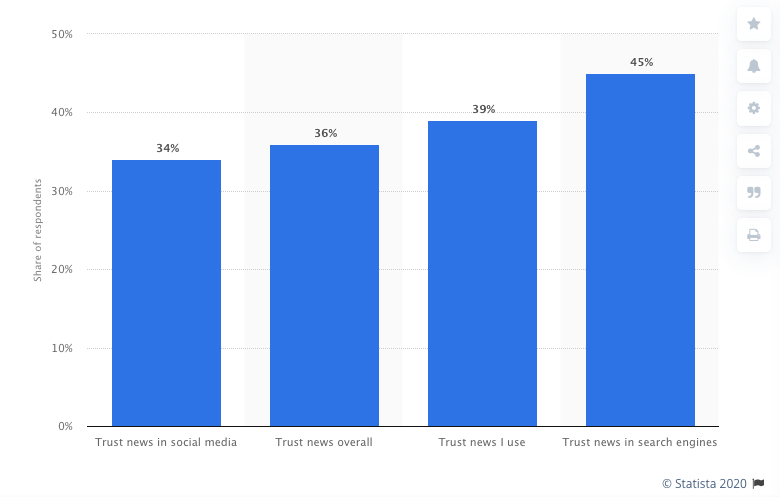
The two bars furthest left are the most interesting of the bunch, and the most decisive in going a distance to explain India’s issue with Fake News. The lowest of all scores, ‘Trust in Social Media’, explains why India’s Fake News scourge manifests itself through instant messaging platforms instead of on social media outlets, as it mainly does in the West. However that doesn’t explain, in and of itself, why instant messengers host so much of the stuff. What does suggest an explanation is the second lowest of the stats, those who “Trust News Overall”.
Presuming the Indian public does have so limited a trust in news, it doesn’t eliminate their need to gather news altogether. So where are they likely to get it from? Why, by word-of-mouth — news-as-instant-oral-history. Where you don’t, or feel you cannot, trust pillars of institution, you will trust your neighbour. In a society as collectivist as India’s is, which puts considerable value on fealty to a wider social framework, and where social pressures to conform in act and belief are accordingly higher, it is no wonder that a great many untruths are thereby transmitted, person-to-person.
After all, what begins in orality, becomes canon.
The Net-as-Library-of-Alexandria
Here we pivot away from fake news. In fact, let’s collect ourselves in Decamerons of ten individuals each and make like the narrators of Boccaccio’s great l’Umana Commedia, and go and hide out in the comforting Fiesole of a different subject’s concern.
The analogy is less torturous than it might at first appear. While the characters of this 14th century prose epic were fleeing something more immediately life-threatening than net-borne thought noise (the Black Death was in Florence at the time), their heavily compelled isolation is familiar to us, not least thanks to the old plague’s wan great-great-…-great-grandson, Covid-19. When they began telling tales to amuse one another and pass the time, they did so not by reading aloud from scripts, but by reciting from memory. The stories they tell, at least within the wider story of Boccaccio’s Decameron, are those passed down from one generation to the next, preserved for their playful or erotic wit, for their sense of tragic wonder, for what they have to say about life.
Those stories, up until Boccaccio committed them to print, had come to the author by the same means as his characters tell them: orally. They’d come from France, from Spain; from both Roman and contemporary Italy; from as far afield as India, the Middle East; from as locally as Boccaccio’s own circles of acquaintance in Certaldo, Florence — all of them, through oral tradition. The eldest tale, of Andreuccio of Perugia, had survived some 1,000 years in orality by the time that Boccaccio came to write it down for inclusion in the Decameron.
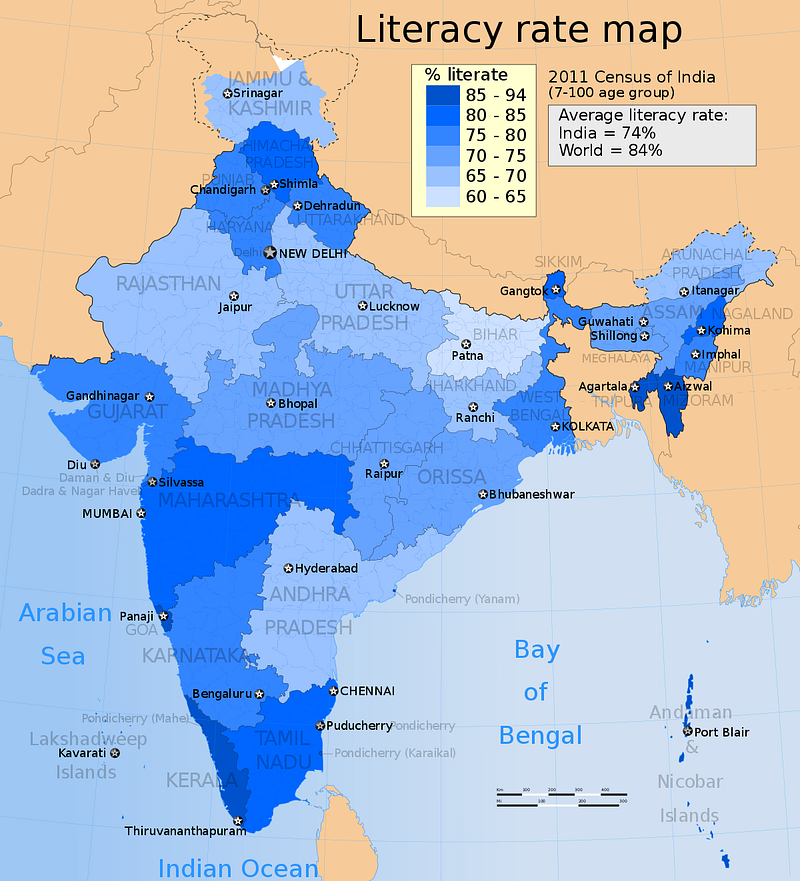
The historical vitality of orality should not be understated. It was not merely the pre-Gutenbergian vehicle of a good yarn to wile away the hours — before the establishment of writing systems, oral history and even oral law held central roles in binding societies together. Religions including Buddhism, Hinduism, Jainism and Christianity have used oral techniques to establish and transmit their respective canons (not coincidentally, the former three all having originated on the Indian subcontinent), through which venerable social customs have formed. Orality, for many centuries, constituted the main means of communicating truth and custom in societies where literacy did not prevail — in India, with its sluggishly improving 74.04% literacy rate (and only 65.46% for women), this is in large part still the case, among both those literate and not.
A more surprising truth, however, is that the West — just as elsewhere — remains every bit as dependent on the principles of the oral tradition as those regions more traditionally apt for its qualities. The Brewster Kahle ambition that the internet should come to serve as a second Library of Alexandria, preserving each and every single thing in the human record, assures us of it.
In fact, it all but guarantees that the virtues of the oral tradition become more important to us with every passing day.
Monty Python & the Oral Grail
Recently, a friend of mine was telling me about a class that the friend’s mother had been teaching in her suburban Southern English comprehensive school. The teacher had, as a learning aide, decided to deploy Monty Python against her class full of Gen Z’ers, presumably to illustrate some passage from Malory, or to illuminate a humourous religious-historic parallel, or to teach them about sex.
At any rate, the teacher found that not a single one of her class had previously had any encounter with Monty Python before. Of course, they found it highly amusing and perfectly morally instructive and all that. That’s a given. What’s more remarkable is that my friend’s mother, in doing as she did, had written a small but entirely new chapter in oral history, and somewhat proved its utility in the Early Digital age.
Monty Python is neither exactly obscure nor hard to access; the name alone still sparks giggles in millions worldwide, and its clips are bounteously preserved in hard copy as well as for streaming online. Therefore, to say that orality had helped it be ‘rediscovered’ seems too dramatic; however, while the subject itself is far from obscure, its value was in obscurity to its given (young) audience who were unfamiliar with it. By electing to pass down her experience of it, and showcase its value, my friend’s mother committed an exchange of an appraised entity with that audience. With their awareness, Monty Python has been meaningfully preserved in a way that it was already very much physically preserved. It could only be done via the principles of orality. There is something fond, loving, in information that has been committed to a matrix of private truths — to retain in the memory is the very essence of care.
In a second Alexandria, where there is more to read/watch/listen to/learn than any one individual can ever absorb totally, this is where the principles of the oral tradition will continue to assert, and are asserting, themselves. They will assert themselves more fully, and more meaningfully every day, as more and more work is produced, and the task of selecting individual articles for value preservation becomes that much harder.
The more we move away from the oral tradition, technologically speaking, the more we find ourselves in need of it.
The Oral Tradition & the Online Conspiracy Theory
The oral tradition presents to us a very familiar notion of truth — what is ‘true’ in a work of oral transmission roughly equates to that which gratifies the instinct; that which appeals correctly to a given prejudice; that which enervates the imagination. Anything that does all three is bound to find itself hopping from one tongue to the other. This idea of ‘truth’, as abstracted from ‘fact’ — for, orally transmitted, the truth arrives in a necessary state of mediation, presuming one is not the first to pass it along; what is being told cannot generally be empirically observed by those being told of it — is native to the oral tradition, and also handily describes the state of many of the truths we presently receive in the Early Digital (regardless of where we get our news from). ‘Internet truth’ is just ‘oral history truth’ made-up in a new and artfully distressed garb.
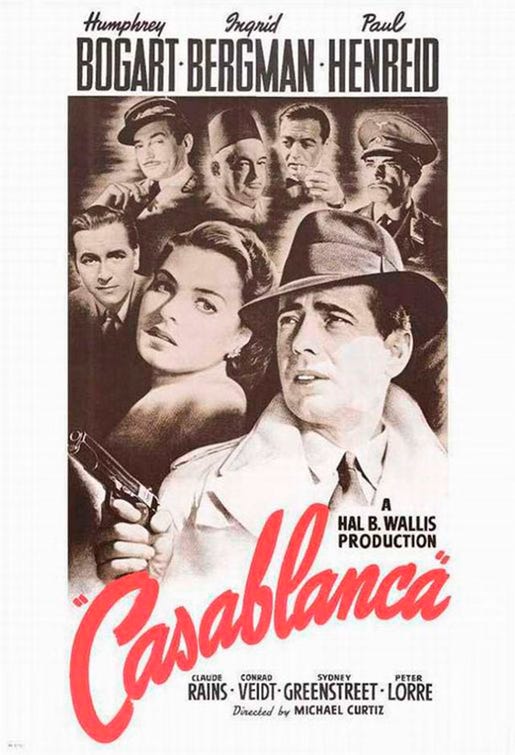
In essence, we swap stories about things because it gratifies us in some way to do so, not necessarily owing to intrinsic properties of what we’re communicating —indeed, those intrinsic properties can be the precise things modified for the sake of a better-told tale. For proof of this, look no further than that famous Casablanca quote “Play it again, Sam”, which is never said quite like that in the film, but is quothed thusly all the time anyway, because people prefer this version to the fact.
This can be seen in direct evidence throughout the net, even in areas where good, solid principles of the Digital Humanities (positivism; a posteriori knowledge sharing; empirical meritocracy etc.) seem notionally to reign. Take, for instance, the lingering posterity of Roko’s basilisk. The notorious thought experiment first proposed by Less Wrong user Roko has been decisively, even violently refuted by notable decision theorists (including the site’s founder, Eliezer Yudkowsky) as theoretically and practically untenable. And yet, the basilisk remains the subject of continual fascination and the matchmaker of prospective future Marsians and eccentric Canadian pop stars; not because of its content, but because of the taboo surrounding it. Moreover, it is the patina of darkness that the theory has accrued that is given weight when it is discussed; rarely does an appreciation of its debunked’ness predominate. If it did, the tale itself would have died on the vine, instead of spreading further.
Oral tradition is, then, necessarily unscientific, but it is no good to merely disparage it on this account — while valuation should strive as far towards objective principles as possible, valuation itself is not scientific. There is no unimpeachable reason why Monty Python deserves to be preserved in tradition more than the stand-up set of a fairweather, unknown comic, and yet it would be immensely hard to disagree with the idea that Monty Python is the more deserving of posterity on the grounds of what we might prejudicially call ‘good sense’. After all, not everything can be preserved. More broadly speaking, not everything that is valuable can be accounted for in purely objective terms. Without partaking in that which is not wholly objective in quality, life becomes arid, and history an unremarkable stillness.
The Critical Voice and Oral Tradition
Taking all that into account, we begin to get a wider sense of why it is that the Internet, the greatest tool of humanity’s collected historical knowledge, makes both knowing and valuation so hard. While we remain in thrall to those methods of mutually appraised valuation derived from the oral tradition, our version of the it lacks what the form has historically revolved around, which is an authoritative voice. Works assembled by oral means are necessarily collective — even if the original sum of a work came from one single author, it will inevitably be modified in the telling. Nevertheless, ascribing the much-changed article to a single artificer makes it easy (or makes it seem easier) to prune the information of too many growths and streamline the truth it is meant to deliver to us.
This is necessarily harder in the Early Digital age, where the Internet is the medium of oral communication. The Internet was designed to deliquesce the need for singular authority, to be in a sense radically democratic. One of the earliest practical casualties of this pursuit of decentralised community was the idea of a critical voice that is authoritative, and trusted as such. Deciding what is worth preserving is only possible in the instance that those to whom the artefacts are passed on trust the word of those who are delivering them.
This makes something of a problem out of the necessary subjectivism of cultural preservation. At least, with the (sometimes dubious) benefit of authorial voice to shape an orally manifest account, a certain degree of expertise, experience, critical faculty, stylistic fluency can to some extent be depended on to predominate. With authority’s violent death at the hands of the Early Digital age’s constitution of custom, and the redistribution of its estate to so many hands that its legacy seems meagre (each recipient, paradoxically, equivalent in their distrust of such centralised authority and yearning to be that authority themselves), that is no longer the case. Trust is the essence of value, and online we live our lives in such abject suspicion of most or all sources of authoritative fact — in fear, in fact, of our own dependency on knowledge as it is vetted by our peers— it cannot possibly thrive to the extent we require it. And thus, Fake News predominates where it does, and its refined cousins where it doesn’t.
Now, as a result, the subjective element does not make a necessarily non-comprehensive kind of valuation possible — instead, by destroying the starting point for the assumption of a subject to orality (the original speaker and their authority), it makes valuation vastly more difficult. After all, deliberate valuation goes against the horizontal, non-hierarchical principles of its current medium, the Internet itself.
The Lips of the Googleplex
It is a statement that must be qualified with some intensity — but in many respects, it is in fact Google that represents our purest and most readily-accessed column of the oral tradition. Or, perhaps it’s truer to say, it represents the version of oral tradition that the economics of the web are most interested in perpetuating.
Considering this statement gives us ideal means to survey the fundamental similarities between a search engine of any kind, and the oral method as extended across a geographically unlimited scale. Furthermore, it gives us cause to imagine what a more perfected kind of search engine — a more perfected attitude towards the valuation and prioritisation of an otherwise untenable amount of stuff — might look like.
For instance, say you type “Ngũgĩ wa Thiong’o Grain of Wheat” into Google, using the usual short-tail search engine syntax, hoping to find some information about that great Kenyan and his novel of 1967. An ideal form of this search engine would sort the results qualitatively: basic vital information on the work and its author sorted here in this column, some cursory analysis or any pertinent news-related items on the work to have come out recently there in a column of its own, and then finally some arrangement of the really high-end stuff, thoroughgoing analysis or scholarly work, each article of it as accessible as the next, the privilege of visibility (are we front page or page 3?) mitigated against as much as possible. This is a very basic vision of a value-based search system, with value being defined in a thoroughgoing abstract sense.
Because Google sorts results along more narrowly defined lines of one principle of oral valuation — ‘usefulness’, where usefulness simply concerns that which is most used— I type those words in and I get a Wikipedia article and a mountain of gradesaver-style pages, which present knowledge in a fraudulent and cursory light, aimed at sweeping away as much of the content as possible [1]. Using the world’s pre-eminent search engine, it’s likely that I can only find something objectively useful to me if I already know how to look for it, if I already know or have some inkling that it exists; proof of the abiding crudeness of Google’s basic concept, and of its allegiance to the least enlightened of oral principles.
For the most influential entity, personal or impersonal, in the world, Google’s priority as a business remains quite straightforward and servile — good things may be preserved and shown, where commercial imperative decides. Google’s broader sense of the importance of a grand, value-based archiving project was epitomised when cases brought against it by the Authors’ Guild in 2005 and 2011 proved that the search giant would not be able to sell the scans they’d made of various canonical texts. They’d already begun the colossal project of archiving the texts in question. But, newly without commercial imperative to motivate them, Google swiftly dropped the whole thing, preferring to let the likes of the Hathi Trust, the Digital Public Library of America, Project Gutenberg, and others carry on the work they’d so nobly picked up and so brutishly thrown down again.
The Tip of the World-Tongue
It can be said that there is no problem as concerns the chief issues of the Early Digital age for which the best and most practical solution does not in some way involve a broad change in thinking and behaviour on behalf of the people using the digital tool to which the problem itself pertains. A roughly equivalent argument can be made that no solution, to any problem whatsoever, that takes as its chief strategy changing the minds of the people (in this case, millions of them) can be said to be ‘practical’ in any dimension bar the most fanatical. This second argument is strengthened especially given, as we’ve observed, in the Early Digital age one has less means to establish sufficient moral authority on a given issue that might then be used to capture the public’s general imagination on the subject and re-direct it.
Nevertheless, what the corpus of Wonk Bridge’s work, on the subject of oral tradition and otherwise, screams out for is a revolution in education — for teaching those whose time is coming how this brave new world works, and how to be proper people in it. We spoke before of art, of the deleterious effects of free culture on valuation of one another’s work (and, by close extension, of one another), and how we stand to lose out greatly by not developing new systems of valuation on which we can collectively rely.
The only difference, really, between the oral systems of valuation on which we will continue to rely in order to understand what information is worth our time and preservation, and the air/appborne ‘Fake News’ that ravages India, is the spirit through which information is selected, and in the honesty latent in that spirit which governs the exchange. There is no measure to be taken against Google that can legislate for changes in the spirit of nations, no way for another piece of technology to proxy for it.
If we are to change our system of valuation in a way that will prove the better for us all, we will have to do it all on our own. We will have to, as it were, speak it into existence.
[1] I must admit that this is, in fact, Fake News itself; you do not get any gradesaver suggestions about Grain of Wheat, for it is shamefully MIA from all but the most discerning and independent of English-language syllabuses. The result observed in this passage is, however, the norm for higher-profile works of literature.


