avatarDark Energy Articles

Free AI web copilot to create summaries, insights and extended knowledge, download it at here

2114

Abstract

“see the Mystery and the call to it.”</p> <figure id="d186"> <div> <div> <img class="ratio" src="http://placehold.it/16x9"> <iframe class="" src="https://cdn.embedly.com/widgets/media.html?src=https%3A%2F%2Fwww.youtube.com%2Fembed%2FOhNTEiwtj6k%3Ffeature%3Doembed&amp;display_name=YouTube&amp;url=https%3A%2F%2Fwww.youtube.com%2Fwatch%3Fv%3DOhNTEiwtj6k&amp;image=https%3A%2F%2Fi.ytimg.com%2Fvi%2FOhNTEiwtj6k%2Fhqdefault.jpg&amp;key=a19fcc184b9711e1b4764040d3dc5c07&amp;type=text%2Fhtml&amp;schema=youtube" allowfullscreen="" frameborder="0" height="480" width="854"> </div> </div> </figure></iframe></div></div></figure><h1 id="b01f">An exhibition for the faithful and beyond</h1><p id="d62e">The sculpture was made by a group of artists under the direction of Álvaro Blanco, curator of the exhibition. The restoration of Christ’s body is the result of more than 15 years of historical and scientific research.</p><blockquote id="48ab"><p>“I have been treating the Shroud of Turin as a scientific object, while I should be looking at it as a work of art. There comes a time when you just have to accept that the greatest things in the world cannot be fully explained,” he said at the exhibition’s inauguration.</p></blockquote><p id="c091">“The Mystery Man,” as the entire exhibition is actually called, is scheduled to remain in Salamanca for a period of 4–6 months.</p><blockquote id="3186"><p>“We want to visit churches around the world in the next 20 years,” announced the executive director of ArtiSplendore, a company that specializes in cultural and artistic heritage exhibitions.</p></blockquote><p id="41aa">The exhibition occupies several rooms where visitors can learn about the historical, archaeological and scientific context of the Turin Shroud. Descriptions also explain how the marks on the cloth correspond to Christian accounts of Jesus’ passion and death.</p><figure id="1851"><img src="https://cdn-images-1.readmedium.com/v2/resize:fit:800/1*Y2RYWTao0tM1Ghzqyvmrpw.jpeg"><figcaption>Replica of

Options

the Shroud of Turin — [Koppchen, <a href="https://creativecommons.org/licenses/by-sa/3.0">CC BY-SA 3.0</a>, via <a href="https://commons.wikimedia.org/wiki/File:Replica_S%C3%A1bana_Santa.jpg">Wikimedia Commons</a>]</figcaption></figure><h1 id="04ae">Shroud of Turin research. What is known about the mysterious relic?</h1><p id="2495">The first research on the shroud began as early as the end of the 19th century. Its origins and authenticity, however, remain unexplained to this day. Verification of the relic’s authenticity is hampered by its limited availability to researchers. The Turin Shroud has been exposed to the public only a few times.</p><p id="8c9e">The only study to date using C14 radiocarbon dating is considered the most reliable. Three independent research teams from three universities (Zurich, Oxford and Tucson) have reached similar conclusions. <b>The Shroud of Turin dates from 1260–1390.</b></p><p id="1bdb">Questions about whether Jesus really existed most often return at Christmas and Easter. They are not always provocative in nature. Christians often want to deepen their faith in this way.</p><div id="6e8e" class="link-block"> <a href="https://readmedium.com/by-2025-australia-intends-to-try-to-grow-plants-on-the-moon-8bd7261e4fe2"> <div> <div> <h2>By 2025, Australia intends to try to grow plants on the moon.</h2> <div><h3>Australian scientists plan to see what kind of plants could grow on the Moon. Seeds from Earth will be sent to our…</h3></div> <div><p>medium.com</p></div> </div> <div> <div style="background-image: url(https://miro.readmedium.com/v2/resize:fit:320/1*2HOcNIIPnCskN6_UfyKx8w.jpeg)"></div> </div> </div> </a> </div><p id="a9e3"><b>Cool that you made it to the end of this article. I will be very pleased if you appreciate the effort of creating it and leave some claps here, or maybe even start following me. It would be nice if you also left a tip! Thank you!</b></p></article></body>

The first hyperrealistic sculpture of Jesus. The model was the shroud of Turin!

The Shroud of Turin is considered one of the most valuable relics of Christianity. The mysterious cloth allowed artists to recreate the body of Jesus after death. Is this what Christ looked like?
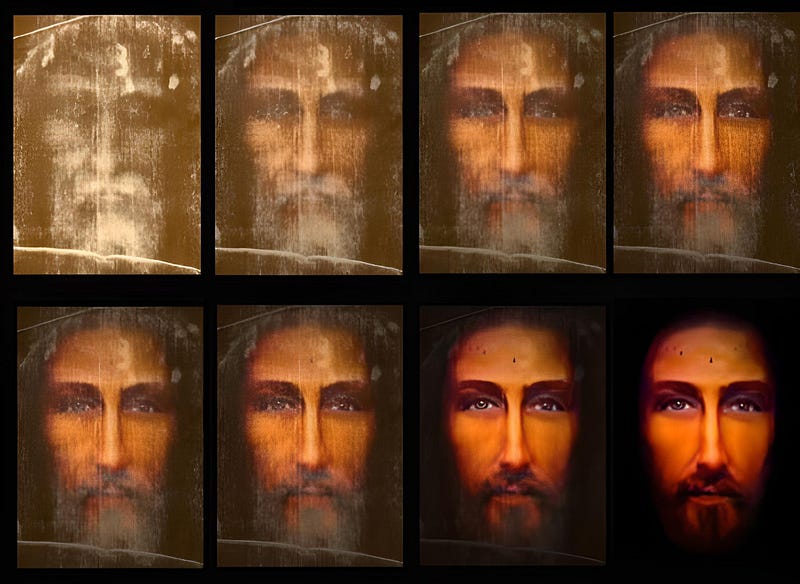
[Photo: Monozigote, CC BY-SA 4.0, via Wikimedia Commons]

According to Catholics, the Shroud of Turin is the cloth in which Jesus Christ was wrapped after his death. The material stored in the Cathedral of St. John the Baptist in Turin fascinates not only the faithful, but also scientists. Its origin has been a mystery until now.

Hyper-realistic sculpture of Jesus in Salamanca

The shroud has been in the news again recently. The faithful visiting Salamanca Cathedral can admire the first hyperrealistic sculpture of Christ after death made based on scientific data gathered from studies of the shroud.

Christ in rigor mortis (post-mortem concentration) weighs about 75 kilograms. It was made of latex and silicone. This is the first such sculpture of Jesus in the world. The authors didn’t leave out any details — from the wounds of scourging and crucifixion, to the marks of circumcision. Most impressive are the realistic cuts on the head from the crown of thorns and the pierced left side between the fifth and sixth ribs. Real human hair was used in the preparation of the sculpture.

The hyper-realistic sculpture of Jesus quickly made headlines in the world media. Although it has stirred up controversy, clerics do not consider it an artistic performance. According to Bishop Josego Luis Retan Gozalo of Salamanca, such a representation will help the faithful “see the Mystery and the call to it.”

An exhibition for the faithful and beyond

The sculpture was made by a group of artists under the direction of Álvaro Blanco, curator of the exhibition. The restoration of Christ’s body is the result of more than 15 years of historical and scientific research.

“I have been treating the Shroud of Turin as a scientific object, while I should be looking at it as a work of art. There comes a time when you just have to accept that the greatest things in the world cannot be fully explained,” he said at the exhibition’s inauguration.

“The Mystery Man,” as the entire exhibition is actually called, is scheduled to remain in Salamanca for a period of 4–6 months.

“We want to visit churches around the world in the next 20 years,” announced the executive director of ArtiSplendore, a company that specializes in cultural and artistic heritage exhibitions.

The exhibition occupies several rooms where visitors can learn about the historical, archaeological and scientific context of the Turin Shroud. Descriptions also explain how the marks on the cloth correspond to Christian accounts of Jesus’ passion and death.
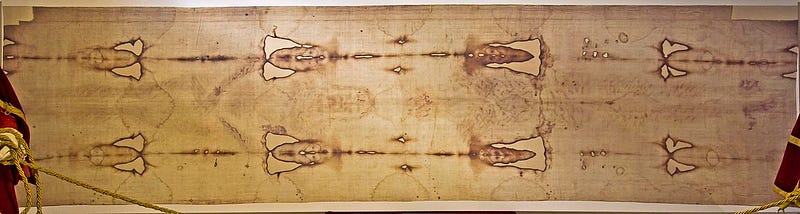
Replica of the Shroud of Turin — [Koppchen, CC BY-SA 3.0, via Wikimedia Commons]

Shroud of Turin research. What is known about the mysterious relic?

The first research on the shroud began as early as the end of the 19th century. Its origins and authenticity, however, remain unexplained to this day. Verification of the relic’s authenticity is hampered by its limited availability to researchers. The Turin Shroud has been exposed to the public only a few times.

The only study to date using C14 radiocarbon dating is considered the most reliable. Three independent research teams from three universities (Zurich, Oxford and Tucson) have reached similar conclusions. The Shroud of Turin dates from 1260–1390.

Questions about whether Jesus really existed most often return at Christmas and Easter. They are not always provocative in nature. Christians often want to deepen their faith in this way.

Cool that you made it to the end of this article. I will be very pleased if you appreciate the effort of creating it and leave some claps here, or maybe even start following me. It would be nice if you also left a tip! Thank you!

Jesus
Art
History
Life
Faith
Recommended from ReadMedium